
Parents don’t usually wake up thinking, “Today I will completely overthink curtains.”
And yet, once you’re dealing with early sunrises, nosy neighbours, and a toddler who believes curtains are capes, they suddenly matter a lot. The right ones can help your child sleep better, play more safely, and actually love their room.
This guide to “Kids Room Curtain Ideas: Cute & Practical Styles Every Parent Will Love” is all about that sweet spot between adorable and sensible. From blackout nurseries to tween hideouts and budget-friendly DIY hacks, you’ve now got a toolkit of ideas you can mix and match to fit your child, your home, and your budget.
As you choose, remember there’s no one “perfect” curtain—there’s just what works best for your family right now. Focus on safety first, then light control, then style. When those three line up, you’ll know you’ve found a winner.
Understanding Kids Room Curtains: Form, Function, and Fun
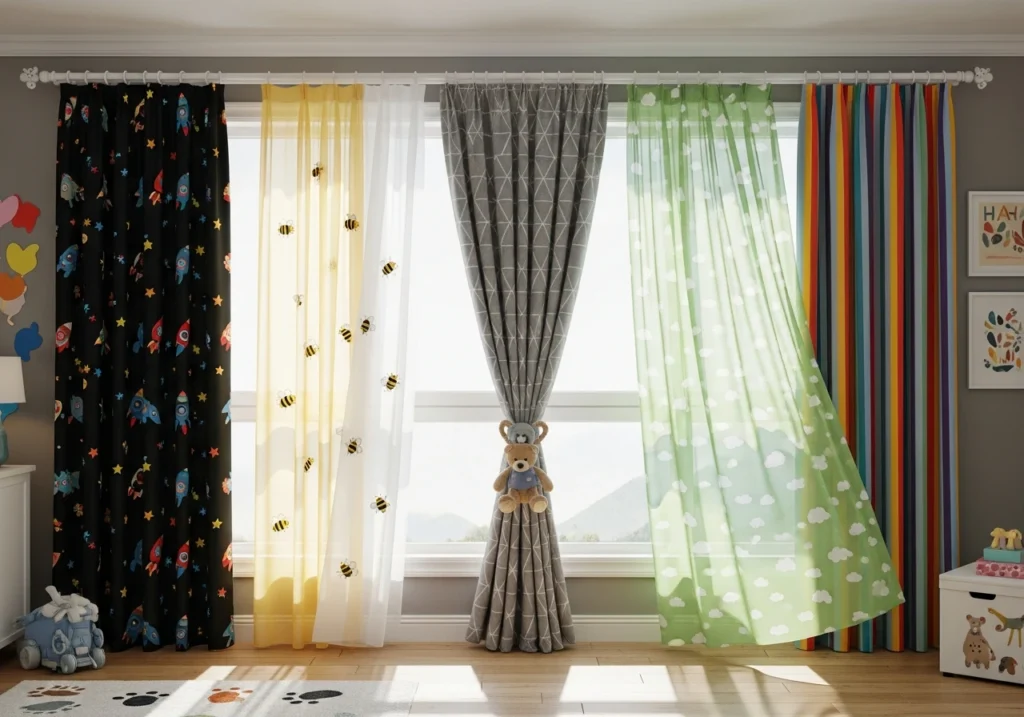
Kids room curtains do a lot more than just “cover the window.” They set the mood, help kids sleep, keep nosy neighbours out, and add a big splash of personality. The best kids room curtain ideas mix cute style with practical details, so the room looks fun and actually works for everyday family life.
Think of your child’s curtains as a multitasking teammate. They should support nap times, homework, cosy reading corners, and those early-morning “why is it so bright?” moments. When you get the balance right, curtains quietly make the whole room feel calmer, safer, and easier to live in.
What makes a great kids room curtain?
A great kids curtain balances three things: safety, function, and style. If one of those is way off, you feel it every single day—usually when you’re wrestling with a tangled panel at bedtime.
Here’s what to look for:
- Safety first: No dangling cords, no heavy rods within easy grab range, and lengths that don’t pool dramatically on the floor where little feet can trip.
- Good light control: Enough coverage to keep the room dark for sleep, but flexible enough to let in sunshine for play and reading.
- Privacy: Especially important for street-facing rooms or older kids who want their own space.
- Durability: Kids tug, touch, and occasionally use curtains as hiding places, so seams, rings, and rods need to be sturdy.
- Easy care: Machine-washable fabrics and simple hardware mean you won’t dread cleaning day.
- Style that sparks joy: Colours and patterns that make your child smile and fit the overall room theme.
When these elements line up, curtains stop being an annoyance and start feeling like one of the smartest choices you made in the room.
Choosing the right fabric for kids rooms
Fabric is where “looks cute on Pinterest” either becomes “this works brilliantly” or “why does this attract dust like a magnet?” The right material will change how the room feels, how well your child sleeps, and how often you need to clean.
Some parent-friendly options:
- Cotton or cotton blends: Soft, breathable, and usually easy to wash. Great for everyday kids rooms and nurseries.
- Polyester or microfibre: Wrinkle-resistant, durable, and often budget-friendly. Ideal if your curtains will be opened and closed a hundred times a day.
- Blackout-lined fabrics: Perfect for light sleepers or street-facing rooms. They block glare and moonlight while keeping the room cosier.
- Linen or linen blends: Airy and relaxed, good for older kids or teen rooms, though they may crease more easily.
If your child has allergies, look for tightly woven, washable fabrics that don’t shed fibres easily. And whatever you choose, check the care label—if it needs dry cleaning, be honest about whether that fits your real life, not your fantasy organised-parent self.
Light control 101: sheers, blackout & layered options
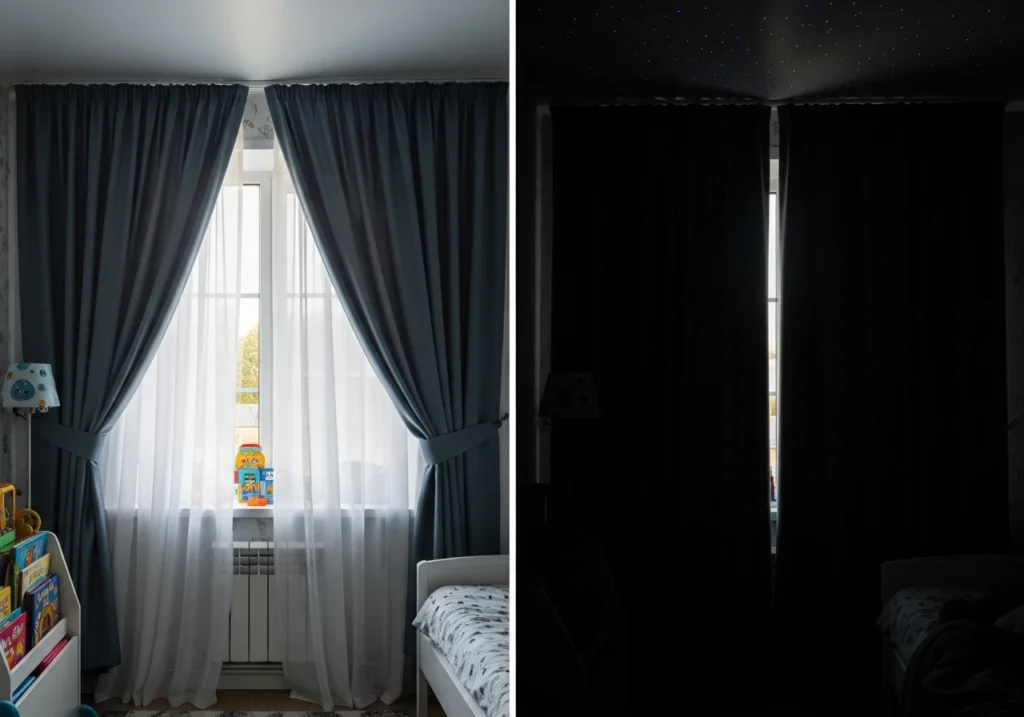
Light control in a kids room is all about flexibility. During the day, you want sunshine for play, reading, and Lego engineering. At night or nap time, you want the room dark enough that a passing car’s headlights or early sunrise don’t cut sleep short.
That’s where layering comes in. A simple setup is sheer curtains closest to the window to soften harsh daylight, with blackout or dim-out curtains on top for serious darkness. In the morning, you open the blackout layer but keep sheers closed, so the room feels bright and private without glare.
Different kids need different levels of darkness, so you can mix and match:
- Sheers + regular curtains for rooms that don’t get much direct light or for older kids.
- Sheers + blackout curtains for nurseries, early sleepers, or street-facing windows.
- Blackout roller blind + decorative side panels if you want a super clean look with strong light blocking.
If you’re unsure where to start, choose a neutral blackout base and have fun with pattern or colour on the outer curtains. That way you keep great sleep conditions, but the style can evolve as your child’s tastes change.
Safety and Practical Must-Knows (Before the Cute Stuff)
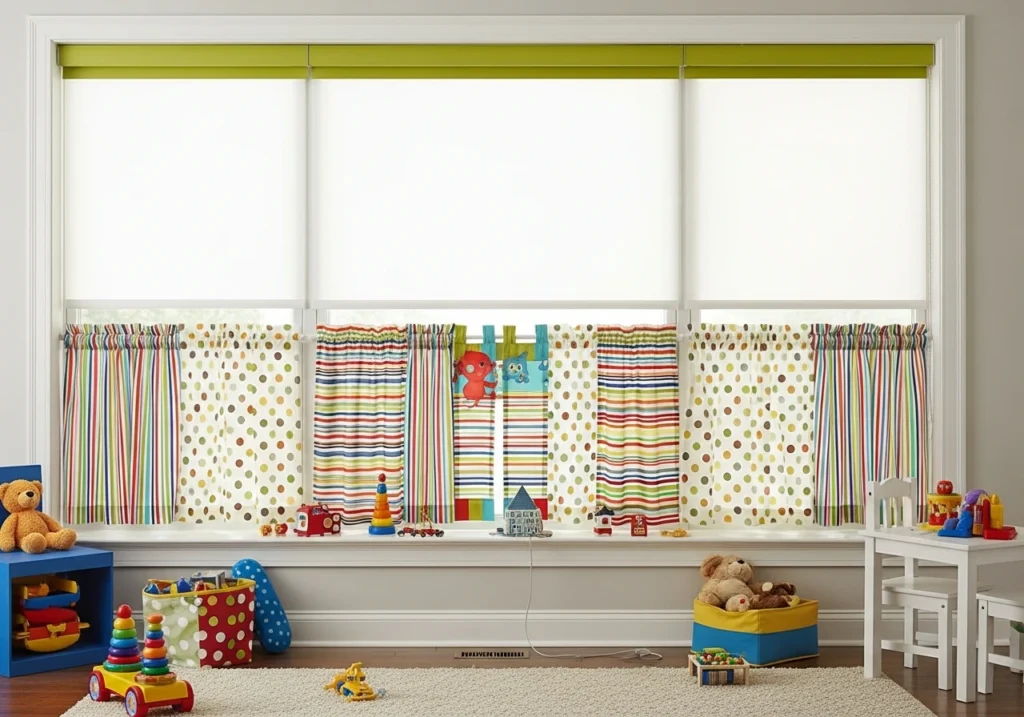
Before you fall for the cutest rocket or unicorn print on earth, it helps to sanity-check the safety and practicality side of things. Kids interact with curtains way more than adults do—they hide behind them, pull them, and occasionally taste them for reasons known only to toddlers.
Good kids room curtain ideas start with a safe setup: secure rods, no dangling cords, and lengths that won’t turn into obstacle courses. Add in easy-wash fabrics and hardware you can actually fix on a busy Wednesday night, and suddenly your “cute” choice is also wonderfully low-stress.
When safety and practicality are sorted, every fun colour, pattern, or DIY tweak you add on top feels much better. You’re not just decorating; you’re creating a room where your child can play, sleep, and grow without avoidable risks.
Child-safe curtain lengths and styles
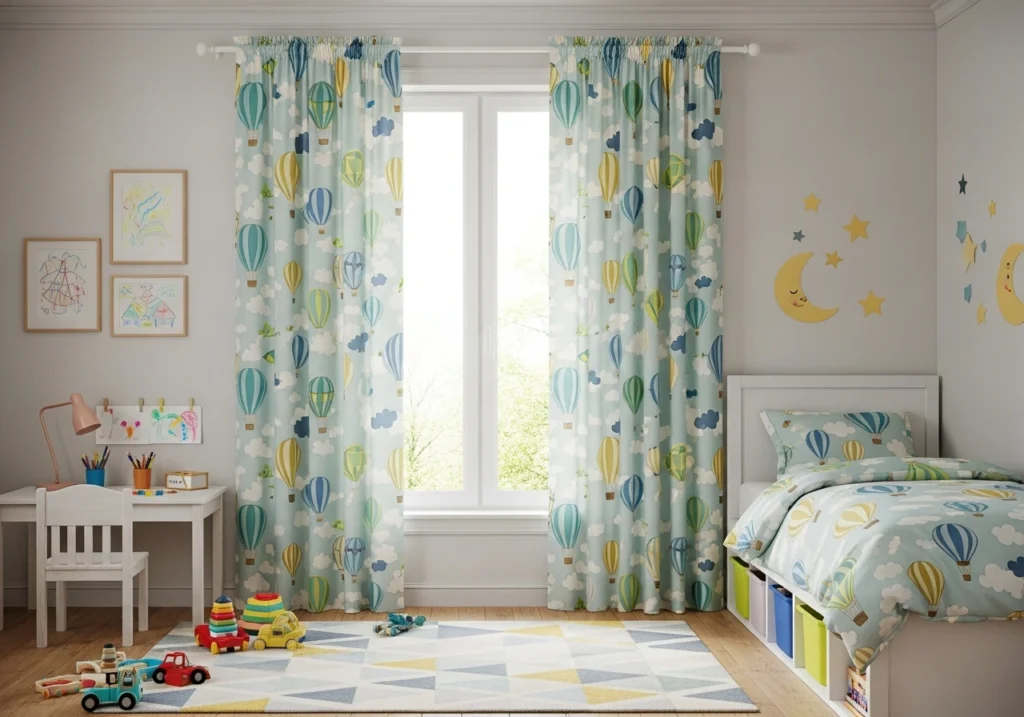
In kids rooms, curtain length is more than a style choice—it’s a safety feature. Long, puddling curtains look dramatic in living rooms but can be a tripping, pulling, or hiding hazard for small children. For most kids room curtain ideas, aim for panels that just skim the floor or stop slightly above a radiator or windowsill.
Shorter styles are especially helpful in playrooms where toys, ride-ons, and tiny racing cars roam freely. Café-length curtains or lower half-window panels keep light and privacy in balance without trailing fabric. They’re also easier to keep clean because they avoid sticky fingers and snack crumbs at floor level.
When you’re choosing styles, keep these tips in mind:
- Avoid tiebacks at toddler height if your child likes to tug or wrap things around themselves.
- Skip heavy embellishments near the hem—no beads or big tassels that can be pulled off.
- Check the “return” of the curtain (how far it wraps around the side of the rod) so there’s no tempting loose fabric for climbing.
If you love a fuller, hotel-style look, you can still have it—just make sure the fabric gently touches the floor rather than pooling. You get that cosy, grown-up feel while keeping the room safer for small, speedy humans.
Cord-free and tangle-free hardware
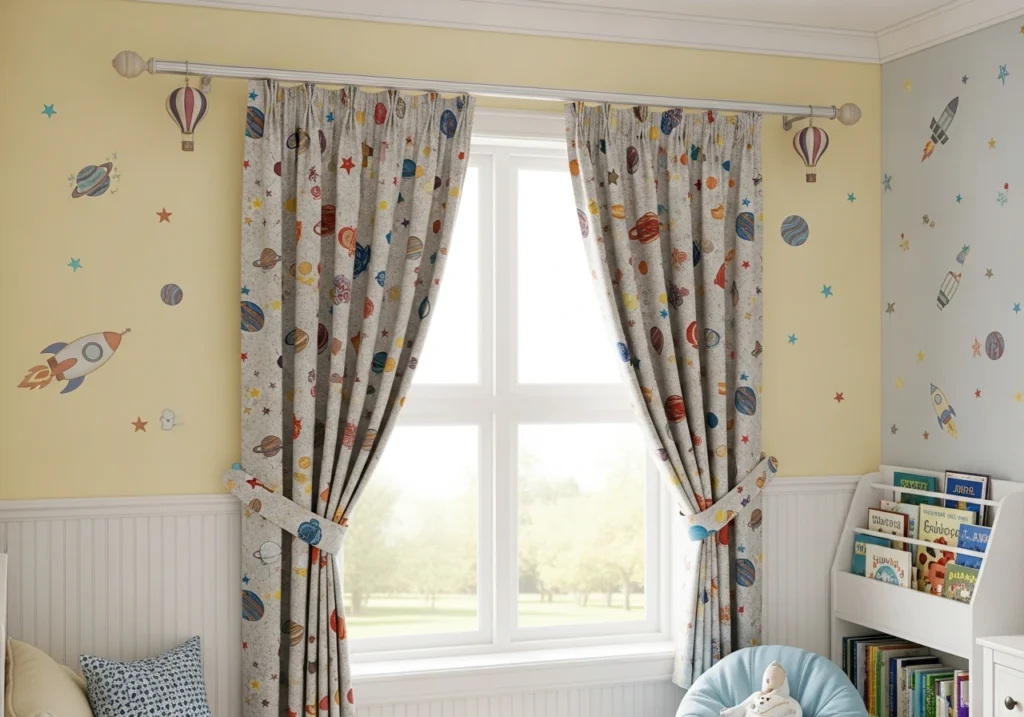
Even the cutest kids room curtains lose their charm if they come with a side of dangling cords and wobbly rods. For child-safe windows, cordless is the goal. Look for simple curtain rods with rings or tab tops, and avoid anything that requires a pull-cord or chain within reach of little hands.
Fabric tiebacks, sewn-on loops, or magnetic tiebacks are safer than long cords that can wrap around necks or get tangled in play. If you already have blinds with cords, use wall-mounted cord cleats to wind them up high and out of reach. It’s a small, inexpensive change that dramatically reduces risk.
Finally, make sure your curtain rod is firmly fixed into the wall, not just the plaster. Use proper wall plugs and brackets and give the rod a firm tug test. If it wiggles when you pull it, imagine what a determined four-year-old could do—and upgrade the hardware.
Easy-clean and allergy-friendly choices
Real talk: kids touch curtains with the same hands that just held crayons, snacks, and possibly the family pet. Choosing easy-clean fabrics keeps kids room curtains looking fresh without constant battles. Look for machine-washable materials and avoid anything that needs dry cleaning or ultra-delicate care.
If allergies or asthma are a concern, opt for tightly woven, synthetic or cotton blends that don’t trap as much dust. Lighter panels that can go in the wash every few weeks are often better than heavy, textured fabrics that never quite get cleaned properly.
A few low-effort habits help too:
- Give curtains a quick shake when you vacuum the room to loosen dust.
- Use a lint roller or hand vacuum on hems where pet hair and fluff collect.
- Keep windows clean, so less grime transfers onto the fabric.
By pairing allergy-friendly fabrics with simple cleaning routines, your cute curtain ideas stay both adorable and breathable.
Cute & Practical Curtain Ideas for Baby Nurseries
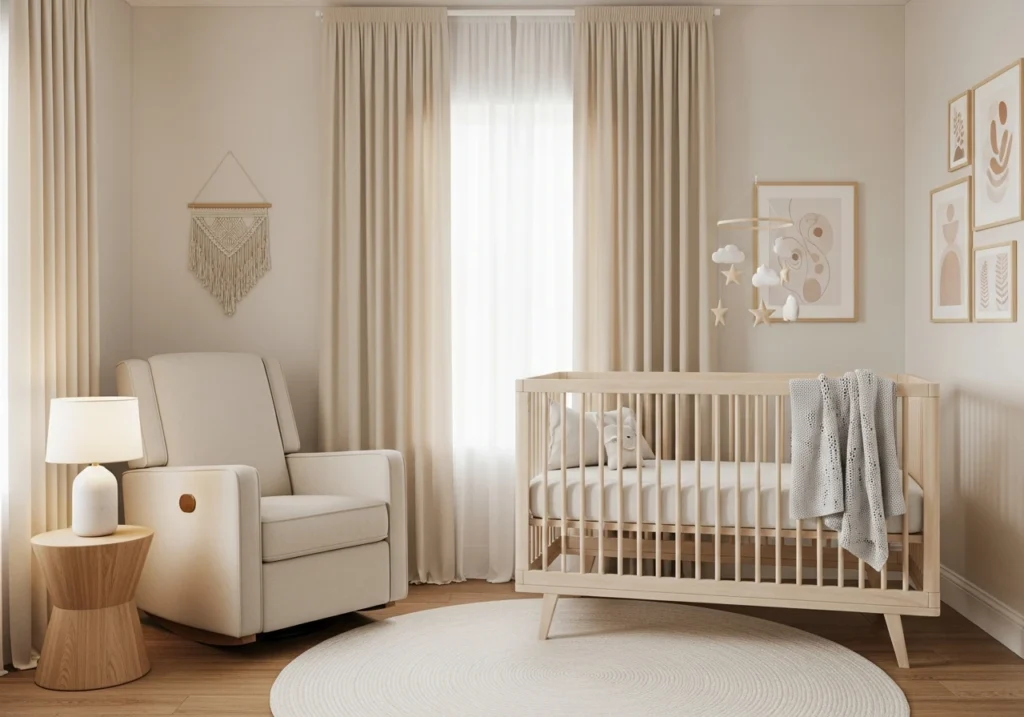
Nursery curtains work hardest during those foggy months when day and night blur together, so they need to be both soothing and super functional. The goal is a space that feels soft and calm for feeds and cuddles, while still giving you strong light control for naps.
In baby rooms, fabrics that fall gently, colours that don’t shout, and hardware that’s simple and safe make a huge difference. Think of the curtains as a cosy backdrop for all the big moments: the first smile, the first proper sleep stretch, and yes, the occasional 3 a.m. pacing session.
Soft blackout curtains in calming colors
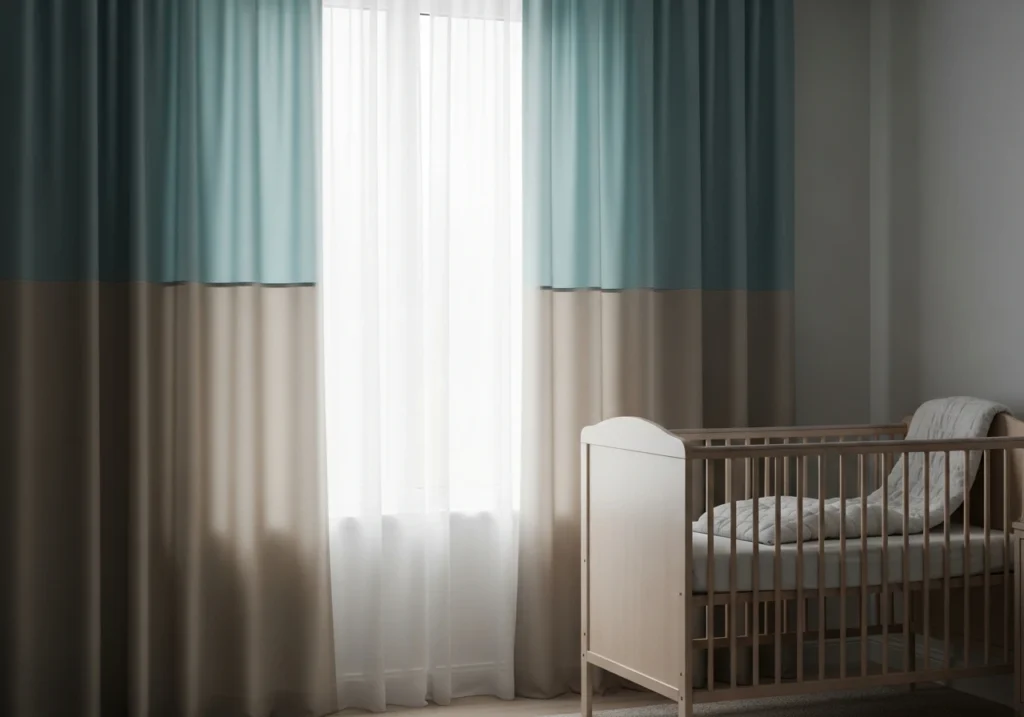
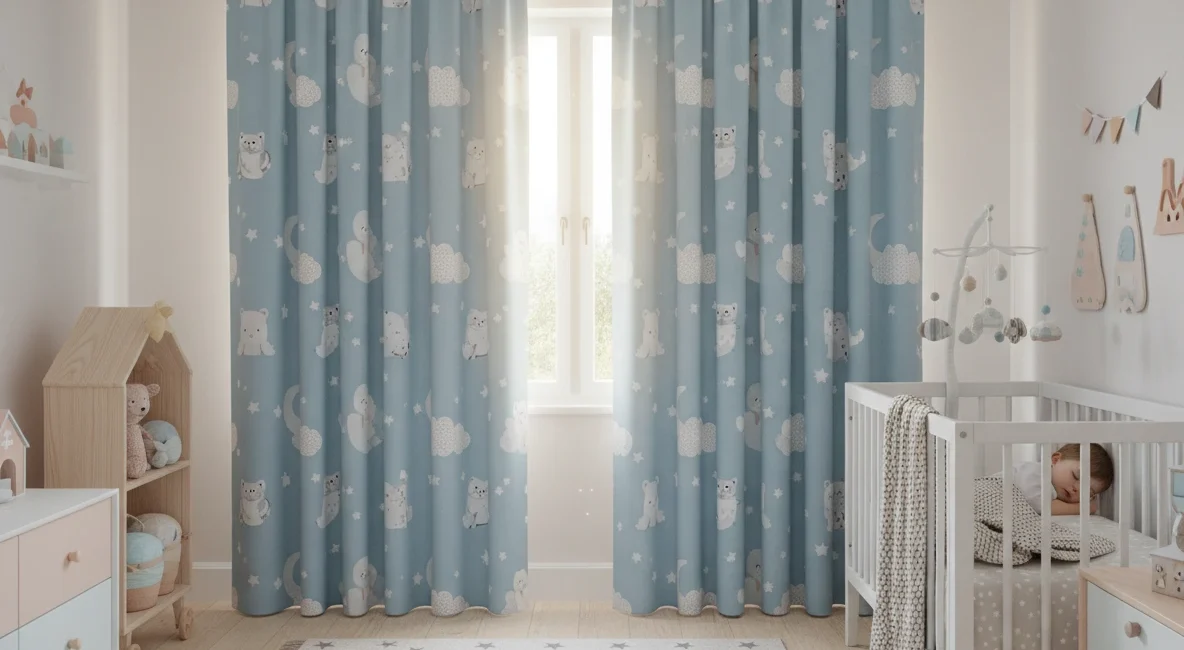
Soft blackout curtains in gentle shades are a nursery’s secret superpower. They block early-morning light and street glow while still looking cosy and calm, which is exactly what tired babies (and parents) need. Think muted blues, warm greys, sandy beige, or soft blush rather than high-contrast brights.
These calmer tones help the room feel peaceful at 2 p.m. nap time and 2 a.m. feed time. They also grow beautifully with your child, so you’re not repainting and re-curtaining everything the moment the crib becomes a toddler bed. Add a comfy chair and a small lamp, and you’ve instantly got a soothing bedtime corner.
If you’re worried blackout curtains will feel heavy, choose colour-blocked panels with a lighter shade at the top or pair them with airy sheers. You still get darkness when it counts, but the room looks soft and spacious when the curtains are open.
Whimsical patterns: clouds, stars, and gentle prints
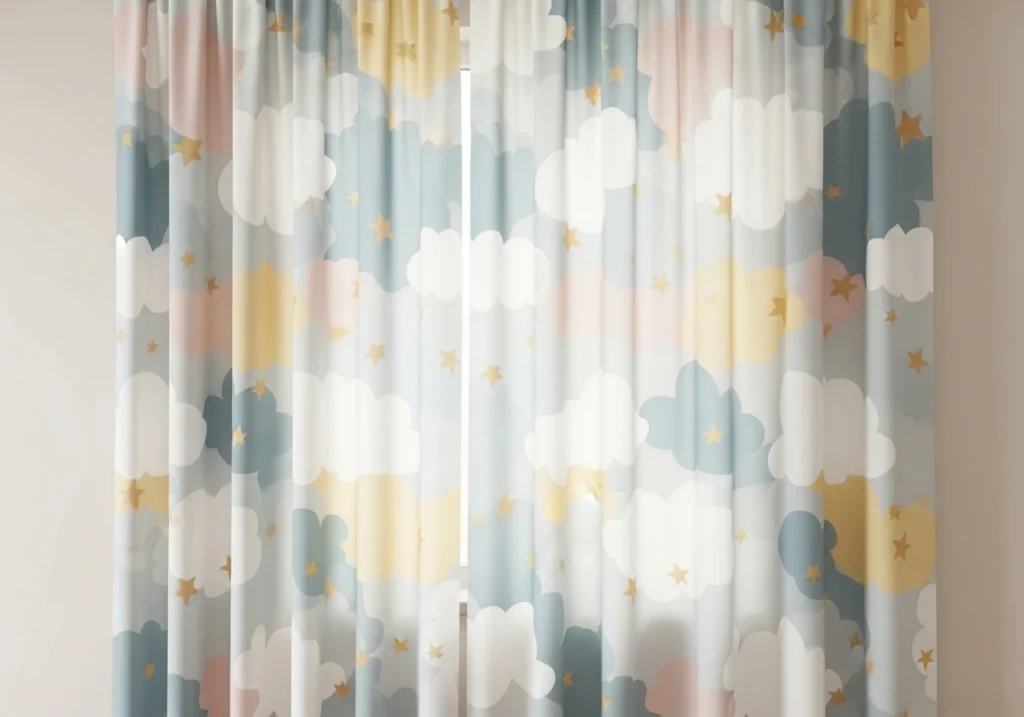
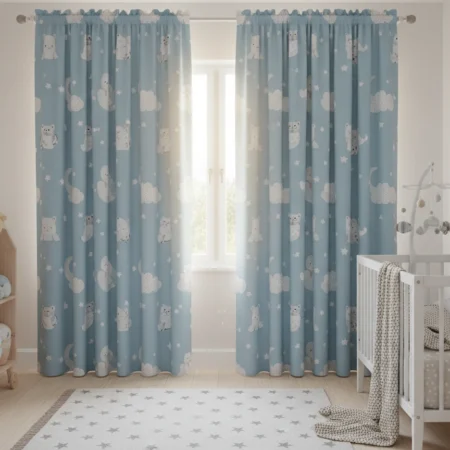
Whimsical prints are a lovely way to add personality to a nursery without overstimulating your baby. Soft clouds, tiny stars, moons, and simple animals feel playful but still calm, especially when they’re drawn in rounded shapes and pastel tones. They give the room a storybook feel that’s magical at bedtime.
These kinds of patterns also age well. A cloud or star print looks just as charming in a toddler’s “big kid bed” as it did over the crib. If the rest of the room is quite neutral, patterned curtains can become the gentle focal point that ties together bedding, wall art, and toys.
To keep the look from feeling too busy, pair one feature pattern with solid-colour bedding and simple rugs. You can echo the shapes in a mobile or wall art so everything feels cohesive, not chaotic. It’s an easy way to make the window wall the sweetest corner of the nursery.
Layered sheers for daytime naps
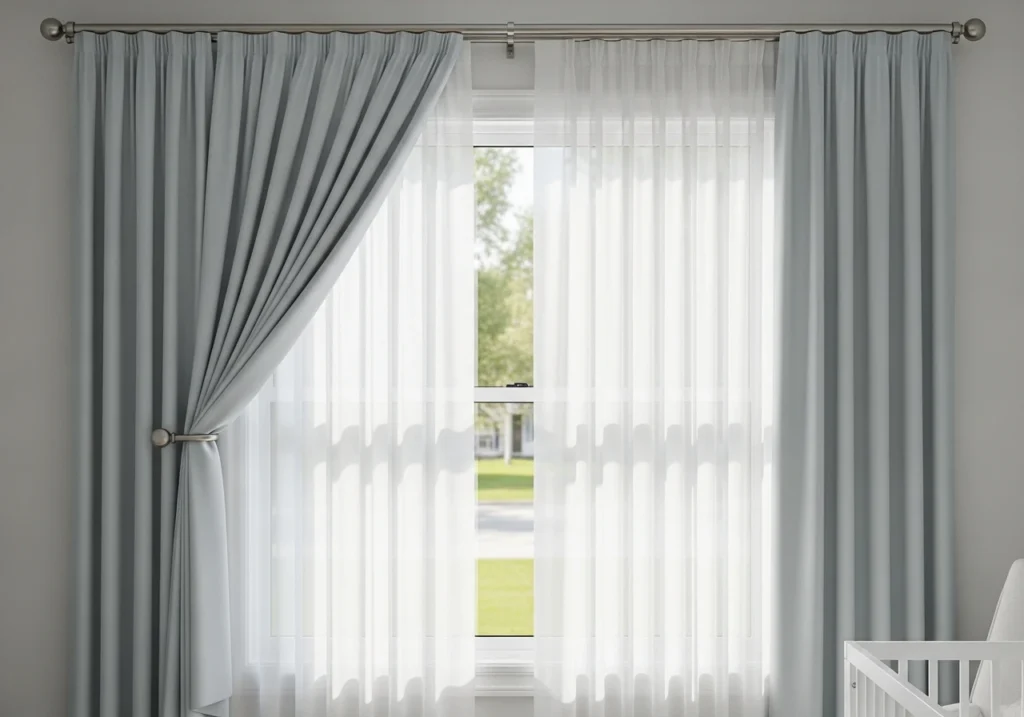
Layered sheers are brilliant when you need a nursery that works in full daylight and deep nap mode. Sheer curtains closest to the glass soften the sun, reduce glare, and keep the room feeling light and airy. Over the top, blackout or dim-out curtains slide across when you need serious darkness.
This combination lets you fine-tune the light: sheers only for calm daytime play, both layers closed for naps, or everything open when you want maximum sunshine. It’s especially useful if your baby naps in the same room where you spend most of your day—you don’t feel like you’re living in a cave just to protect sleep.
For a clean look, mount a double curtain rod so sheers and blackout panels move independently. Choose similar tones for both layers so the window feels soft and cohesive, even when the heavier curtains are pulled right back.
Canopy-style curtains over crib corners (with safety in mind)

Canopy-style curtains instantly make a nursery feel dreamy and special, like a little storybook nook just for your baby. Soft fabric framing the crib creates a cosy, cocoon-like feel that’s lovely for bedtime and sweet photos. The key is to enjoy the look without putting loose fabric within grabbing or tangling distance.
For safest results, attach the canopy securely to the ceiling or wall and keep any draped fabric outside the crib rails. As your baby becomes more mobile, tie the fabric back so it can’t be pulled down or chewed. Light, breathable materials are best, as they move gently with air but don’t feel heavy or overwhelming.
A few safety-first checks help:
- Make sure there are no cords, beads, or ribbons hanging into the crib area.
- Test the fixing points—if you can tug the canopy firmly without movement, you’re in good shape.
- Be ready to adjust or remove the canopy once your little one can stand and pull.
That way you get the charming canopy look now, and you can easily update it as your baby grows into a curious toddler.
Kids Room Curtain Ideas for Toddlers & Young Kids

Once your baby becomes a very opinionated toddler, curtains suddenly need to handle more light, more play, and more personality. This is the age of bright colours, favourite animals, and the occasional “let’s hide behind the curtains forever” game. Your best friends now are durable fabrics, safe lengths, and patterns that can survive ketchup fingerprints.
Cute and practical kids room curtain ideas for this stage balance bold, happy designs with easy care. Think fun prints, simple rods, and panels that glide smoothly so you can shut out early morning light in three sleepy seconds. If you choose well now, these curtains can grow with your child into the early school years.
Bold color-block curtains that grow with them
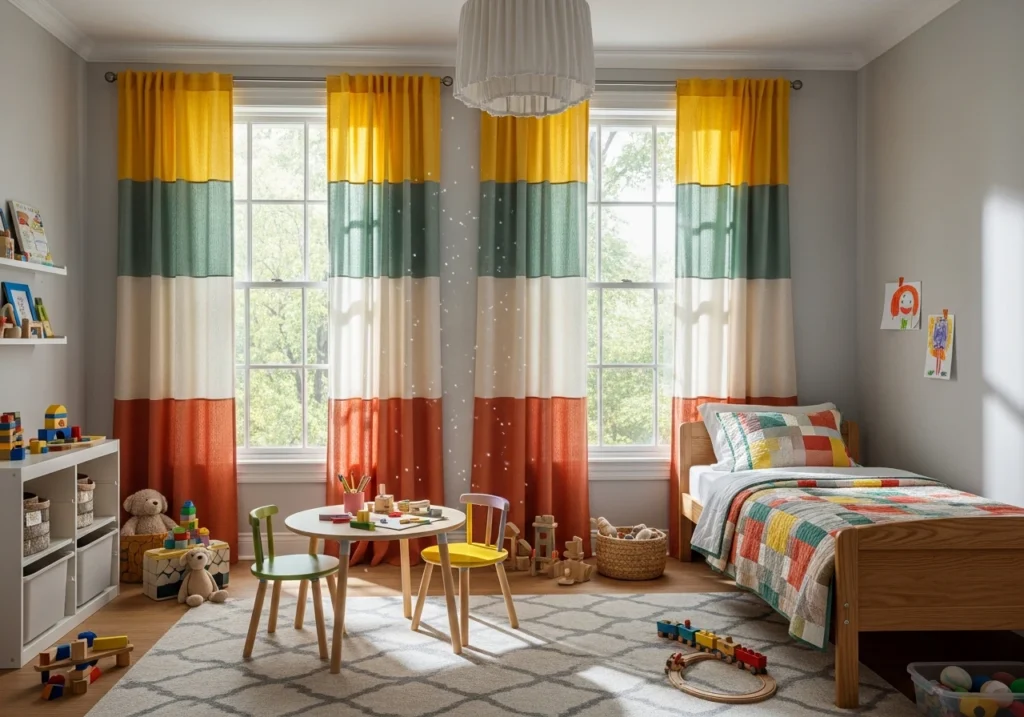
Bold color-block curtains are a great middle ground between “fun for toddlers” and “not embarrassing for a seven-year-old.” Blocks of colour feel playful now, but they don’t lock you into a specific character or theme. You can easily change bedding, wall art, and toys while the curtains still work with the new look.
To keep the room from feeling too busy, mix one or two bright shades with softer neutrals like cream, grey, or dusky blue. This gives you those cheerful pops of colour kids love, but it still feels calm enough for bedtime stories. It’s also a clever way to introduce a colour palette you can echo in rugs, cushions, and storage bins.
If you’d like extra practicality, choose blackout or dim-out color-block panels so they work just as well for naps as they do for daytime play. When your child’s favourite colour inevitably changes, you can update accessories first and think about new curtains much later.
Character curtains (and how not to be stuck with them)
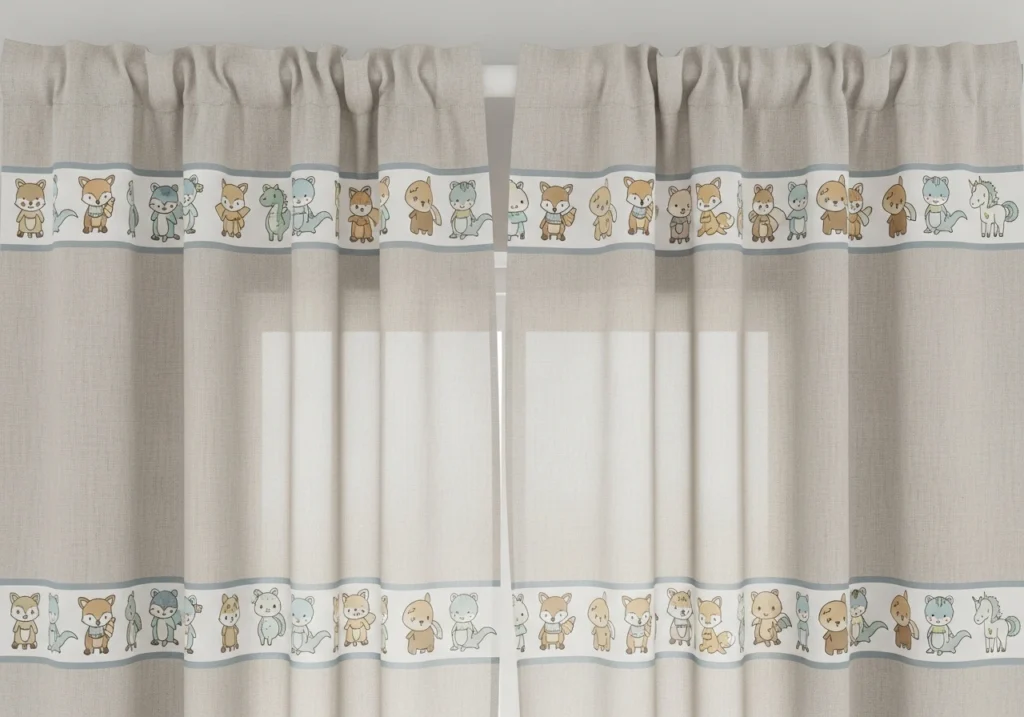
Character curtains are basically décor catnip for kids. Dinosaurs, princesses, superheroes—your child will spot them from three aisles away. The problem is that obsessions change fast, and full-on themed curtains can feel dated long before the fabric wears out.
To keep things flexible, choose neutral panels with a subtle character border, printed band, or small motif instead of an all-over print. You can also bring characters in through tiebacks, a single accent panel, or a valance, while keeping the main curtains plain. That way, when your little one moves from dinosaurs to space, you’re swapping accessories, not the entire window treatment.
If you’re already invested in bold character curtains, balance them with simple bedding and rugs so the room doesn’t feel overwhelming. When the phase passes, you can move those panels to a playroom or reading nook and introduce more timeless curtains in the bedroom.
Interactive curtains: pockets, appliqués, and peekaboo panels
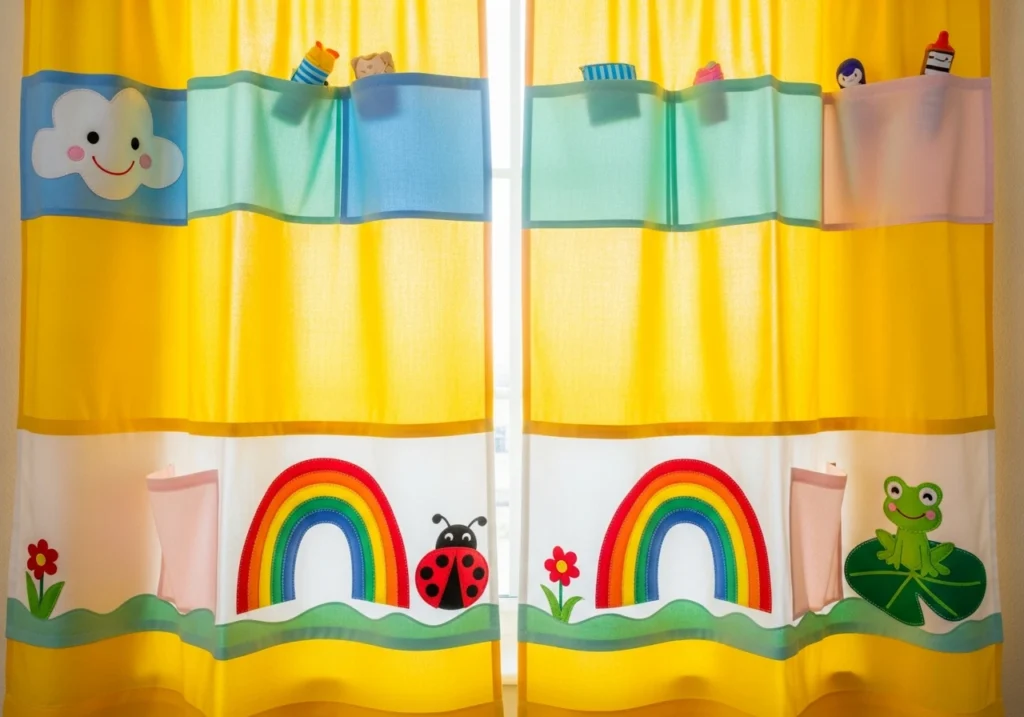
Interactive curtains turn the window into a gentle play zone without adding more plastic toys to the floor. Small pockets, stitched-on rainbows, clouds, or animals give little hands something to explore while they’re waiting for you to finish “just one more thing.” It’s a fun way to build personality into the room at kid-height.
To keep things safe and tidy, choose flat, securely stitched appliqués and shallow pockets that hold soft items only—think finger puppets, fabric books, or a favourite small teddy. Avoid anything heavy or hard that could swing if the curtain moves. If your child is a climber, keep pockets low and minimal so the curtain doesn’t become a climbing wall.
You can even DIY interactive curtains by adding:
- Iron-on patches or fabric shapes near the bottom edge.
- A row of sturdy pockets for small toys or bedtime books.
- “Peekaboo” flaps that hide simple pictures or shapes underneath.
It’s like having a quiet busy-board built into your kids room curtains—cute, practical, and surprisingly good at buying you a few extra minutes of calm.
Blackout curtains with fun linings
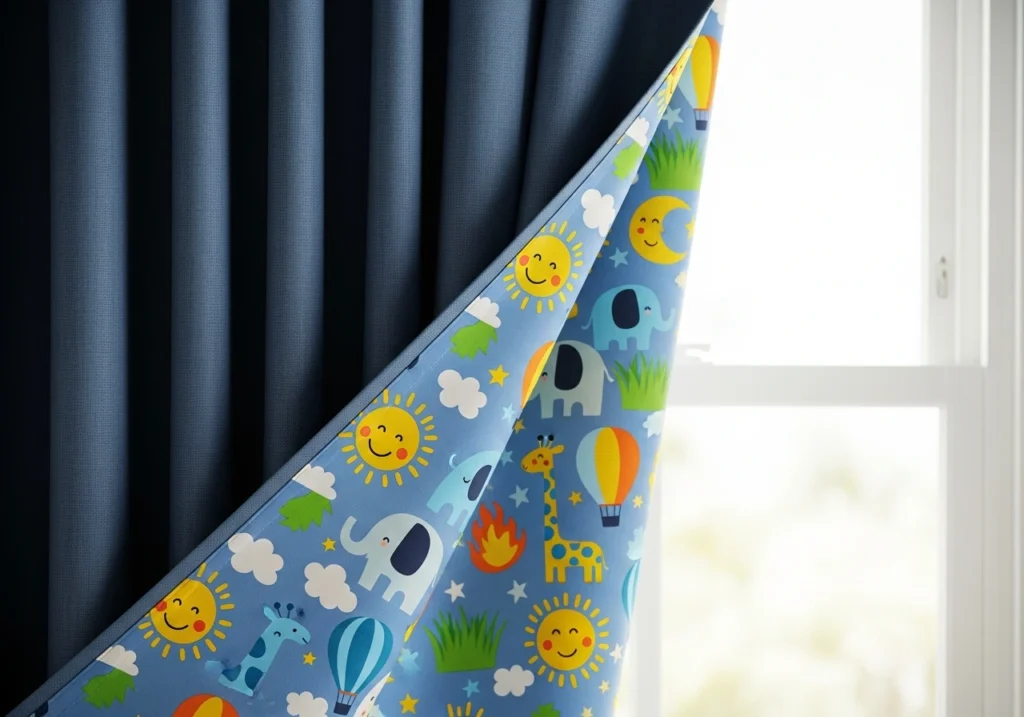
Blackout curtains are a lifesaver for early-rising kids, but they don’t have to look serious or plain. One clever twist is choosing solid blackout panels on the outside with a secretly fun patterned lining on the inside. When the curtains are open, kids see bright animals, stars, or balloons; from the room, you see calm, grown-up colour.
This trick keeps the room tidy and versatile, while still giving your child something joyful to look at when the curtains are pulled. It’s perfect if you like a more neutral decor but your child begs for bold prints. If their tastes change, you can swap bedding and wall art first and keep the curtains for years.
For maximum practicality, look for linings that are wipeable or easy to spot-clean, especially if your child loves to touch and point at every picture. Among all kids room curtain ideas, this one is a brilliant compromise between cute style and serious sleep support.
Tween & Teen Curtain Styles They Won’t Outgrow Overnight
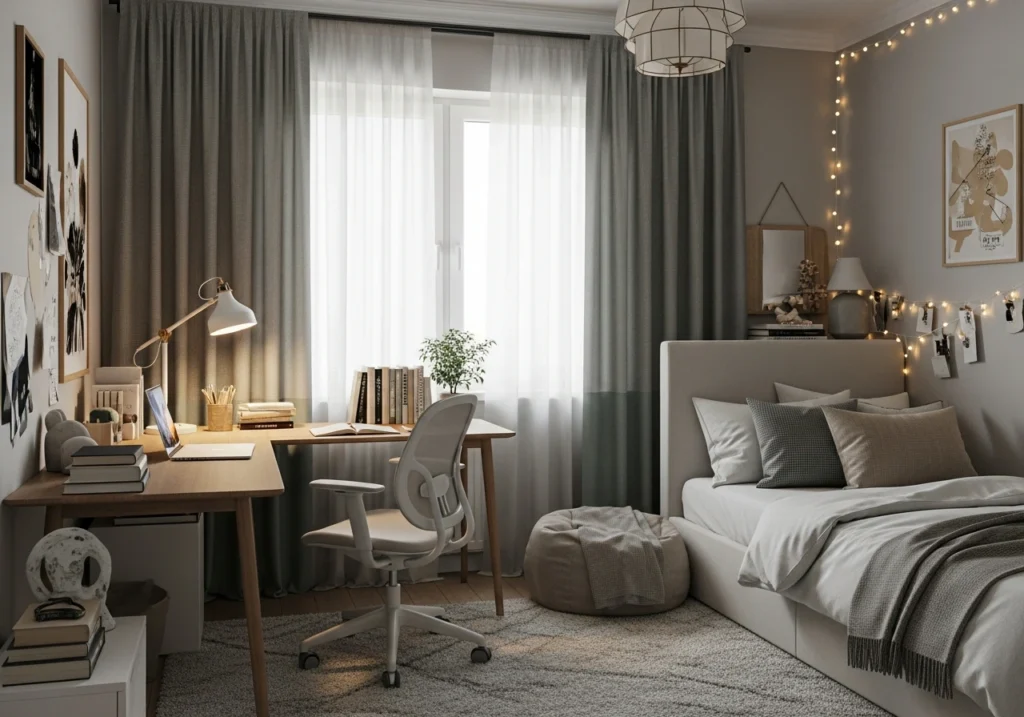
Tween and teen rooms work hard: they’re bedrooms, study spaces, hangout zones, and “I-need-some-privacy” retreats. Curtains here need to feel more grown-up, but still cosy enough for movie nights and late-night chats. Think calm colours, good light control, and textures that look stylish rather than “little kid.”
The trick is choosing kids room curtain ideas that can survive changing hobbies and phases. Neutral bases, layered sheers, and simple hardware let your teen swap out posters, bedding, and fairy lights without the curtains feeling out of place. If you invest a bit more here, you’ll likely get years of use from the same window treatment.
These curtains also have a job to do: block early-morning light, soften screen glare, and make the room feel like a personal sanctuary. When your teen feels comfortable in their space, they’re more likely to keep it (reasonably) tidy and actually enjoy spending time there.
Minimal neutrals with a twist
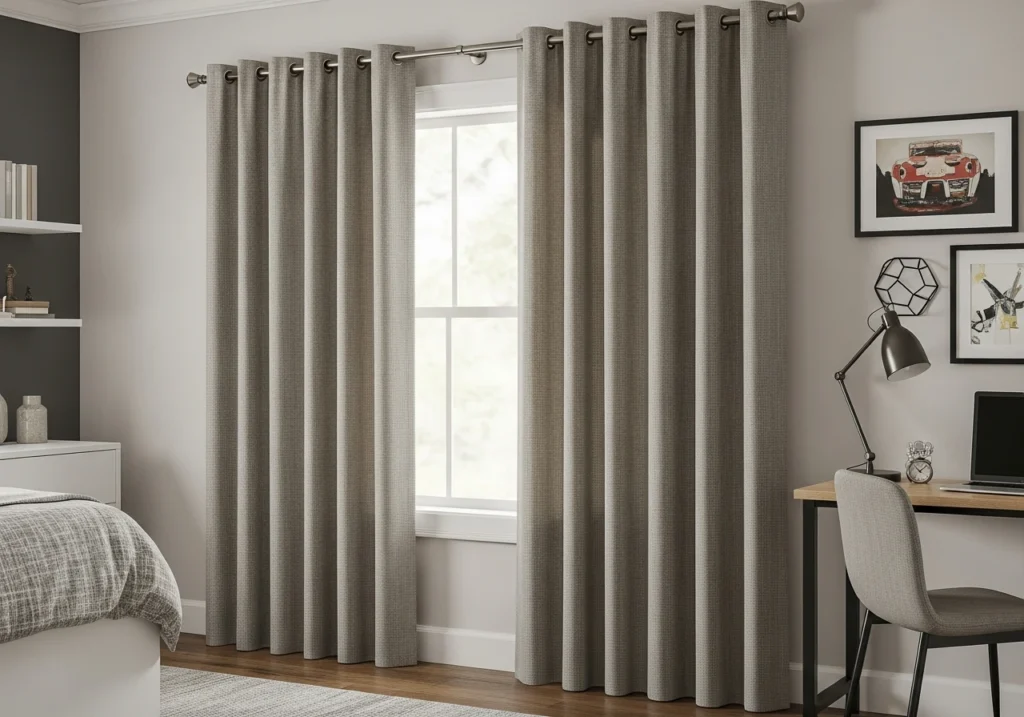
Minimal, neutral curtains are a safe bet for tweens and teens who change their minds weekly about everything else. Soft greys, taupes, or warm beige panels feel calm and grown-up, giving your child a blank canvas for posters, bedding, and fairy lights. They’re also brilliant at hiding the sheer chaos that sometimes lives on the floor.
To keep neutrals from feeling boring, look for texture and detail: a subtle weave, pinch-pleat or eyelet headings, or a gentle gradient. These small touches add depth without shouting for attention. Pair them with a sleek rod in black, brass, or chrome so the whole window treatment looks intentional rather than “default.”
If your teen’s room is on the darker side, choose a slightly lighter neutral so the curtains don’t swallow the daylight. In brighter rooms, deeper greys or greige panels can make the space feel cosy and cocoon-like—perfect for movie marathons and late-night revision sessions.
String lights and sheer curtains combo
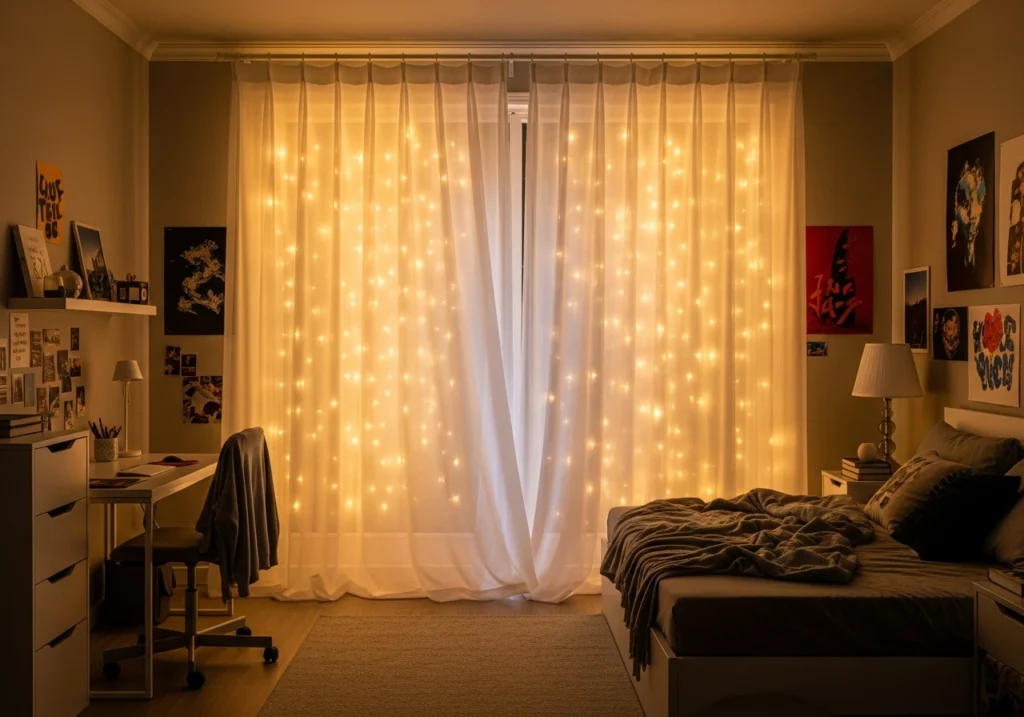
The sheer-curtains-plus-fairy-lights combo is basically teen-room magic. Soft white sheers diffuse the tiny lights so the whole window glows instead of showing individual bulbs, creating that cosy, starry-wall effect everyone loves. It instantly turns a regular bedroom into a calm evening retreat for journaling, scrolling, or hanging out with friends.
To keep things safe, hang curtain-safe LED string lights behind or sandwiched between two layers of sheers, and plug them into an accessible socket with a switch or remote. Avoid wrapping lights tightly around fabric or piling them on the floor where they can overheat or get stepped on. A simple timer or smart plug is handy too—you don’t have to rely on anyone remembering to switch them off at midnight.
Because the curtains themselves are neutral and light, your tween or teen can change posters, bedding, and accent colours as often as they like while the glowing window still works with everything. Among all kids room curtain ideas, this might be the easiest one for instant “wow” with very little effort.
Boho layers: macramé, tassels, and light cotton
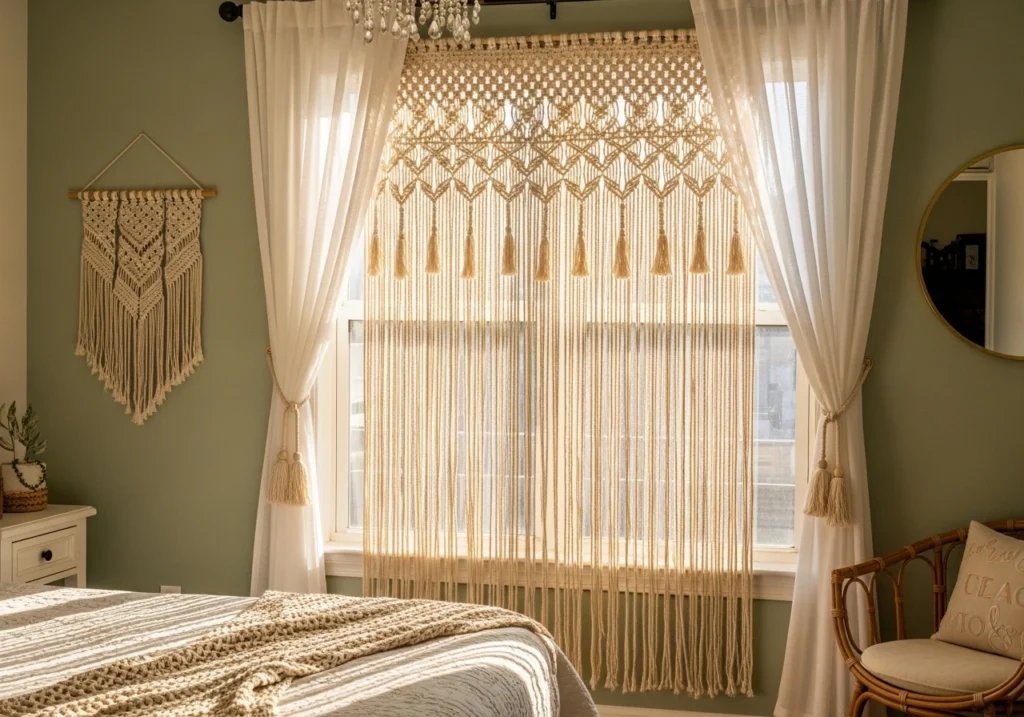
Boho-inspired curtains are perfect for teens who want a room that feels relaxed and a bit artsy. Layering light cotton sheers with a macramé panel or tasseled valance adds texture and interest without heavy colour. The window becomes a feature, but the room still feels airy and bright.
To keep things practical, use the macramé as a decorative middle layer and rely on simple sheers or roller blinds behind it for actual light control. That way your teen can enjoy the boho vibe while still being able to darken the room for sleep or screen time. Stick to a soft, neutral palette so the look feels curated, not cluttered.
If your teen is crafty, a DIY macramé piece can be a fun project and a genuinely unique part of their space. Just make sure any tassels or long cords are kept away from heaters and that the hanging is securely fixed—style is great, falling rods are not.
Study-friendly curtains to reduce glare

Study areas near windows are great for natural light, but not so great for screen glare and squinting. Study-friendly curtains solve this by softening light rather than blocking it completely. Think light-coloured dim-out curtains or layered sheers that you can pull partly across the window while still letting daylight in.
Neutral fabrics work best here because they don’t cast strong colour onto books or screens. Position the desk so the window is beside, not directly behind, your teen, then use the curtains to fine-tune brightness. A simple tieback or holdback lets them adjust panels quickly between reading, laptop work, and relaxing.
If homework often happens in the evening, pair these curtains with a good desk lamp and, if needed, a separate blackout blind for sleep. That way the window area supports focused study time and cosy wind-down time, without constant rearranging.
Smart Layering & Layout Tricks for Small or Shared Rooms
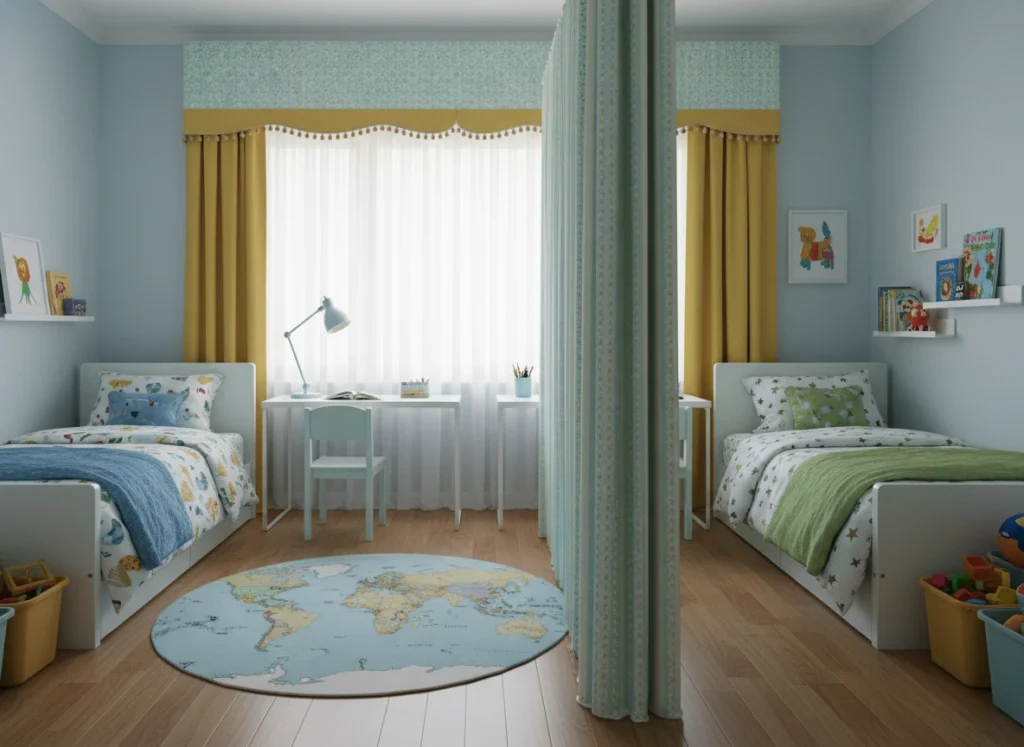
In small or shared kids rooms, curtains can do far more than cover windows. They can divide space, hide clutter, and even make ceilings look taller—all without building a single wall. Used cleverly, kids room curtain ideas become layout tools that help siblings share peacefully and give every corner a clear job.
Layering different curtains in the same room also helps it feel calm instead of cramped. For example, you might use simple blackout blinds at the window, light curtains to soften the wall, and a ceiling-mounted panel to separate beds at night. When everything’s on rails or tracks, you can slide panels open in seconds for playtime and close them again for focused, quiet moments.
Using curtains to divide shared rooms
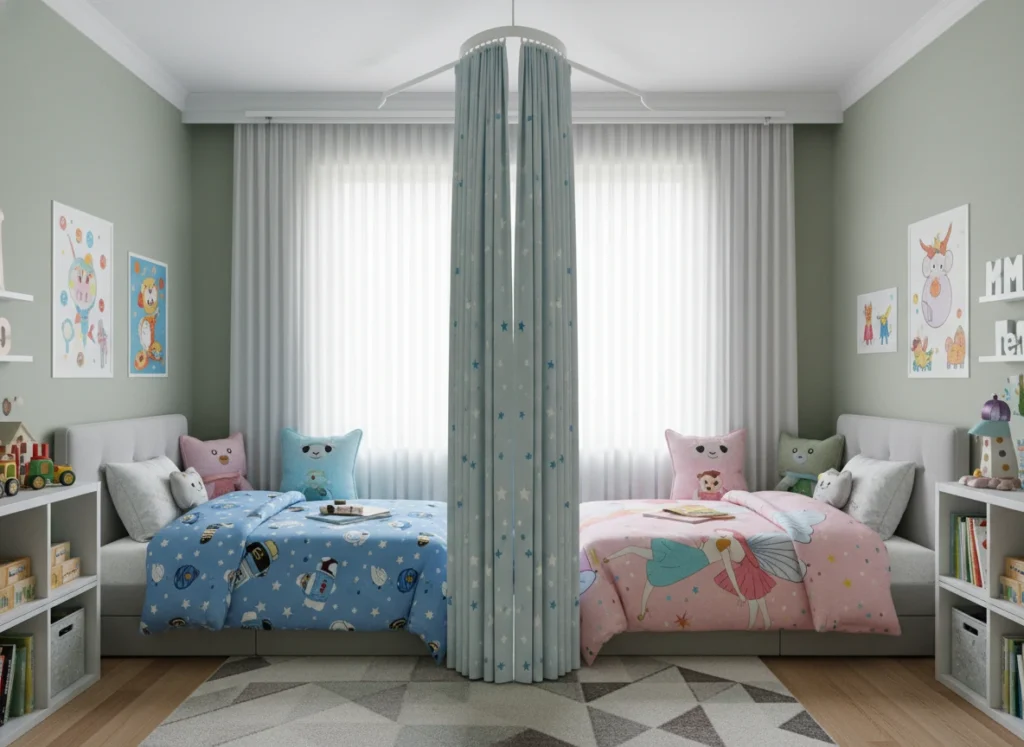
In shared kids rooms, curtains can be peacekeepers. A ceiling-track curtain between beds gives each child a little slice of privacy for reading or winding down, without blocking airflow or light completely. It’s also far easier (and cheaper) than building a permanent partition.
Choose fabric that’s light enough to slide easily but opaque enough to feel like a real divider. Solid colours or simple patterns work best so the room doesn’t feel visually chopped up. During the day, you can tie the curtain back so the space feels open and roomy again.
It helps to agree on a few “curtain rules” with the kids, like no swinging, yanking, or hiding dangerous toys behind it. When everyone treats the divider with respect, it becomes a simple, flexible tool that makes sharing a room feel a lot more fair.
Bunk bed and reading nook curtain ideas
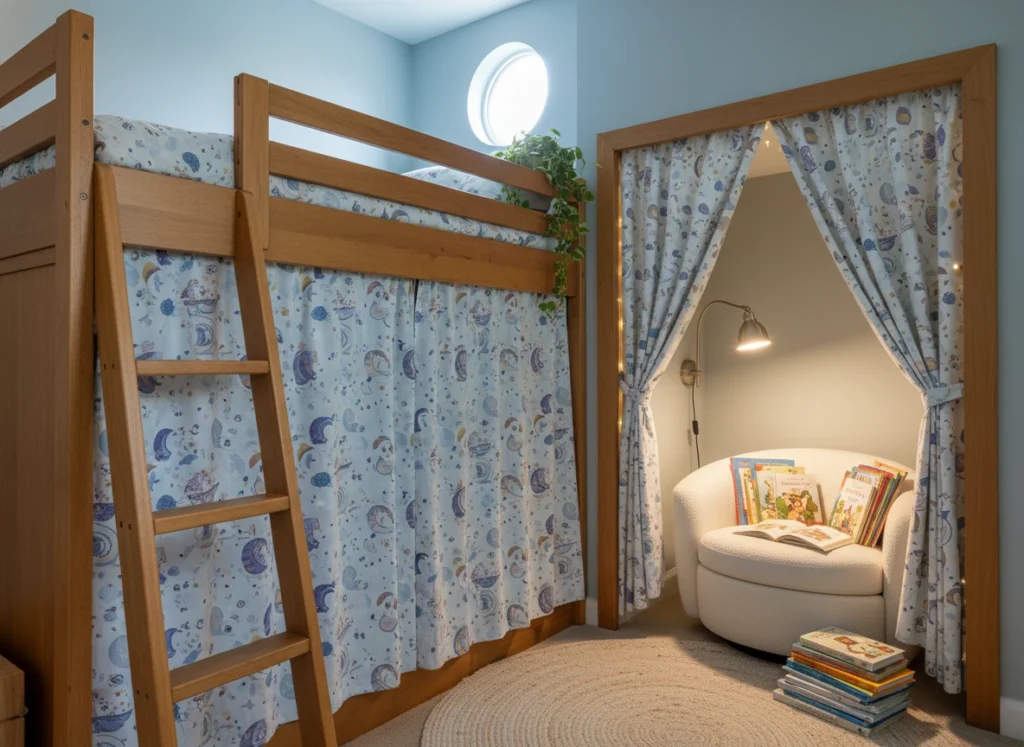
Curtains and bunk beds are a natural pair. A simple rail along the lower bunk lets kids close their own little “cabin” at night, which can feel comforting for anxious sleepers or siblings sharing a room. Matching fabric around a nearby reading nook ties the space together and makes the whole area feel like one cosy zone.
When adding bunk bed curtains, choose lightweight, breathable fabric and avoid anything too thick or long that could tangle on the ladder. Leave small gaps at the top or sides so air can flow, and make sure any tiebacks are easy for kids to use but not long enough to become hazards. Inside a reading nook, a curtain across the doorway instantly turns it into a secret hideout for books and quiet time.
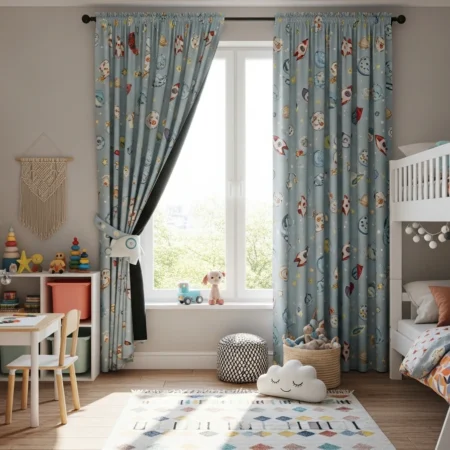
You can even coordinate prints: planets for a “space bunk,” woodland scenes for a little den, or simple spots and stripes that work for a wide age range. It’s a flexible way to add privacy and magic without taking up extra floor space.
Extra-wide curtains for toy storage or closet zones
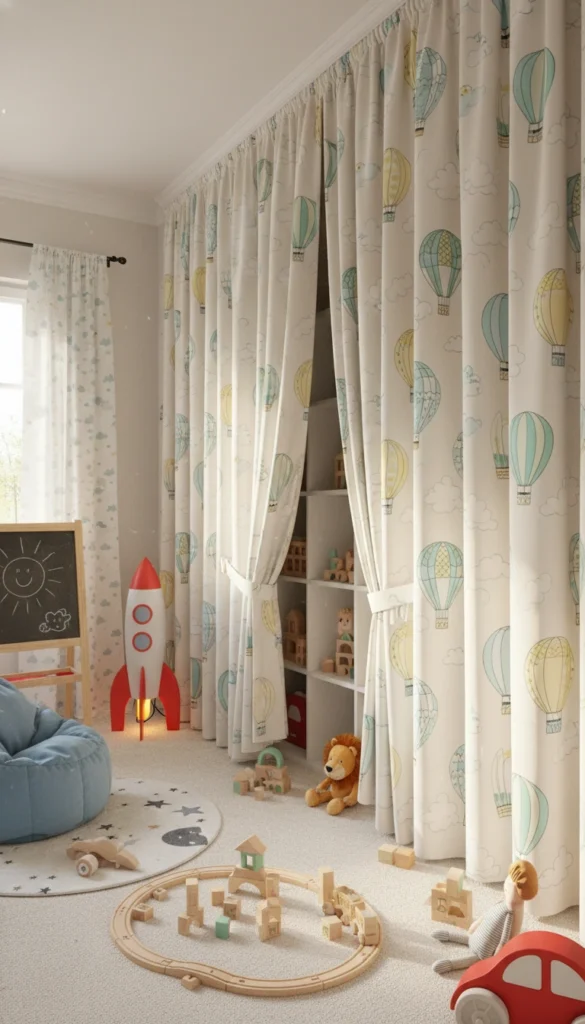
Extra-wide curtains are miracle workers for hiding the kind of toy chaos that appears five minutes after you tidy. Instead of doors that bang or sliders that jam, a full-width curtain glides across to cover shelves, wardrobes, or an open toy corner. Suddenly the room looks calm again, even if everything behind the fabric is… a work in progress.
For this trick, choose sturdy fabric and a strong track or rod, because these panels will be opened and closed a lot. Patterns work brilliantly here—balloons, stripes, or simple geometrics add personality while distracting from any lumps and bumps behind the curtain. If siblings share the space, you can even assign sections—each child’s “zone” lives behind their side of the curtain.
It’s also a great option for renters who can’t install built-in storage. You can add shelves or cube units, then run a ceiling-mounted track in front. When you move, the whole system comes with you, and the curtains can be reused in a new kids room layout.
Making low ceilings look taller with curtain placement
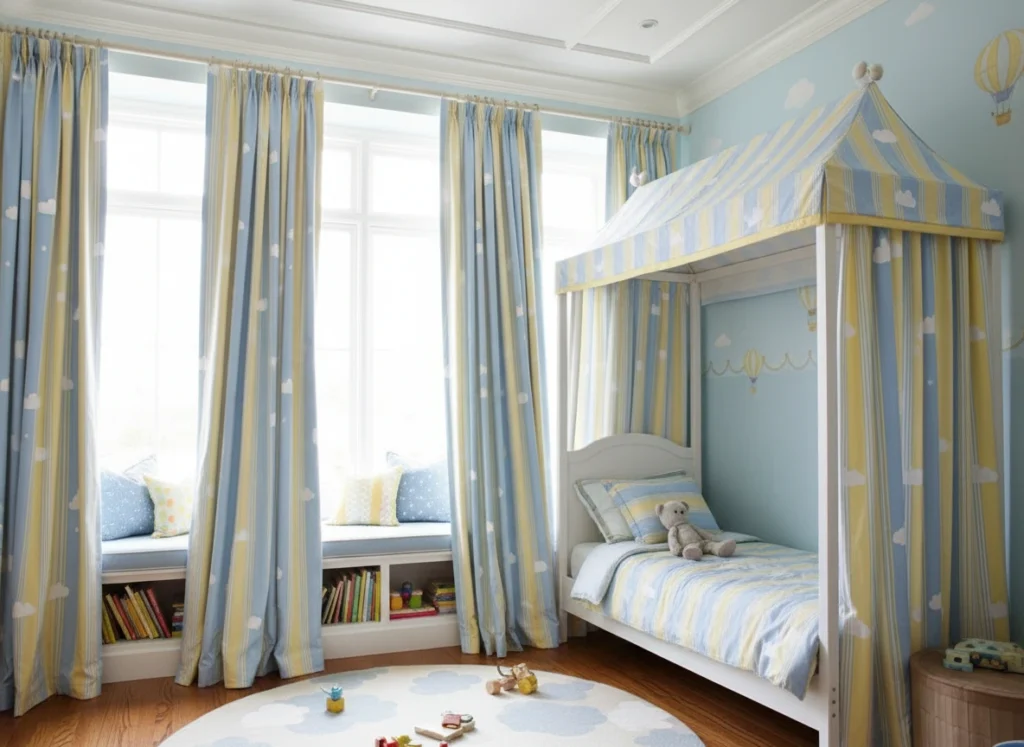
Curtain placement can change how tall a kids room feels without touching the actual ceiling. The main trick is to hang curtains as high as possible, close to the ceiling or even from a simple ceiling track. Long, floor-skimming panels draw the eye upward so the whole wall looks taller and more elegant.
Going a little wider than the window helps, too. Mount the rod so the curtains can stack mostly on the wall, not over the glass—this makes the window look larger and lets in more light. Vertical stripes or long, uninterrupted panels also stretch the room visually, which is especially helpful in older homes or basement bedrooms.
If the room is small, stick to lighter colours or soft patterns so the walls don’t feel boxed in. The overall effect is subtle but powerful: your child’s room feels airier, brighter, and just a bit more “grown-up,” even if the ceiling hasn’t moved an inch.
Matching Curtains with Bedding, Rugs & Decor
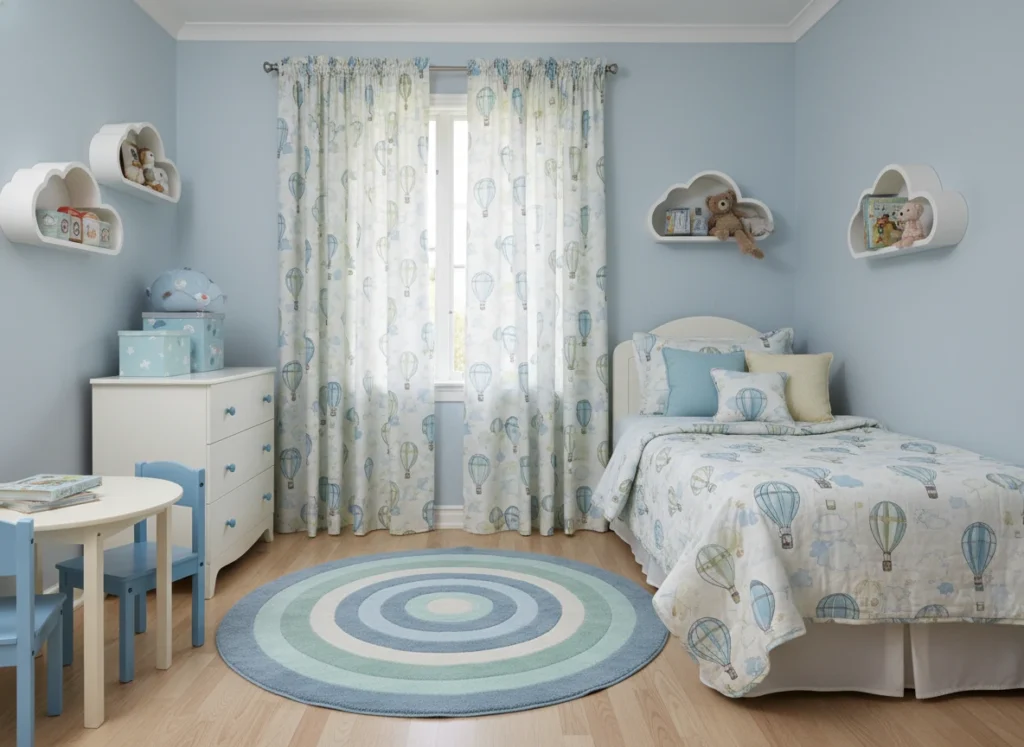
When curtains, bedding, and rugs all talk to each other, a kids room suddenly looks “put together” instead of random. The trick isn’t buying matching sets; it’s repeating colours and shapes so the eye can spot a gentle pattern. That’s why hot-air-balloon curtains with balloon bedding and a round rug in the same tones feel so satisfying.
Start by choosing one or two main colours you want to repeat around the room—maybe sky blue and soft yellow, or forest green and blush. Let the curtains carry one key pattern or colour, then echo it in smaller touches: a striped rug, a cushion, a lamp base, or even storage bins. The result looks intentional but still playful.
If you already own pieces that don’t quite match, don’t panic. Add a new element—like curtains or a rug—that bridges the colours between them. As long as each shade shows up at least twice in the room, everything will start to feel like it belongs on the same team.
One focal pattern vs mixed prints
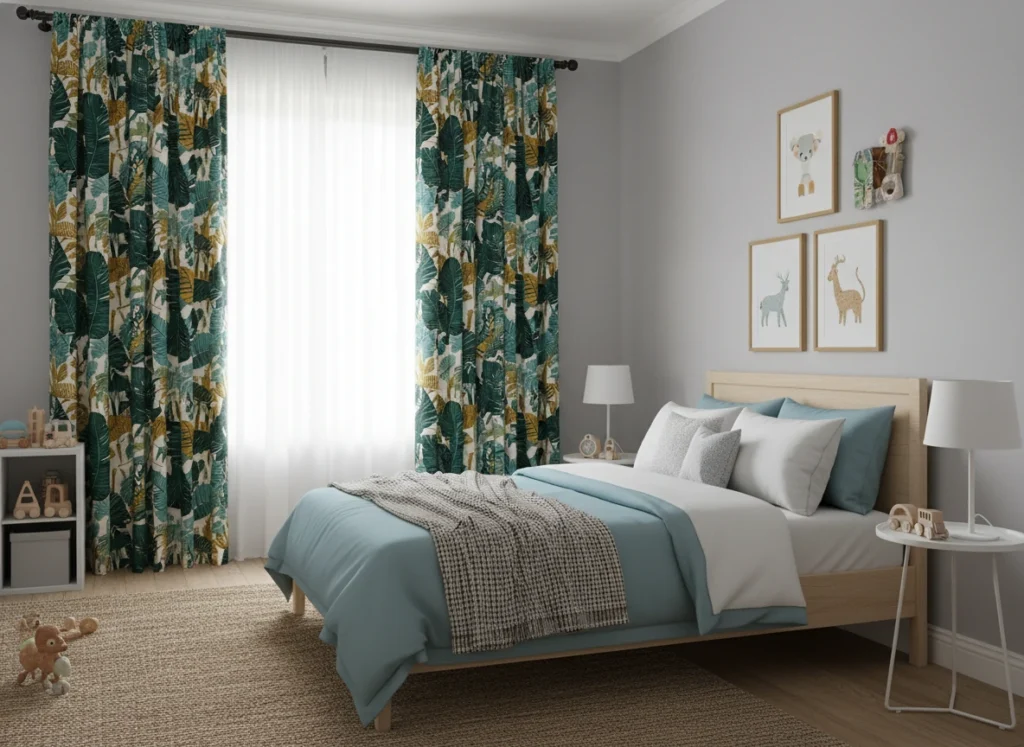
When you’re juggling toys, homework, and snack dishes, keeping decor simple is a small sanity saver. One easy rule is to choose one focal pattern—often on the curtains or the duvet—and let everything else be plainer. In this room, leafy curtains do the talking while the bedding, rug, and walls stay calm and mostly solid.
This approach works brilliantly if you love bold prints but don’t want the room to feel chaotic. Mixed prints can also look great, but they’re trickier: you’ll want to vary the scale (big leaves on the curtains, tiny checks on a blanket, maybe skinny stripes on a cushion) and keep to the same colour family. Too many big, busy patterns together can overwhelm a small kids room.
If you’re unsure, start with just one hero print on the curtains and echo the colours in smaller accents around the room. Once that feels balanced, you can experiment with an extra pattern or two in small doses. That way, you get a playful, layered look without feeling like you live inside a pattern book.
Coordinating colors without being too matchy
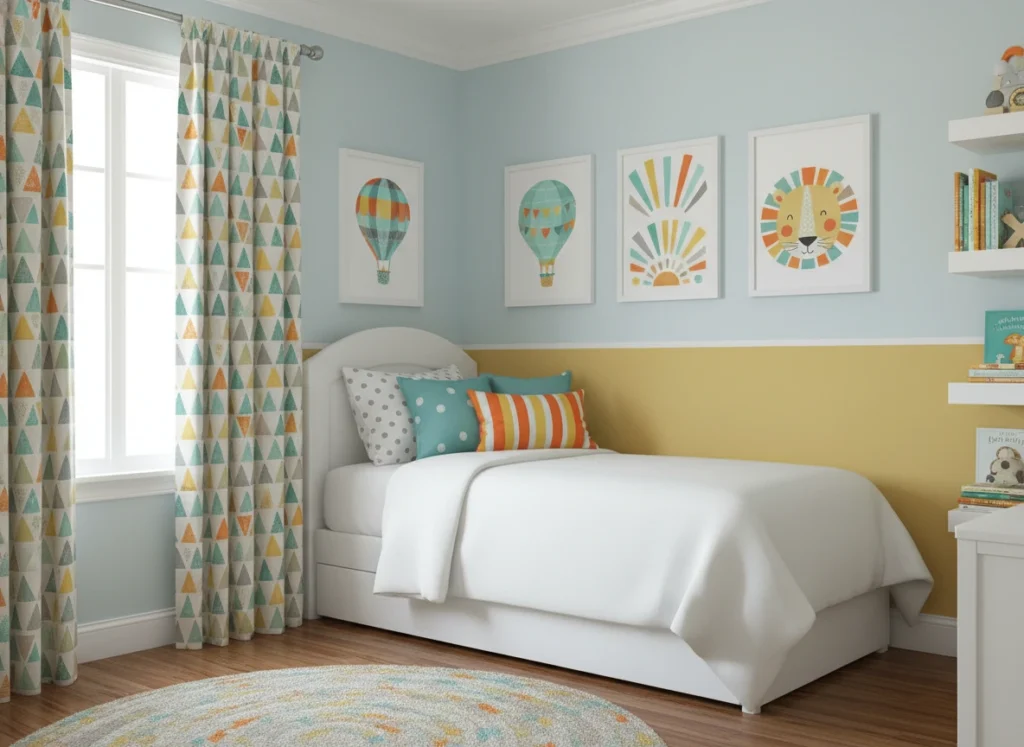
Perfectly matching everything in a kids room can make it feel a bit like a showroom. Coordinating colours instead keeps things lively and relaxed. The idea is simple: choose a small palette—like teal, mustard, and soft grey—and let different pieces share those colours in slightly different ways.
Here, the curtains pick up the same tones as the wall art, rug, and cushions, but nothing is identical. That’s what makes it feel stylish instead of strict. You can mix dots, stripes, and triangles confidently as long as they’re all speaking the same colour language.
If you’re starting from scratch, pick the curtains or rug first, then pull two or three colours out of that pattern for bedding and accessories. If you already have furniture and art, choose curtains that echo one or two existing shades so everything feels gently tied together.
Seasonal switch-ups with curtain accents
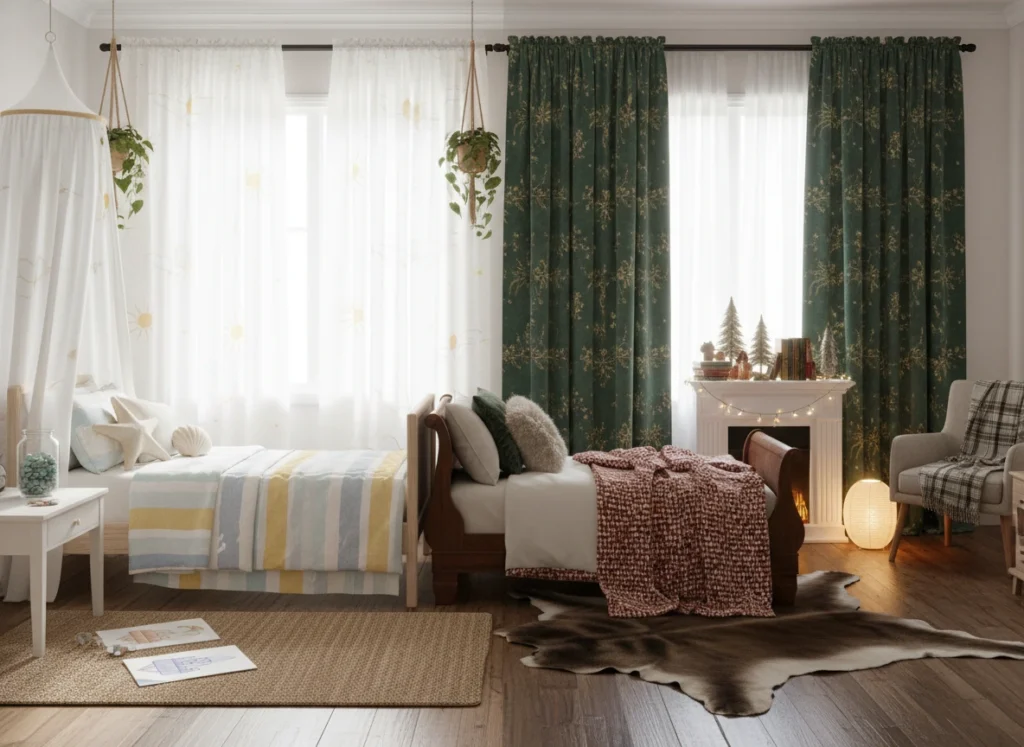
Seasonal curtain tweaks are a fun way to refresh a kids room without repainting or buying all-new bedding. Light, airy sheers with sun or cloud motifs feel perfect for spring and summer, while richer colours and thicker fabrics instantly make the same room feel cosy in autumn and winter. Think of it as giving the room a little “wardrobe change.”
You don’t have to replace everything, either. You can:
- Swap just the outer panels while keeping the same sheers year-round.
- Add seasonal tiebacks (shells, stars, pom-poms) or a matching throw on the bed.
- Rotate in a different rug or a couple of cushions that pick up the new curtain colours.
By storing one extra set of panels in a vacuum bag, you get a fresh look twice a year with minimal effort. Kids love the sense of change, and you get a chance to reset the room, declutter toys, and adjust the overall mood to match the season.
Budget-Friendly & DIY Kids Curtain Ideas
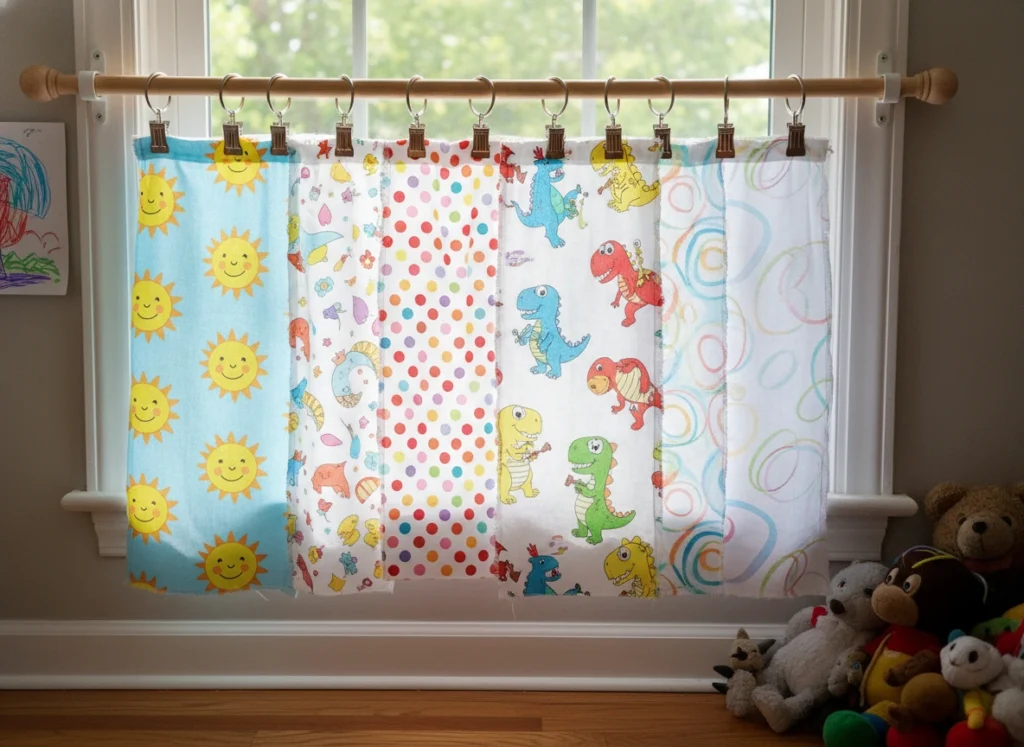
You don’t need a big budget to create kids room curtain ideas that feel cute and personal. A simple rod, clip rings, and a few fun fabrics can turn into cheerful panels in an afternoon. The best part? When your child’s tastes change, you can shuffle pieces around or swap a few strips of fabric instead of starting from scratch.
DIY curtains are also a lovely way to involve kids in their own room design. Let them choose prints—dinosaurs, rainbows, polka dots—and mix them into patchwork-style panels like this. It doesn’t have to be perfect sewing; the charm is in the colour, pattern, and the “we made this together” story.
If you’re renting or just not ready for permanent choices, this approach is ideal. Clip-on panels come down in seconds for washing, and you can reuse the fabric later as cushion covers, bunting, or play-tent sides. It’s creative, flexible, and kind to your wallet.
No-sew curtain hacks with clips and hem tape
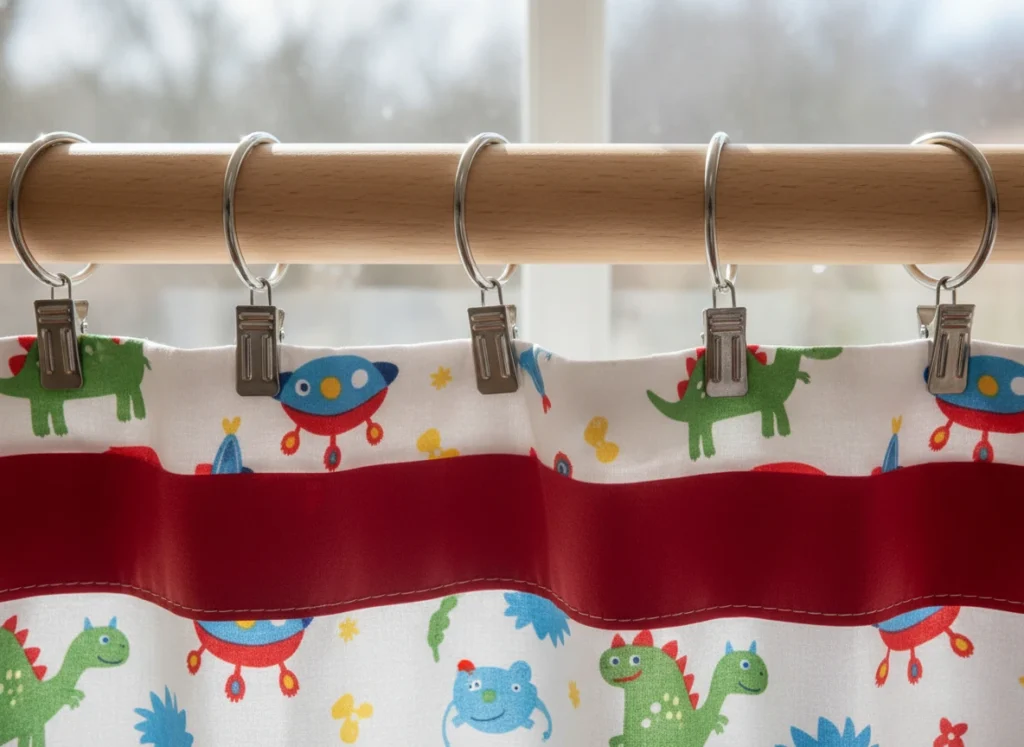
If sewing isn’t your thing (or your machine is permanently “in the shop”), no-sew curtain hacks are a lifesaver. All you need is a rod, clip rings, and fabric that makes you smile—cotton sheets, tablecloths, or even cute tea towels for small windows. Clip, adjust the folds, and boom: instant kids curtains.
Iron-on hem tape takes care of raw edges or wonky lengths. Just fold the fabric to the height you want, sandwich the tape inside, and press with a hot iron according to the instructions. It looks surprisingly finished, and you can redo it later if you move the rod higher or change rooms.
This setup is perfect for renters because you can remove everything in minutes with no permanent changes. It also makes curtain updates ridiculously simple—swap just the clipped panel for a new print when your child moves on from dinosaurs to outer space.
Upcycling sheets or tablecloths into curtains
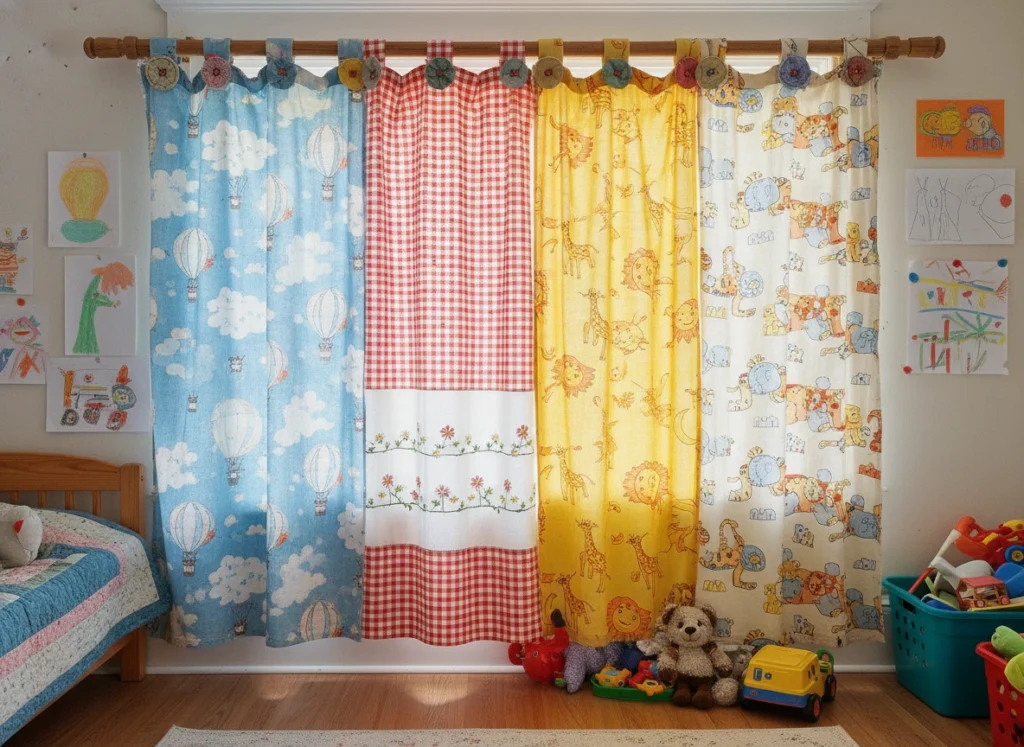
Old bed sheets and tablecloths are secretly fantastic curtain material. They’re already soft, washable, and often come in exactly the fun patterns kids love—clouds, checks, animals, you name it. Upcycling them into curtains saves money, keeps fabric out of landfill, and gives the room a cosy, collected feel.
You can keep things simple: cut (or fold) to length, finish the top with iron-on hem tape, then hang with clip rings or sew on easy tab tops. Mixing a few different prints across the window, like panels from different sheets, creates a playful patchwork look that feels intentional rather than “leftover.”
This is also a clever way to extend the life of favourite bedding your child has outgrown. That beloved lion duvet or balloon sheet can become window panels, a reading-nook curtain, or a storage-covering drape. Your child still gets to enjoy the pattern every day, just in a new, more practical role.
Personalizing plain curtains with patches and fabric paint
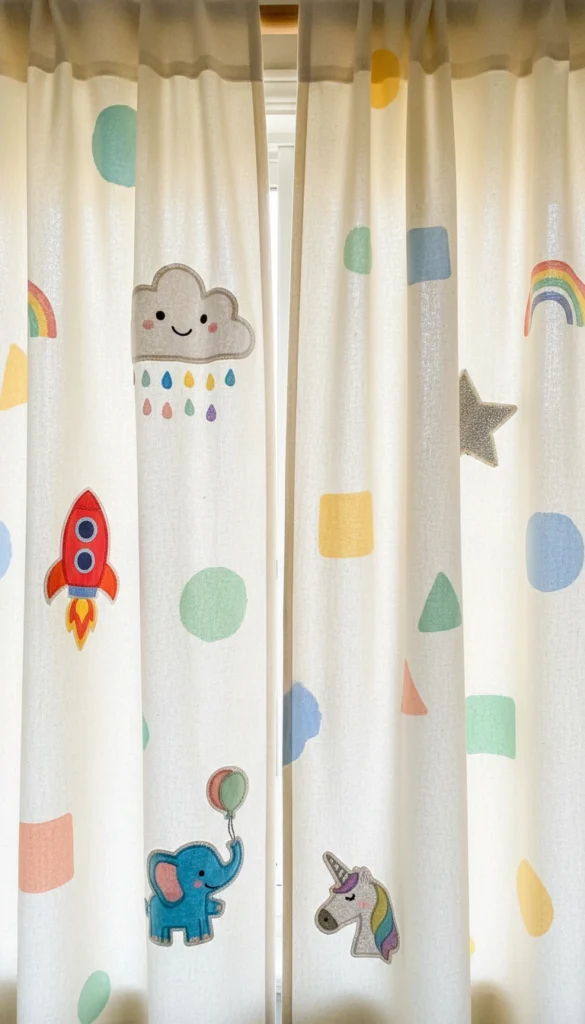
Plain curtains are the perfect blank canvas for a little personality. Iron-on patches, fabric stickers, or simple shapes painted with fabric paint can transform basic panels into something that feels totally custom. Think rockets, unicorns, clouds, and stars sprinkled across the bottom half where kids can see and enjoy them.
The beauty of this idea is that you can start small. Add a few patches now, then let your child choose new ones for birthdays or milestones. If you keep the background neutral, the overall look stays calm while the little motifs bring in colour and fun—very “cute and practical” all at once.
For an easy project:
- Wash and iron the curtains first so patches stick properly.
- Arrange everything on the floor before you commit, keeping designs mostly below mid-height so they’re visible but not overwhelming.
- Use iron-on backing or fabric glue according to instructions, then finish with a gentle press from the iron to seal.
It’s a low-pressure way to refresh kids room curtain ideas over time, and if tastes change, you can always layer new patches over old ones or retire a panel to the playroom.
How to Choose the Right Curtains for Your Child
Start with how the room is used
Before falling for a pattern, think about how the room actually works day to day. Is it a nursery where naps are sacred, a play-heavy toddler zone, or a teen cave with a study corner? The more roles the room has, the more you’ll benefit from layered curtains that can switch between bright, soft, and dark.
Make a quick list of must-haves—blackout for naps, privacy from neighbours, easy wash, or sound-softening fabric. Use that list as your filter while you browse cute kids room curtain ideas so you’re not swayed by something that looks great but doesn’t fit real life.
Layer for flexibility, not perfection
One set of curtains rarely does everything perfectly. Instead, aim for simple layers: maybe a roller blind plus pretty side panels, or sheers plus blackout drapes. This gives you options as your child grows, without replacing the whole setup.
If you’re on a budget, invest in the practical base layer first (like a good blackout blind), then add more decorative, inexpensive panels on top. It’s easier to swap the “pretty” layer later when tastes change, while the functional layer quietly keeps doing its job.
Let your child have a say (within boundaries)
Kids feel proud when they help choose their space, and curtains are a great place to give them some control. Offer two or three parent-approved options rather than the entire internet, and let them pick the favourite. That way, you stay in charge of safety, budget, and practicality, while they get a real say in the style.
For younger kids, steer choices towards themes that can grow—stars, clouds, stripes, animals—rather than super-specific shows or characters. Older kids and teens might enjoy adding their own touches later, like fairy lights, clip-on photos, or small DIY patches.
When to splurge vs. when to save
Some curtain decisions are worth a little extra, and others are perfect for budget or DIY solutions. As a rule, splurge on hardware and anything safety-related: strong rods, secure brackets, cordless systems, and quality blackout linings. Those parts affect how the whole window works every single day.
You can save on the visible fabric, especially in fast-changing stages like toddler and tween years. That’s where DIY kids room curtain ideas, upcycled sheets, or inexpensive ready-made panels are ideal. When your child finally settles into a long-term style, you can upgrade to higher-end fabric knowing it will be loved for years.
Wrapping Up: Cute Curtains, Happier Kids
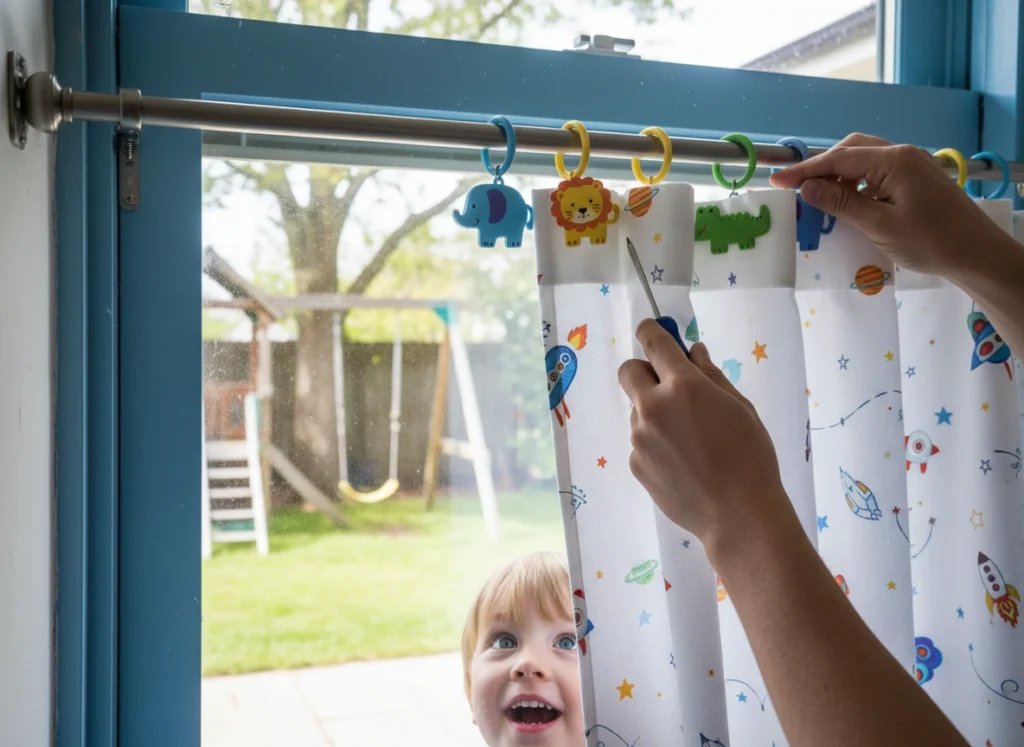
If you take only one thing away, let it be this: curtains are working furniture, not just decoration. The cutest print in the world won’t feel so charming at 5:12 a.m. in summer if it doesn’t block any light. Start with how the room is used, layer for flexibility, and then have fun with colour, pattern, and texture.
You can go whimsical in nurseries, playful and hardy in toddler rooms, and calm and cool in teen spaces—all while keeping cords safe, fabrics washable, and rods secure. Smart tricks like extra-wide panels to hide storage, blackout linings with fun prints, and DIY clip-on curtains mean you don’t need a huge budget to get a polished look.
Most of all, let your child have a little say, whether that’s picking a pattern, choosing patches, or helping clip panels onto the rod. When kids feel proud of their space, they’re more likely to care for it—and you get to enjoy a room that’s not only cute in photos, but genuinely works in everyday life.
Other Articles