


How to Divide a Studio Apartment Without Making It Feel Small
Living in a studio doesn’t mean giving up comfort, privacy, or style. With the right separation ideas, a single room can feel like a collection of purposeful spaces rather than one open box. The goal isn’t to hide square footage—it’s to organize it in a way that feels natural, functional, and easy to live in. Whether you want subtle boundaries or clearly defined zones, smart separation can completely transform how your space works day to day.
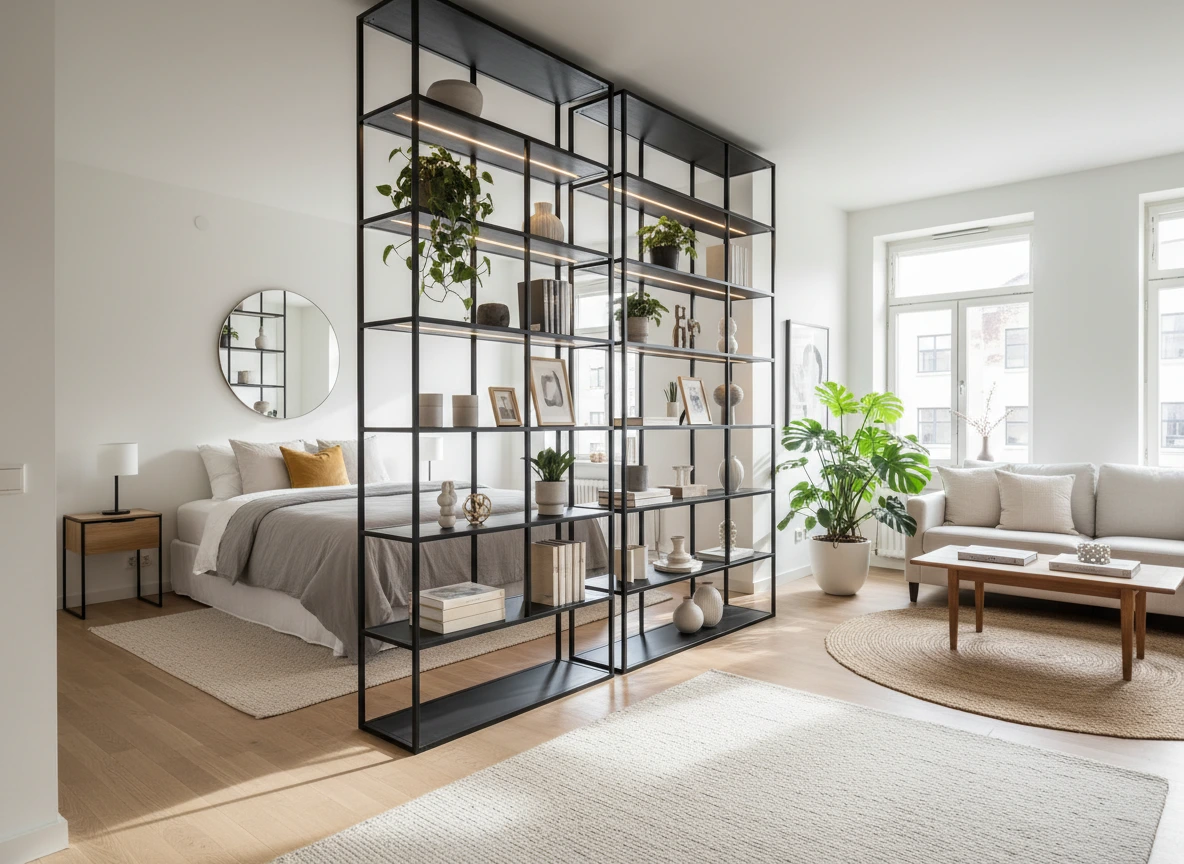
Use a Bookcase as a Functional Room Divider

A tall, open-backed bookcase is one of the easiest ways to separate a studio without making it feel boxed in. It creates a clear boundary between sleeping and living areas while still letting light move through the space. The bonus? You gain serious storage without adding clutter.
How to make it work well:
- Choose a unit that’s open on both sides to keep the space airy.
- Mix books with a few decorative pieces so it feels intentional, not crammed.
- Anchor the layout by aligning the bed or sofa directly against the divider.
- Keep heavier items on lower shelves for stability and safety.
This approach works especially well if you want visual separation without committing to permanent walls or major renovations.
Create Soft Separation With Ceiling-Mounted Curtains

Curtains are one of the most flexible ways to divide a studio without committing to walls or bulky furniture. They create privacy when you need it and disappear when you don’t, making the space feel adaptable rather than cramped.
How to use this approach effectively:
- Install a ceiling-mounted curtain track to keep the look clean and intentional.
- Choose light, semi-sheer fabric to maintain brightness while softening boundaries.
- Let the curtains fall just above the floor for a polished, hotel-like feel.
- Stick to neutral tones so the separation feels calm, not heavy.
This setup works especially well if your layout needs to shift between daytime and nighttime use without rearranging furniture.
Frame the Sleeping Area With a Built-In Look
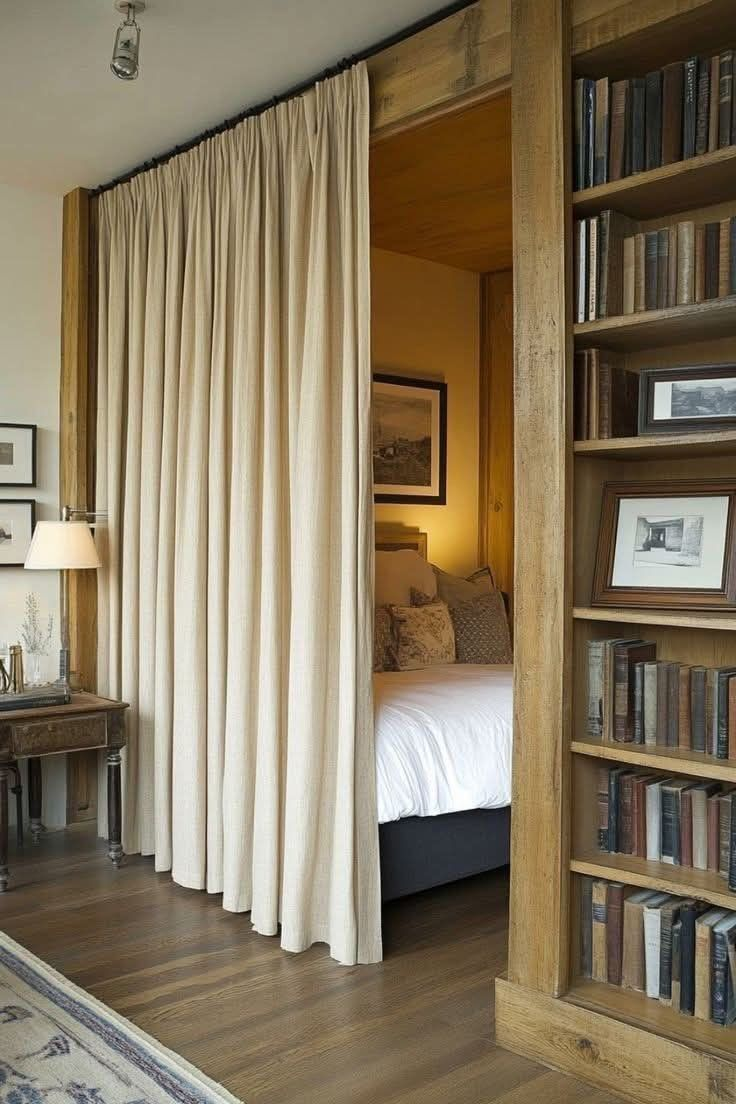
Using architectural framing paired with soft curtains creates a cozy, intentional sleeping zone without closing off the room. This approach gives structure while still keeping the space flexible and breathable.
How to apply this idea well:
- Use wood framing or shelving to visually anchor the sleeping area.
- Add floor-to-ceiling curtains to soften edges and control privacy.
- Stick to warm, natural finishes so the space feels calm rather than boxed in.
- Keep lighting warm and layered to avoid a boxed-in feeling at night.
This setup works especially well when you want separation that feels permanent but still adaptable.
Use Partial Walls to Define Zones Without Closing Them Off

A half-height or partial wall creates a clear sense of separation while keeping the space open and breathable. It gives structure to a studio without blocking light or making the room feel smaller.
How to make this work smoothly:
- Keep the divider low or open at the top to preserve visual flow.
- Add built-in shelving to double its function without adding bulk.
- Use the same color palette on both sides so the space feels connected.
- Position furniture so each zone feels intentional, not accidental.
This solution is ideal when you want a defined sleeping area but still want the apartment to feel spacious and cohesive.
Build a Storage Wall That Doubles as a Divider
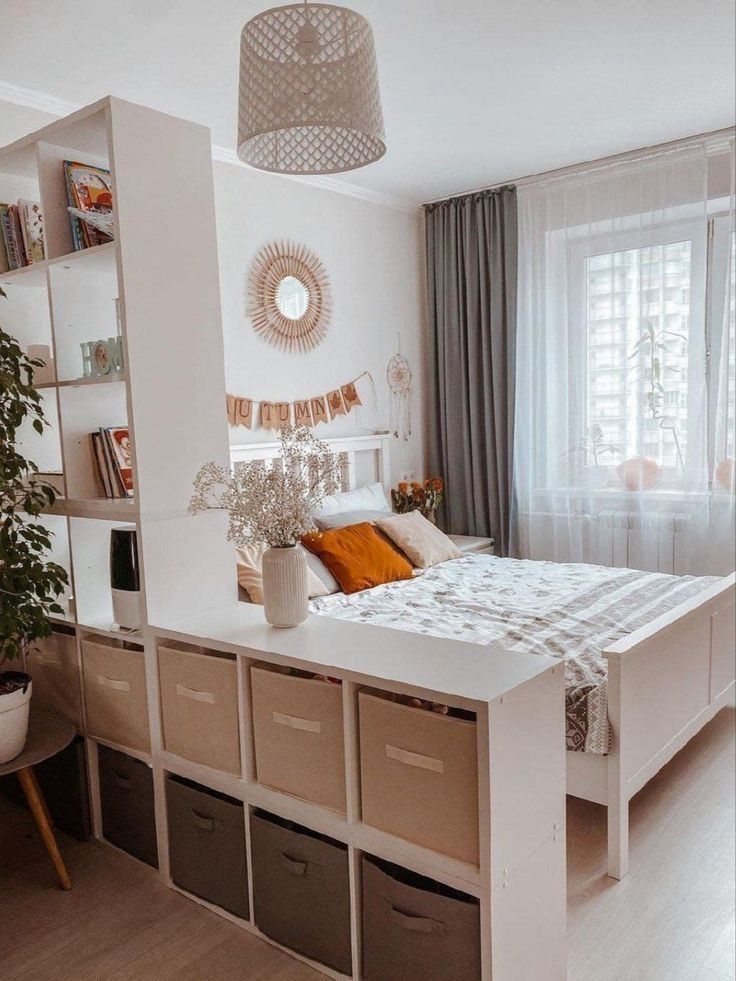
A low, solid storage unit can quietly separate zones while solving one of the biggest studio problems: where to put everything. This approach creates structure without closing off light or making the space feel tight.
How to make it work:
- Use cube or drawer-style storage to hide clutter and keep the look clean.
- Keep the height just below mattress level to maintain openness.
- Choose light or neutral finishes so the divider blends instead of dominates.
- Style the top surface with a few calm accents to soften the structure.
This setup works especially well if you want your sleeping area to feel grounded while maximizing storage efficiency.
Use Folding Screens for Flexible, Low-Commitment Separation
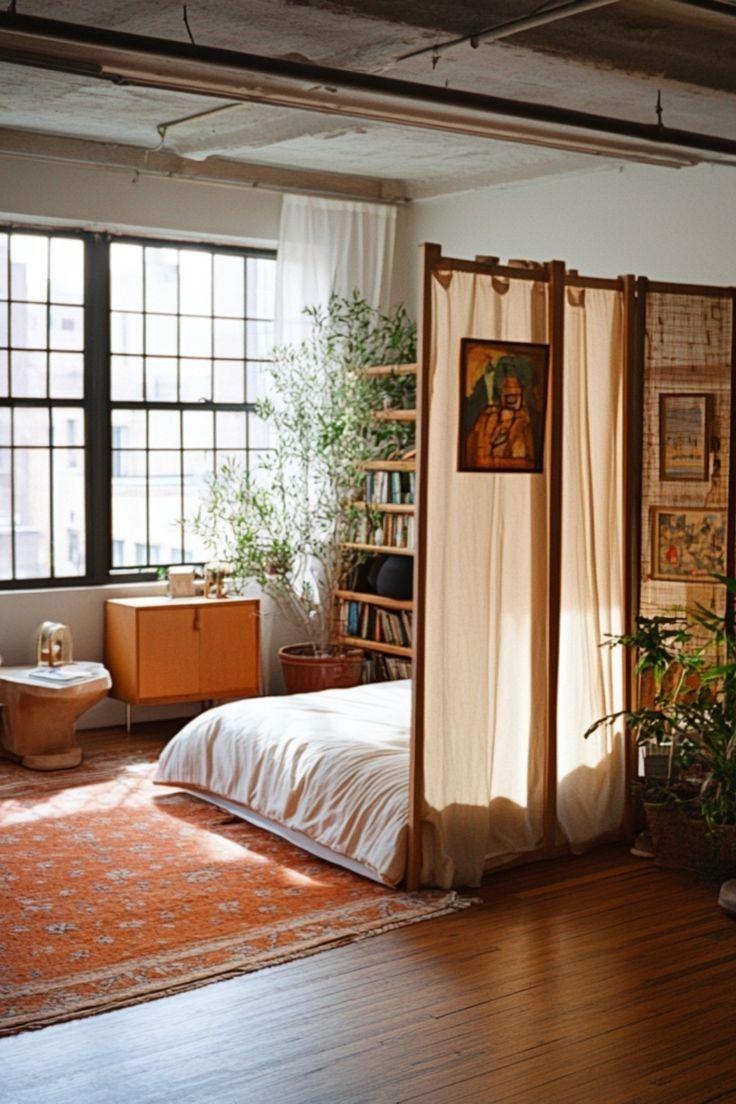
A folding screen is one of the easiest ways to create visual privacy without changing your layout or committing to construction. It adds character while letting you reshape the space whenever your needs change.
How to make this option work best:
- Choose lightweight panels that are easy to move or tuck away.
- Look for natural materials like wood, fabric, or woven textures to keep things warm and relaxed.
- Position the screen to block sightlines rather than fully enclose the bed.
- Pair it with plants or soft lighting to make the separation feel intentional, not temporary.
This approach is ideal if you like flexibility or tend to refresh your layout often.
Divide Space With a Full-Height Open Shelf Wall
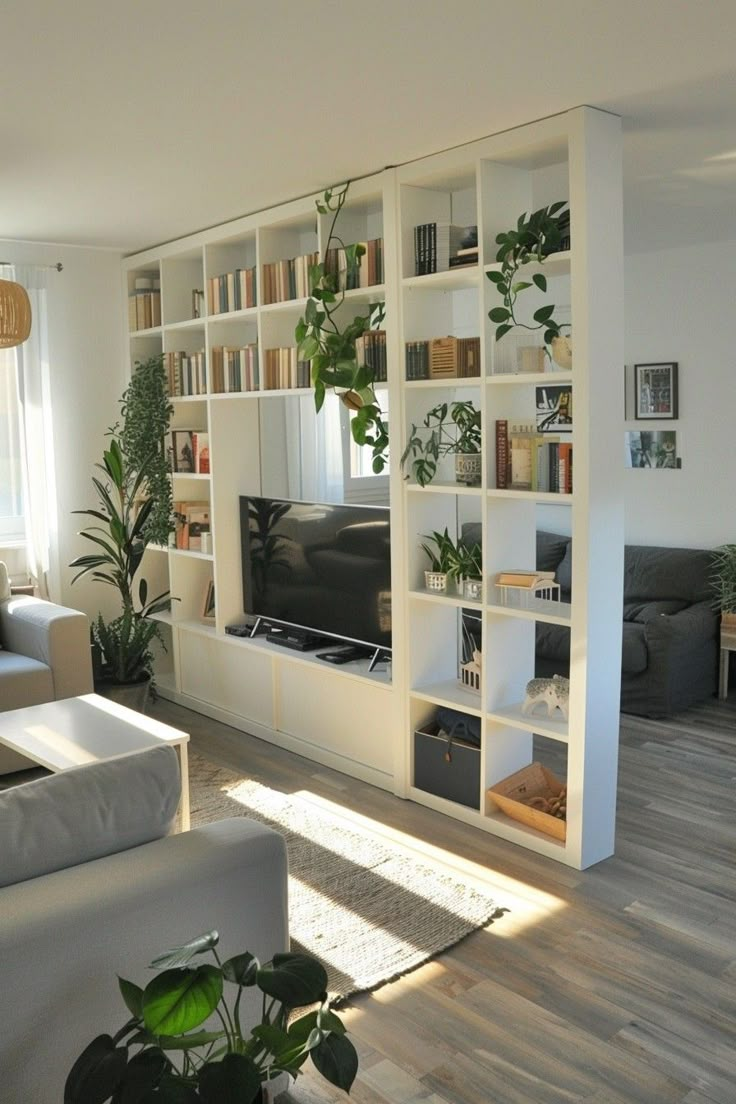
A full-height shelving unit creates strong separation while keeping the room visually open and functional. It works especially well when you want clear zones without losing light, airflow, or flexibility.
How to make this setup work smoothly:
- Use open shelving on both sides so the divider serves multiple areas at once.
- Mix books, plants, and closed storage to avoid visual clutter.
- Place heavier items lower to keep the structure balanced and grounded.
- Let light pass through by leaving some sections intentionally open.
This approach is ideal when you want a defined living area without sacrificing brightness or a sense of flow.
Use Slatted Panels for Light, Airy Separation
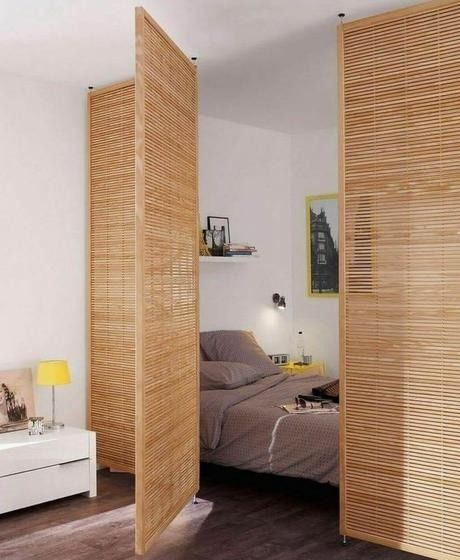
Vertical slatted panels offer privacy without fully blocking light or airflow. They create a strong visual boundary while keeping the space feeling open and breathable.
How to use this idea effectively:
- Choose wood or wood-look slats for warmth and texture.
- Leave small gaps between slats to avoid a boxed-in feeling.
- Mount panels from floor to ceiling for a clean, architectural look.
- Pair with soft lighting to create a calm, hotel-like atmosphere.
This option works beautifully when you want structure without heaviness and a design that still feels modern and intentional.
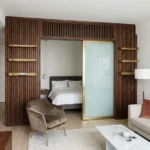
Combine Storage and Sliding Panels for Flexible Privacy
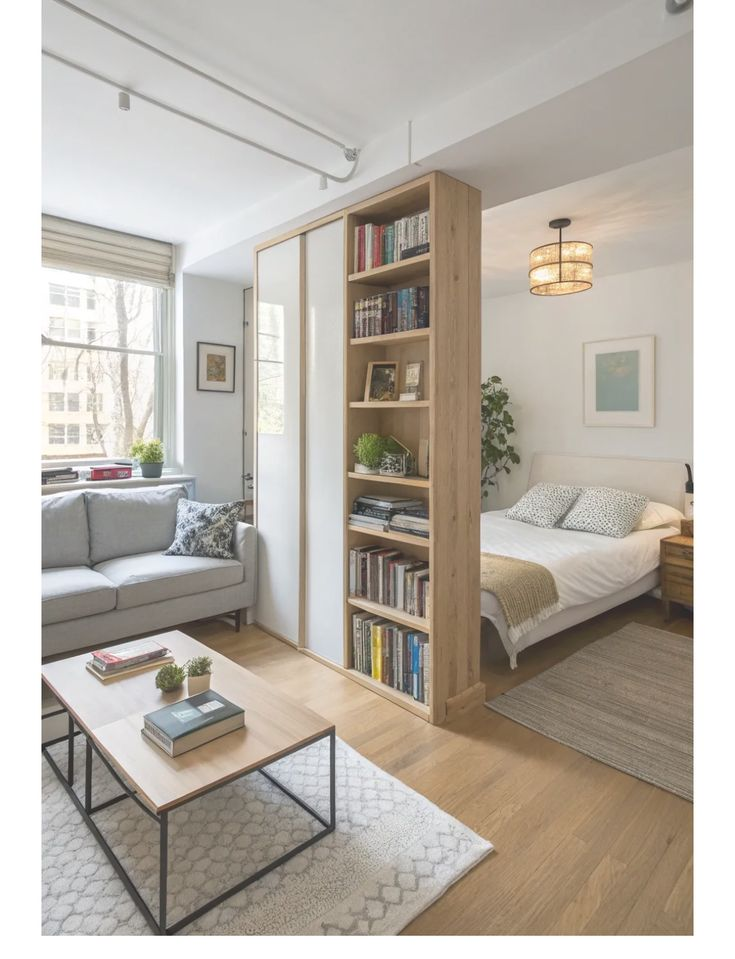
This setup blends built-in shelving with sliding panels to create a clean, adaptable division between zones. It gives you the option to open or close the space depending on mood, time of day, or activity.
How to make this work smoothly:
- Use sliding panels instead of hinged doors to save floor space.
- Pair solid surfaces with open shelving to balance privacy and openness.
- Keep finishes light and neutral so the divider feels integrated, not bulky.
- Add soft lighting on both sides to maintain warmth when the space is closed off.
This approach is ideal if you want separation without sacrificing flow or natural light.
Soften Separation With Curtains and Lighting Layers
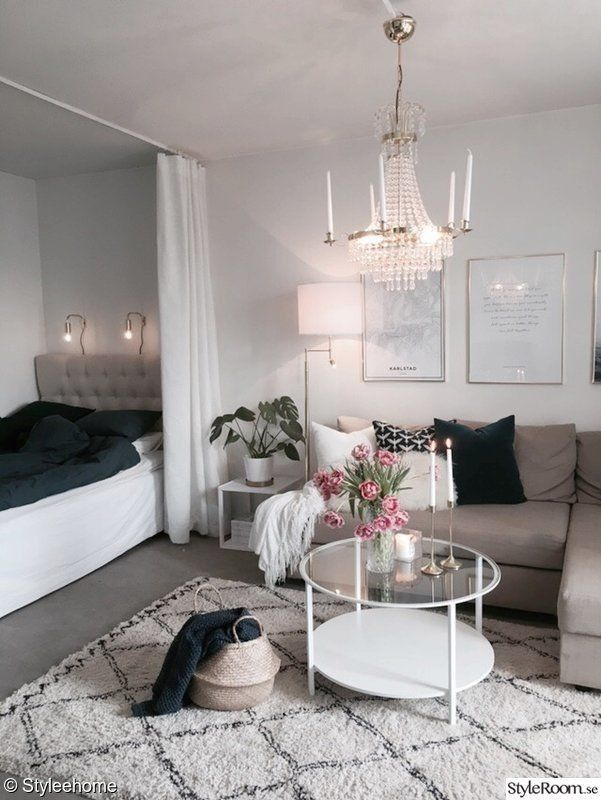
Soft curtains paired with thoughtful lighting create a gentle boundary that feels calm rather than closed off. This approach works especially well when you want the sleeping area to feel private without losing the cozy flow of the space.
How to make this setup feel intentional:
- Use floor-to-ceiling curtains in light fabrics to keep things airy.
- Add layered lighting—a mix of overhead, task, and ambient—to define each zone.
- Keep the color palette cohesive so the space reads as one calm environment.
- Let soft textures (rugs, throws, cushions) help visually separate zones without walls.
This method is perfect if you want a relaxed, hotel-like atmosphere with flexible privacy.
Create Separation With Framed Glass Panels
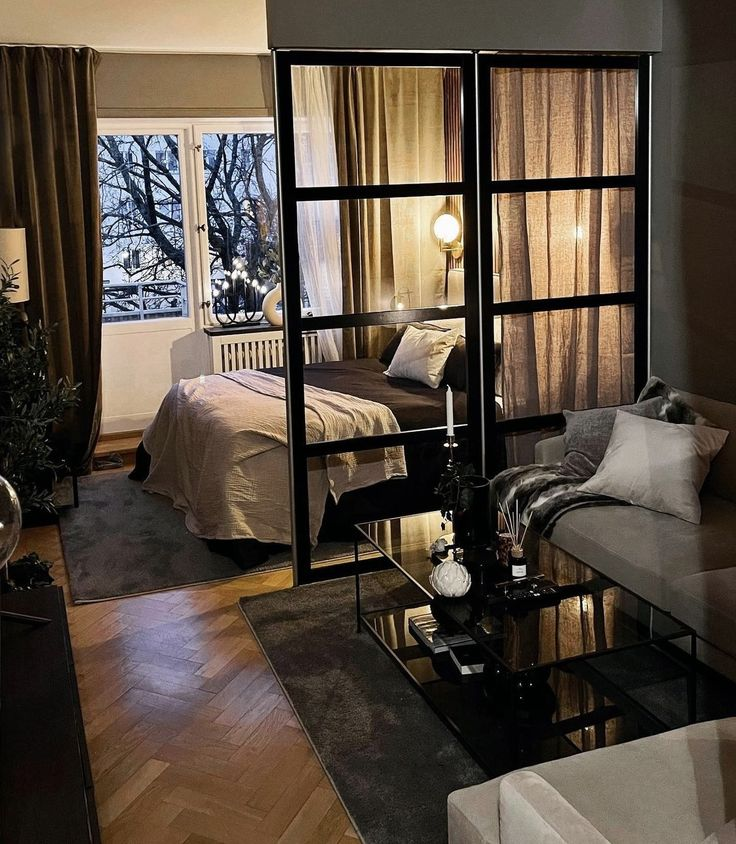
Framed glass panels offer a clean, modern way to divide a studio while keeping light flowing freely. They provide strong visual separation without making the space feel closed or heavy.
How to use this setup effectively:
- Choose black or dark frames for contrast and structure.
- Pair glass panels with curtains for adjustable privacy when needed.
- Use warm lighting inside the sleeping area to soften the industrial edge.
- Keep surrounding furniture minimal so the divider becomes the focal point.
This solution works beautifully if you want clear zoning with a modern, architectural feel.
Use a Low Divider to Create Gentle Separation
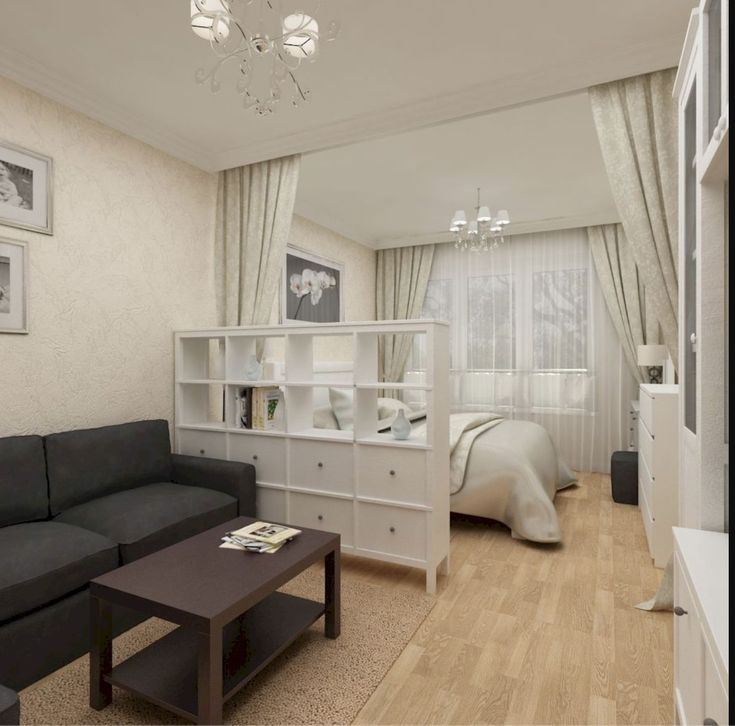
A low divider offers structure without interrupting sightlines or light flow. It subtly defines zones while keeping the space feeling open, calm, and balanced.
How to make this approach work well:
- Choose a divider with open cubbies or partial backing to avoid visual heaviness.
- Keep the height below eye level so the room still feels expansive.
- Use soft, neutral finishes to blend seamlessly with the rest of the space.
- Style the top lightly so it feels intentional, not crowded.
This option is ideal if you want separation that feels effortless and visually light.
Mix Open Shelving With Slatted Screens for Layered Separation
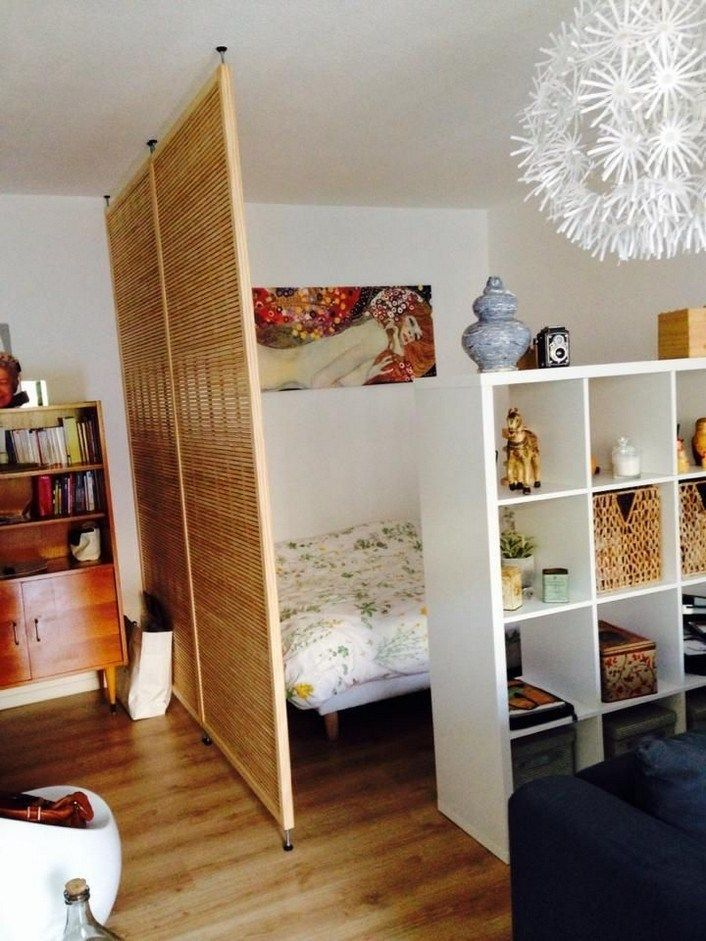
Combining open shelving with a slatted divider creates depth without making a studio feel boxed in. This layered approach adds function, texture, and visual interest while keeping the layout flexible.
How to make this setup work well:
- Use slatted panels to softly shield the sleeping area while allowing airflow.
- Pair them with open shelving to store everyday items and decorative accents.
- Keep materials light or natural to prevent visual heaviness.
- Let each zone feel distinct without cutting off movement or light.
This combination is ideal if you want privacy without sacrificing personality or openness.
Use Sliding Barn Doors for a Clean, Flexible Divide

Sliding barn-style doors are a smart way to separate a studio while keeping things visually light and functional. They give you privacy when you want it and disappear neatly when you don’t.
How to make this setup work smoothly:
- Choose glass-paneled or partially transparent doors to maintain light flow.
- Mount the track high to draw the eye upward and make ceilings feel taller.
- Keep the surrounding palette soft so the doors feel like part of the architecture.
- Use minimal hardware to avoid visual clutter.
This option works especially well when you want a defined bedroom feel without permanently closing off the space.
Use Ceiling-Mounted Curtain Tracks for Seamless Zoning
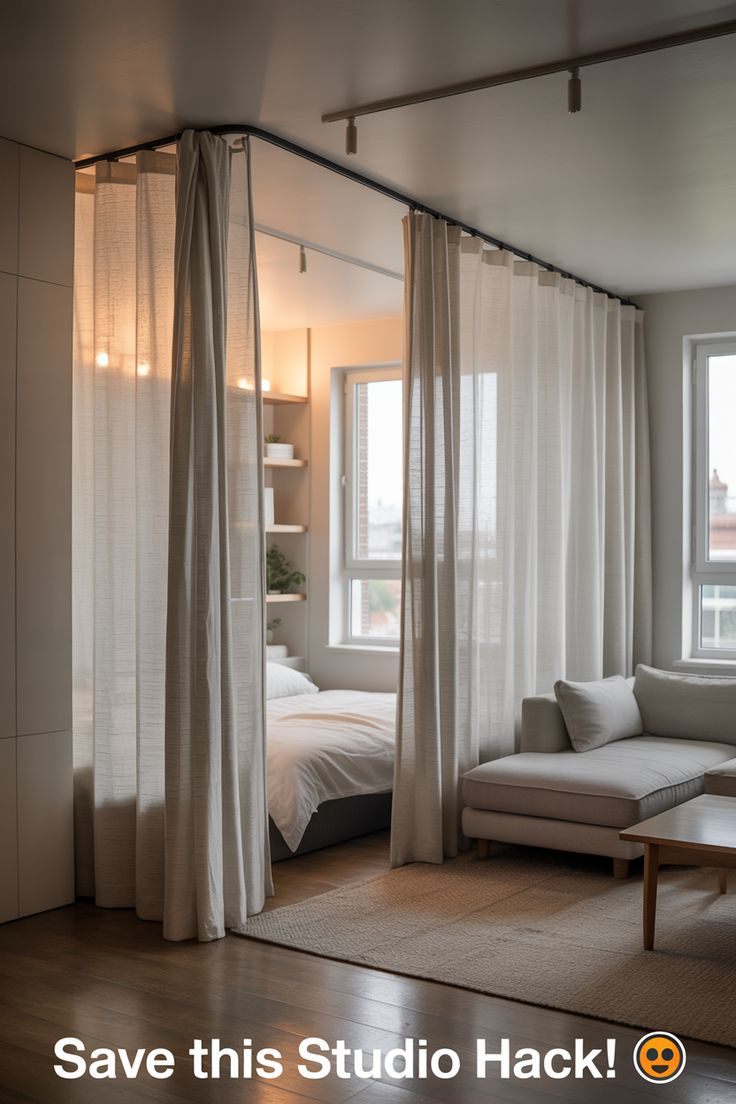
Ceiling-mounted curtain tracks create one of the cleanest and most flexible ways to divide a studio. They feel intentional, architectural, and soft at the same time—perfect for separating sleep and living zones without visual heaviness.
How to make this setup work beautifully:
- Install ceiling-mounted tracks to avoid breaking vertical lines.
- Choose sheer or lightly textured curtains to let natural light filter through.
- Run the track beyond the bed area so curtains can fully open when not needed.
- Use warm lighting near the bed to keep the space cozy when closed off.
This solution is ideal when you want privacy without committing to permanent walls or bulky dividers.
Use Open Shelving as a Soft, Functional Divider
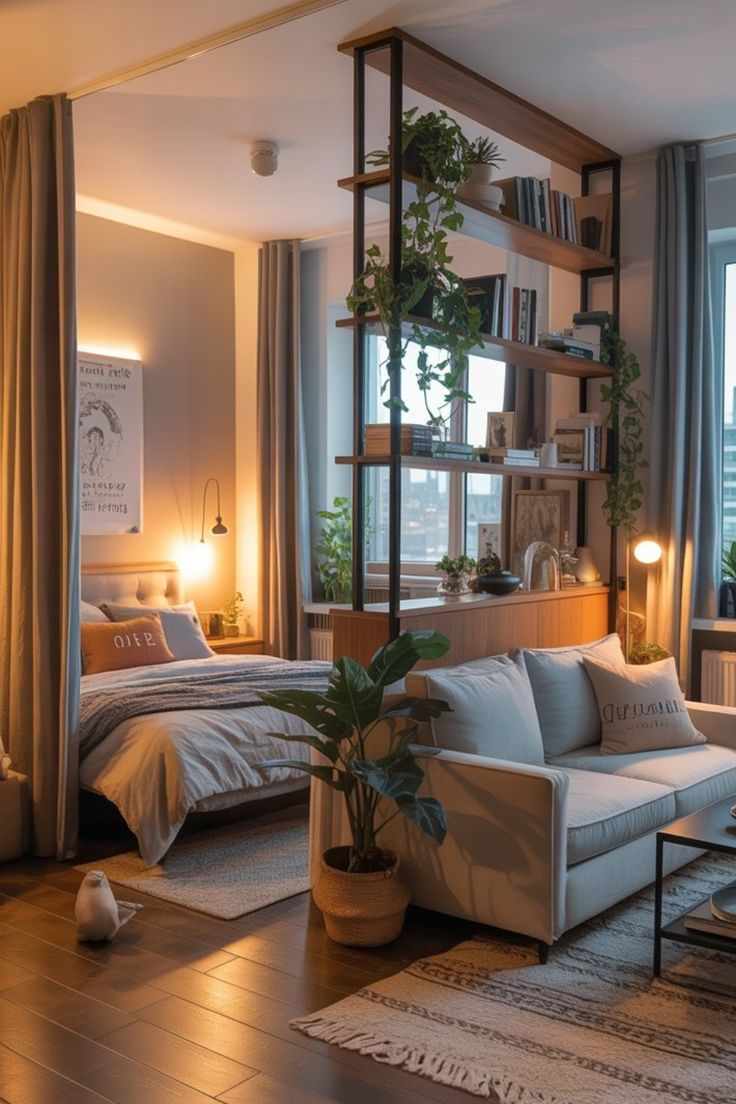
An open shelving unit creates a natural separation while keeping the space airy and connected. It works especially well when you want storage, greenery, and visual interest all in one clean structure.
How to make this approach work well:
- Use open shelves with varied spacing to avoid visual heaviness.
- Mix books, plants, and decor so the divider feels lived-in rather than rigid.
- Anchor the shelving with a low cabinet or sofa to keep the layout grounded.
- Let natural light pass through to maintain a bright, open feel.
This solution is perfect for studios that need structure without sacrificing warmth or flow.
Final Thoughts on Separating a Studio Apartment
Creating separation in a studio isn’t about building walls — it’s about shaping how the space feels and functions. The right divider can add privacy, improve flow, and make your home feel thoughtfully designed rather than cramped. Whether you lean toward curtains, shelving, sliding panels, or architectural dividers, the key is choosing something that supports how you actually live.
Smart separation brings balance: openness where you want it, privacy where you need it, and comfort everywhere in between. When done well, even the smallest studio can feel intentional, calm, and surprisingly spacious.
Other Articles
15 Aesthetic Dorm Room Ideas That Feel Cozy & Stylish
21 Studio Apartment Separation Ideas That Look Expensive
No Comment! Be the first one.