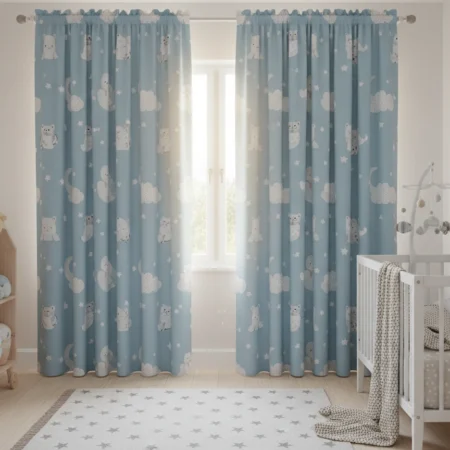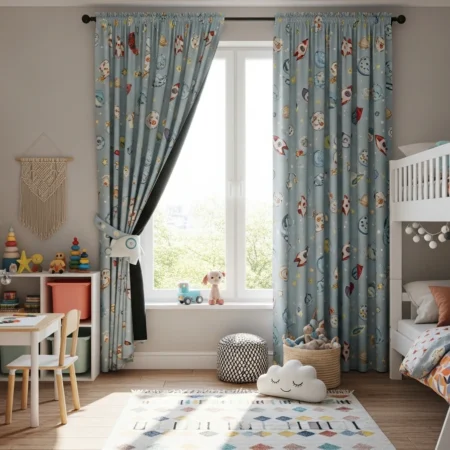


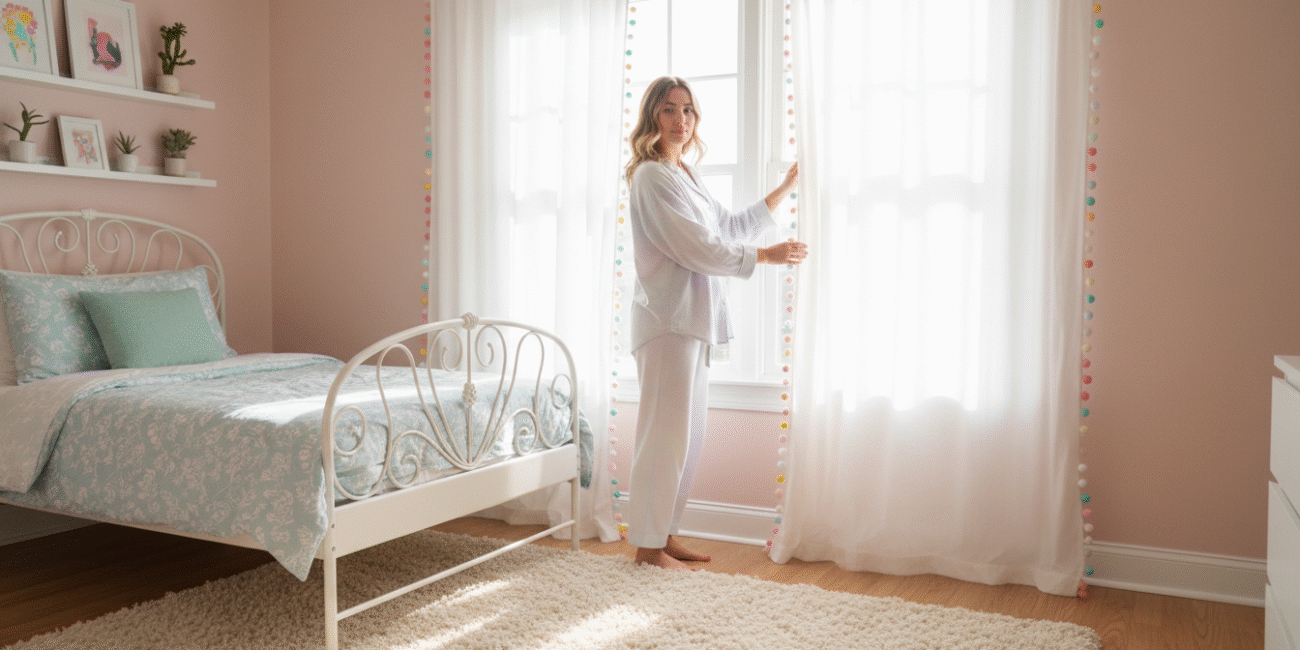
Updating a girl’s bedroom often calls for custom window treatments, but sewing machines can be intimidating. You can create stunning, professional-looking curtains without a single stitch. Using simple materials like bonding tape, glue, or creative knotting techniques saves time and money. These DIY no-sew curtain ideas offer style, personality, and function for any age, from toddlers to teens.
Ribbon Tie Top Panels
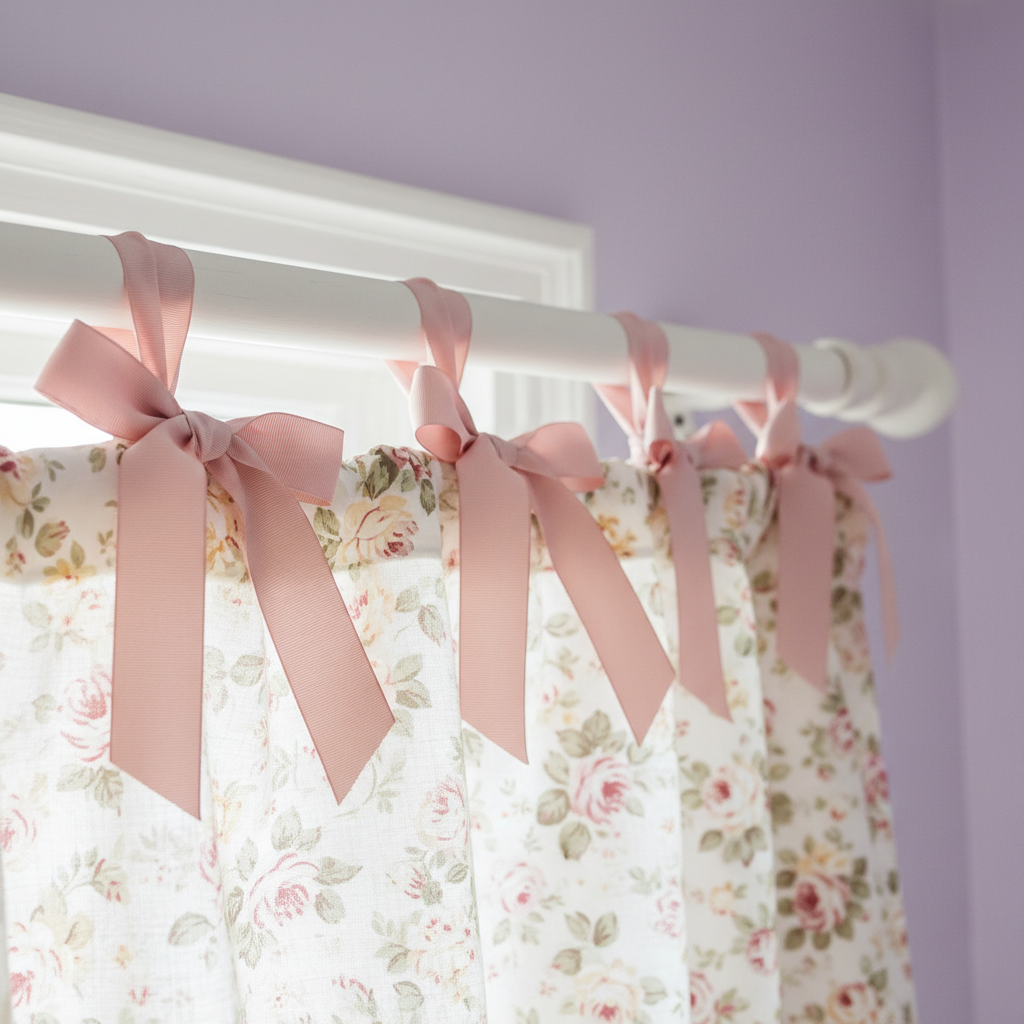
Ribbon ties add a whimsical, soft touch perfect for a dreamy bedroom theme. Instead of a rod pocket, ribbons attach to the top of the fabric and tie directly onto the curtain rod. This method allows for adjustable length and introduces a secondary color or texture to the window design. It creates a relaxed, cottage-core vibe that feels custom-made.
Consider these steps for a secure hold:
- Cut small slits along the top hem to feed the ribbon through, or use fabric glue to attach them to the back.
- Select wide grosgrain ribbon to ensure the bows hold their shape and don’t slip.
- Space ties evenly every 5 to 7 inches to prevent the fabric from sagging in the middle.
- Double knot the bows for safety, especially in younger children’s rooms.
This style looks particularly charming when the ribbons contrast with the main fabric.
Iron On Hem Tape Classics
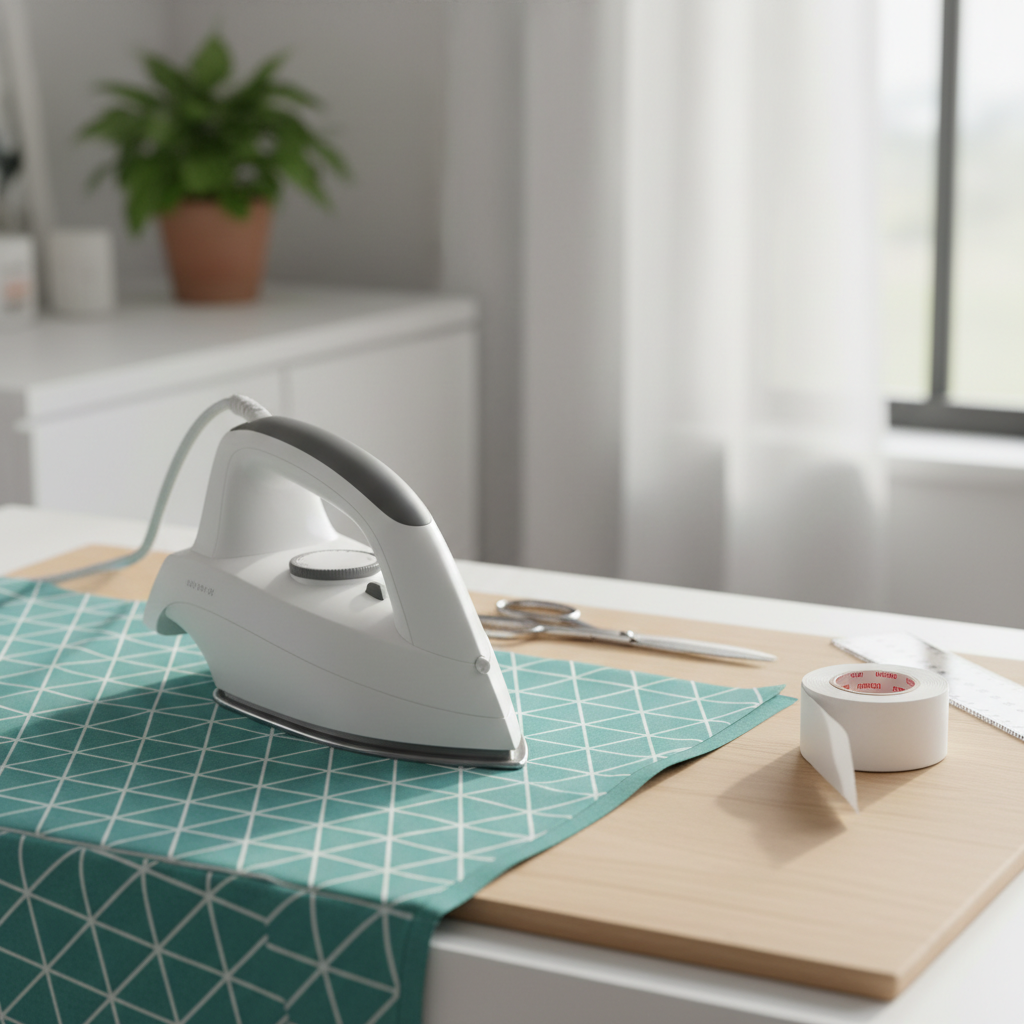
Iron-on fusible bonding tape is the gold standard for no-sew projects. It creates a crisp, clean edge that mimics professional stitching perfectly. You essentially sandwich the tape between the folded fabric layers and apply heat to melt the adhesive. This works beautifully for hemming store-bought curtains that are too long or creating panels from raw fabric yardage.
Keep these application tips in mind:
- Wash and dry fabric before starting to remove sizing, which can prevent the glue from adhering.
- Use a damp cloth between the iron and the fabric to generate steam for a stronger bond.
- Measure twice before ironing, as the bond is very difficult to reverse once set.
- Select heavyweight tape for thicker fabrics like canvas or blackout material.
The result is a polished, durable hem that stands up to regular use.
Clip Ring Drapery
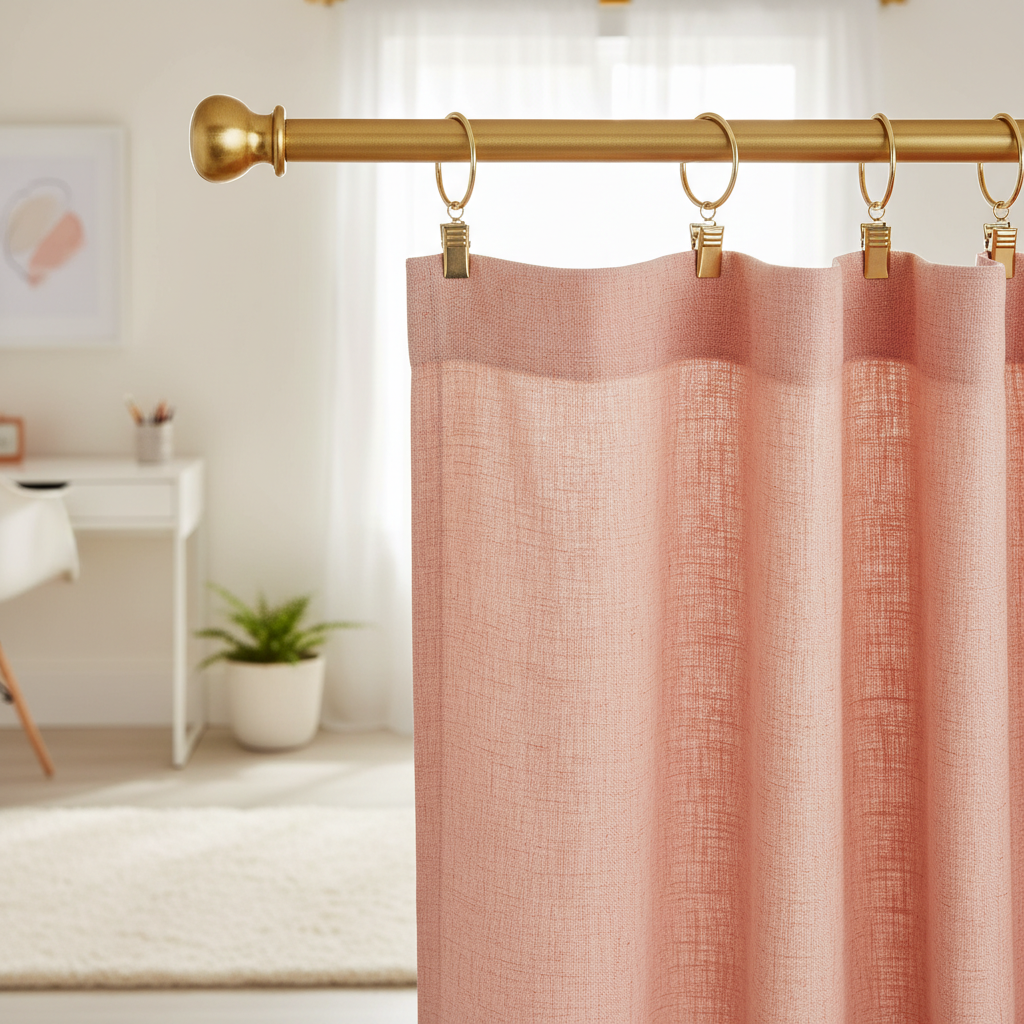
Clip rings offer the fastest transformation from a piece of fabric to a functional curtain. You simply clip the metal rings onto the top edge of your chosen material and slide them onto the rod. This technique creates a modern, industrial-chic look and makes opening and closing the curtains incredibly smooth. It allows you to use almost any hemmed fabric, including tablecloths or flat sheets.
Focus on these details for a high-end look:
- Fold the top edge over before clipping to add weight and structure to the drape.
- Space clips consistently to create uniform folds and pleats when the curtain is open.
- Match the ring finish to your curtain rod for a cohesive visual flow.
- Use pinch pleat hacks by gathering fabric before clipping to mimic expensive tailoring.
Changing the fabric out is effortless, making room updates a breeze.
Knotted Tulle Fairy Layers
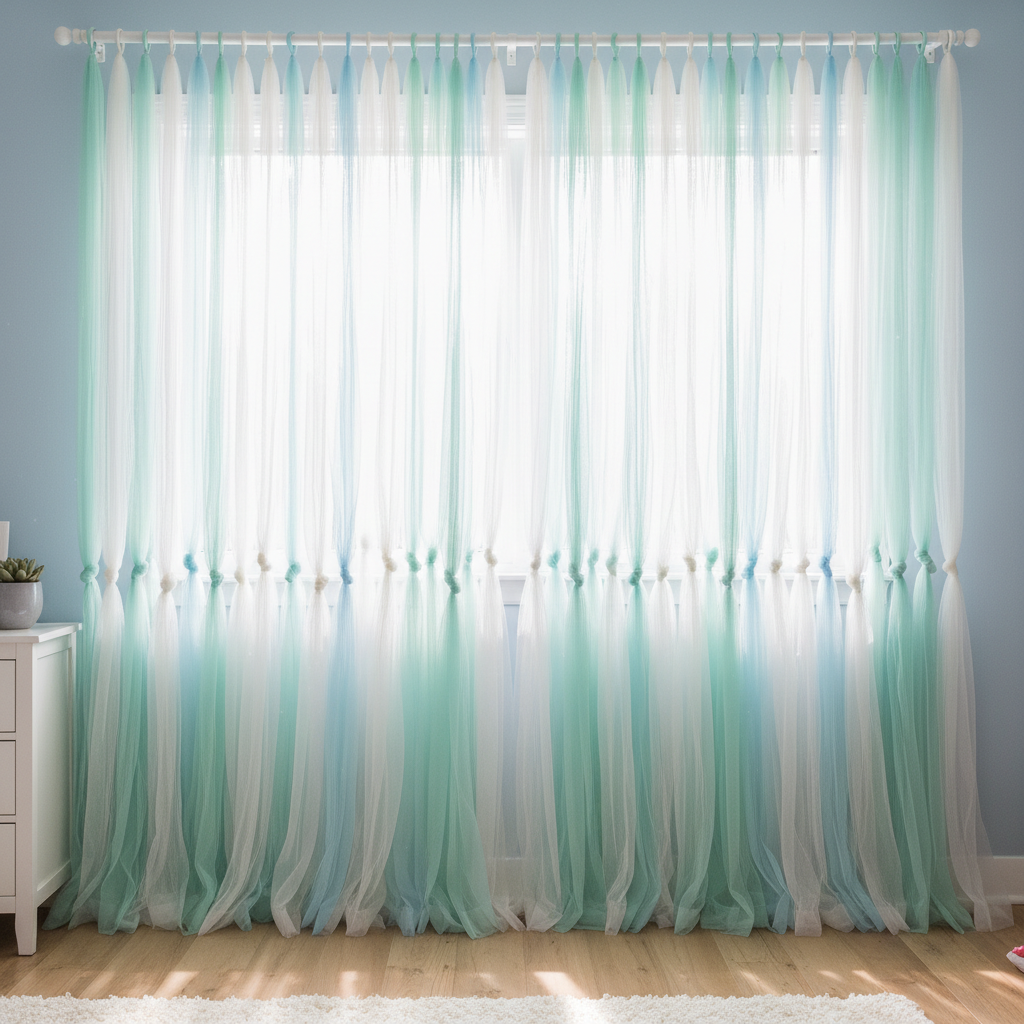
Tulle curtains bring an ethereal, princess-like quality to a bedroom without blocking natural light. This method involves looping strips of tulle directly over the curtain rod using a lark’s head knot. No cutting or hemming is required beyond sizing the strips, making it safe and easy for kids to help. Mixing colors creates a custom rainbow or ombre effect that acts as a stunning focal point.
Try these variations for maximum impact:
- Layer different shades of pink, purple, and white for a dimensional, magical appearance.
- Mix in satin ribbons or lace strips among the tulle for added texture diversity.
- Cut strips double the length of the desired window height since you fold them in half to knot.
- Add fairy lights behind the tulle layers to create a glowing nightlight effect.
The finished look is voluminous and full of movement.
Fabric Glue Pom Pom Trim
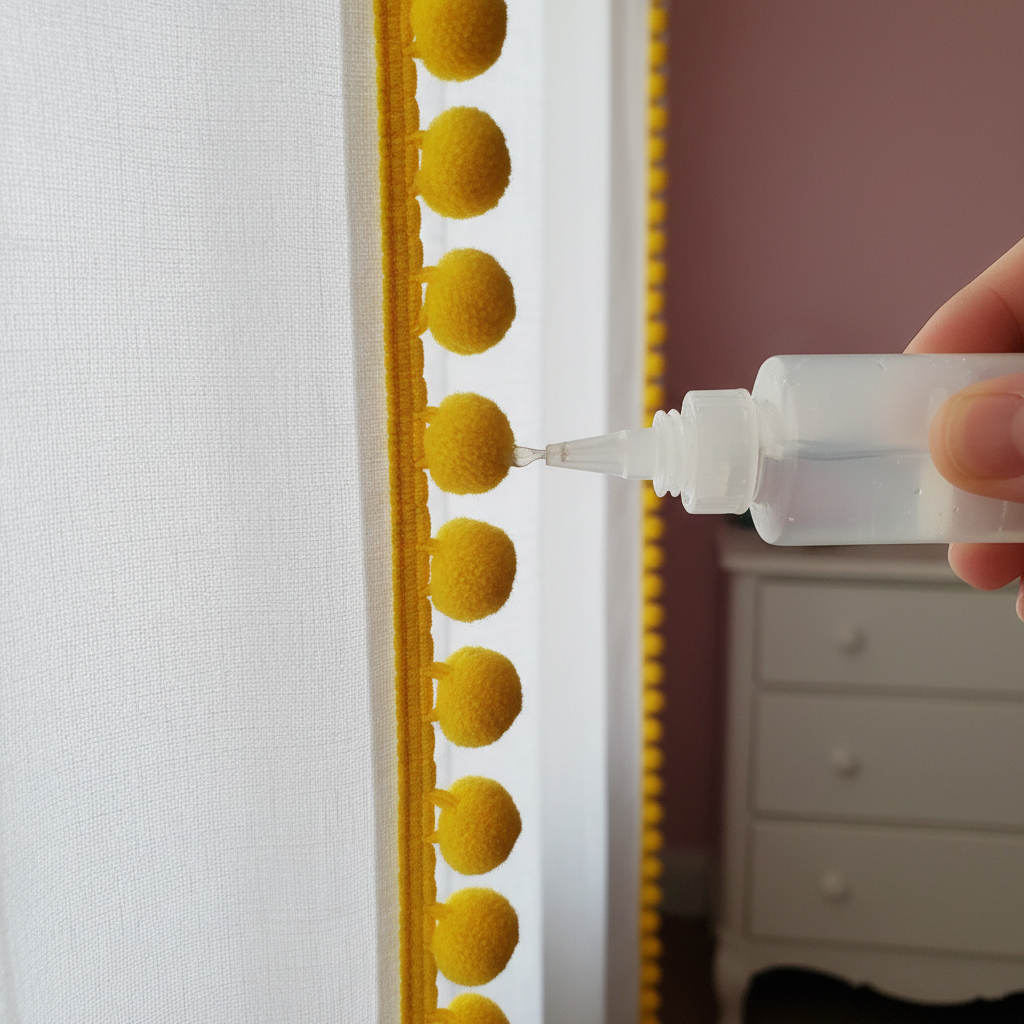
Plain, inexpensive curtains get an instant boutique upgrade with the addition of pom-pom trim. High-quality permanent fabric glue holds the trim securely to the edge of the curtain panels. This adds a pop of color and playful texture that is synonymous with fun, youthful decor. It is a brilliant way to customize basic white IKEA curtains.
Follow these guidelines for durability:
- Apply glue in small sections to ensure the trim stays straight and the glue doesn’t dry too fast.
- Use painter’s tape to mark a straight line if you are adding trim to the middle of the panel.
- Press firmly for at least 30 seconds to set the adhesive into the fibers.
- Let it cure for 24 hours before hanging the curtains to prevent shifting.
This detail adds significant character with minimal effort.
Boho Macramé Rope Valance
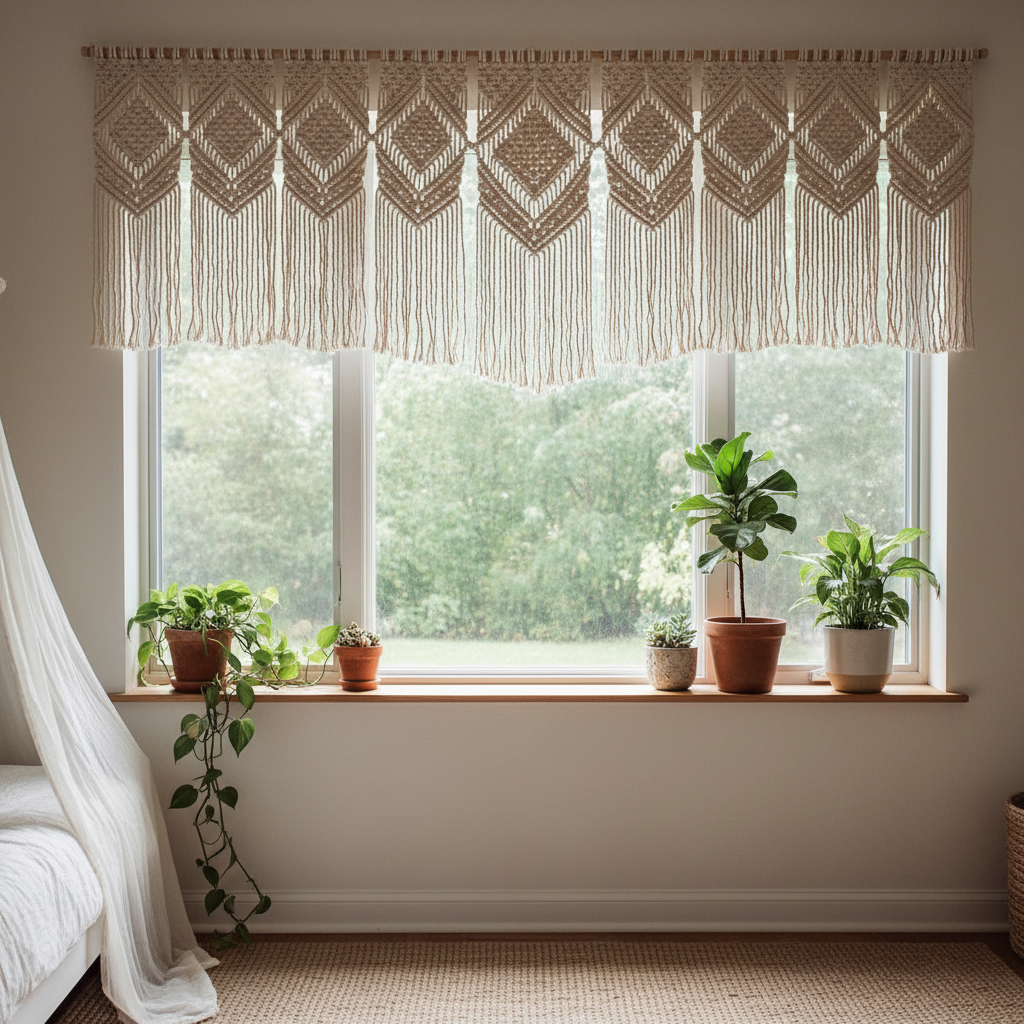
Macramé brings a trendy, bohemian texture that works well for older girls or teens. You can create a simple knotted valance using cotton rope tied directly onto a wooden dowel or rod. While it looks intricate, basic square knots are easy to learn and cover space quickly. This serves more as a decorative frame for the window rather than privacy.
Keep these styling points in mind:
- Use thick cotton cord (4mm or 5mm) to make the project go faster and look more substantial.
- Start with simple loop knots to attach the cords to the rod before beginning the pattern.
- Leave the ends fringed for a relaxed, organic finish at the bottom.
- Dip-dye the bottom of the ropes for a splash of color that matches the room’s palette.
This adds a handcrafted, artistic element to the wall.
Drop Cloth Stenciling
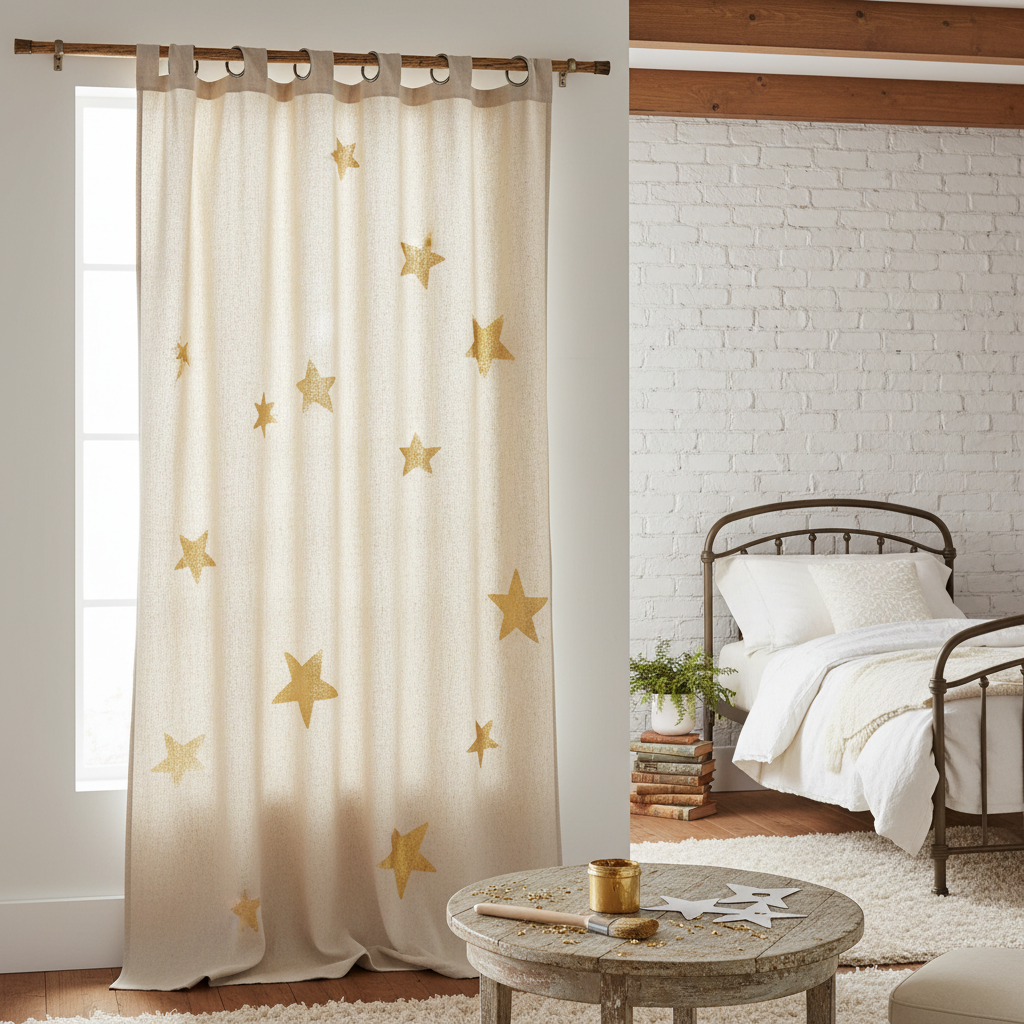
Canvas drop cloths are durable, incredibly cheap, and come practically ready to hang. Their neutral oatmeal color is the perfect canvas for adding painted designs using stencils. This allows you to create patterns like stars, polka dots, or chevrons that match the room’s theme exactly. The heavy fabric also blocks a decent amount of light, making them functional for sleep.
Enhance the look with these techniques:
- Wash and bleach the cloth first to soften the fabric and lighten the color.
- Use fabric medium mixed with acrylic paint so the design stays soft and doesn’t crack.
- Secure the stencil with spray adhesive to prevent paint bleeding under the edges.
- Create a rod pocket by folding the top over and using fabric glue along the edge.
Custom painted curtains look high-end for a fraction of the cost.
Vintage Scarf Patchwork
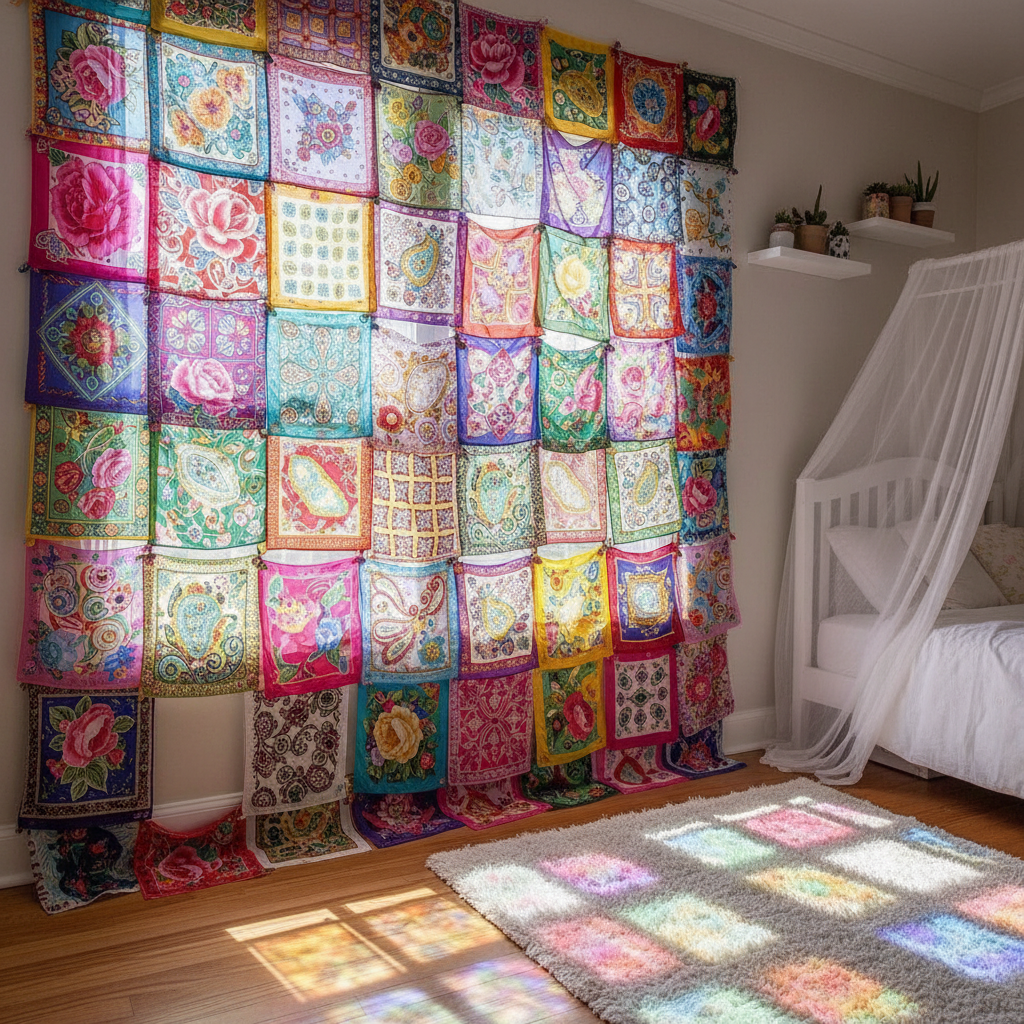
For a vibrant, eclectic teen room, knotting together vintage silk or sheer scarves creates a one-of-a-kind tapestry. You tie the corners of the scarves together to form a large grid, then tie the top row to the curtain rod. The light filters through the different patterns and colors like stained glass. This project requires absolutely no adhesive, just knots.
Consider these composition tips:
- Lay out the scarves on the floor first to balance the colors and patterns effectively.
- Double knot every connection to ensure the curtain holds together when moved.
- Mix sheer and opaque scarves to create interesting play with light and shadow.
- Use safety pins on the back for extra security if the knots feel slippery.
It is the ultimate expression of boho-chic style.
Bed Sheet Pleats
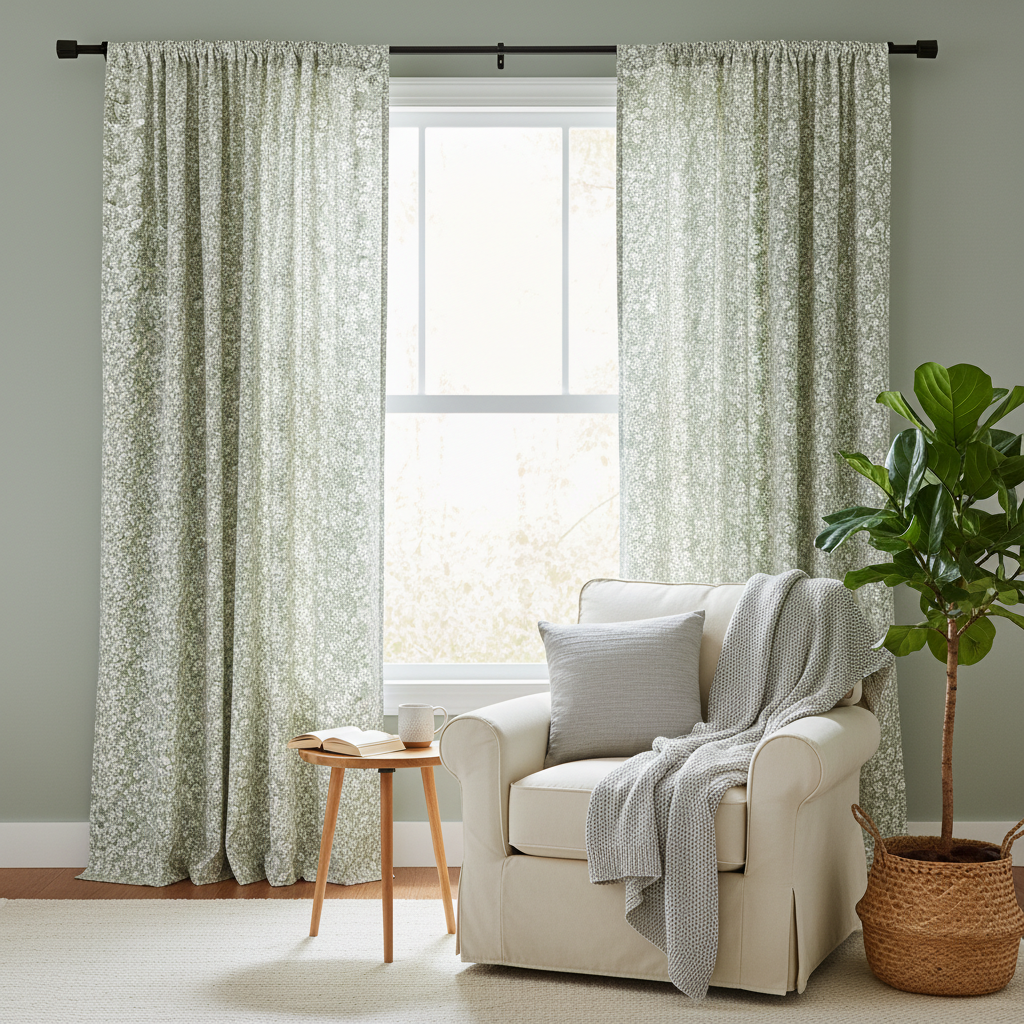
Flat bed sheets are an economical way to get a lot of fabric that is already hemmed on all sides. A twin or full flat sheet is the perfect width for most standard windows. You can create a faux-pleated look using ring clips or by cutting small slits in the top hem for a rod. The wide variety of available sheet patterns means limitless design options.
Use these tricks for a tailored appearance:
- Use the wide top hem of the sheet as the bottom of the curtain for a weighted look.
- Iron sharp creases into the sheet before hanging to simulate professional drapery folds.
- Add blackout liner with fusible tape if you need darker sleeping conditions.
- Choose high thread count sheets for a softer drape and luxurious feel.
This is the secret weapon for budget-friendly interior design.
Rag Strip Shabby Chic
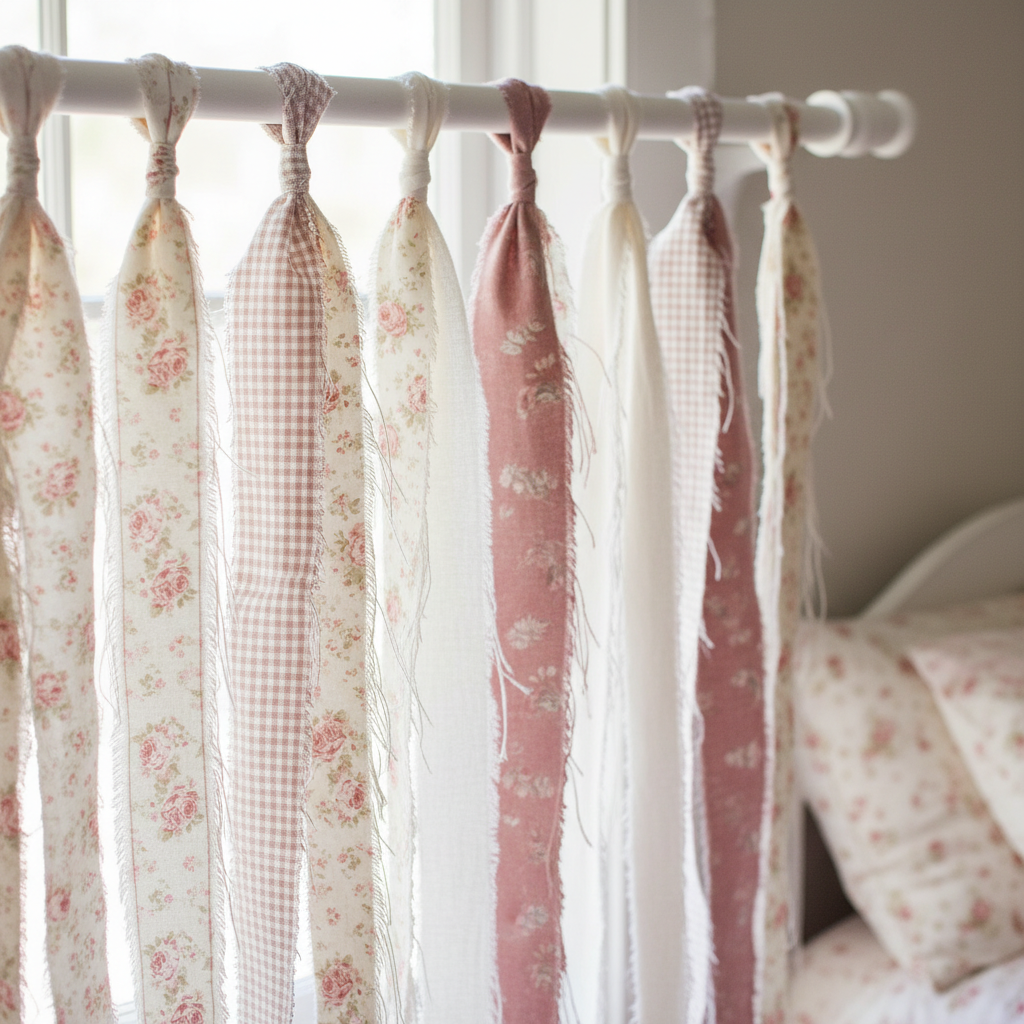
The rag curtain technique uses torn strips of various fabrics tied onto a rod, similar to the tulle method but with woven cloth. This creates a textured, shabby-chic look that adds warmth and coziness. It is a fantastic way to use up fabric scraps, old clothing, or mismatched linens. The raw edges are part of the charm, so fraying is encouraged.
Focus on these assembly methods:
- Rip the fabric rather than cutting it to create those desirable soft, frayed edges.
- Vary the strip widths between 1 and 3 inches for visual interest and texture depth.
- Combine solids and prints within the same color family for a cohesive yet scrappy look.
- Push strips tightly together on the rod for privacy, or space them out for a valance.
The finished piece is full of personality and tactile appeal.
Conclusion
No-sew curtains open up a world of creativity without the barrier of learning to thread a machine. Whether you choose the elegance of iron-on hems or the playfulness of knotted ribbons, you can completely transform a bedroom in an afternoon. These methods prove that custom decor is accessible to everyone, regardless of crafting skills. Pick your favorite fabric and start customizing those windows today.
Other Articles
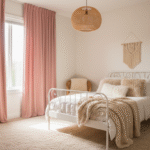
Soft Pink Curtain Ideas for Girls Bedrooms (Affordable!)
12 Girls Bedroom Drapes Ideas (Cute & Stylish Inspiration)