

Why Pom-Pom Leading Edge Curtains Feel So Right at Home
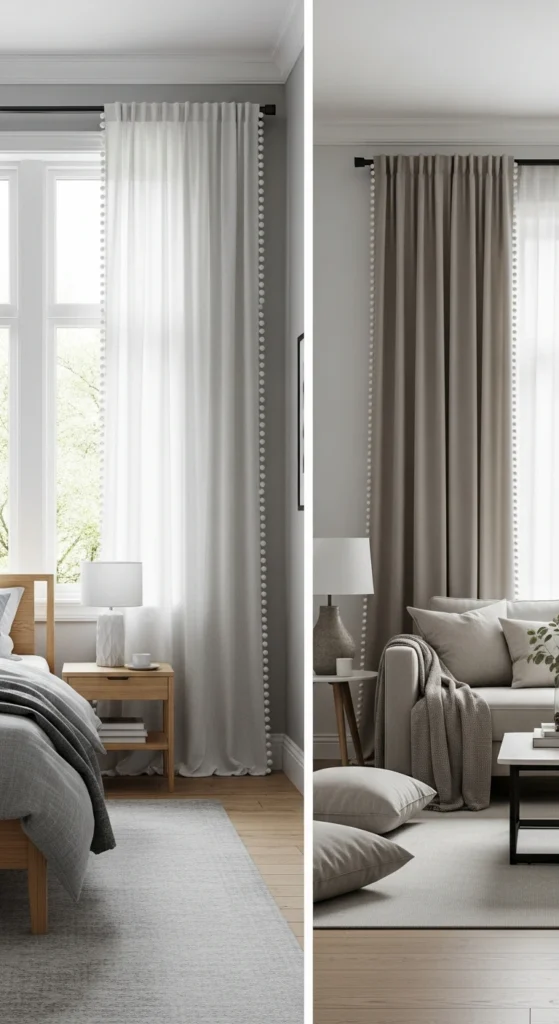
Pom-pom leading edge curtains deliver that rare balance between playful detail and grown-up polish. They add just enough personality to make a room feel loved without tipping into “theme decor” territory. I used to assume pom-poms belonged strictly in kids’ rooms, yet the first time I tried a set in a neutral bedroom, the entire space softened instantly—almost like the room exhaled.
The magic lies in the placement. Because the pom-poms sit only on the leading edge, they frame the window in a clean, tailored way. The curtain still reads as elegant, but now there’s movement, texture, and this friendly little hint of charm whenever the fabric shifts. Bedrooms benefit most from that softness; a simple edge of pom-poms makes the room feel calmer, warmer, and more personal. Living rooms, on the other hand, get a touch of effortless style—almost like when someone wears classic clothes but pairs them with fun socks.
Another reason these curtains work so well: they suit nearly every decor style. Minimalist rooms get a bit of life. Cozy spaces get even cozier. Traditional interiors get a fresh twist. And if you’ve ever felt like your windows look unfinished, pom-pom leading edges solve the problem in one swoop. They draw the eye upward, highlight the height of the room, and make the curtains look tailored rather than “just hung.”
It’s the kind of detail guests notice without quite knowing why. And honestly, isn’t that the best kind of design?
Soft Neutrals, Spicy Pom-Pom Edge
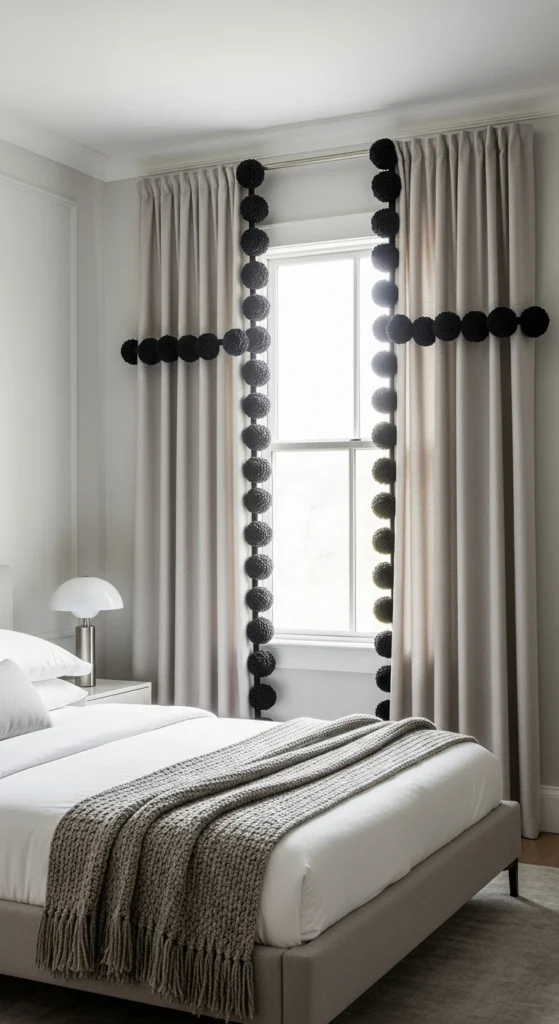
Neutral curtains create a calm foundation, but a bold, high-contrast pom-pom edge instantly wakes up the room. Think warm greige or soft oatmeal fabric paired with charcoal, cinnamon, or deep navy pom-poms. The edge becomes a crisp border that feels playful in the best possible way.
Why it works:
• The neutral base keeps the look sophisticated.
• The darker pom-poms add definition without overwhelming the space.
• Bedrooms gain personality while still feeling soothing.
Sheer Layer + Pom-Pom Panel Duo
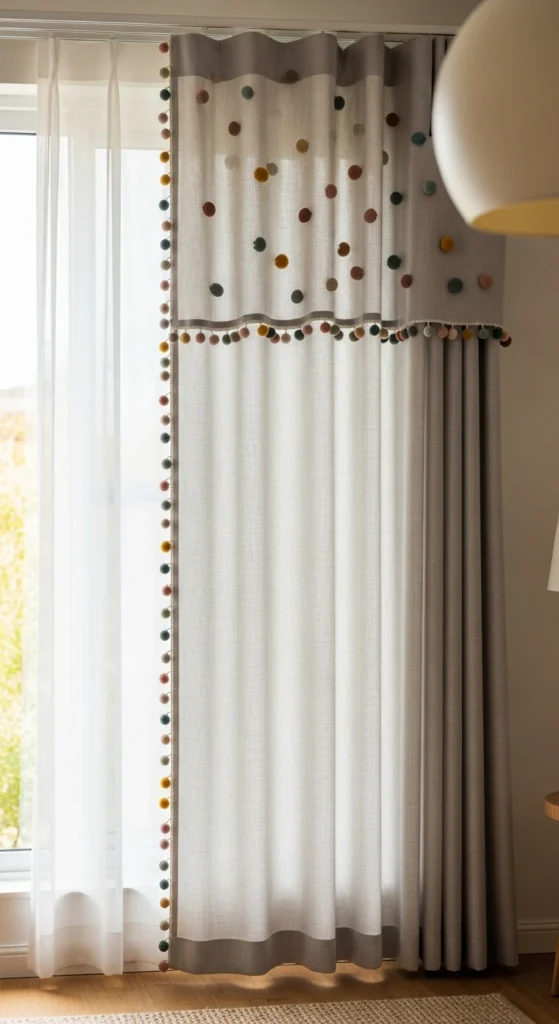
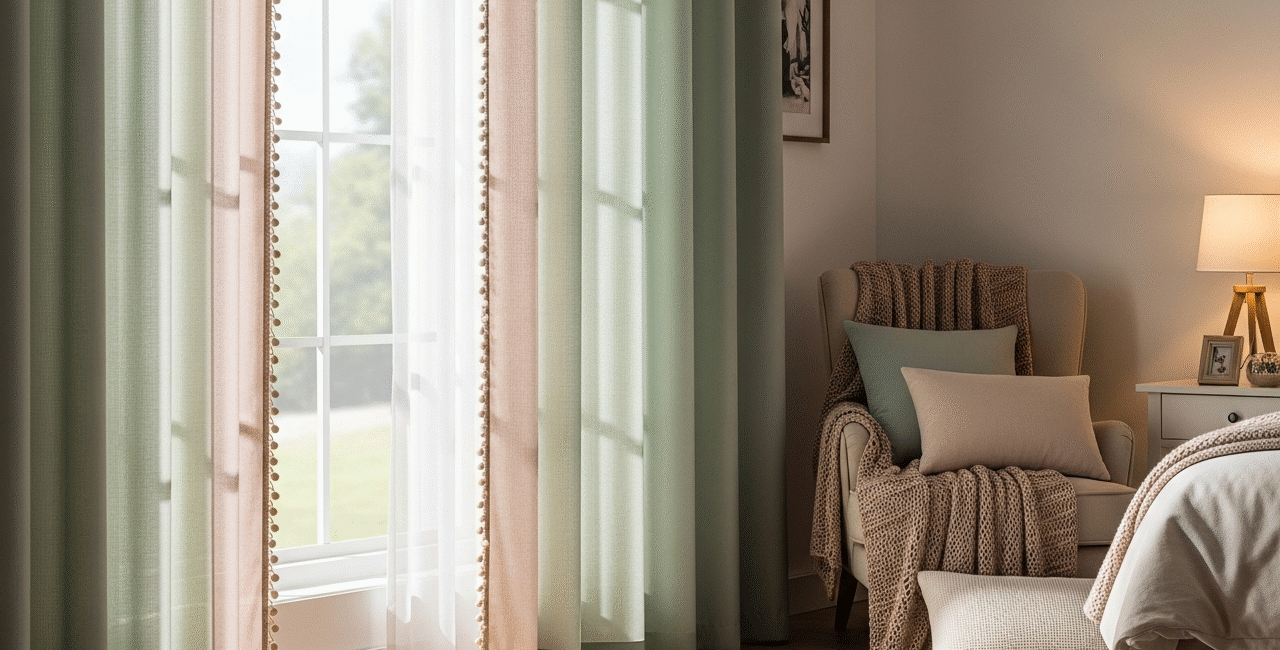
A sheer layer behind a pom-pom leading edge panel gives you the best of both worlds: soft daylight and a cozy frame for evenings. The sheer keeps the room bright, while the pom-pom panel adds texture and a little personality—like jewelry for your windows. This pairing makes any living room feel intentionally layered instead of simply covered.
Quick steps:
- Hang the sheer closest to the window for natural light.
- Add the pom-pom panel in front for depth and softness.
- Choose coordinating colors so the layers feel unified.
- Let the pom-poms face inward for the prettiest outline.
Hotel-Luxe Bedroom with Tonal Pom-Poms
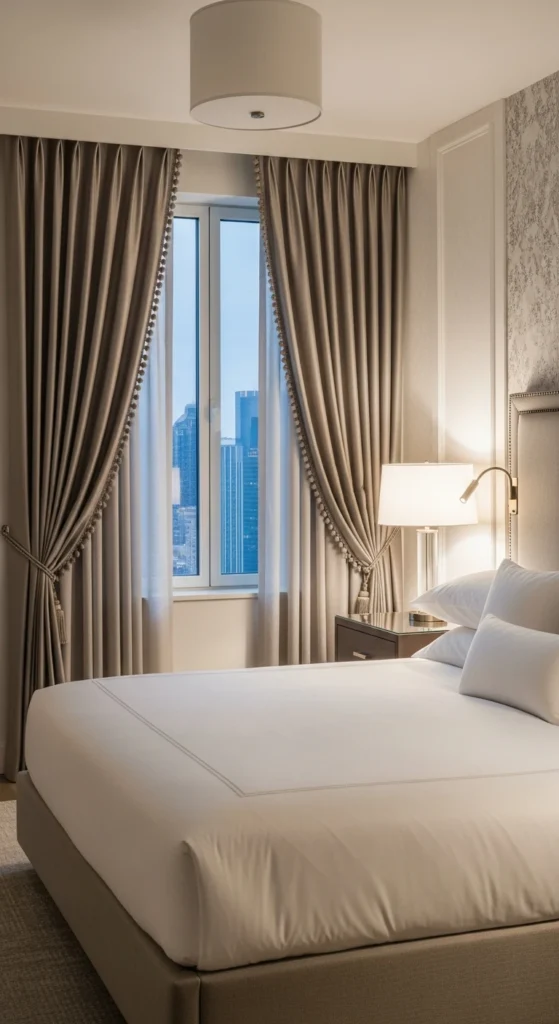
Tonal pom-poms elevate a bedroom the same way a boutique hotel elevates a simple white bedspread—quiet luxury with a tiny wink. When the pom-poms match the curtain fabric, the texture becomes subtle and sophisticated. You notice the detail only when you’re close, which feels intentional and expensive.
Pro tips:
• Choose soft neutrals like taupe or warm grey for a serene palette.
• Keep the pom-poms small to maintain that refined, hotel-like finish.
• Pair with crisp bedding to enhance the calm, curated atmosphere.
Color Echo in the Living Room
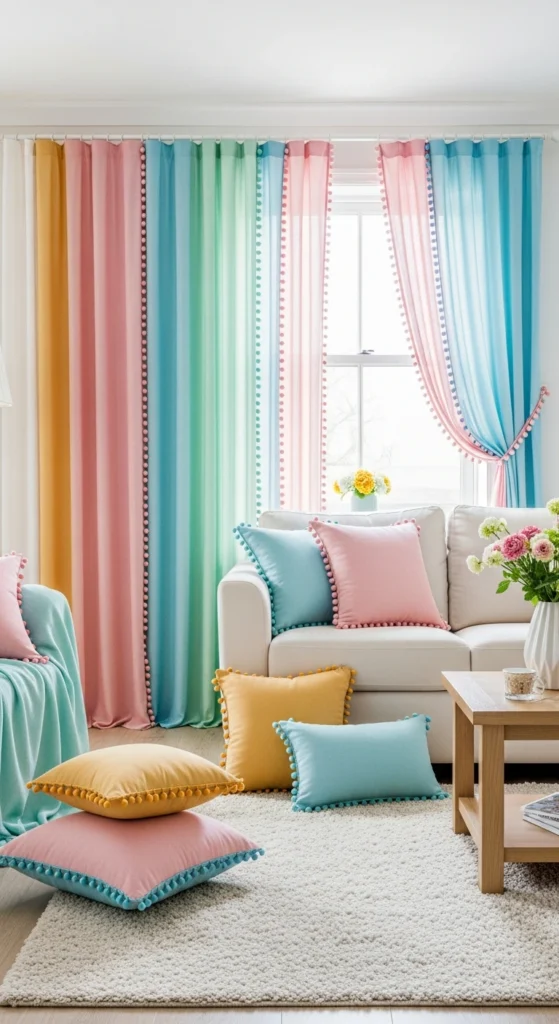
Matching your pom-pom edge to accents already in the room creates a look that feels intentional instead of accidental. When cushions, throws, or artwork repeat the same color as the curtain trim, the whole space suddenly feels pulled together—even if you didn’t change anything else. It’s a simple design trick with big visual payoff.
Why it works:
• Repeated color naturally guides the eye around the room.
• The pom-pom edge becomes a subtle connector, not a standalone statement.
• Perfect for spaces with multiple hues that need gentle harmony.
Single Statement Panel for Smaller Spaces
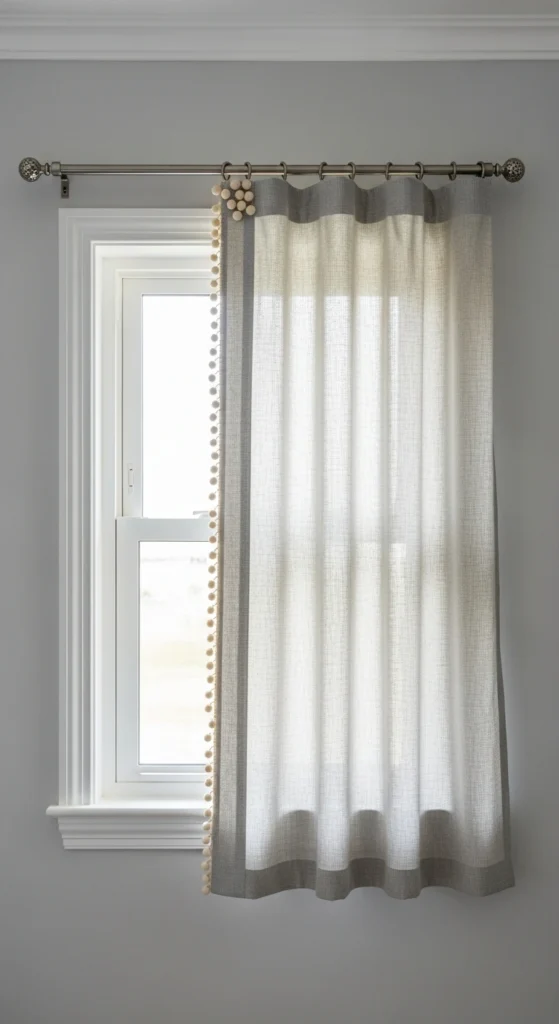
A single pom-pom leading edge panel can feel surprisingly sculptural, especially in smaller rooms where a full pair might overwhelm the window. By pulling one panel to the side, you get a relaxed, asymmetrical look that still feels intentional. The pom-poms create a clean visual border that draws the eye upward and makes the window appear taller.
What makes it special:
• Ideal for narrow windows or compact bedrooms.
• Adds charm without crowding the wall.
• Easy to keep tidy—one panel means less fuss.
Framing a Reading Nook or Bed Alcove
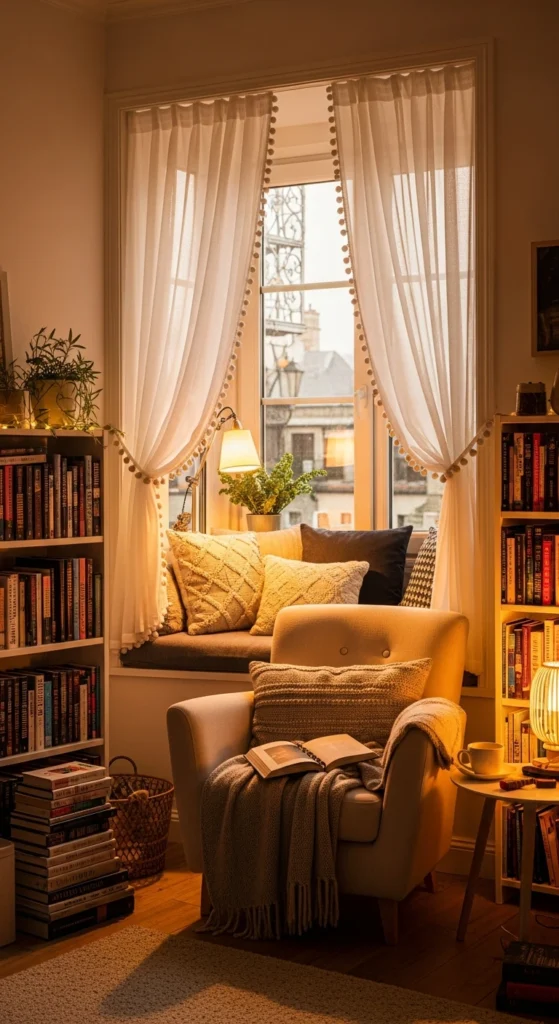
Pom-pom leading edge curtains can do more than dress a window—they can define a whole little world. When you use them to frame a reading nook or bed alcove, they instantly soften the edges and make the space feel cocooned. It’s the kind of detail that quietly invites you to linger a little longer with your book or morning coffee.
How to use it:
• Mount the rod slightly wider to create a cozy “curtain frame.”
• Let the pom-poms fall inward to outline the nook.
• Add plush cushions to amplify the warm, tucked-in vibe.
Calm Curtains, Bold Wall Behind
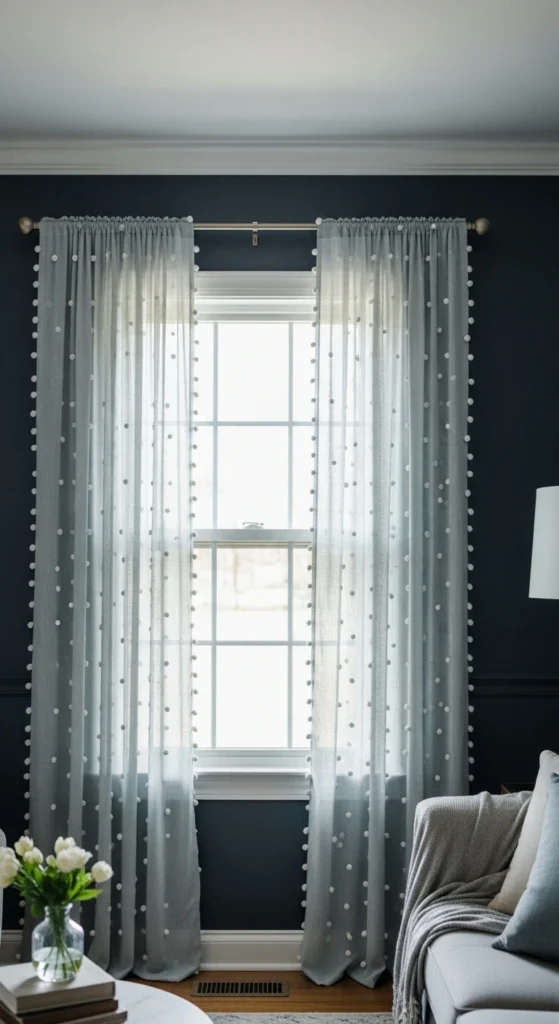
Light pom-pom leading edge curtains soften a room instantly, but pairing them with a deeper wall color behind adds dimension you can feel as soon as you walk in. The contrast creates a layered, designer look without any complicated styling. The curtain stays airy and calm, while the wall brings depth—kind of like a quiet friend standing next to someone confidently bold.
Why it works:
• Light fabric stands out beautifully against rich paint colors.
• Pom-poms create a crisp outline that enhances the contrast.
• Ideal for renters who want impact without committing to dramatic curtains.
Studio or Shared Room Divider
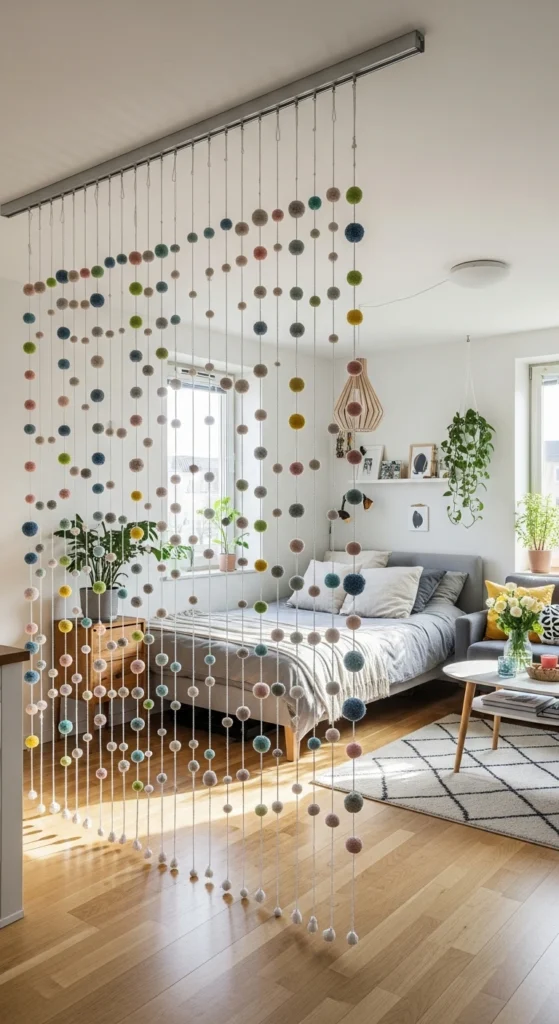
Pom-pom curtains make delightful room dividers, especially in studios or shared bedrooms where you want separation without blocking light. When hung from a ceiling track, the strands fall like a soft, textured veil—giving you privacy while still keeping the space open and friendly. It’s practical, but also undeniably fun.
Key benefits:
• Defines zones without making the room feel smaller.
• The pom-poms turn a functional divider into a design feature.
• Great for studios, shared kids’ rooms, or guest corners in living spaces.
Seasonal Switch with Swappable Panels
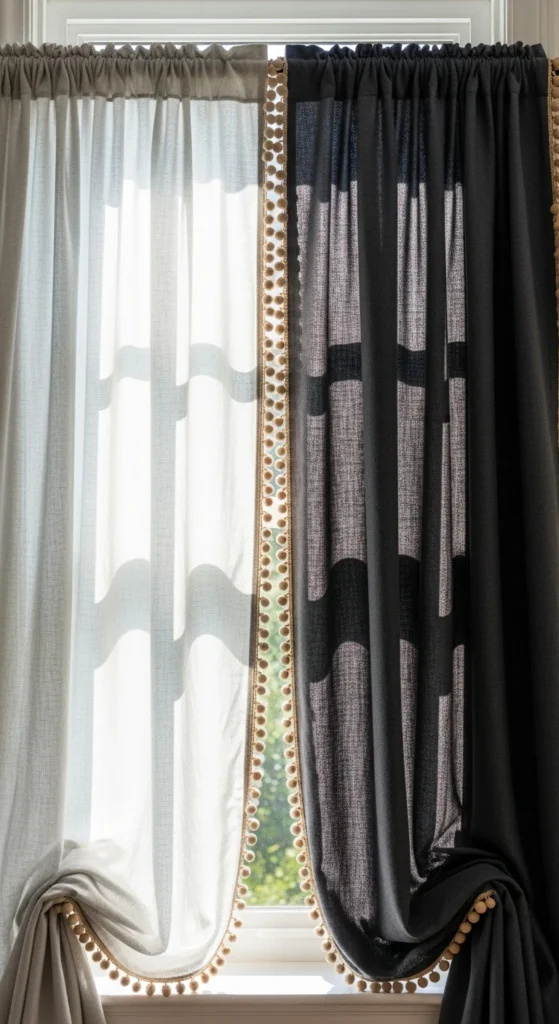
Swapping out pom-pom leading edge curtains seasonally keeps your space feeling fresh without forcing a full makeover. Light fabrics with airy pom-poms brighten the room in spring and summer, while deeper, richer panels bring warmth and coziness in the cooler months. It’s the décor equivalent of rotating your wardrobe—easy, satisfying, and surprisingly impactful.
What you’ll need:
• One light, breezy panel for sunny seasons.
• One richer, darker panel for fall and winter.
• A shared pom-pom trim color to maintain visual continuity.
How to Choose the Right Pom-Pom Leading Edge Curtain for Your Space

Choosing the right pom-pom leading edge curtain feels a bit like picking the perfect outfit—fabric, color, and proportions all matter. The good news? You don’t need to overthink it. A few simple decisions can help you land on a curtain that complements the room and feels wonderfully “you.” Think of it as matching personality with practicality.
Start by deciding on fabric weight. Light linens and cotton blends work beautifully in bedrooms where you want softness and flow, while richer weaves or velvets can ground a living room with more structure. Then look at the room size to determine pom-pom scale. Smaller spaces and lower ceilings benefit from petite poms, while larger rooms can easily handle chunkier trim.
Color strategy plays a surprisingly big role. If you want a gentle, grown-up look, go for tone-on-tone pom-poms that softly blend into the fabric. If your space needs energy, choose a contrasting pom color that echoes another accent nearby—like a cushion or rug. Bedrooms often benefit from calmer palettes, especially if you use blackout lining behind the fabric for better rest. Living rooms, on the other hand, give you more freedom to experiment with transparency, light filtering, and bolder trims.
A useful trick? Hold up fabric samples and pom-pom trims near the window before committing. The way light filters through a curtain changes everything, and sometimes the fabric that looks “fine” on the table turns into magic when it catches daylight.
Caring for Pom-Pom Curtains So They Stay Charming, Not Scruffy
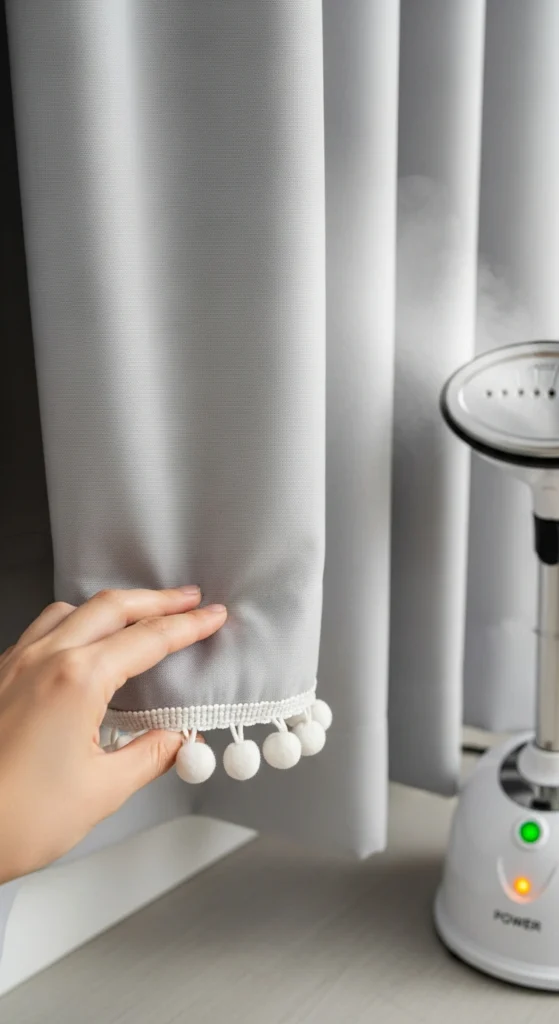
Pom-pom leading edge curtains don’t ask for much—just a little consistent attention to keep them looking crisp and cloud-like. A quick shake, a gentle fluff, and an occasional pass with a steamer go a long way. You don’t need to treat them like high-maintenance show dogs, but ignoring them completely won’t do those adorable edges any favors.
Basic care helps the trim stay fresh. Most curtains with pom-poms prefer gentle washing or light steaming, depending on the fabric. While steaming, reshape each pom with your fingers as it cools; they spring back beautifully when slightly warm. If you live with curious pets, consider keeping the panels just high enough to avoid enthusiastic pawing. And if a pom-pom ever loosens, a quick stitch usually restores it to its full fluffy glory.
Bringing It All Together in Your Own Home
Pom-pom leading edge curtains prove that a small detail can shift the entire mood of a room. They add softness to bedrooms, personality to living rooms, and just enough playfulness to remind you that home should feel warm, not formal. When you choose the right fabric, trim, and placement, these curtains frame your windows—and your daily routines—with an easy charm that’s hard to resist.
Maybe you’ve already pictured them against your favorite reading corner. Or maybe you’re imagining how they’d brighten a tired wall in the living room. Either way, the question becomes irresistible: what little bit of magic could those pom-poms bring to your own space?
Other Articles
15+ Pom Pom Curtains Ideas to Brighten Your Home in 2026
30+ Kitchen Valance Ideas That Instantly Upgrade Your Space