


5+ Apartment DIY Projects That Make Small Spaces Feel Thoughtfully Designed
Apartment DIY projects live in the space between necessity and personality. They’re born from limitations — small rooms, rental rules, awkward layouts — but they quietly turn those constraints into character. This article exists in that exact place, where everyday problems get solved with a little wood, a little patience, and just enough taste to make it feel intentional rather than improvised.
A Wall-Mounted Key Holder That Doesn’t Look Like a Key Holder
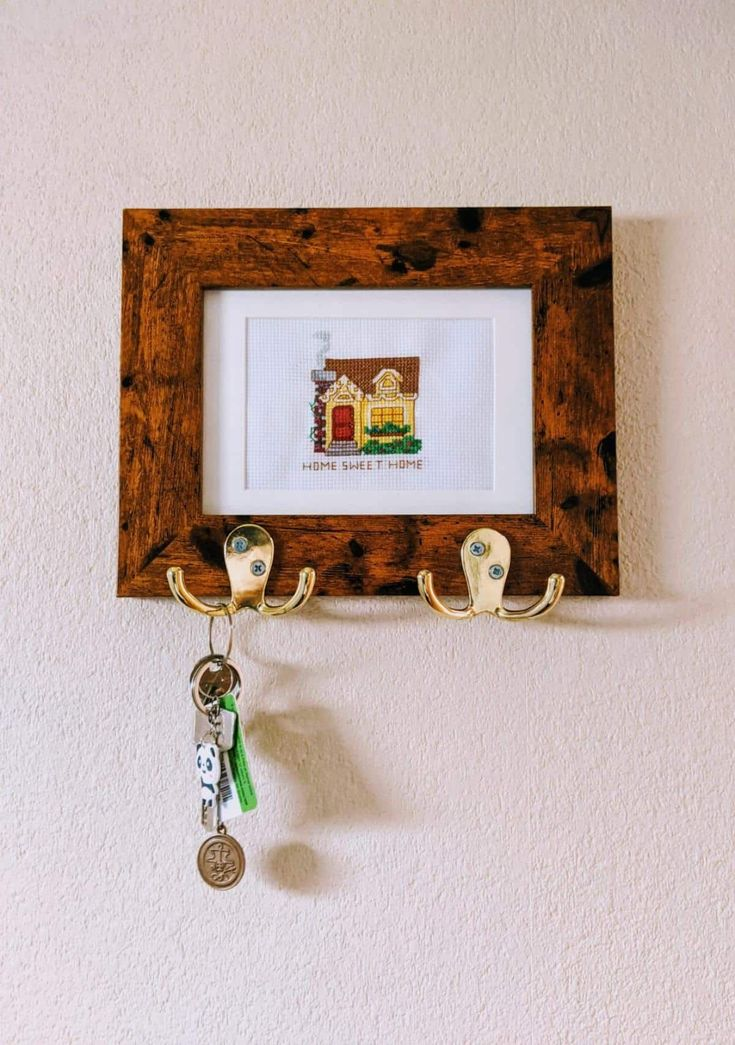
This is exactly the kind of apartment DIY I love: useful first, decorative by accident. A simple wooden frame becomes a landing zone for keys, with just enough personality to make coming home feel intentional instead of chaotic.
What works here isn’t the hooks alone — it’s the combination:
- Warm, slightly rustic wood that softens a blank wall
- A small framed piece of art that gives the object a reason to exist beyond storage
- Minimal brass hooks that feel sturdy without shouting for attention
It quietly solves the “where are my keys?” problem without turning your entryway into a hardware aisle.
Why this is perfect for apartments
Apartments punish excess. This kind of project respects that.
- One object, two jobs: wall art + daily function
- Vertical footprint: uses wall space, not precious surfaces
- Easily reversible: patch a few holes, and it’s gone
I’m also a fan of how personal this can get. Swap the artwork for:
- A postcard from a trip
- A cross-stitch, photo, or print
- Even something slightly weird — it’ll make the routine feel less… routine
How you’d recreate this without overthinking it
- Find or build a solid wood frame (thrift stores are gold for this)
- Attach 2–3 sturdy hooks along the bottom edge
- Mount into studs if possible, or use proper anchors
- Hang keys only — resist turning it into a junk magnet
The restraint is the point. When every item earns its place, even keys feel curated.
When Storage Becomes the Bathroom Decor
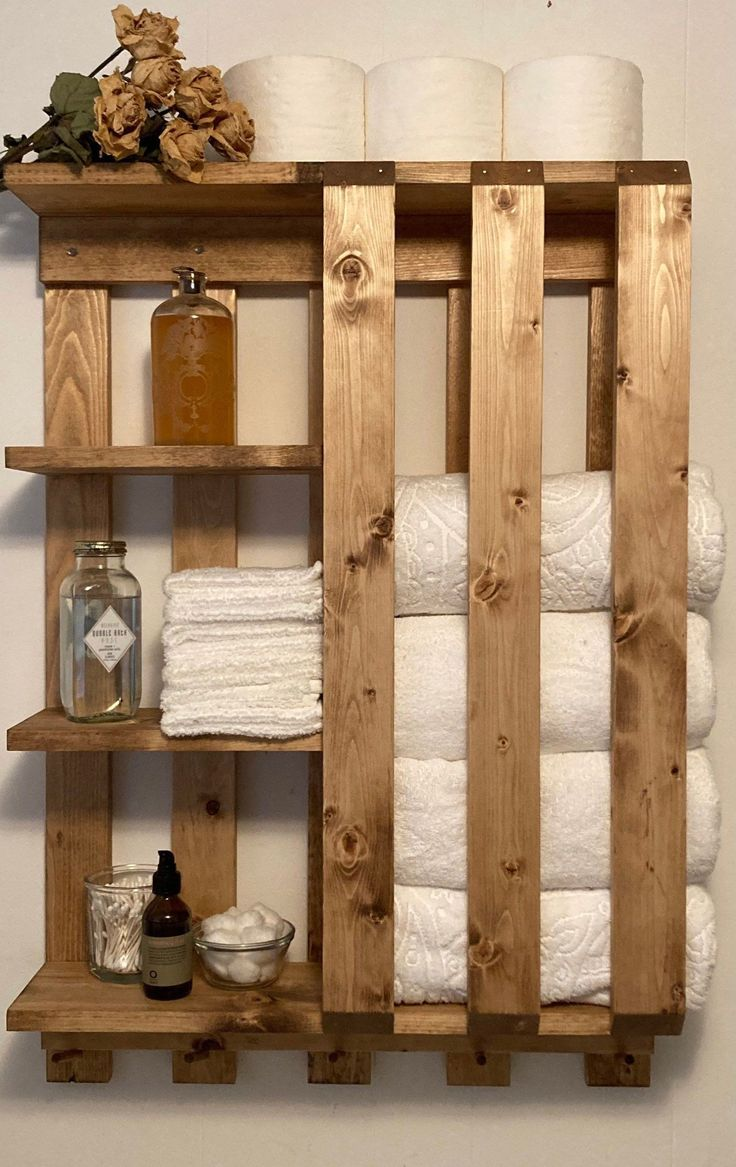
This is one of those apartment DIYs that pretends it’s just storage — but it’s absolutely pulling aesthetic weight. A wall-mounted wooden rack holding towels, toilet paper, and everyday bathroom bits sounds practical (because it is), yet the real win is how calm it makes the room feel.
Everything is visible, but nothing feels messy. That balance is harder than it looks.
What makes this work:
- Open vertical slats keep bulky items like towels from looking heavy
- Narrow shelves prevent over-styling (there’s literally no room for clutter)
- Natural wood grain warms up what’s usually the coldest room in an apartment
This kind of piece turns “I don’t have a linen closet” into a design choice.
Why this solves small-bathroom problems
Apartments love tiny bathrooms. This build fights back politely.
- Uses wall height, not floor space
- Keeps essentials within arm’s reach
- Doubles as visual structure, so the room feels finished
I especially like how the towels are stacked tightly. It’s a small detail, but loose piles make everything look chaotic fast.
If you were building something like this yourself
You’d want to think less like a carpenter and more like an editor.
- Use unfinished or lightly stained wood — perfection kills the charm
- Space shelves just wide enough for what you actually use
- Mount securely into studs (this thing earns its weight)
- Style sparingly — one bottle, one jar, one soft accent max
The goal isn’t to show everything you own. It’s to show that everything has a place.
Turning Spare Materials into a Statement Pedestal
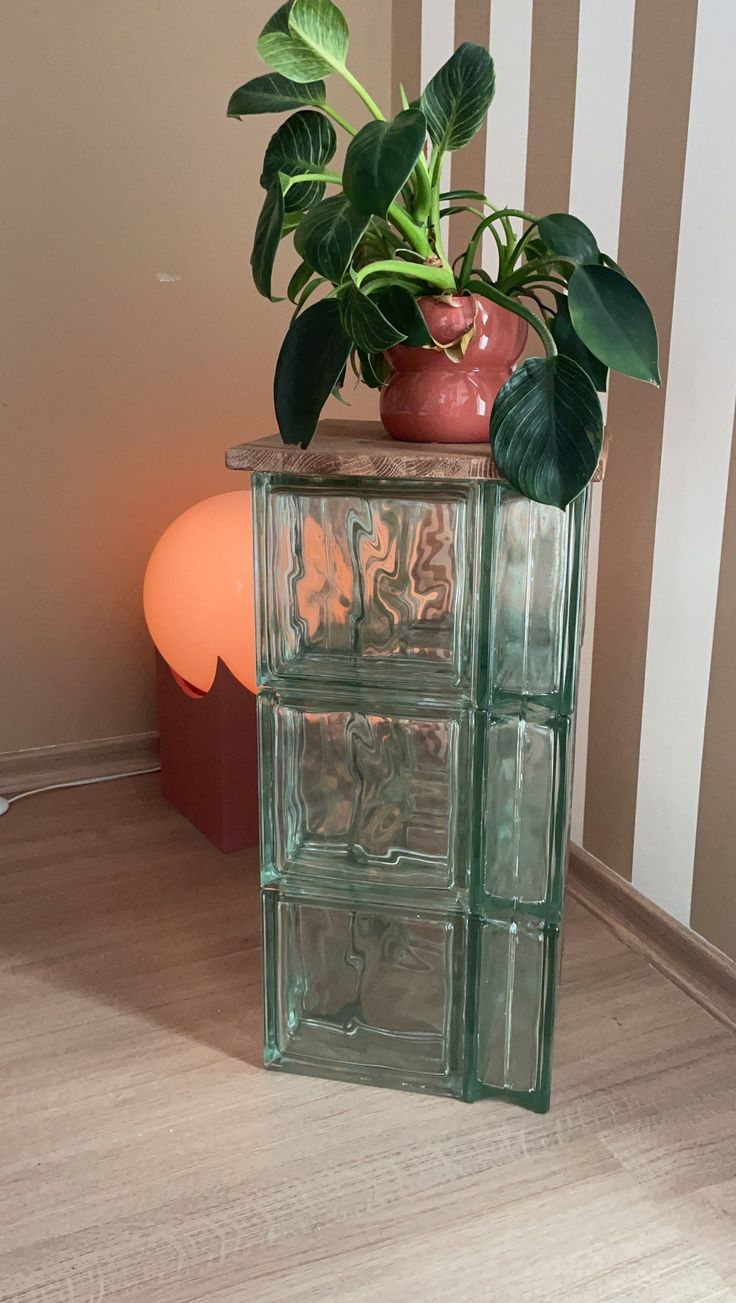
This one feels quietly confident. A stack of glass blocks topped with a simple wood slab becomes a plant stand that doesn’t beg for attention — it just earns it. It’s sculptural without being precious, and that’s a sweet spot most apartment DIYs miss.
The materials are doing all the talking here:
- Glass blocks add weight and texture without visual clutter
- A raw wood top grounds the whole thing so it doesn’t feel cold
- One healthy plant finishes the job — no extras needed
It’s the kind of piece that looks intentional even if it came together on a lazy afternoon.
Why this works especially well in apartments
Apartments often lack those “in-between” surfaces. This fills the gap.
- Narrow footprint, perfect for corners or dead zones
- Tall enough to give plants presence without sacrificing floor space
- Light-reflecting material keeps small rooms from feeling boxed in
I also love how forgiving this build is. Slight misalignment? Doesn’t matter. Minor imperfections? They actually help.
Recreating this without overengineering it
You don’t need a workshop — just restraint.
- Stack glass blocks securely (adhesive or construction silicone works)
- Cut a wood top slightly wider than the base for balance
- Sand the edges, leave the grain visible
- Let one object live on it — plant, lamp, or nothing at all
This kind of DIY shines when you stop before it turns into furniture cosplay.
The Couch Sleeve That Saves Your Coffee (and Your Sanity)
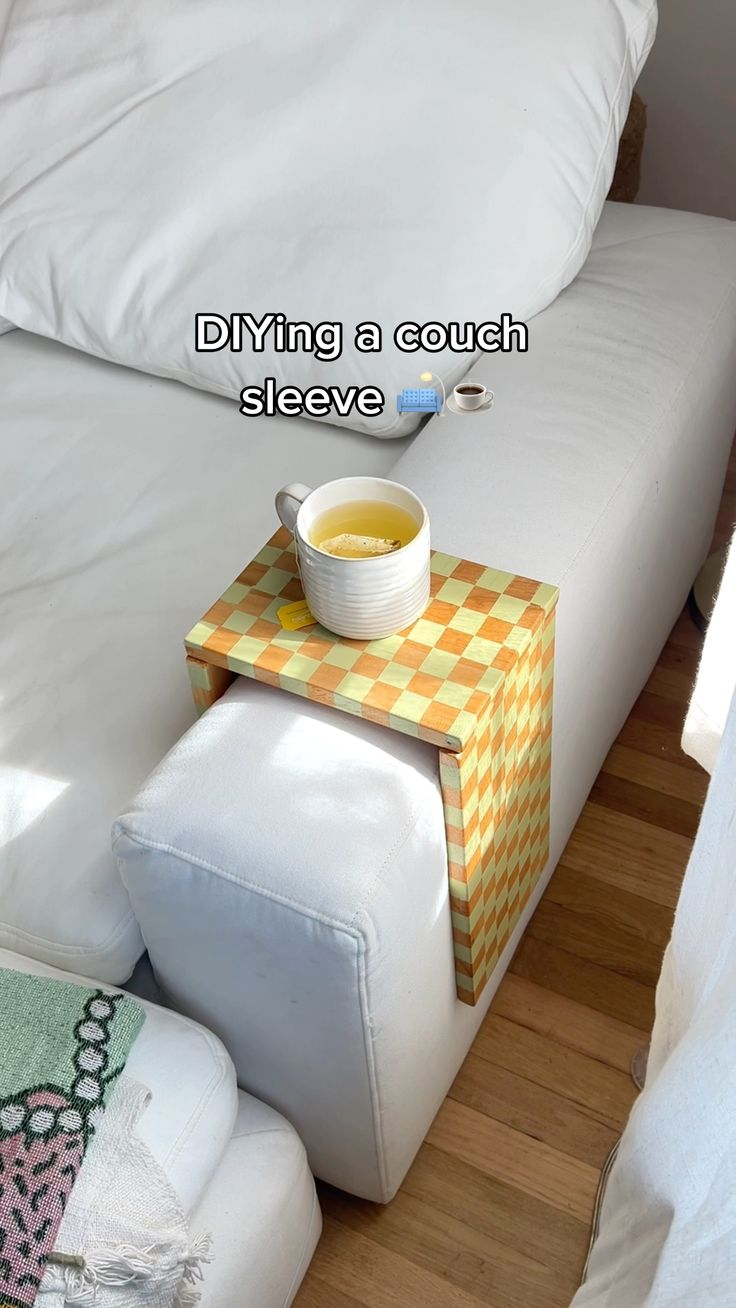
This is one of those apartment DIYs that feels almost smug in its simplicity. A snug wooden sleeve slips over the arm of the couch and suddenly you’ve got a table where there was never supposed to be one. No wobble. No spill panic. No sacrificing floor space for yet another side table.
And let’s be honest — this solves a very real problem.
What makes this version especially good:
- Tailored fit around the couch arm, so it doesn’t slide or tilt
- Flat, solid surface that actually trusts you with a hot drink
- Playful pattern that keeps it from feeling like a utility object
It’s functional, but it’s also clearly enjoying itself.
Why this is peak apartment thinking
Apartments force creativity because there’s nowhere to hide bad solutions.
- Zero footprint — it lives on furniture you already own
- Removable when guests come over or moods change
- Doubles as decor, not a compromise
I love that this doesn’t try to replace a table everywhere. It just fixes the one spot where you always reach instinctively.
If you were making one yourself
Precision matters here — but not in a scary way.
- Measure the couch arm exactly (width + height)
- Build a simple U-shaped box from thin plywood or MDF
- Sand edges generously — your elbows will thank you
- Finish with paint, veneer, or tile if you’re feeling bold
This kind of project shines because it respects real life. It doesn’t demand discipline — it adapts to laziness.
The Modular Shelf That Grows With You
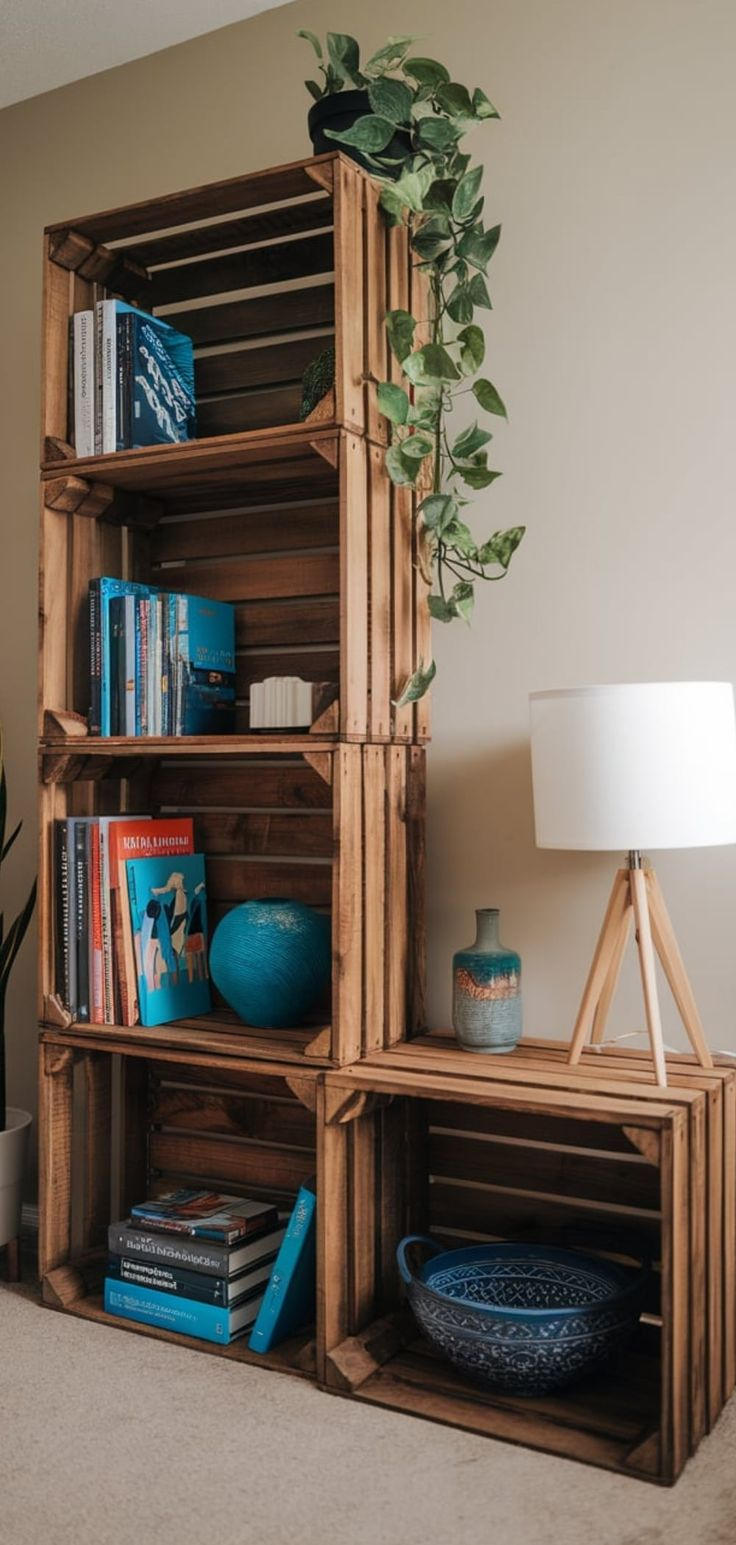
This is the kind of apartment DIY that understands commitment issues. Stacked wooden crates become a shelving unit that looks deliberate, but stays flexible — which, frankly, is the dream when you don’t know how long you’re staying put.
What I love here is how unfixed it feels. Nothing is screaming “permanent furniture,” yet the whole thing reads cohesive and calm.
Why it works so well visually:
- Repeated crate shapes create rhythm without rigidity
- Open backs and sides keep the piece from feeling bulky
- A trailing plant softens the grid and adds movement
It feels curated, not constructed.
Why this is an apartment classic for a reason
There’s a reason crates keep coming back — and this is the good version.
- Modular by nature: add, subtract, rearrange without tools
- Lightweight but sturdy enough for books and objects
- Easy to adapt when rooms or needs change
I also appreciate that this setup doesn’t overstyle every cube. Some shelves are full, some barely touched. That negative space is doing real work.
If you were building this yourself
Think stacking system, not bookshelf.
- Source uniform crates (same size matters here)
- Sand thoroughly — splinters ruin the romance fast
- Secure vertically if stacking high (hidden brackets work)
- Mix books, objects, and emptiness intentionally
This kind of DIY succeeds when you stop trying to make it impressive and let it be useful first.
Conclusion
Looking back at these projects together, what stands out isn’t craftsmanship or trendiness — it’s judgment. Knowing when to stop. Knowing what deserves space. Knowing that in an apartment, every object has to pull its weight. These DIYs don’t try to impress; they settle in, do their job, and slowly become part of daily life. That’s usually how the best ones work.
Other Articles
8 Simple DIY Decor Ideas That Make Your Home Feel Curated
17 Easy Home Aesthetic DIY Projects You Can Finish in One Day
No Comment! Be the first one.