


18 Cozy Dorm Room Ideas for Two People That Feel Stylish and Shared
Sharing a dorm room doesn’t have to mean sacrificing comfort, privacy, or style. With the right layout choices, even a small shared space can feel intentional, cozy, and uniquely yours. The best setups balance personal space with shared flow—so both people can relax, study, and recharge without stepping on each other’s vibe. Whether you’re working with bunk beds, twin layouts, or creative dividers, thoughtful design choices make all the difference. These ideas focus on real-life functionality, comfort, and aesthetic balance—so your room feels like a place you actually want to come back to every day.
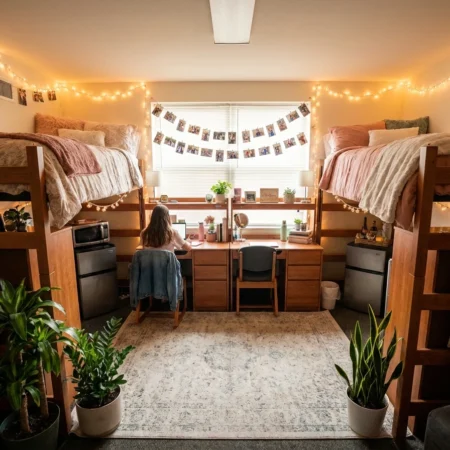
Shared Loft Beds With Personal Zones
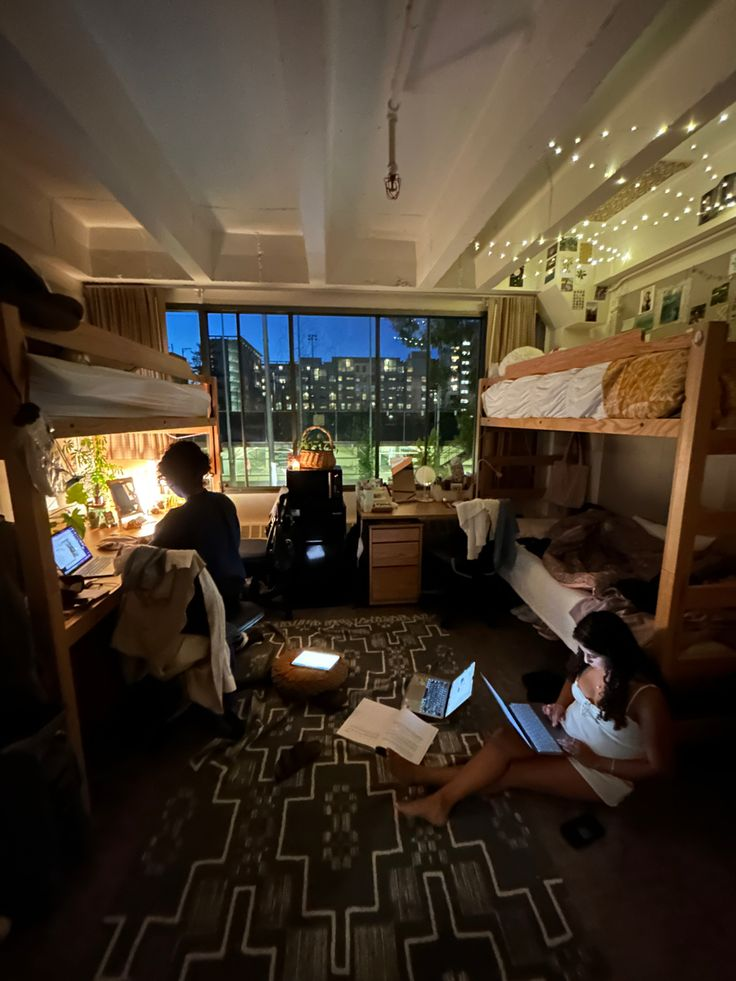
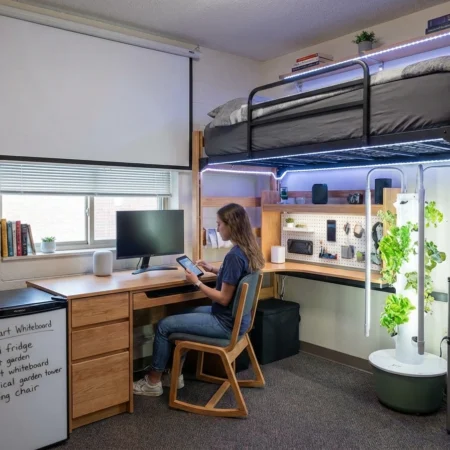
When two people share a dorm, vertical space is the secret weapon. Lofted beds instantly double usable floor area while giving each person a clearly defined “zone” that still feels connected.
Why this setup works so well:
- Privacy without isolation: Each person gets a dedicated sleep space above, while staying part of the same room flow.
- Built-in study corners: Desks fit naturally underneath, keeping work areas focused and distraction-light.
- Balanced symmetry: Matching bed heights and furniture sizes help the room feel intentional instead of cramped.
- Better light control: Individual lamps or string lights let each person set their own vibe without disturbing the other.
How to recreate this layout smoothly:
- Choose loft beds with guard rails and solid ladders for safety and comfort.
- Anchor each side with a small rug or desk mat to visually separate personal zones.
- Use soft, warm lighting instead of overhead lights to make shared evenings feel calmer.
- Keep storage vertical—stacked drawers, hanging organizers, or wall shelves free up floor space fast.
This setup works especially well for roommates with different schedules because everyone gets autonomy without sacrificing comfort or style.
Mirror-Style Loft Layout for Balanced Shared Living
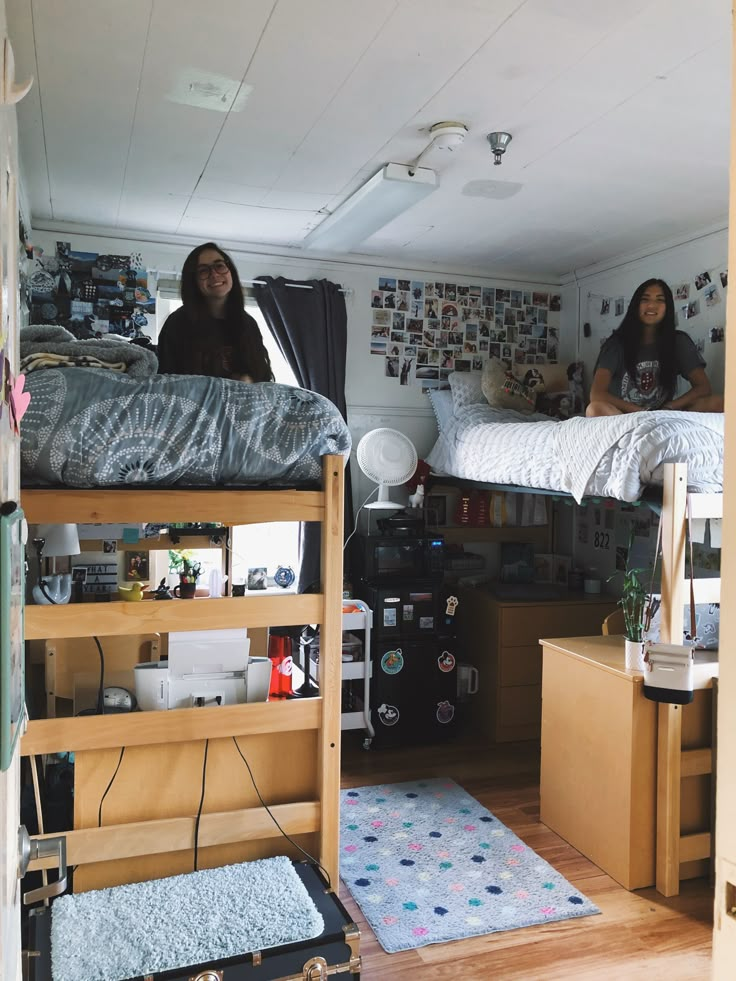
When two people share a dorm, balance matters more than matching. A mirrored loft layout gives both roommates equal space, storage, and comfort without feeling repetitive or cramped.
Why this setup works so well:
- Equal territory: Each person gets the same bed height, desk size, and storage access—no quiet resentment builds over “the better side.”
- Clear personal zones: Even in a shared room, it’s obvious where one person’s space ends and the other begins.
- Efficient use of vertical space: Raised beds open up room for desks, mini fridges, or drawers underneath.
- Visual calm: Keeping furniture symmetrical makes the room feel cleaner and more organized, even when life gets busy.
Smart ways to upgrade this layout:
- Use matching bedding styles in different colors to keep individuality without visual chaos.
- Add small rugs or foot mats at each desk to soften the floor and define zones.
- Keep shared items (like a fan or mini fridge) centered so neither person feels crowded.
This setup is ideal for roommates who want fairness, structure, and a clean look without sacrificing personality.
Soft, Cozy Twin Bed Layout With a Shared Center Flow

This kind of setup works beautifully when two people want a calm, homey space without feeling boxed in. The layout keeps both beds grounded and open, making the room feel wider and more breathable.
Why this layout feels so comfortable:
- Balanced openness: Beds placed on opposite sides create natural symmetry while keeping the center open for movement.
- Warm, layered textures: Soft bedding, rugs, and wall accents reduce the “dorm” feel and make the space emotionally calming.
- Shared visual rhythm: When both sides follow a similar tone—neutrals, warm wood, soft lighting—the room feels cohesive instead of cluttered.
- Natural light flow: Leaving the middle open helps daylight travel evenly, which instantly boosts mood and focus.
How to make this layout work in real life:
- Stick to light, neutral bedding and add personality through pillows or small decor instead of bold patterns.
- Use wall shelves instead of bulky furniture to keep the floor open.
- Add plants or soft textures to soften hard lines and make the space feel lived-in, not staged.
- Keep shared decor intentional—too much symmetry feels stiff, but too little feels chaotic.
This approach is perfect for roommates who want a peaceful, aesthetic space that still feels personal.
Cozy Bunk Setup With Personality-Driven Decor
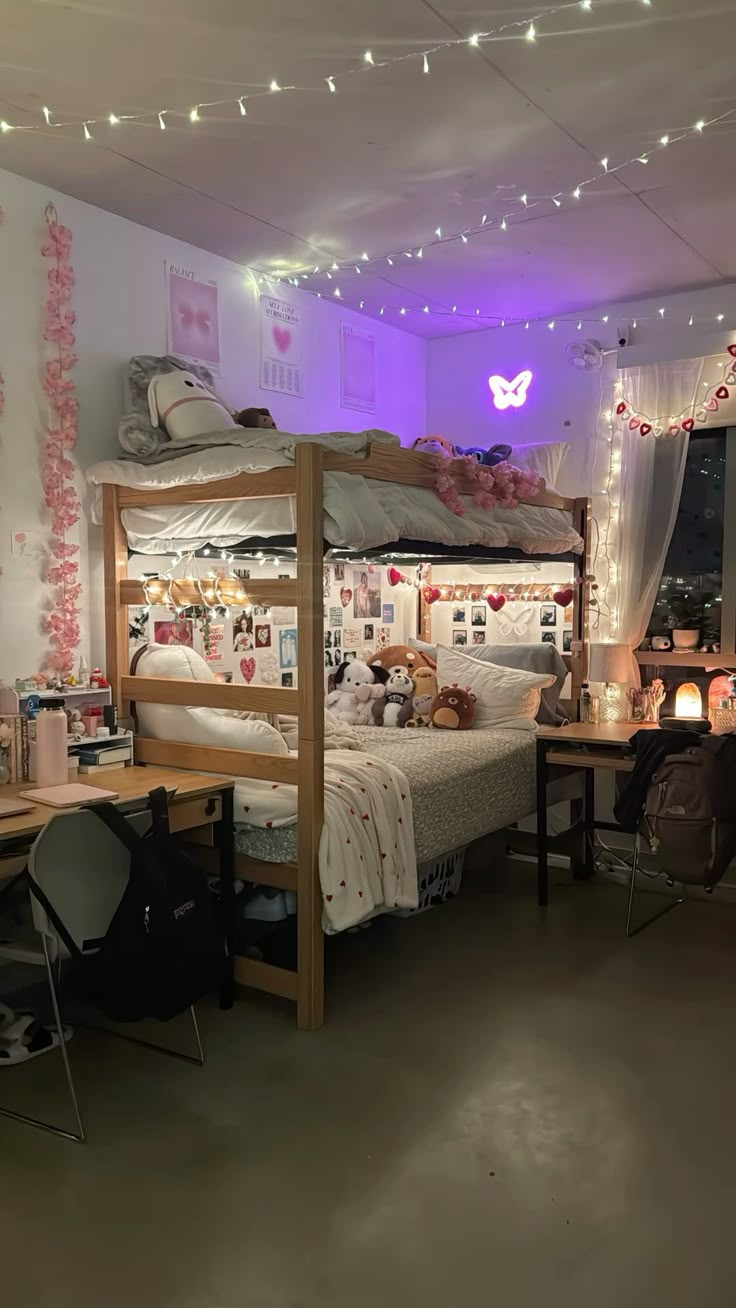
This layout proves that shared dorms don’t have to feel plain or temporary. When personality leads the design, even a compact bunk setup can feel warm, expressive, and genuinely comforting.
Why this approach works so well:
- Layered lighting creates mood: Soft string lights and warm accents make the space feel cozy instead of institutional.
- Personal expression without clutter: Posters, plush accents, and small decor pieces add character while staying contained to each person’s zone.
- Smart use of vertical space: Bunk beds open up room for desks, storage, and movement without crowding.
- Emotional comfort matters: Familiar textures and personal touches help a shared room feel safe and relaxing, especially after long days.
How to recreate this vibe easily:
- Use warm-toned lighting instead of harsh overhead lights.
- Add soft textiles (throw blankets, pillows, fabric garlands) to soften hard surfaces.
- Keep décor intentional—choose a few meaningful items rather than filling every inch.
- Let each person express their style while keeping a shared color palette for harmony.
This setup works especially well for roommates who want their space to feel comforting, expressive, and a little magical.
Shared Room With Defined “Mini Suites”
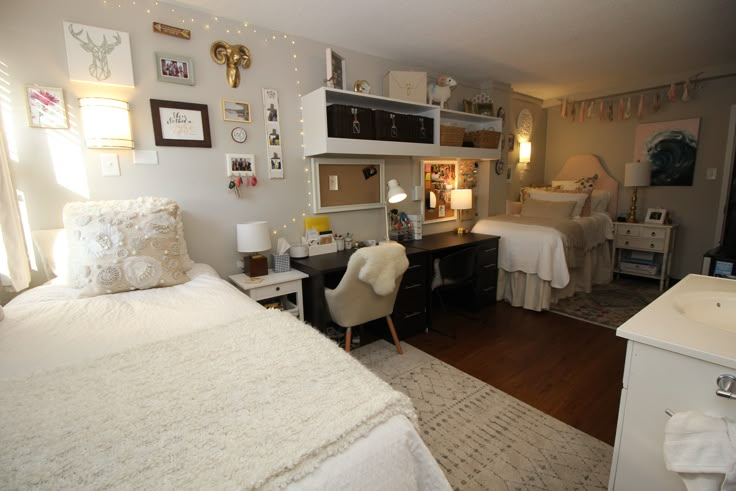
This layout is perfect when two people want privacy without physical separation. It feels almost like two small bedrooms living inside one shared space.
Why this setup works so well:
- Clear personal zones: Each bed feels like its own mini retreat, complete with personal decor and lighting.
- Shared function in the center: The desk area acts as a natural divider while staying useful for both people.
- Visual calm: Neutral tones and soft textures prevent the room from feeling busy, even with lots of furniture.
- Hotel-like comfort: Coordinated bedding and lighting make the space feel intentional instead of temporary.
How to recreate this layout:
- Use matching bed frames or bedding tones to keep things cohesive.
- Add a shared desk or shelving unit between sleeping areas to define space without blocking flow.
- Keep decor personal but curated—each side should reflect personality without overpowering the room.
- Use layered lighting (desk lamps + soft ambient light) to avoid harsh brightness.
This layout is ideal for roommates who want independence, comfort, and a calm atmosphere without needing physical walls.
Matching Layout With Coordinated Lighting Vibes
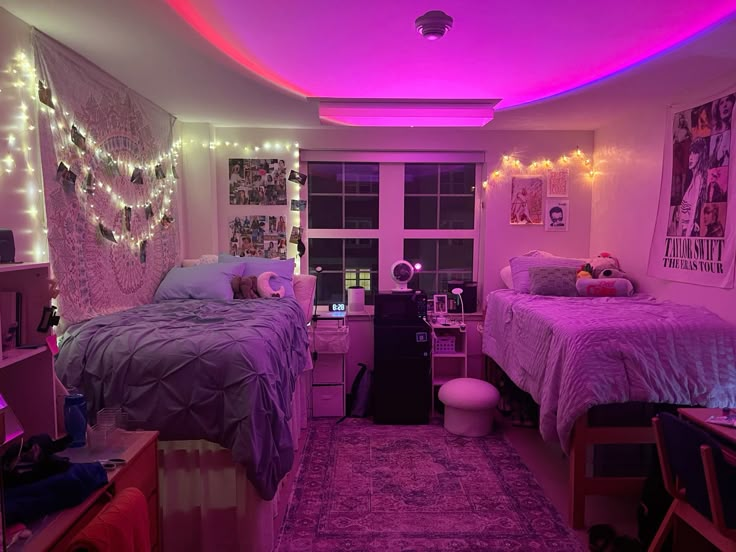
This setup nails the balance between shared energy and personal comfort. It’s especially good for roommates who want a cohesive look without losing individuality.
Why this layout works so well:
- Symmetry brings calm: Matching bed placement instantly makes the room feel intentional and balanced.
- Coordinated lighting sets the mood: Soft LED tones and string lights create a relaxed, cozy atmosphere without overwhelming the space.
- Personal zones still shine: Each side reflects personality through wall decor, bedding choices, and small accessories.
- Central shared space stays functional: The middle area stays open, keeping movement easy and preventing the room from feeling boxed in.
How to make this setup work in your own dorm:
- Choose one lighting tone (warm, pink, soft white) so the room feels cohesive instead of chaotic.
- Use matching or similar bed heights to maintain visual balance.
- Keep personal décor concentrated near each bed instead of spreading it everywhere.
- Add a small shared piece (like a stool or mini table) to subtly connect both sides.
This style works especially well for roommates who enjoy aesthetics, mood lighting, and a cozy nighttime vibe without sacrificing comfort.
Soft Symmetry With a Calm, Hotel-Style Feel
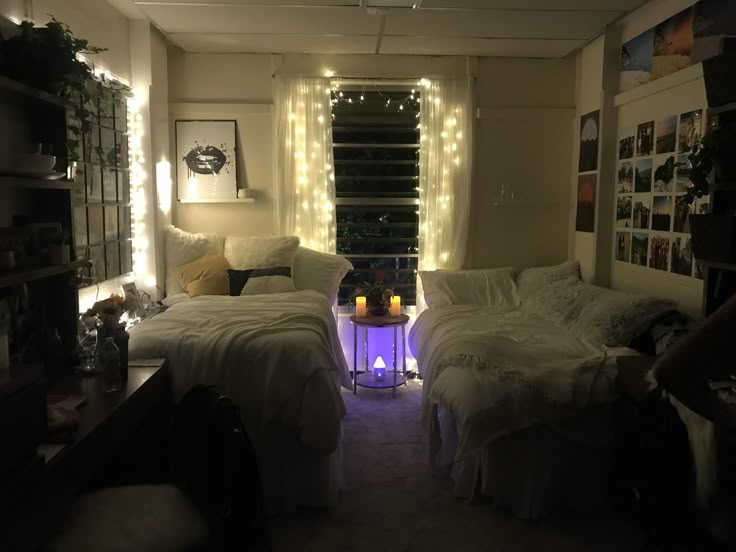
This layout leans into softness, balance, and calm—perfect for roommates who want their space to feel restful rather than busy. It’s cozy without feeling cluttered and styled without feeling staged.
Why this setup works so well:
- Balanced bed placement: Matching beds on opposite sides create a peaceful sense of order.
- Gentle lighting layers: Warm string lights and subtle accent lamps soften the room and reduce harsh shadows.
- Shared centerpiece: A small table between the beds gives structure while staying visually light.
- Comfort-first design: Plush bedding, soft textures, and muted tones help the room feel relaxing at any time of day.
How to recreate this vibe:
- Use soft whites, creams, and warm neutrals as your base palette.
- Add one shared focal point (like a small table or lamp) to connect both sides visually.
- Stick to low, ambient lighting rather than bright overhead lights.
- Keep wall decor simple and balanced to avoid visual noise.
This setup works especially well for roommates who want their room to feel calm, cozy, and emotionally grounding.
Soft Nature-Inspired Layout With Calm Symmetry

This setup leans into softness, greenery, and gentle symmetry—perfect for roommates who want a calm, grounding space that still feels personal and warm.
Why this layout works so well:
- Balanced bed placement: Beds facing each other with a shared center area create natural harmony and easy movement.
- Nature-inspired accents: Greenery, soft textures, and earthy tones help the room feel calmer and more breathable.
- Personal expression without clutter: Each side reflects personality through small decor pieces while keeping visual balance.
- Functional shared storage: A central table or organizer makes shared items easy to reach without crowding either side.
How to recreate this feel:
- Use soft greens, creams, and neutrals to create a peaceful base.
- Add lightweight greenery or vines to soften walls without overwhelming the space.
- Keep decor mostly at eye level or above to avoid crowding the floor.
- Use matching rugs or bedding tones to visually connect both sides of the room.
This setup works beautifully for roommates who want a calm, cozy atmosphere that feels personal without being overwhelming.
Clean & Balanced Layout With Shared Storage in the Center
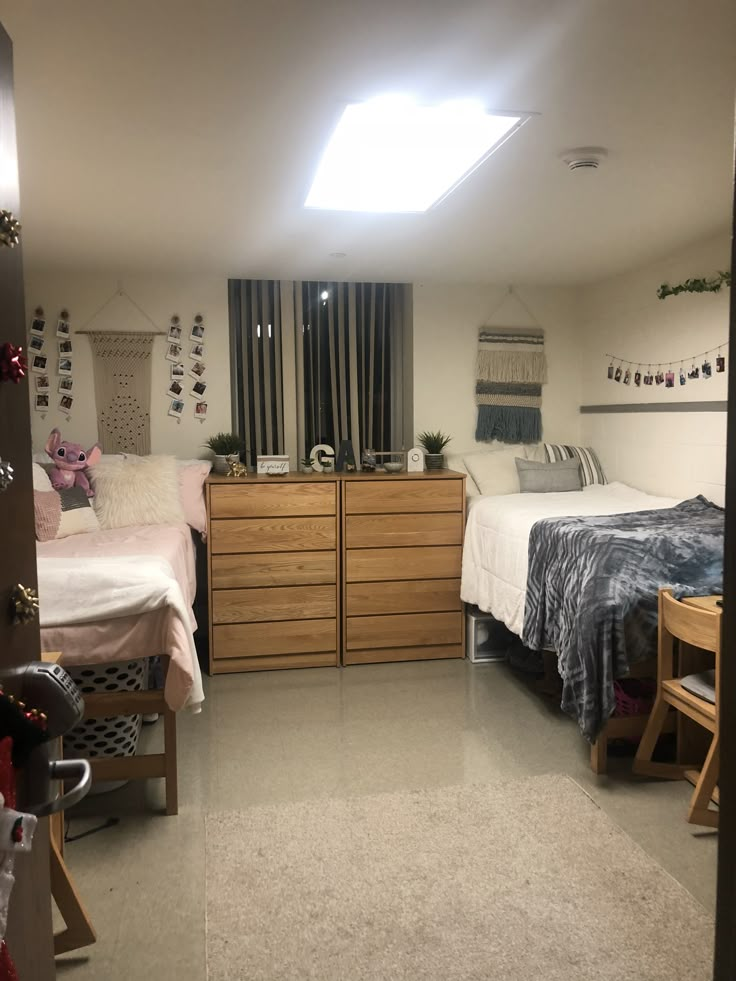
This setup is ideal for roommates who want structure, clarity, and an uncluttered feel without sacrificing comfort. Everything feels intentional, calm, and easy to maintain.
Why this layout works so well:
- Central storage creates balance: Matching dressers in the middle divide the space naturally while offering shared functionality.
- Clear personal zones: Each side feels equal, giving both people a sense of ownership and comfort.
- Open floor space: Keeping the center walkway clear makes the room feel larger and easier to move through.
- Simple, calm styling: Neutral colors and minimal décor reduce visual noise and help the room feel restful.
How to recreate this setup:
- Place matching dressers or storage units between beds to act as a natural divider.
- Keep décor minimal and intentional—choose a few meaningful pieces instead of many small ones.
- Use soft, neutral bedding to create cohesion without looking boring.
- Leave open space in the center to prevent the room from feeling cramped.
This layout works especially well for roommates who value organization, symmetry, and a calm environment that stays functional all semester.
Split-Function Layout With Lounge + Sleep Zones
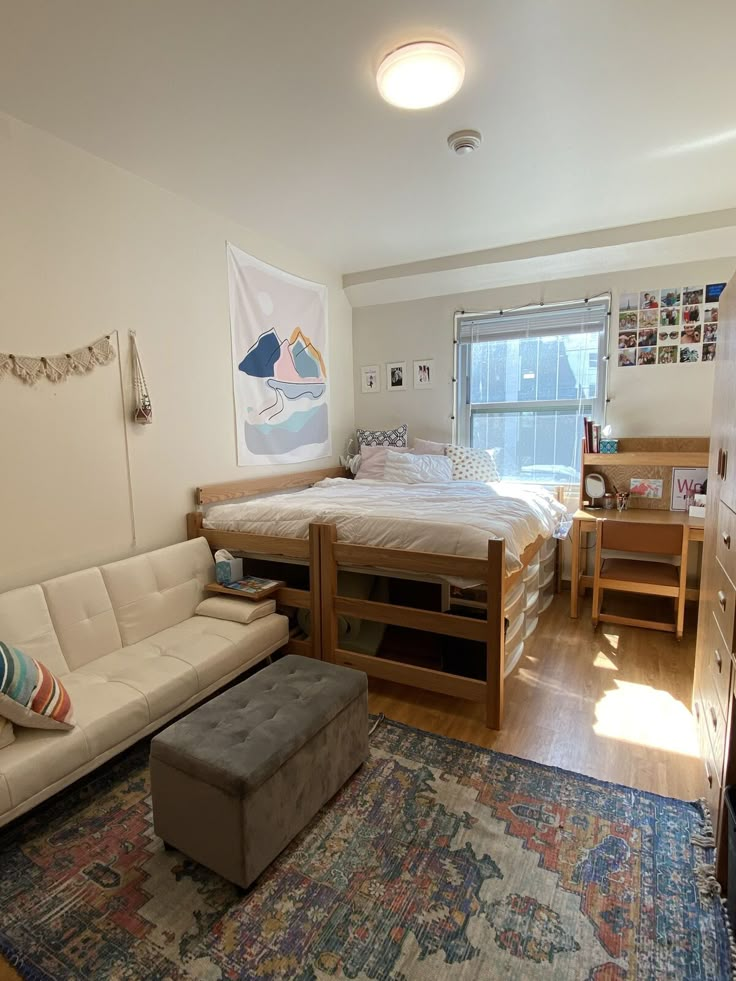
This setup works beautifully when two people want both a shared hangout area and a comfortable sleep space without crowding the room.
Why this layout works so well:
- Clear zone separation: One side supports rest, the other supports relaxing or social time—without walls or dividers.
- Multi-use furniture: A small couch and ottoman create flexibility for studying, chatting, or decompressing.
- Open sightlines: Keeping the center open prevents the room from feeling boxed in, even with larger furniture pieces.
- Balanced comfort: Soft textures paired with clean lines keep the space cozy but not cluttered.
How to recreate this setup:
- Choose compact seating that doesn’t overpower the room.
- Use low-profile furniture to keep the space feeling open.
- Anchor the layout with a soft rug to visually define the lounge area.
- Keep personal decor mostly near each bed to maintain balance.
This setup is ideal for roommates who want their room to double as a chill zone without sacrificing sleep comfort.
Vertical Bunk Layout With Cozy Personal Corners
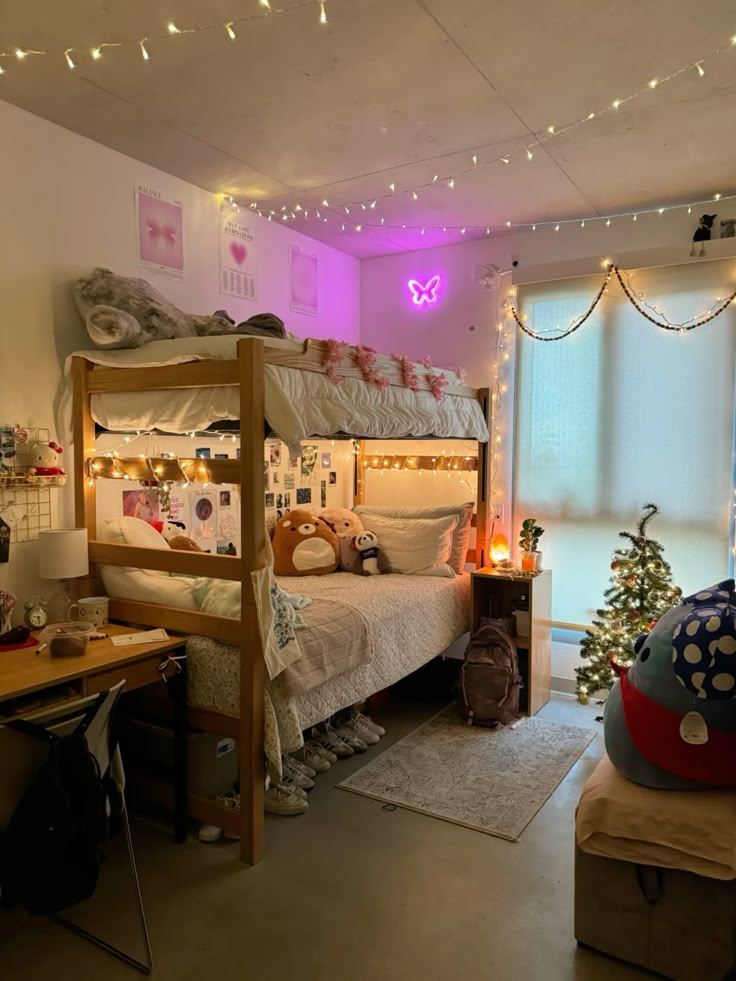
This setup makes the most of vertical space while keeping the room warm, playful, and personal. It’s a great option for roommates who want distinct zones without losing that cozy, shared energy.
Why this layout works so well:
- Vertical stacking saves space: Bunking the beds frees up valuable floor area for movement, storage, or lounging.
- Strong personal zones: Each level feels like its own mini retreat, complete with decor, lighting, and personality.
- Soft lighting creates comfort: String lights and warm glows soften the room and make it feel inviting at any hour.
- Smart use of under-bed space: Storage bins, shoes, and bags stay organized without cluttering the room.
How to recreate this setup:
- Use warm string lights or LED accents to add depth without overpowering the space.
- Add soft textures (pillows, plush decor, blankets) to balance the structure of the bunk bed.
- Keep walkways clear to avoid the space feeling tight.
- Choose a few statement decor pieces instead of filling every surface.
This layout works especially well for roommates who love a cozy, playful vibe while still keeping things functional.
Split-Zone Comfort With a Lounge-First Feel
Split-Zone Comfort With a Lounge-First Feel
This setup works especially well when one side of the room doubles as a social or relaxation zone while still keeping sleep space calm and functional.
Why this layout works so well:
- Clear zoning without walls: The sleeping area stays elevated and defined, while the lounge area feels open and inviting.
- Comfort-forward design: A couch, ottoman, and soft rug make the space usable beyond just sleeping or studying.
- Balanced proportions: Furniture heights stay low and visually light, which prevents the room from feeling crowded.
- Natural light advantage: Keeping the bed near the window helps the room feel open and energized during the day.
How to recreate this setup:
- Use a raised bed or platform to separate sleep from hangout space without blocking light.
- Add soft seating like a loveseat or pouf to encourage downtime without taking over the room.
- Keep decor calm and cohesive so both sides feel connected.
- Anchor the space with a large rug to visually define the shared area.
This layout is ideal for roommates who want a room that feels both livable and social—somewhere you can relax without always being on your bed.
This setup works especially well when one side of the room doubles as a social or relaxation zone while still keeping sleep space calm and functional.
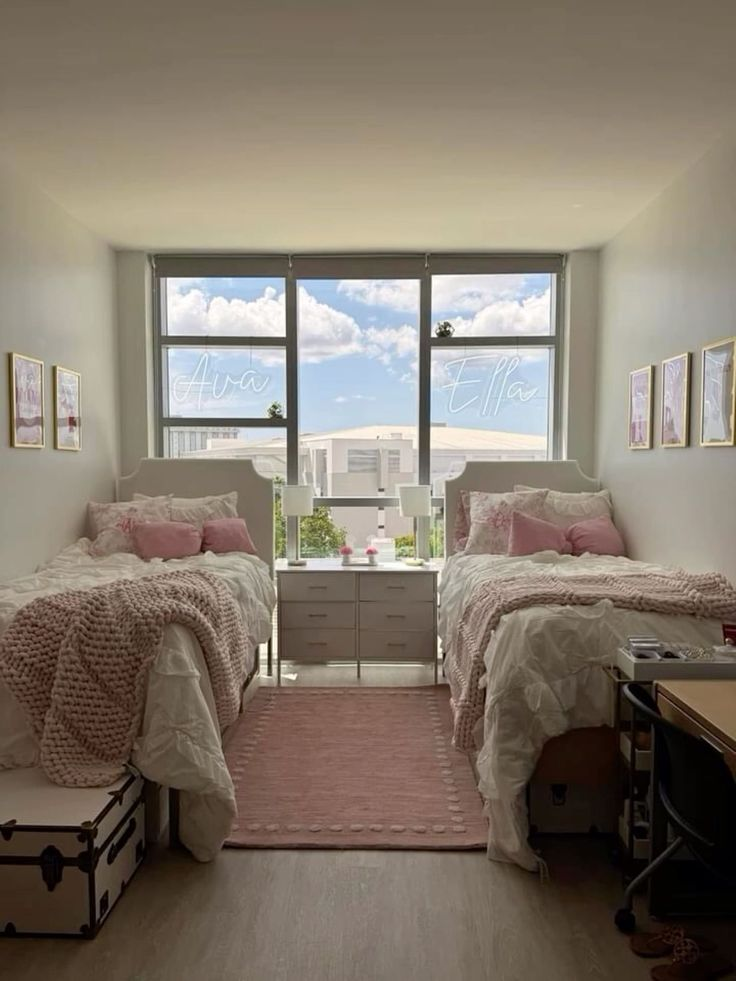
Why this layout works so well:
- Clear zoning without walls: The sleeping area stays elevated and defined, while the lounge area feels open and inviting.
- Comfort-forward design: A couch, ottoman, and soft rug make the space usable beyond just sleeping or studying.
- Balanced proportions: Furniture heights stay low and visually light, which prevents the room from feeling crowded.
- Natural light advantage: Keeping the bed near the window helps the room feel open and energized during the day.
How to recreate this setup:
- Use a raised bed or platform to separate sleep from hangout space without blocking light.
- Add soft seating like a loveseat or pouf to encourage downtime without taking over the room.
- Keep decor calm and cohesive so both sides feel connected.
- Anchor the space with a large rug to visually define the shared area.
This layout is ideal for roommates who want a room that feels both livable and social—somewhere you can relax without always being on your bed.
Cozy Elevated Beds With Smart Under-Storage
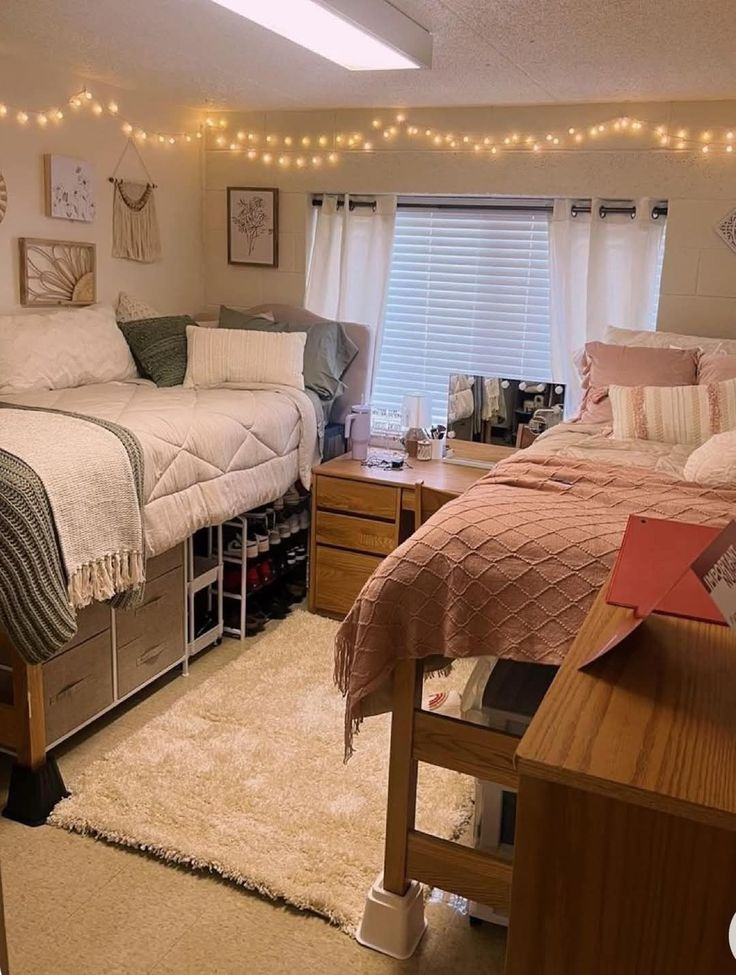
This setup is perfect for shared dorms where storage, comfort, and warmth all matter equally. It feels lived-in, calm, and thoughtfully arranged without being overly styled.
Why this layout works so well:
- Raised beds create hidden storage: The space underneath becomes ideal for bins, shoes, or drawers without crowding the room.
- Warm, cohesive tones: Soft neutrals and blush accents make the space feel welcoming and calm.
- Balanced layout: Both sides mirror each other enough to feel fair, while still allowing personal touches.
- Soft lighting enhances comfort: String lights and warm lamps instantly soften the room and make evenings more relaxing.
How to recreate this setup:
- Use bed risers or lofted frames to gain functional storage space.
- Choose coordinated bedding colors rather than identical sets for balance without stiffness.
- Add one plush rug to anchor the center and soften foot traffic.
- Keep lighting warm and layered to avoid harsh overhead brightness.
Cozy Corner Layout With a Shared Entertainment Focus
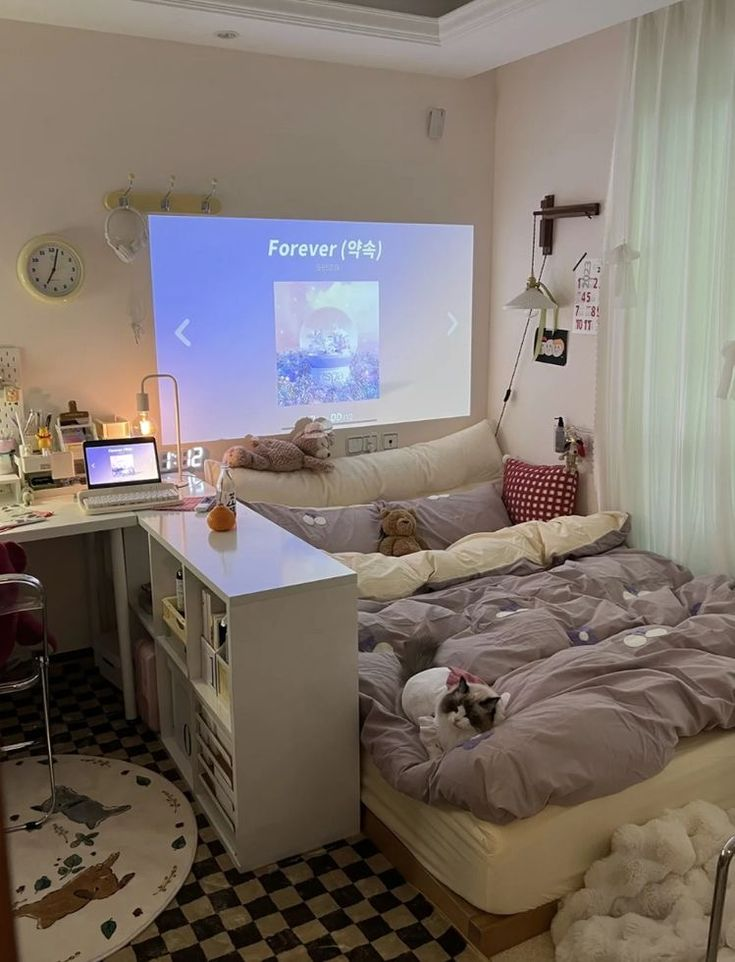
This setup blends comfort, personality, and functionality—perfect for roommates who like relaxing together without sacrificing personal space.
Why this layout works so well:
- Multi-use focal point: The shared viewing area creates a natural hangout zone without needing extra furniture.
- Soft, grounded layout: Keeping everything low to the ground makes the room feel relaxed and cozy rather than crowded.
- Blended personal + shared space: One side leans more toward rest, the other toward productivity, yet both flow naturally together.
- Warm, lived-in energy: Soft textures, warm lighting, and personal items make the space feel emotionally comfortable, not staged.
How to recreate this setup:
- Use a low bed or floor mattress to keep the space open and relaxed.
- Add a compact desk or divider that doubles as storage and visual separation.
- Keep lighting soft and layered—ambient light works better than overhead brightness.
- Choose decor that feels comforting rather than matchy; balance matters more than symmetry here.
This layout is ideal for roommates who want a cozy, shared retreat that feels personal, relaxed, and easy to live in.
Cozy Twin Beds With Soft Glow Ambience
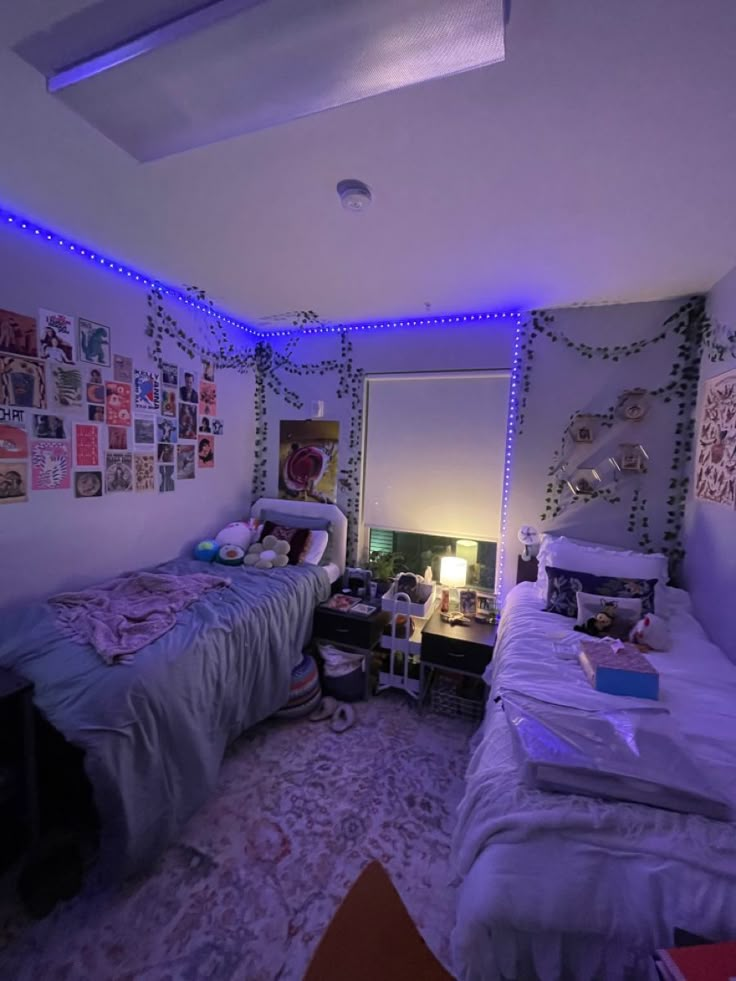
This layout is perfect for roommates who love a calm, dreamy atmosphere that still feels personal and lived-in. It balances comfort, mood lighting, and individuality without overwhelming the space.
Why this setup works so well:
- Soft lighting creates instant calm: LED strips and warm lamps reduce harsh overhead lighting and make evenings feel relaxed.
- Balanced twin layout: Both beds feel equal in size and importance, which helps maintain harmony in shared spaces.
- Personal expression without clutter: Wall art, photos, and small decor pieces give personality while staying visually organized.
- Comfort-first design: Plush bedding, soft rugs, and layered textures make the room feel welcoming at any time of day.
How to recreate this look:
- Use LED strip lights or fairy lights around the ceiling perimeter for ambient glow.
- Keep bedding soft and layered, mixing textures rather than bold patterns.
- Limit wall decor to a few intentional groupings instead of covering every inch.
- Choose warm, dimmable lighting to avoid harsh brightness at night.
This layout is ideal for roommates who want a cozy, calming space that still feels expressive and personal.
Functional Divider Layout With Shared Desk Space
This setup is great for roommates who want clear separation without closing off the room. It blends practicality with comfort, making everyday routines smoother and less chaotic.
Why this layout works so well:
- Built-in separation: A shared desk or shelving unit creates two distinct personal zones without blocking light or airflow.
- Efficient use of space: Storage, workspace, and room division all happen in one footprint.
- Equal access: Both roommates get their own bed area while sharing a functional center zone.
- Natural light stays balanced: The layout keeps the window unobstructed, helping the room feel brighter and more open.
How to recreate this setup:
- Use a desk or shelving unit as a divider instead of bulky furniture.
- Keep the divider mid-height so the room still feels connected.
- Personalize each side with bedding, pillows, or wall décor without overcrowding.
- Store shared items (printer, bins, supplies) in the center to keep things fair and tidy.
This setup works especially well for roommates who study often and want privacy without sacrificing connection or light.
Extra Ideas That Elevate Any Shared Dorm
Smart Storage That Doesn’t Feel Bulky
- Use under-bed bins, rolling drawers, or stackable cubes to keep clutter out of sight.
- Choose storage that doubles as decor—woven baskets, fabric bins, or soft crates.
Lighting Changes Everything
- Layer lighting with lamps, warm LEDs, and ambient glow instead of relying on overhead lights.
- Soft lighting instantly makes shared spaces feel calmer and more personal.
Create Visual Boundaries Without Walls
- Rugs, desks, or shelving can gently divide space without cutting off airflow or light.
- This helps each person feel ownership without closing things off.
Match the Mood, Not Everything
- You don’t need identical decor.
- Matching color tones or textures keeps the room cohesive while allowing personality to shine.
Keep One “Calm Zone”
- Whether it’s the sleeping area or a shared corner, designate one space that stays visually calm and clutter-free.
Conclusion
A shared dorm works best when it feels balanced, intentional, and lived-in—not forced or overdesigned. The most successful setups prioritize comfort, flow, and small personal touches that make everyday life easier. With the right layout, lighting, and storage choices, even the smallest room can feel warm, functional, and genuinely yours. When both people feel comfortable in the space, everything else tends to fall into place naturally.
Other Articles
15 Modern Valance Window Treatment Ideas You’ll Love in 2026
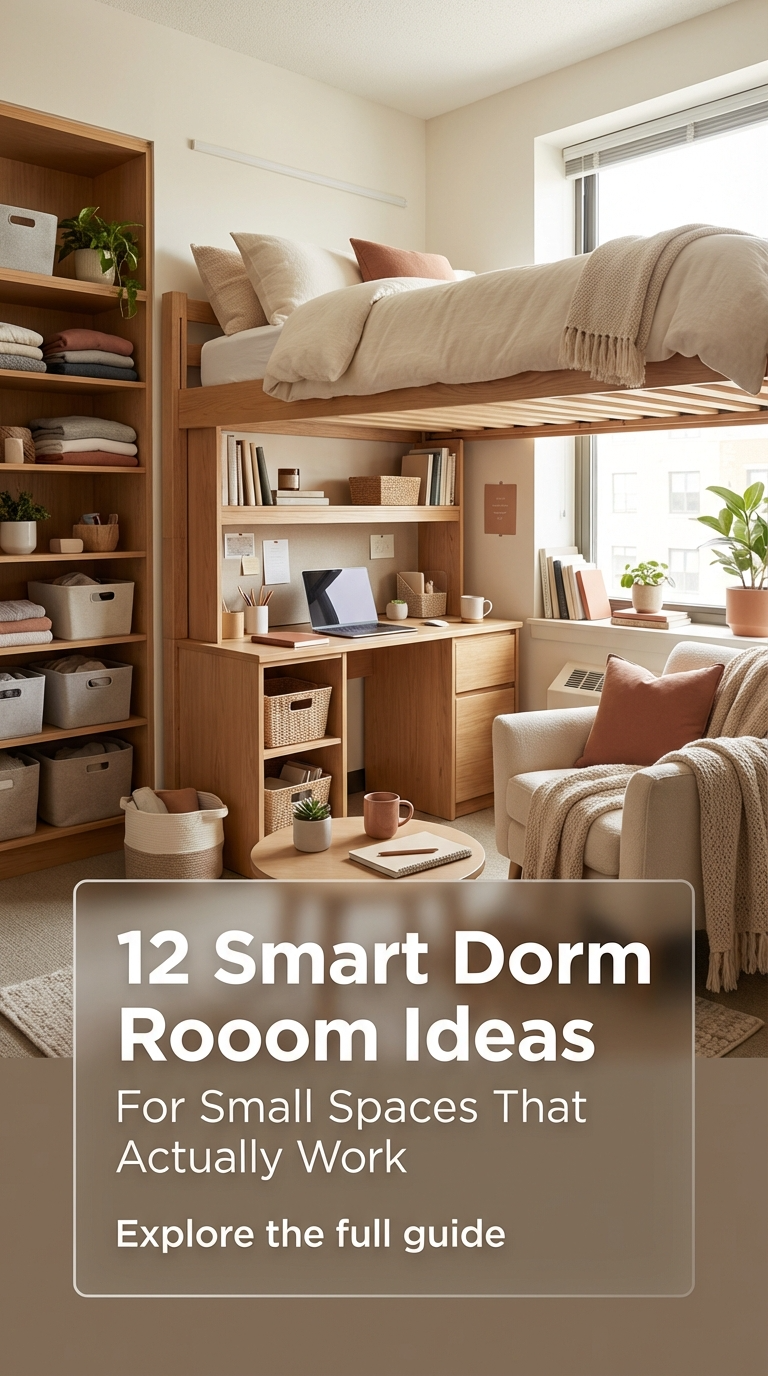
12 Smart Dorm Room Ideas for Small Spaces That Actually Work
No Comment! Be the first one.