


17 Minimalist Room Ideas That Instantly Feel Calm & Clean
A calm, clean room isn’t about owning less for the sake of it. It’s about removing friction — visual, mental, and physical — so the space works with you instead of against you. Minimalist rooms feel peaceful because nothing is fighting for attention. Every choice has a reason.
These ideas focus on practical changes you can actually apply, whether you’re working with a tiny bedroom or a larger space that still feels chaotic. You don’t need a full renovation. You need clearer decisions, fewer distractions, and layouts that make calm the default.
Keep the Palette Soft and Limited
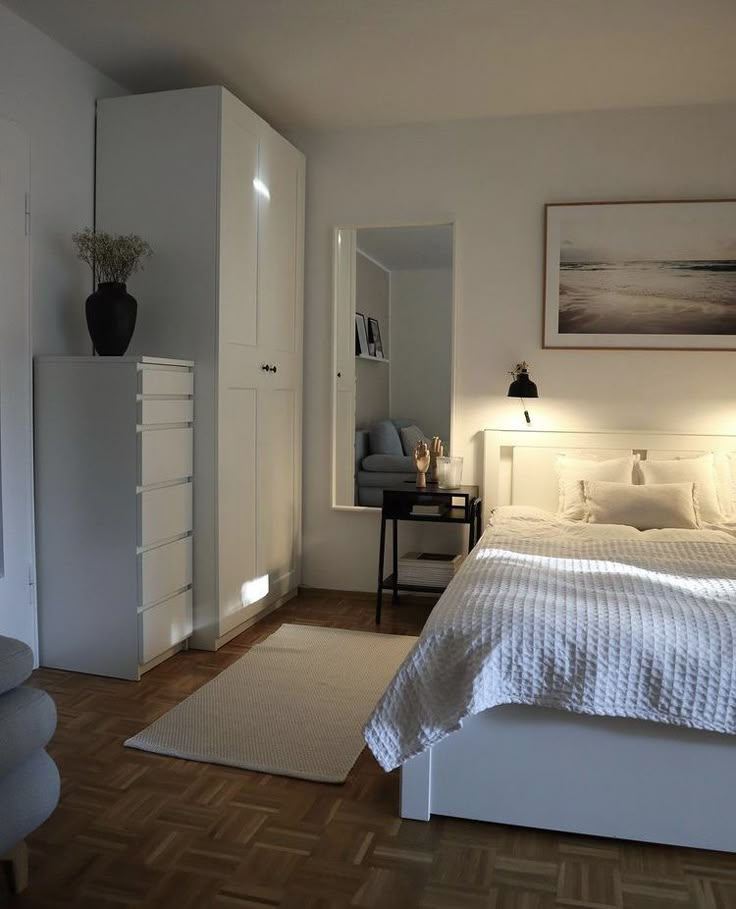
Start by stripping the room back to a tight, neutral color range. Whites, warm off-whites, light greys, and soft wood tones work together to reduce visual noise and make the space feel instantly calmer. When everything sits within the same family of colors, the room feels cohesive even with very few elements.
To apply this:
- Choose one main neutral for walls and large furniture
- Add one supporting tone through textiles like bedding or rugs
- Keep contrast gentle rather than stark
If you’re unsure, err on the side of lighter shades. They reflect light better, make the room feel more open, and prevent the space from feeling heavy or crowded.
Build Storage Into the Structure
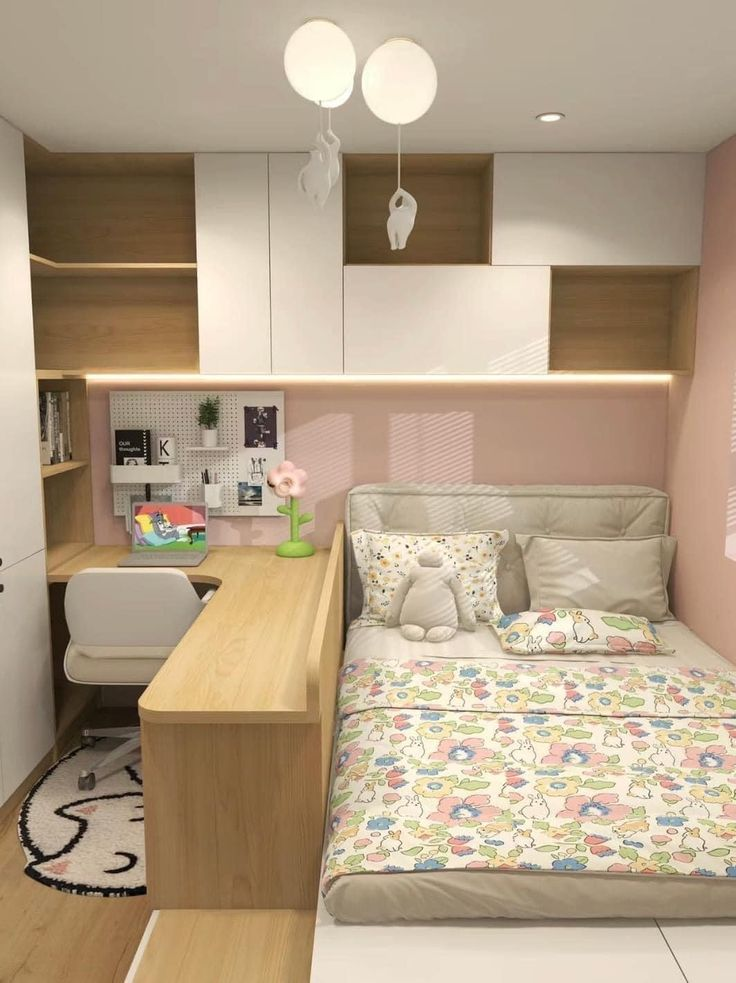
One of the fastest ways to make a room feel calm is to stop relying on loose furniture. Built-in storage keeps everything contained, aligned, and visually quiet. When shelves, cabinets, and desks are integrated into the walls, the room feels intentional instead of pieced together.
How to apply this in a practical way:
- Combine sleep, work, and storage into one continuous layout
- Use closed cabinets for everyday clutter and a few open spots for essentials
- Keep finishes consistent so nothing visually competes
This approach is especially powerful in small rooms. You gain function without adding bulk, and the space feels cleaner even when it’s fully in use.
Hide Visual Clutter With Flush Cabinetry
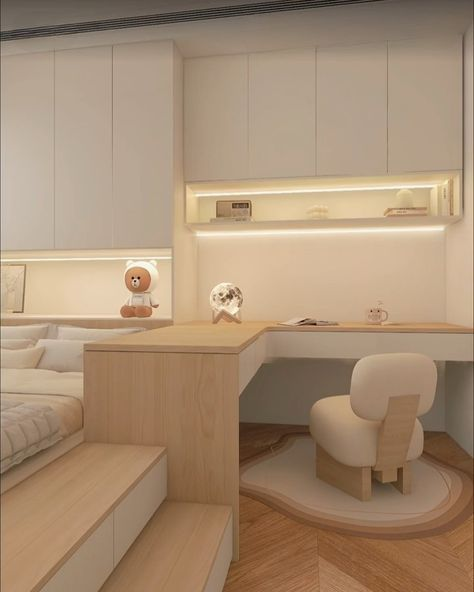
Minimalist rooms feel calm when storage disappears into the background. Floor-to-ceiling cabinets with flat fronts reduce visual breaks and make walls feel uninterrupted. When handles are removed or recessed, the room reads as calmer and more spacious—even if it’s doing a lot of work behind the scenes.
To recreate this effect:
- Choose handleless or push-to-open cabinets
- Match cabinet color closely to the wall color
- Store anything non-essential completely out of sight
This setup is ideal if you want a room that feels tidy without constant effort. When clutter has a hidden home, the space stays clean by default, not discipline.
Use Indirect Lighting to Soften the Room
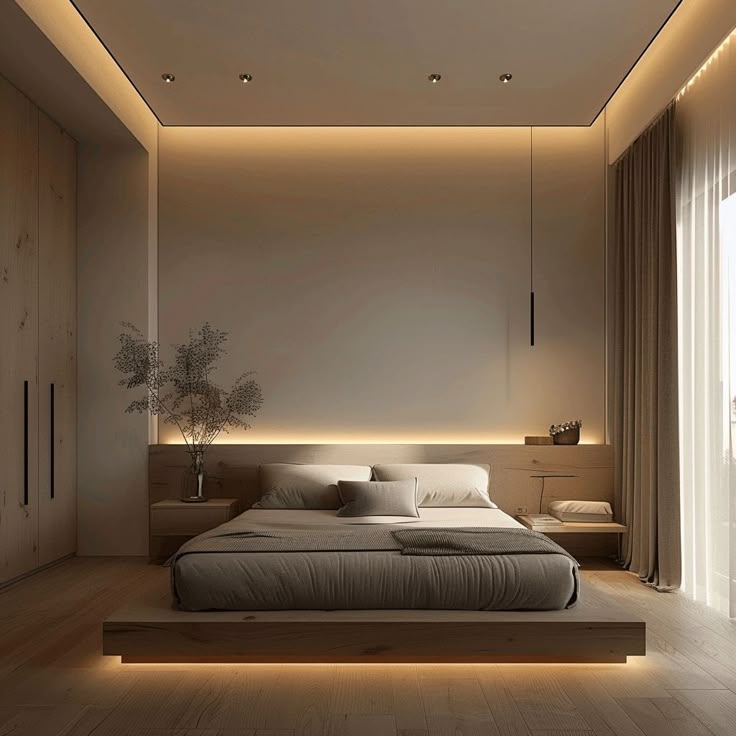
Harsh overhead lighting can instantly ruin a calm space. Indirect lighting—hidden strips, recessed glows, and soft wall washes—creates depth without drawing attention to the light source itself. The result is a room that feels warm, quiet, and intentionally designed.
To apply this at home:
- Add LED strips behind headboards, shelves, or wall panels
- Use warm light temperatures rather than cool white
- Limit ceiling fixtures to subtle accents instead of main light sources
This kind of lighting reduces shadows and visual tension. It makes the room feel restful at night and balanced during the day, even with minimal décor.
Let Furniture Do Double Duty
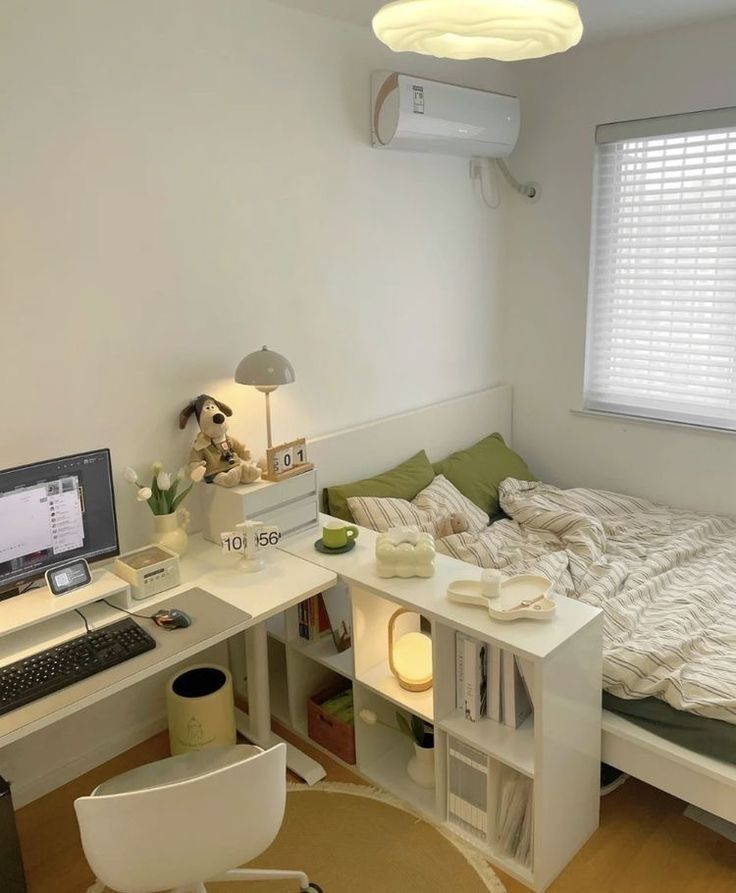
Minimalist rooms work best when each piece earns its place. Combining functions—like sleep, work, and storage—reduces the total number of items while keeping the room practical. Fewer pieces mean fewer visual breaks, which instantly makes a space feel cleaner.
To apply this idea:
- Use bedside units that also act as shelving or desks
- Choose open storage only for everyday essentials
- Keep surfaces lightly styled so they don’t feel crowded
This approach is especially useful in smaller rooms. When furniture works harder, the room feels simpler without sacrificing comfort or function.
Keep Wall Decor Sparse and Intentional
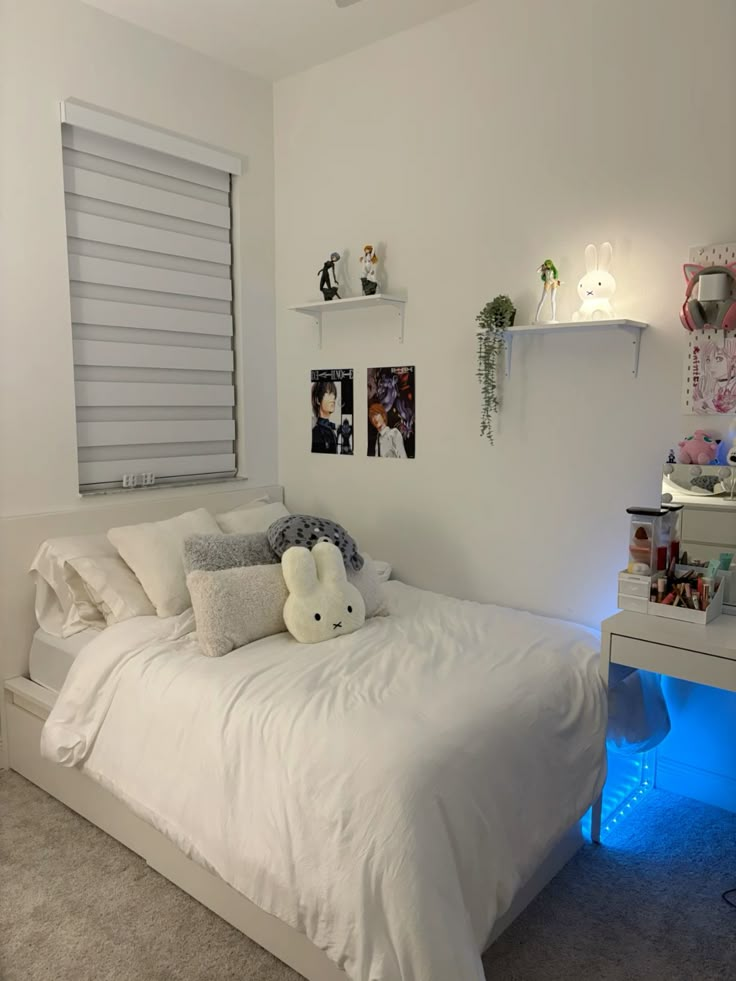
Minimalism doesn’t mean bare walls, but it does mean being selective. A few well-chosen pieces spaced generously feel calmer than a crowded gallery wall. Leaving visible gaps gives the eye a place to rest and stops the room from feeling busy.
To apply this without overthinking it:
- Limit wall decor to one small cluster or a few single pieces
- Keep everything within a tight color range
- Mount items higher or with more spacing to avoid visual clutter
If you love collectibles or art, rotate them instead of displaying everything at once. The room stays fresh, and nothing competes for attention.
Leave Open Floor Space Wherever Possible
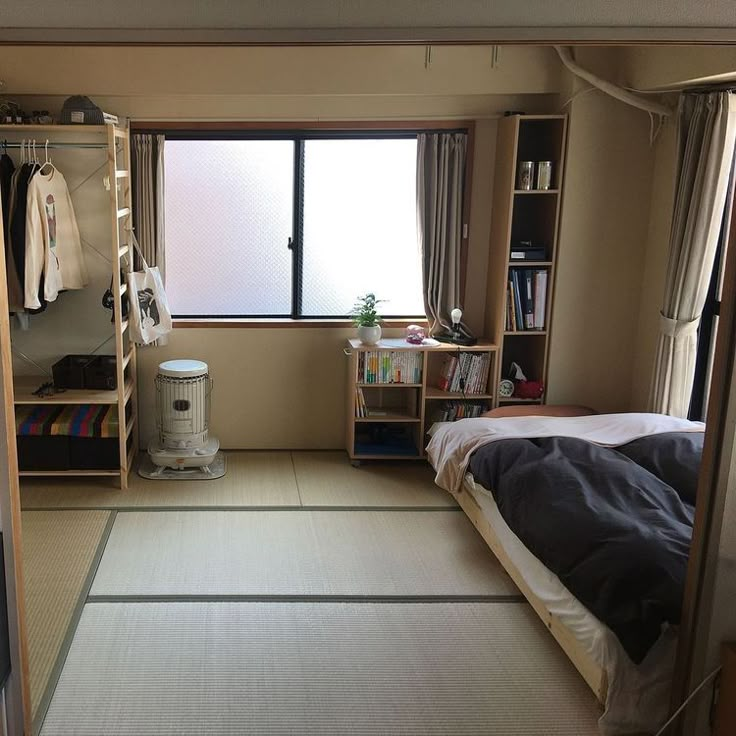
A calm room needs breathing room. Open floor space makes everything feel lighter, even if the room isn’t large. When furniture hugs the walls and circulation paths stay clear, the space feels organized without trying.
To apply this idea:
- Push larger pieces against walls instead of floating them
- Avoid filling corners unless they serve a clear purpose
- Choose low-profile furniture to keep sightlines open
If you’re unsure what to remove, start with anything that interrupts walking paths. Clearing the floor instantly makes the room feel more peaceful and intentional.
Anchor the Room With One Simple Focal Point
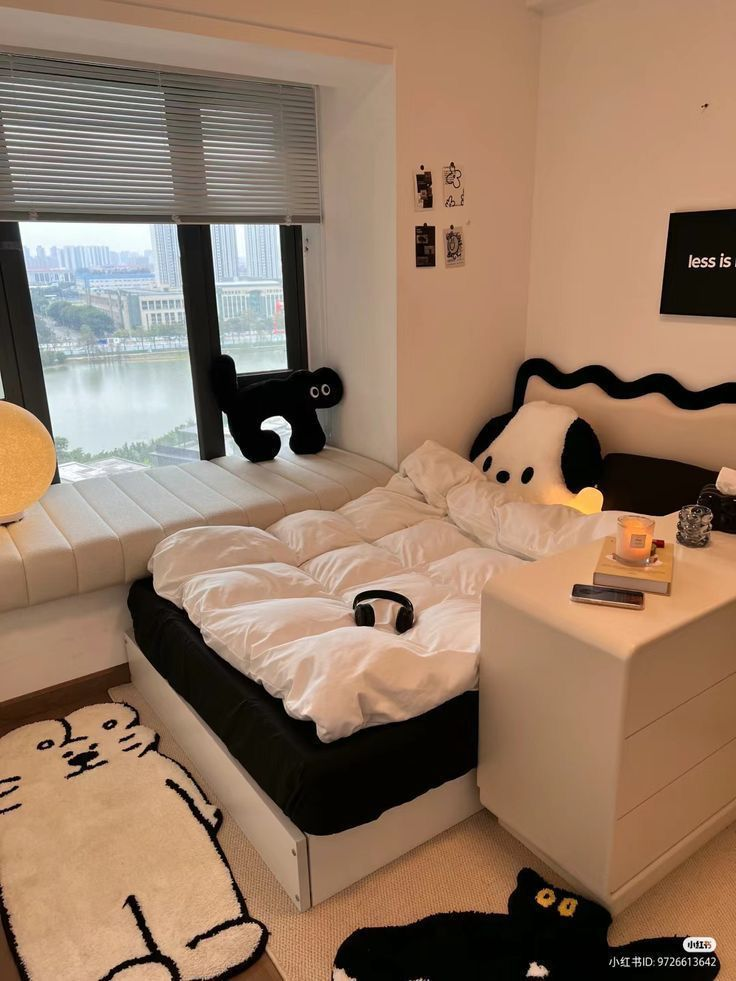
Minimalist rooms still need a visual anchor. The difference is choosing one clear focal point instead of many competing elements. When the bed, seating nook, or main surface carries the visual weight, everything else can stay calm and supportive.
To apply this cleanly:
- Let one large element dominate the space
- Keep surrounding furniture low-contrast and quiet
- Avoid adding secondary “statement” pieces nearby
This creates instant order. The room feels intentional rather than empty, and your eye knows exactly where to land when you walk in.
Use Dark Tones Carefully for a Calm, Cocooned Feel
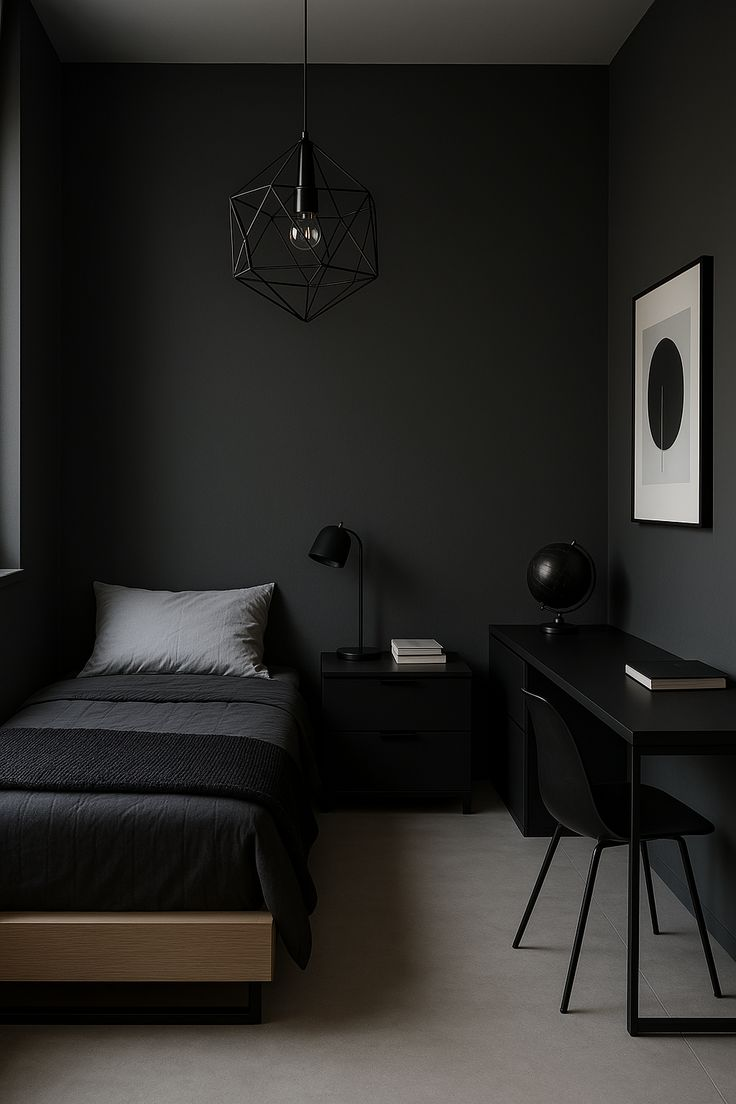
Minimalism doesn’t have to mean light and airy. Deep, dark tones can feel just as calm when they’re used with restraint. A single dark color applied consistently creates a cocoon effect that feels intentional rather than heavy.
To make this work without overwhelming the room:
- Stick to one dominant dark shade instead of mixing many
- Balance it with simple shapes and clean lines
- Keep furniture and decor minimal so the color does the work
Dark rooms feel most peaceful when nothing competes for attention. The simplicity lets the space feel grounded, quiet, and surprisingly relaxing.
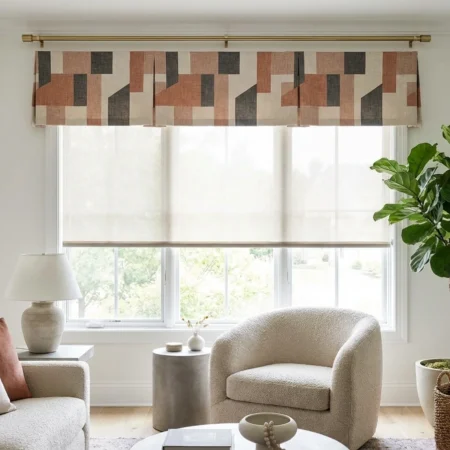
Let Natural Light and Simple Curtains Lead
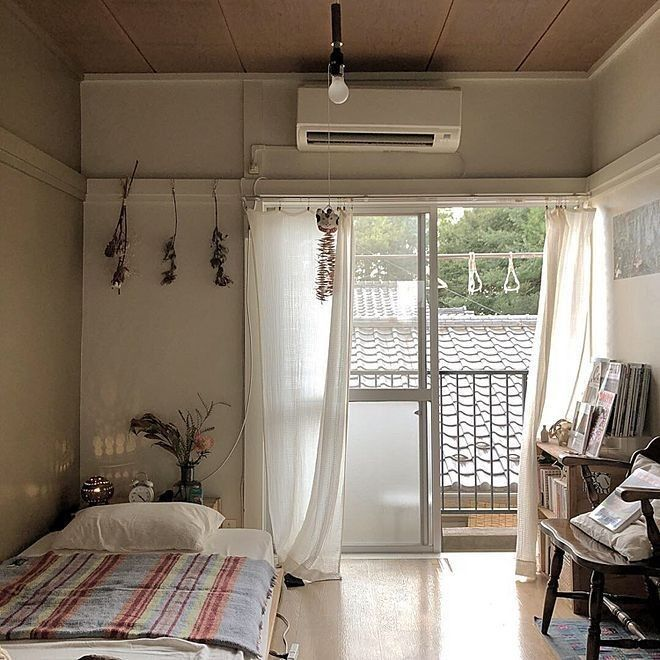
Calm rooms rely heavily on light. When natural light is allowed to flow freely, the space feels open and relaxed even with very little décor. Lightweight curtains soften the room without blocking brightness or adding visual weight.
To apply this simply:
- Use sheer or lightly textured curtains
- Avoid heavy patterns or bold colors near windows
- Keep window areas mostly clear of furniture
This setup makes the room feel fresh throughout the day and cozy in the evening. Light becomes part of the design, not something you have to compensate for.
Separate Zones Without Adding Walls
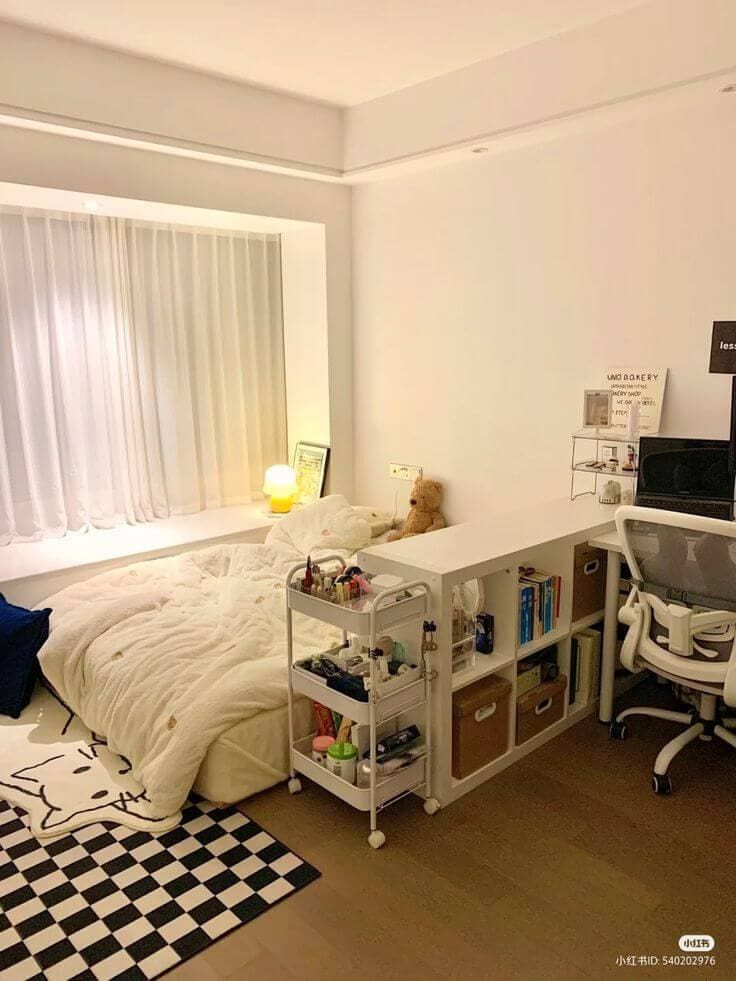
A minimalist room can handle multiple functions as long as each area feels clearly defined. Instead of walls or bulky dividers, subtle zoning keeps the space calm while still organized. The goal is separation without visual clutter.
To do this cleanly:
- Use low shelving or storage units to mark boundaries
- Change rug textures or patterns to signal different zones
- Keep each zone visually simple so nothing feels crowded
This approach helps the room feel purposeful rather than chaotic. Everything has its place, but the space still reads as open and uncluttered.
Keep Surfaces Clear With One Styling Rule
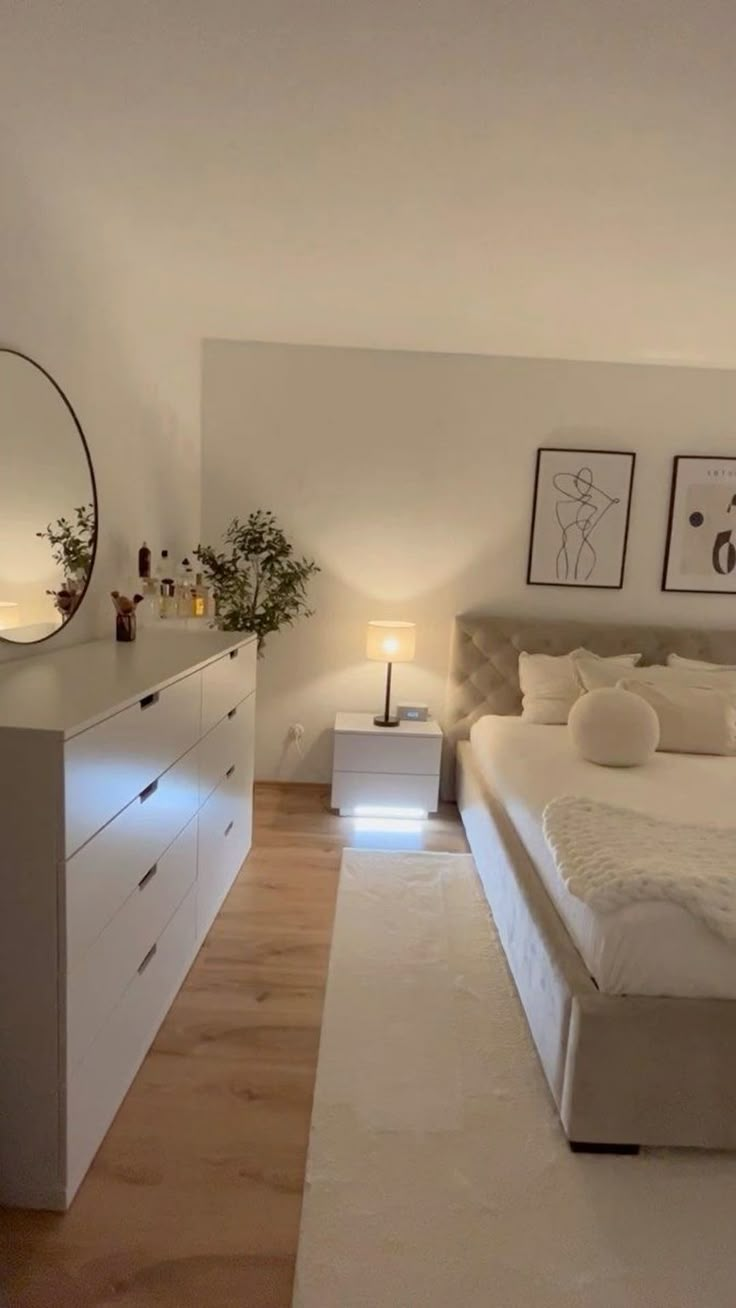
Flat surfaces are where clutter sneaks in fastest. A minimalist room stays calm when dressers, nightstands, and consoles follow a simple styling rule: one functional item, one decorative item, nothing more. This keeps the room feeling intentional instead of unfinished.
To apply this easily:
- Limit each surface to two or three objects max
- Group small items on a tray to create order
- Leave visible empty space so surfaces can breathe
When surfaces stay mostly clear, the entire room feels cleaner—even if storage is working hard behind the scenes.
Stick to Low, Grounded Furniture
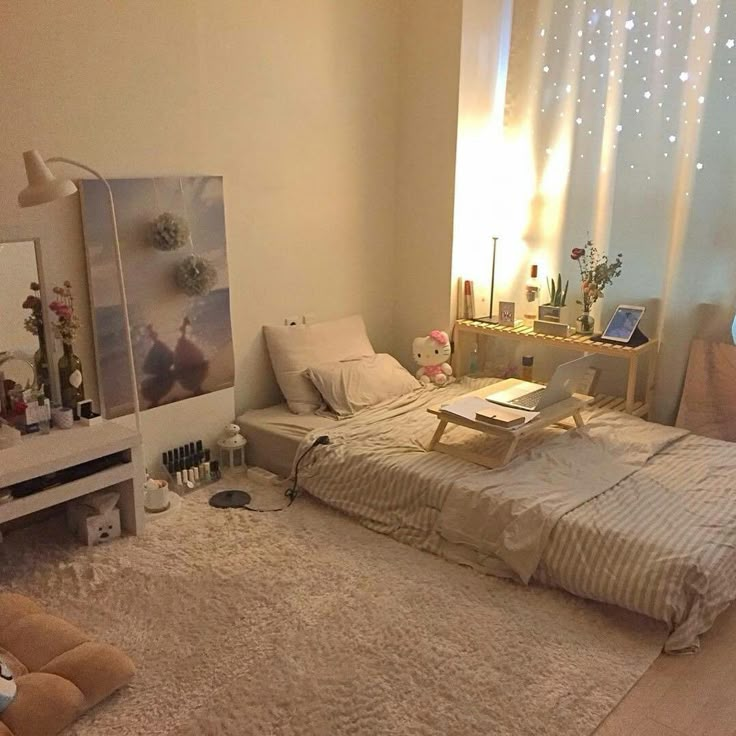
Rooms feel calmer when furniture stays close to the floor. Low beds, short tables, and compact seating lower the visual center of gravity, which makes the space feel more open and relaxed. This is especially effective in bedrooms meant for rest.
To apply this idea:
- Choose platform beds or floor-level frames
- Keep side tables and desks visually light
- Avoid tall, bulky pieces unless absolutely necessary
Lower furniture creates a sense of ease. The room feels less formal, less crowded, and more naturally calming.
Create Balance Through Symmetry
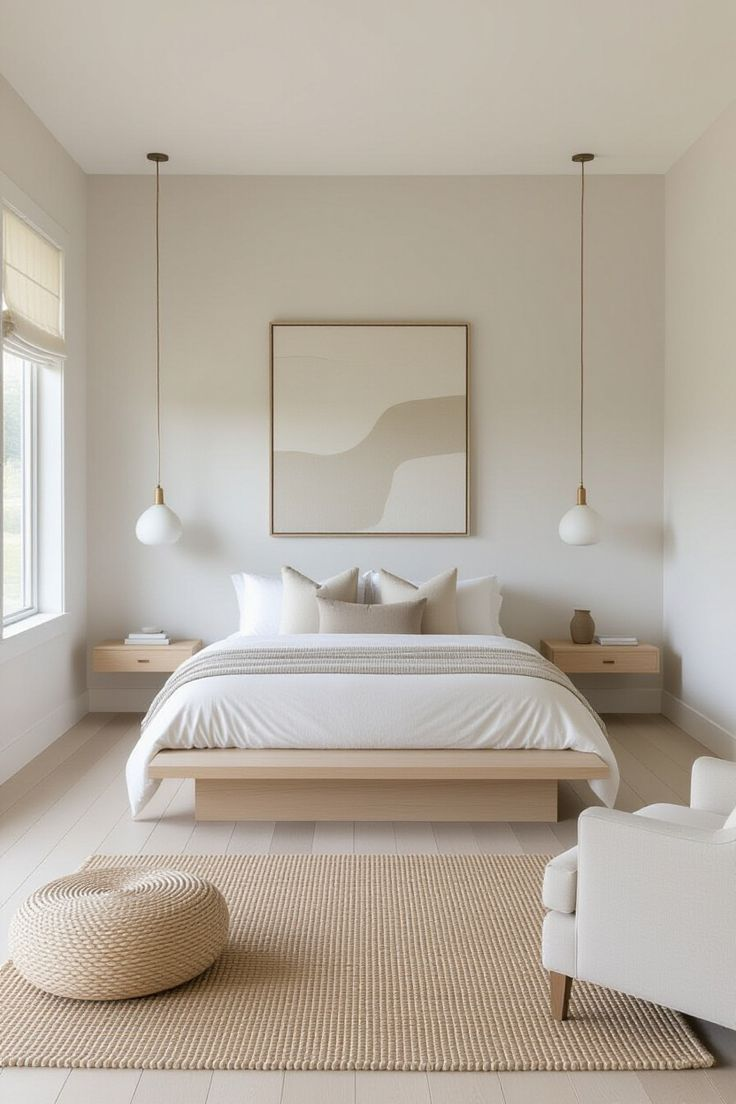
Symmetry brings instant calm because the brain reads it as order. When major elements are evenly balanced, the room feels settled and intentional without adding anything extra. This works especially well in bedrooms and other rest-focused spaces.
To apply symmetry without making the room feel stiff:
- Match bedside tables or lighting on both sides
- Keep spacing consistent, not necessarily identical décor
- Use symmetry for large pieces, then keep smaller items minimal
Balanced layouts reduce visual tension. The room feels composed, clean, and easy to relax in.
Strip the Room Back to the True Essentials
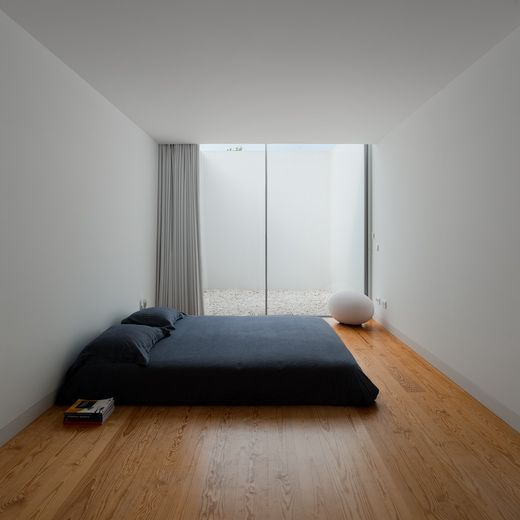
The calmest minimalist rooms are often the most disciplined. When only the essentials remain, the space feels intentional instead of styled. Fewer items mean fewer decisions for the eye, which creates instant mental quiet.
To apply this in a practical way:
- Start by removing anything that isn’t used daily
- Keep furniture count intentionally low
- Let empty space be part of the design, not something to fill
If a room ever feels overwhelming, this is the reset button. Reducing down to the basics makes calm the default, not something you have to maintain.
Use Mirrors to Amplify Light Without Adding Clutter
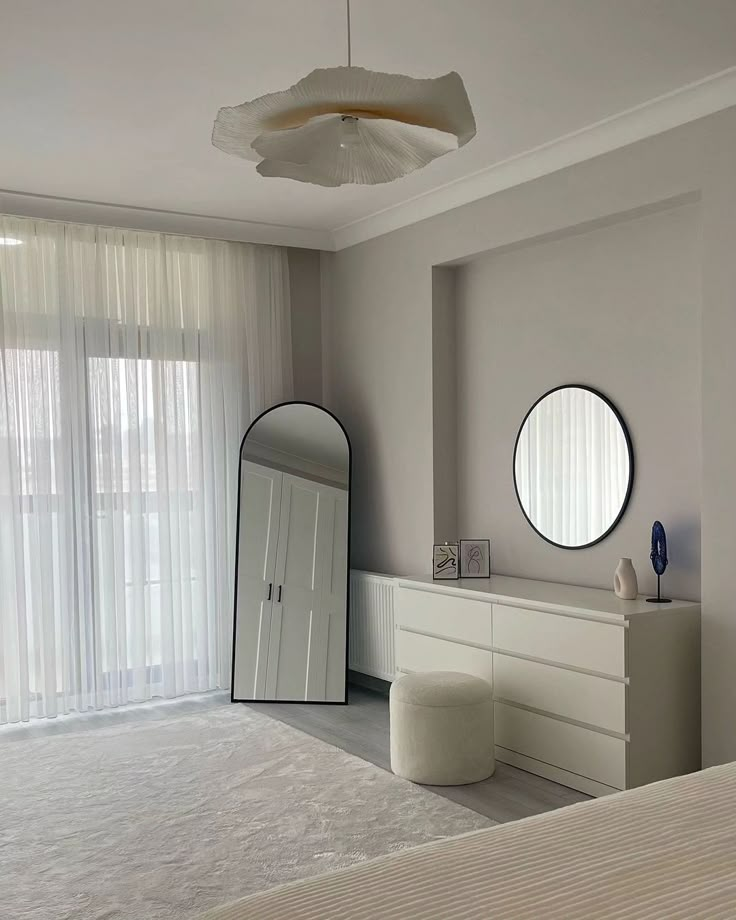
Mirrors are one of the few decor pieces that actively make a minimalist room feel calmer. They reflect light, expand the sense of space, and add visual interest without introducing color or texture overload. When chosen simply, they blend in while quietly doing a lot of work.
To use mirrors effectively:
- Opt for clean shapes like arches, circles, or simple rectangles
- Lean or mount one large mirror instead of several small ones
- Keep frames thin and neutral so they don’t compete
A well-placed mirror makes the room feel brighter and more open without adding anything you have to maintain or style.
Choose Natural Materials for Quiet Warmth
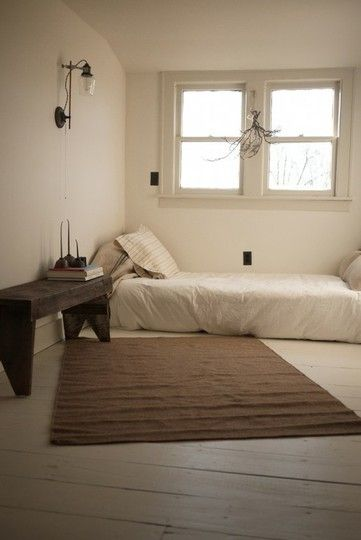
Minimalist rooms can feel cold if everything is too sleek. Natural materials bring warmth without adding clutter. Wood, linen, wool, and simple ceramics soften the space and make it feel lived-in rather than bare.
To apply this gently:
- Favor unfinished or lightly finished wood
- Use natural textiles for bedding and rugs
- Keep textures subtle instead of layered or busy
These materials age well and don’t demand attention. They quietly support a calm, grounded atmosphere that still feels comfortable.
Conclusion
Minimalism isn’t a look you copy — it’s a system you build. The calm comes from consistency, restraint, and letting space exist without pressure to fill it. When storage is intentional, light is soft, and furniture earns its place, the room stays clean almost effortlessly.
You don’t have to apply everything at once. Start with one idea that solves your biggest source of stress — cluttered surfaces, harsh lighting, or overcrowded furniture. Each small change compounds. Before long, the room stops demanding attention and starts giving it back.
Other Articles
21 Coffee Bar Ideas for Small Spaces (Perfect for Apartments)
14 Small Apartment Bedroom Ideas You’ll Wish You Tried Sooner

No Comment! Be the first one.