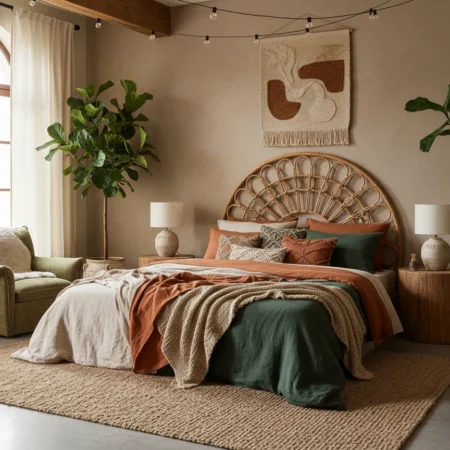


You know that feeling when you walk into a hotel room and everything just feels right? Nine times out of ten, it’s the curtains doing the heavy lifting. They’re probably floor-to-ceiling, they block out light perfectly, and they make the whole room feel more expensive than it actually is.
Here’s the thing about bedroom curtains: most people treat them as an afterthought. You pick whatever matches your comforter, hang them at whatever height seems about right, and call it done. But curtains can completely change how your bedroom looks and, more importantly, how well you sleep in it.
I’m going to walk you through 15 curtain styles that actually make a difference. Some will help you sleep better, some will make your room look twice as expensive as it is, and some will solve specific problems you might be dealing with—like weirdly-sized windows or a bedroom that turns into a sauna every afternoon.
The Classic Styles That Always Work
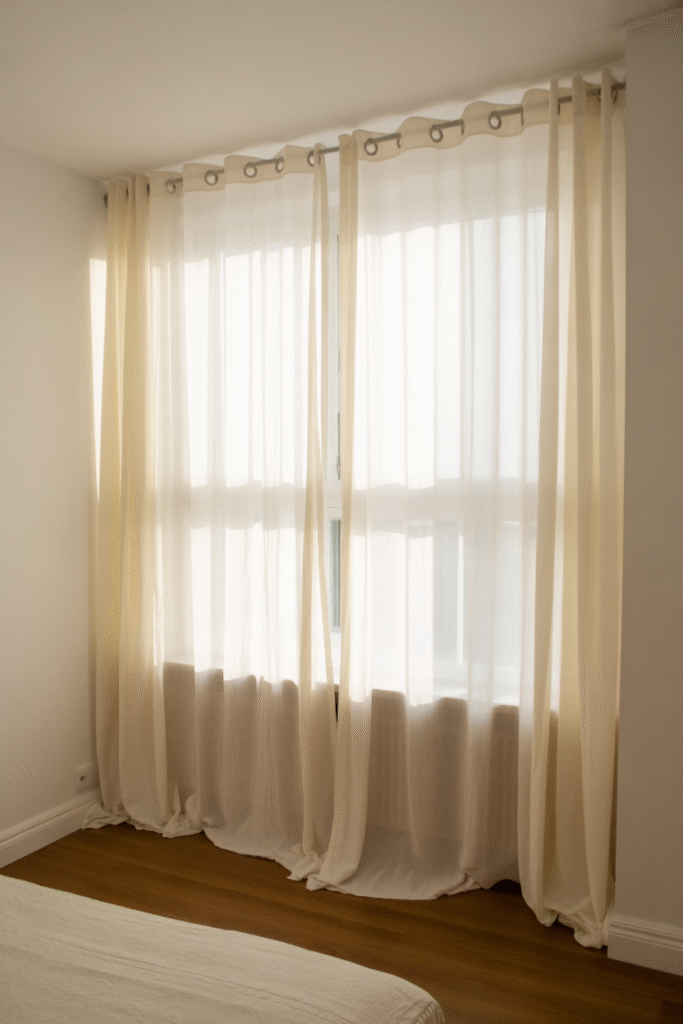
1. Floor-to-Ceiling Sheer White Curtains
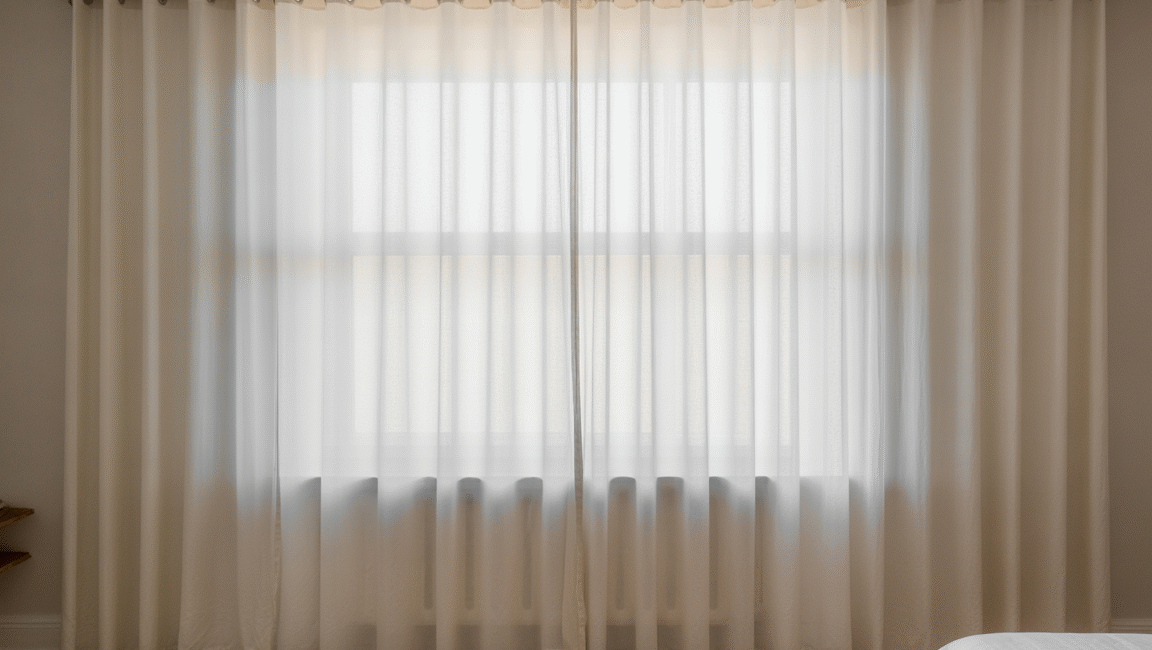
If you want your bedroom to feel bigger and airier, this is where you start. Sheer white curtains that run from ceiling to floor make any room feel more spacious. They let in soft, filtered light during the day without broadcasting your business to the neighbors.
The trick here is installation height. Don’t mount your curtain rod just above the window like most people do—go as close to the ceiling as you can. Even in a room with 8-foot ceilings, this makes a noticeable difference. Your walls look taller, your windows look more impressive, and suddenly your bedroom feels less like a box.
Best for: Small bedrooms, minimalist aesthetics, or anyone who wants more natural light without sacrificing privacy.
What to look for: A rod-pocket or back-tab style works well here. You want the fabric to have some movement to it, not hang stiff like a shower curtain.
2. Blackout Curtains in Solid Colors
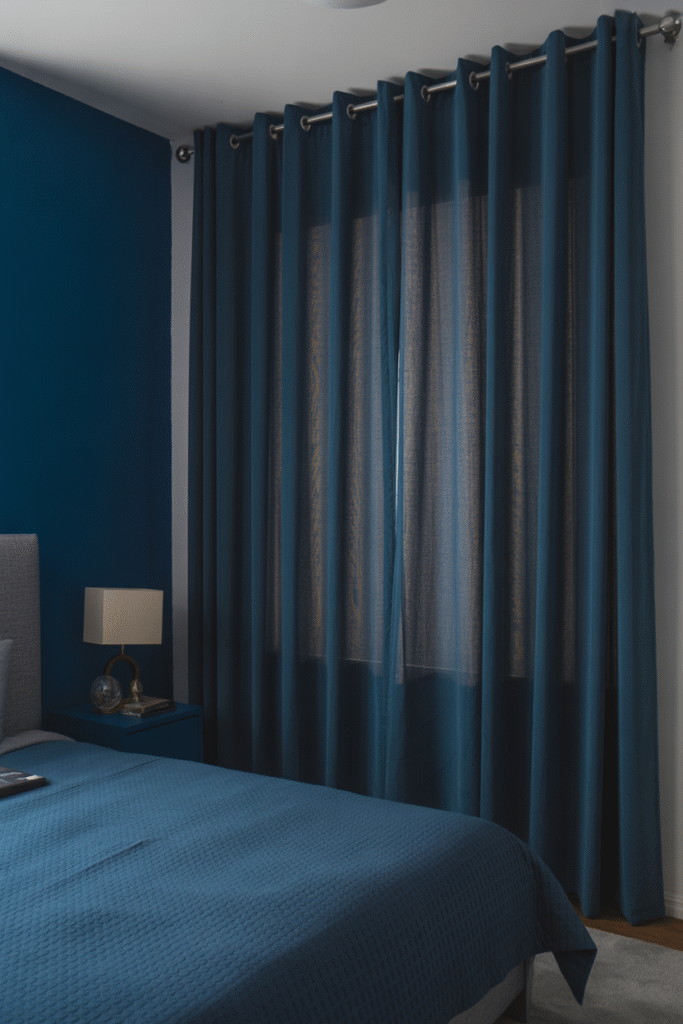
Let’s talk about sleep quality. If you’re someone who wakes up the moment sunlight hits your face, or you work night shifts and need to sleep during the day, blackout curtains are non-negotiable. But here’s what most people get wrong: they buy those cheap blackout curtains that feel like rubber and look industrial.
Good blackout curtains come with a dense lining that blocks light without looking like you’re trying to develop photographs in your bedroom. Solid, rich colors work best—deep navy, charcoal gray, forest green, or even black if your room can handle it.
The difference you’ll notice: Complete darkness, yes, but also better temperature control. That backing that blocks light also insulates your windows, which means your bedroom stays cooler in summer and warmer in winter.
Installation tip: Make sure your curtains are wider than your window—you want at least 4-6 inches of overlap on each side. Light sneaks in through gaps, and that defeats the entire purpose.
3. Linen or Linen-Blend Curtains
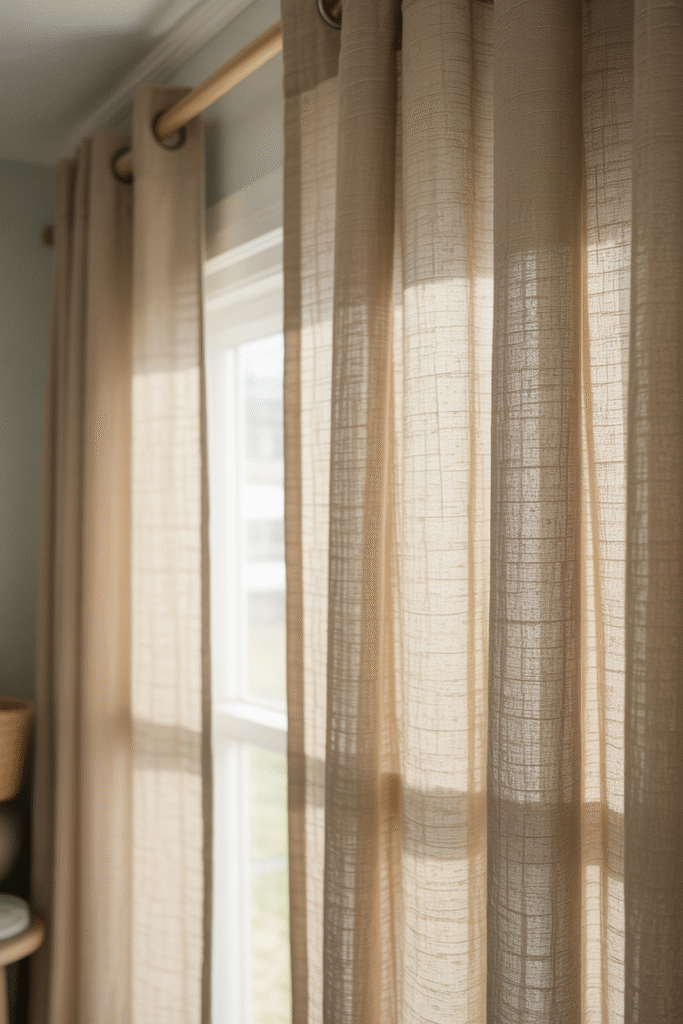
Linen curtains have this effortlessly elegant thing going on. They’re textured, they drape beautifully, and they work with pretty much any bedroom style from modern to farmhouse to bohemian.
Real linen is expensive and wrinkles like crazy—which is actually part of the appeal if you’re going for that relaxed, lived-in look. If that’s not your thing, linen-blend curtains (usually linen mixed with cotton or polyester) give you the same aesthetic with easier care and a lower price tag.
Colors to consider: natural beige, warm gray, soft white, or muted earth tones. Linen in jewel tones exists too, but the neutral versions are more versatile.
What they’re good at: Filtering light gently while maintaining privacy. They won’t make your room pitch black, but they’ll take the harsh edge off afternoon sun.
Statement Curtains That Change the Whole Room
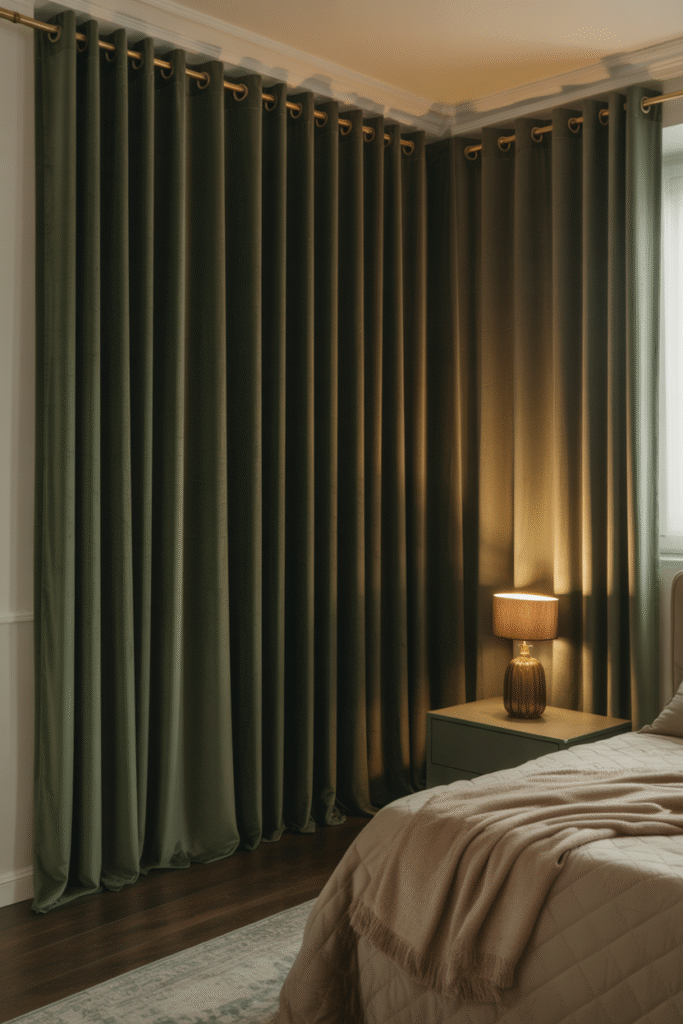
4. Velvet Curtains for Luxury on a Budget
Want to make your bedroom look more expensive? Velvet curtains are probably the easiest upgrade you can make. The fabric catches light in a way that adds depth and richness to your space, and the weight of velvet automatically makes everything feel more substantial.
You don’t need to go full Victorian drama here. Modern velvet curtains come in clean, simple styles and contemporary colors. Dusty rose, emerald green, burnt orange, or classic navy all work beautifully.
The catch: Velvet shows dust and pet hair like nobody’s business, so factor in maintenance. Most velvet curtains need to be professionally cleaned or at least vacuumed regularly with an upholstery attachment.
Bonus feature: Velvet is naturally insulating, so you get both style and function.
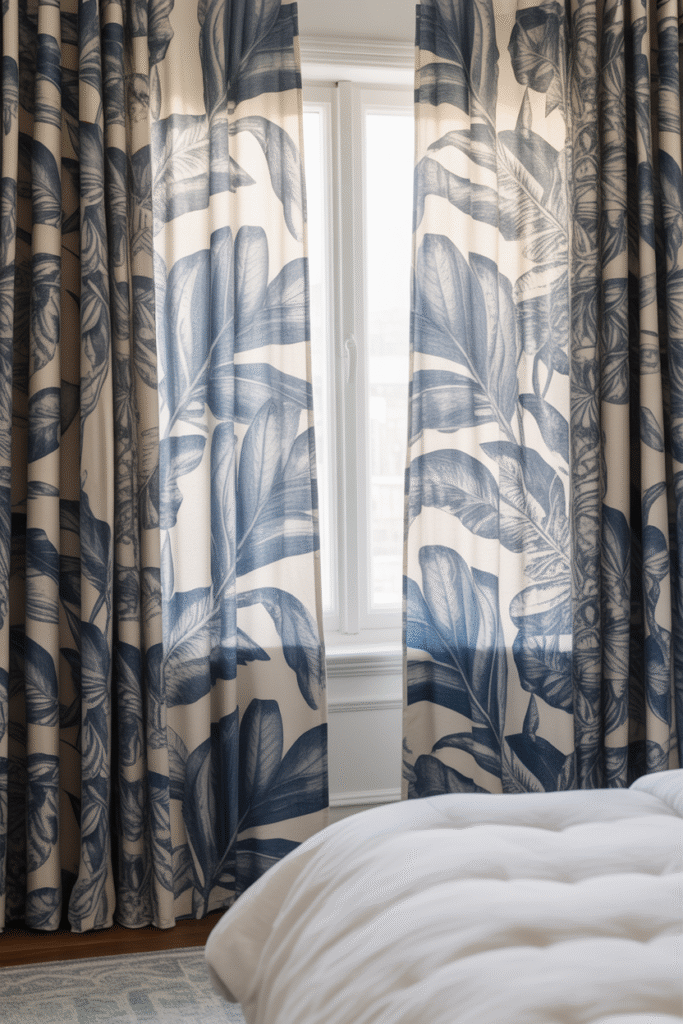
5. Bold Patterned Curtains
If your bedroom feels boring, patterned curtains can fix that faster than repainting. Florals, geometric prints, botanical designs, or even abstract patterns—the key is choosing something you actually like, not just what’s trendy this year.
Here’s the rule of thumb: if your bedding is patterned, keep curtains simple. If your bedding is solid, curtains can handle a bold pattern. You’re aiming for balance, not visual chaos.
Scale matters: Large rooms can handle oversized patterns. Small rooms do better with smaller-scale prints or patterns with lots of white space, which keeps things from feeling cramped.
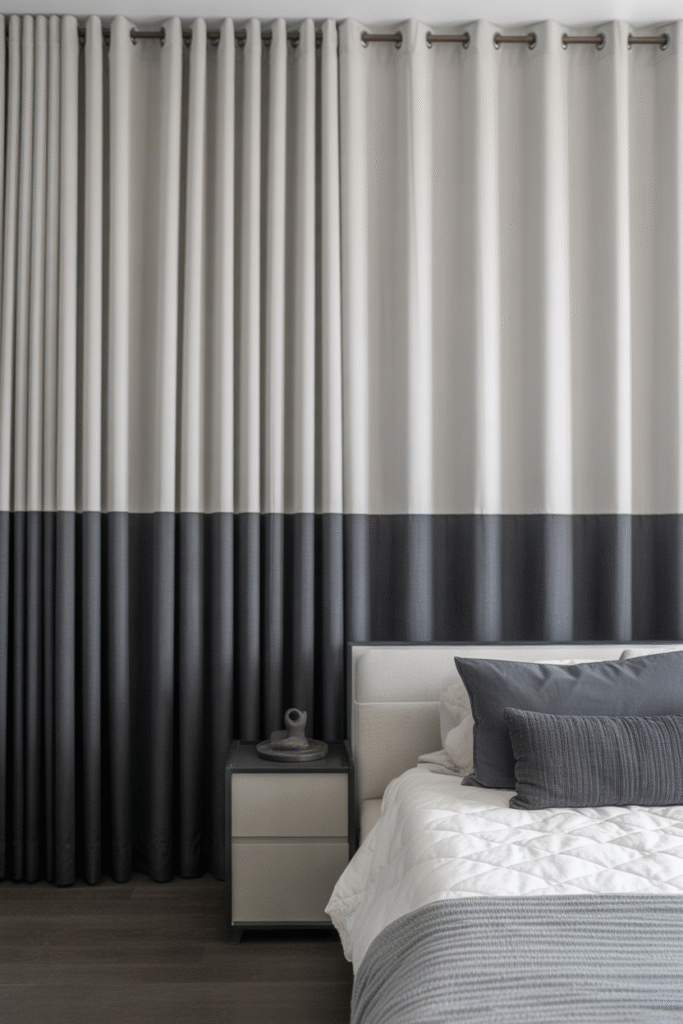
6. Two-Tone or Color-Block Curtains
This is a more modern, architectural approach to bedroom curtains. You get curtains divided horizontally into two colors—maybe white on top and navy on the bottom, or gray transitioning to charcoal.
The color division creates a visual line that can make your ceilings look higher if you position it strategically (aim for about two-thirds up from the floor). It also lets you incorporate two colors from your room’s palette without committing to one or the other.
Style tip: This works especially well in contemporary or transitional bedrooms. It might look out of place in a traditional or cottage-style room.
Practical Solutions for Specific Problems
7. Layered Curtains (Sheer Plus Blackout)
Can’t decide between natural light during the day and complete darkness at night? Layer them. Use a double curtain rod—sheers in front, blackout panels behind.
During the day, keep the blackout curtains open and enjoy filtered sunlight through the sheers. At night, close everything for darkness and privacy. You get flexibility without constantly taking curtains down and putting up different ones seasonally.
Installation note: Make sure your blackout panels are on the rod closest to the window. This makes them more effective at blocking light and also looks better visually.
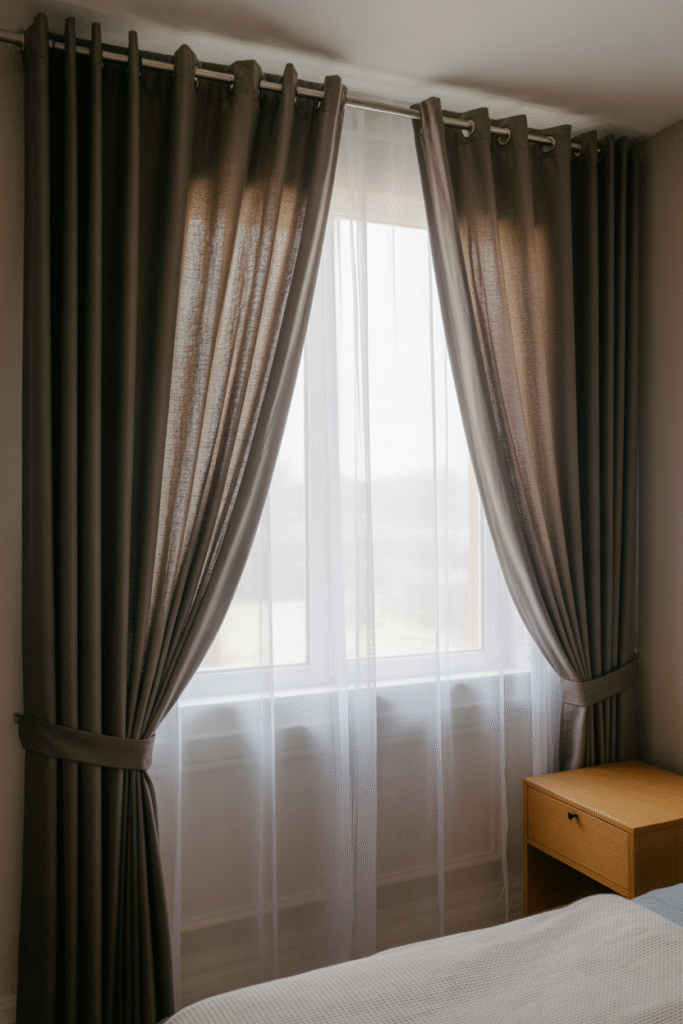
8. Thermal Insulated Curtains
If your bedroom turns into an icebox in winter or an oven in summer, thermal curtains can legitimately save you money on energy bills. They have a foam or acrylic backing that creates a barrier between your window and your room.
The energy efficiency is real—studies show thermal curtains can reduce heat loss by up to 25% in winter and keep rooms noticeably cooler in summer. That might not sound dramatic, but you’ll feel it on your heating and cooling bills.
What to expect appearance-wise: They look like regular curtains from the front. The thermal backing is on the back side, so it doesn’t affect your room’s aesthetic.
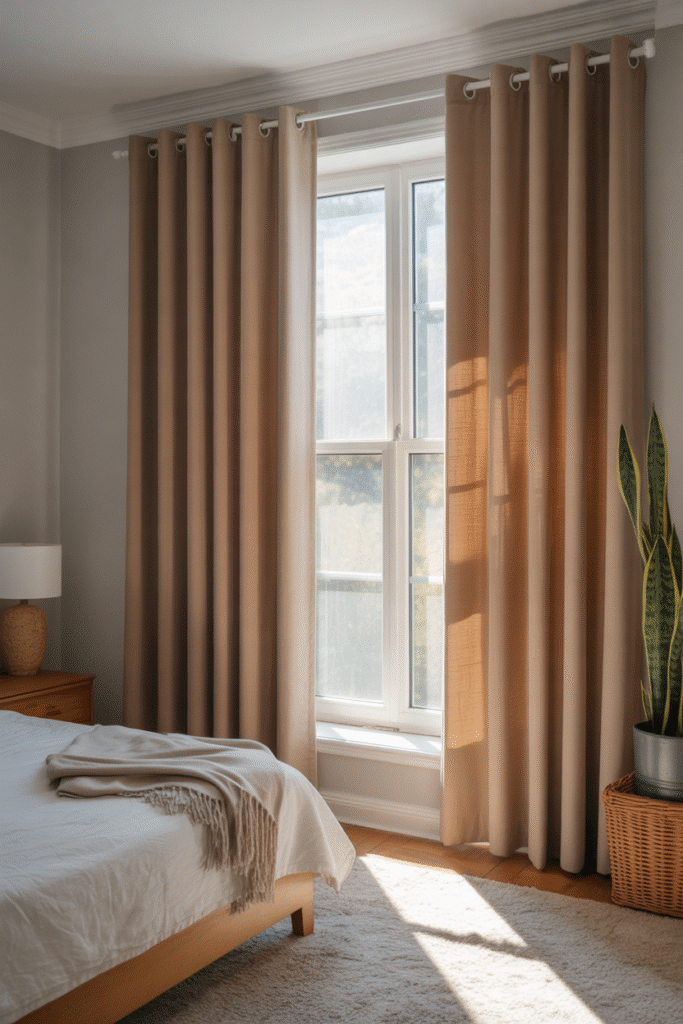
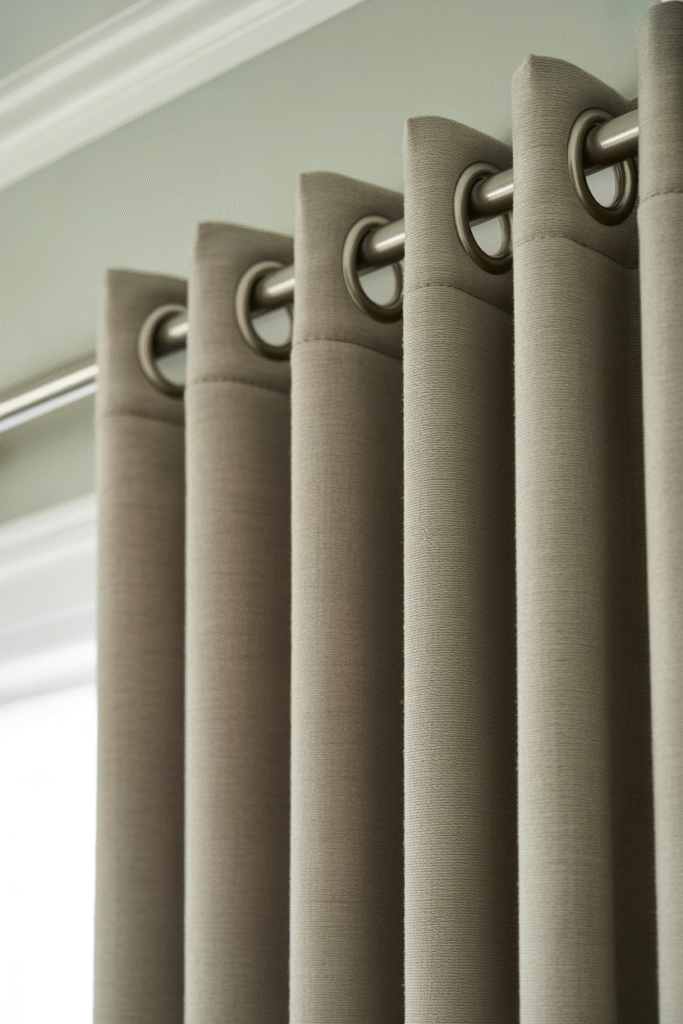
9. Grommet Curtains for Easy Maintenance
If you actually open and close your curtains daily (instead of just leaving them in one position forever), grommet curtains are worth considering. Those metal rings at the top slide along the rod smoothly, so you’re not yanking and tugging every morning and evening.
They create these uniform, modern pleats automatically, and they work in pretty much any bedroom style depending on the fabric and color you choose.
Practical consideration: Check the grommet spacing before buying. If the grommets are spaced too far apart, the curtains won’t slide smoothly. Good quality ones have grommets every 6-8 inches.
10. Curtains for Short or Awkwardly Sized Windows
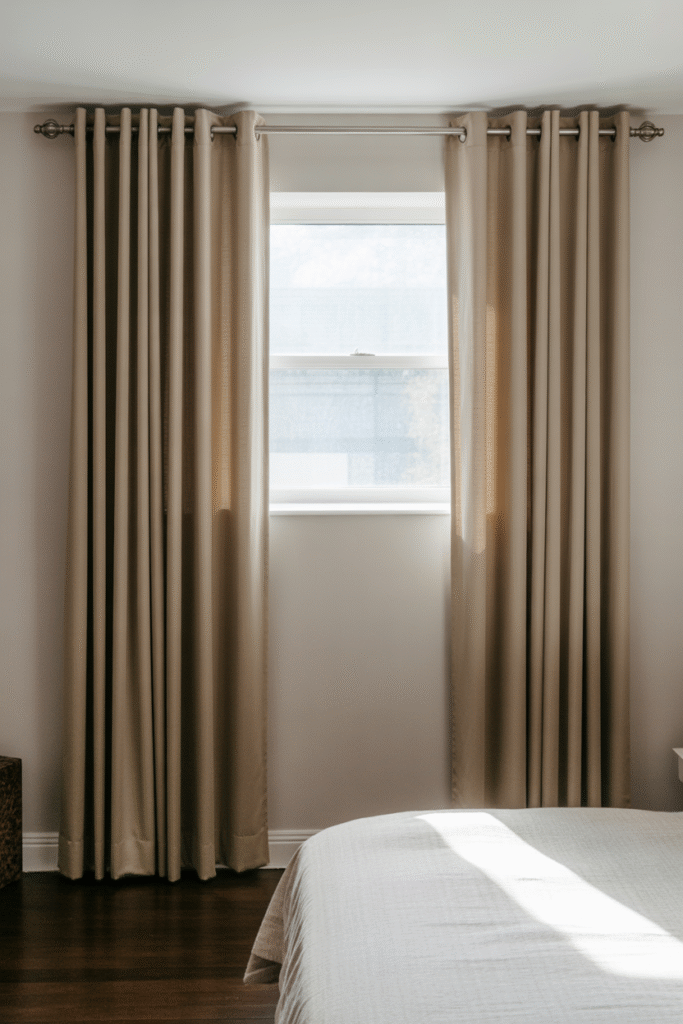
Short windows are tricky because standard curtains can overwhelm them or look weirdly disproportionate. Here’s what actually works:
For windows that are too short: Mount your rod well above the window frame (6-12 inches up) and choose curtains that go to the floor. This makes the window appear taller than it is.
For narrow windows: Extend your curtain rod 8-10 inches beyond each side of the window frame. When the curtains are open, they stack outside the window completely, making the window look wider.
For windows that are just… odd: Custom curtains might seem expensive, but they’re often worth it for problem windows. You can also look into café curtains (which cover just the bottom half) or Roman shades combined with a small valance.
Trending Styles Worth Considering
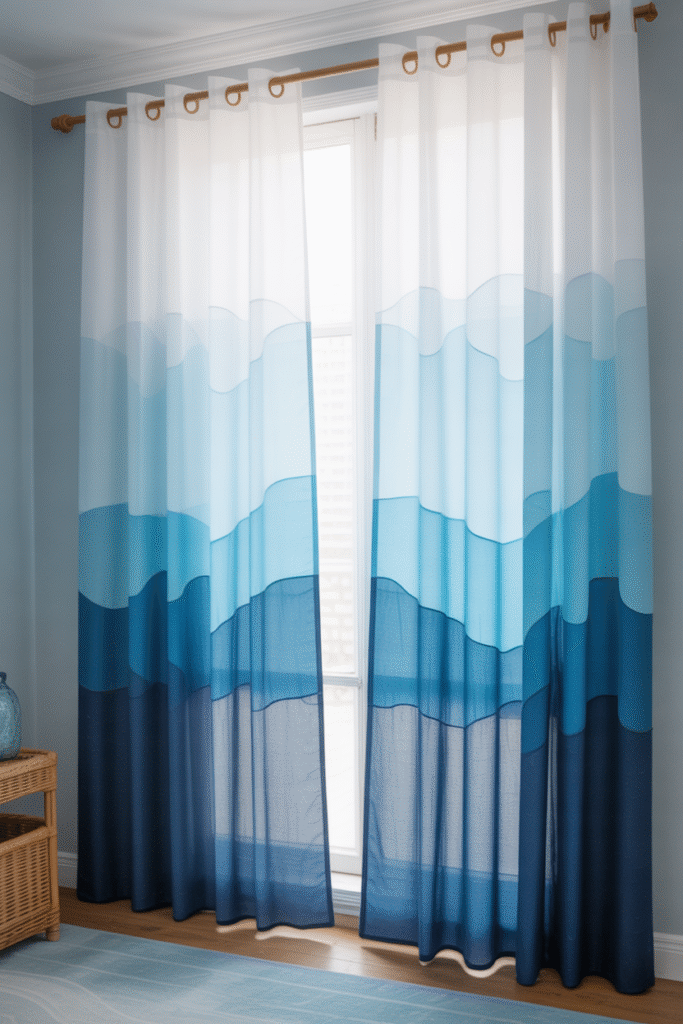
11. Ombre Curtains
Ombre—where one color gradually fades into another—has staying power because it’s subtle enough to work in most bedrooms while still being interesting. Most ombre curtains fade from a deeper color at the bottom to lighter at the top (or vice versa).
They add this artistic, handcrafted quality without being overly bold. Blues fading to white work well in coastal bedrooms, grays in modern spaces, warm tones in bohemian rooms.
Keep in mind: The fade should be gradual and well-executed. Cheap ombre curtains can look like a DIY project gone wrong.
12. Tab-Top Curtains with Natural Materials
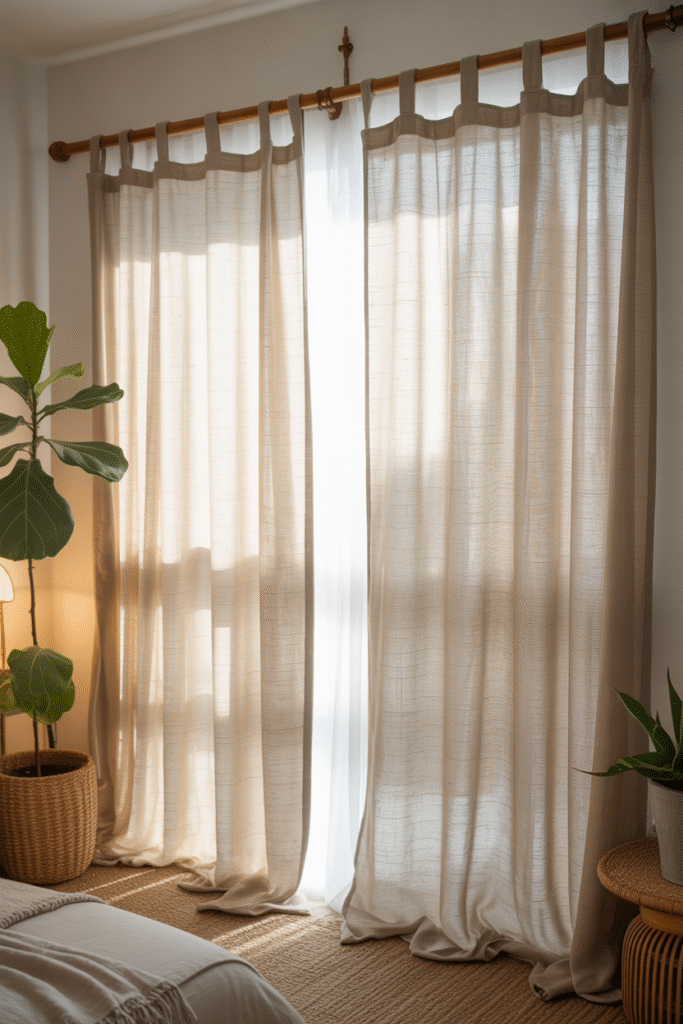
These have visible fabric loops at the top instead of hidden pockets or grommets. When done with natural materials like cotton, linen, or bamboo blends, they create this casual, organic look that works beautifully in relaxed bedroom styles.
The tabs themselves become part of the design, especially if you pair them with a natural wood rod or wrought iron. Just know that tab-tops don’t slide as easily as grommets—they’re better for curtains you don’t move frequently.
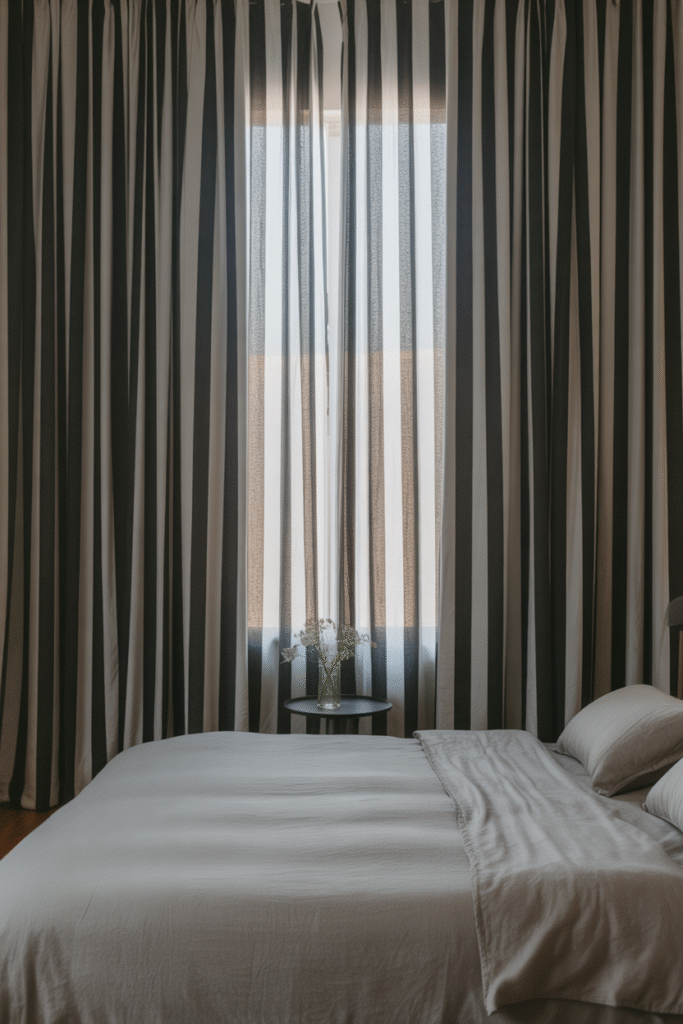
13. Striped Curtains
Vertical stripes draw your eye upward, making ceilings appear higher. This is especially useful in bedrooms with standard 8-foot ceilings that feel a bit cave-like.
You can go bold with contrasting stripes if your room needs energy, or subtle tone-on-tone stripes if you want the height effect without the drama. Horizontal stripes exist too, but they make rooms feel wider and shorter—only use them if you’re trying to balance out a very tall, narrow room.
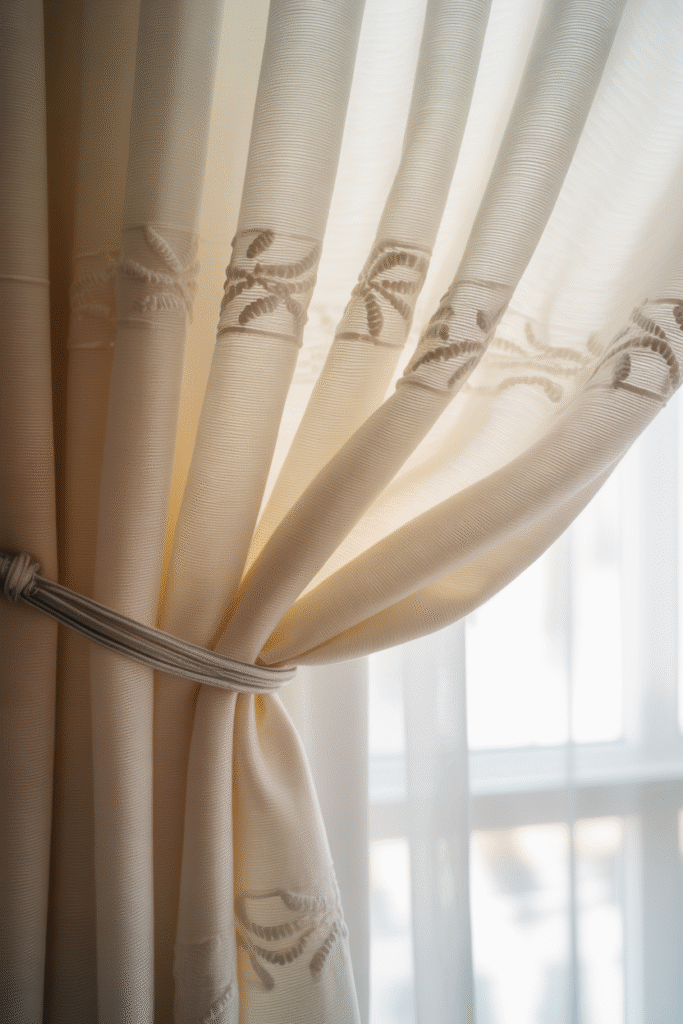
14. Textured or Embroidered White Curtains
Plain white curtains can feel boring, but textured white curtains? That’s different. Look for options with subtle details—pintucks, eyelet embroidery, jacquard weaving, or even light crochet panels.
You get the brightness and versatility of white curtains, but with enough visual interest to keep things from feeling flat. These work in literally any bedroom style, from modern to traditional.
15. Smart Curtains (Motorized Options)
Okay, these are definitely a splurge, but if you’re someone who loves smart home tech or you have really tall windows that are annoying to reach, motorized curtains are pretty great.
You can program them to open gradually in the morning (so you wake up naturally instead of to a jarring alarm), close automatically when it gets hot to keep your room cool, or control them with your phone when you’re already in bed and realize you forgot to close them.
They’re also excellent for people with mobility issues or anyone who just wants their bedroom to feel a bit more futuristic.
How to Actually Choose Curtains That Work for You
Look, I just gave you 15 options, which might feel overwhelming. Here’s how to narrow it down:
Start with function. Do you need blackout capability? Temperature control? Easy maintenance? Let your actual needs eliminate options that won’t work.
Then consider your style. What’s already in your bedroom? What feeling are you going for? Your curtains should fit into the overall aesthetic, not fight against it.
Measure carefully. Width matters more than you think. For a full, luxurious look, your curtains should be 1.5 to 2 times the width of your window. Skimpy curtains that just barely cover the window look cheap no matter how expensive the fabric is.
Think about light. Walk into your bedroom at different times of day. When does light become a problem? When do you want more of it? This will guide whether you need sheer, medium-weight, or blackout curtains.
Budget realistically. Quality curtains cost more than you expect, but they last for years and you look at them every single day. If budget is tight, consider buying one really good set for your bedroom rather than mediocre curtains for every room in your house.
Getting the Most from Your Curtains
Once you’ve chosen your curtains, installation makes or breaks the final look. Mount your rod high (at least 4-6 inches above your window frame, or all the way at the ceiling), make sure it extends beyond your window on both sides, and let your curtains touch the floor. Even budget curtains look expensive when hung correctly.
If your curtains are too short, you can often add clip rings to lower them, or—if you’re handy—sew a band of coordinating fabric to the bottom.
The right curtains really do transform your bedroom. They affect how you sleep, how much you pay for heating and cooling, and how you feel about your space every time you walk into it. Start with one change—maybe upgrading to blackout curtains if you’re not sleeping well, or adding floor-length panels if your room feels cramped—and see what a difference it makes.
Your bedroom should be the most comfortable room in your home. Sometimes that starts with something as simple as better curtains.
Other Articles