


15 Smart Bedroom Concepts That Transform Small Spaces
Small bedrooms can feel limiting—but with the right ideas, they can become some of the most powerful spaces in your home. Thoughtful layout, lighting, and storage choices can dramatically improve how you sleep, work, and live. This article explores 15 carefully designed bedroom concepts, each solving a real, everyday problem—from burnout and clutter to creativity and calm.
Each idea is practical, adaptable, and designed for real people with real constraints (yes, even tiny apartments). Whether you rent, work from home, or just want your bedroom to work harder for you, you’ll find inspiration you can actually use.
1. The Remote-Reset Micro Bedroom
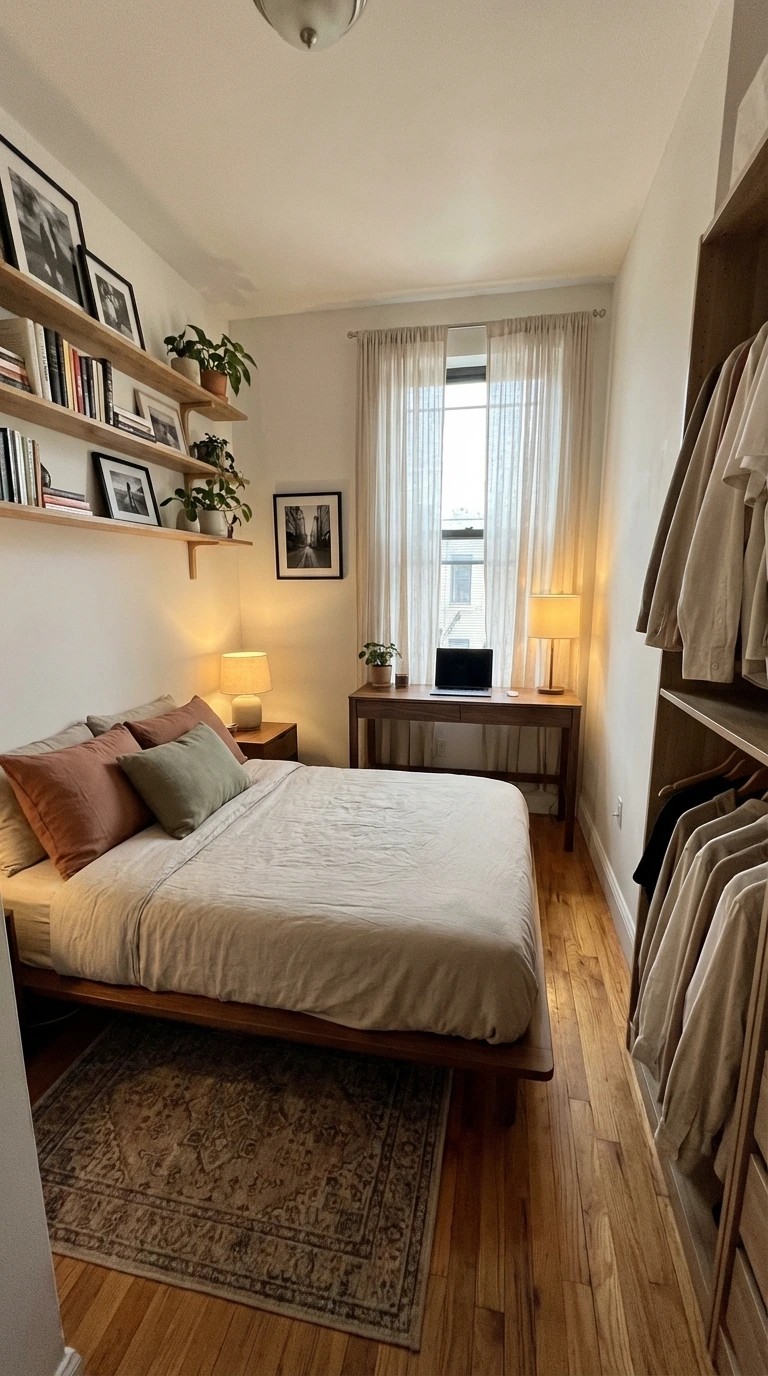
This bedroom is designed for one core challenge: working from home without burning out.
The layout clearly separates rest and work without walls. A low bed sits against one side, dressed in soft neutral bedding that visually signals “rest.” Opposite it, a slim desk placed directly under the window benefits from natural light and helps maintain energy during the day.
Key features:
- Desk facing daylight to reduce fatigue
- Floating shelves above the bed for books and plants without floor clutter
- Warm lamps instead of harsh ceiling light
- Open wardrobe with limited items to reduce decision stress
This room helps you mentally “close the laptop” at the end of the day—even when your office is three steps from your bed.
2. The Creative-Constraint Studio
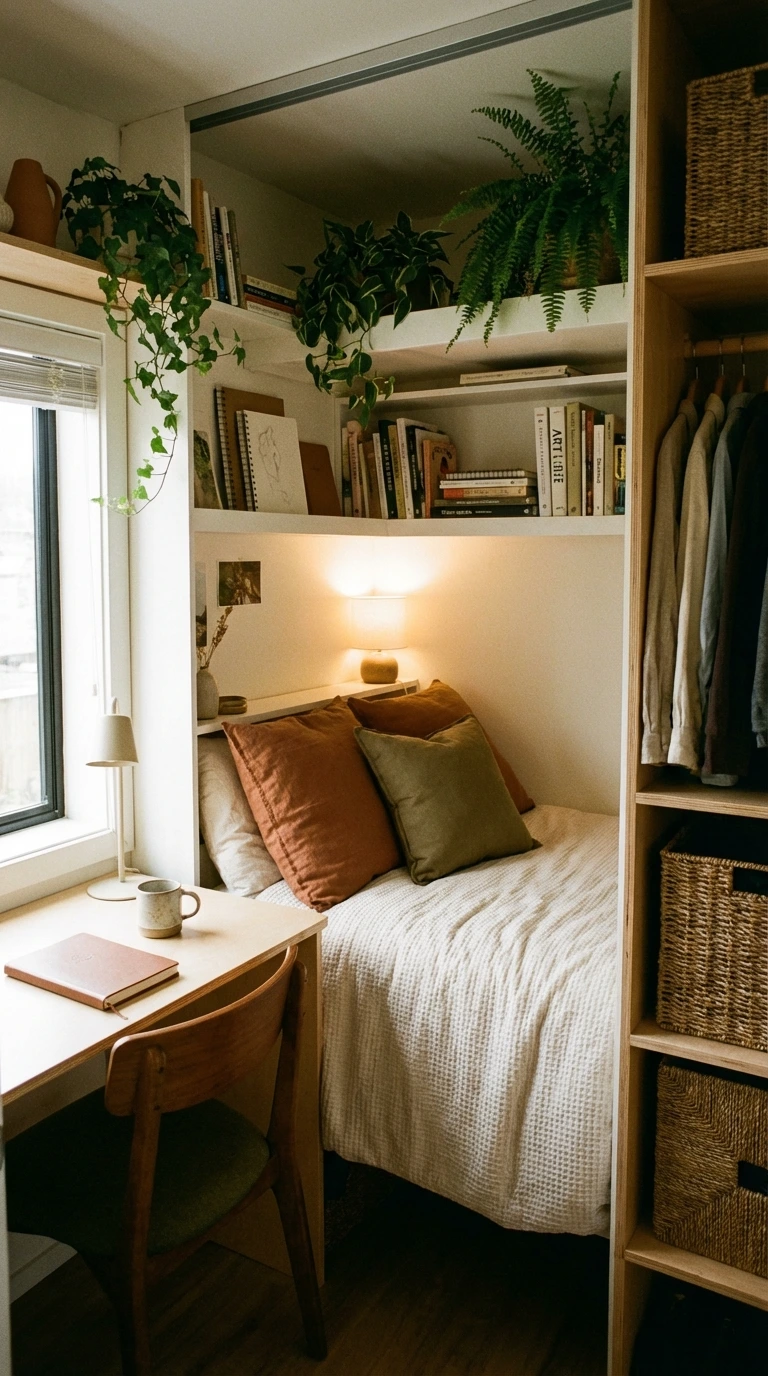
Creativity loves limits, and this room proves it.
Designed for artists, writers, and makers, the space uses intentional scarcity to encourage focus. The bed is simple and comfortable, while the desk remains deliberately uncluttered—just a notebook, a lamp, and maybe a coffee mug.
What makes it work:
- Open shelving with creative tools only (no random storage chaos)
- Natural textures like wood, linen, and ceramic
- Warm, even lighting that avoids visual distraction
By removing excess, this room gives creative energy somewhere to land instead of bouncing off clutter.
3. The Anxiety-Calming Sleep Room
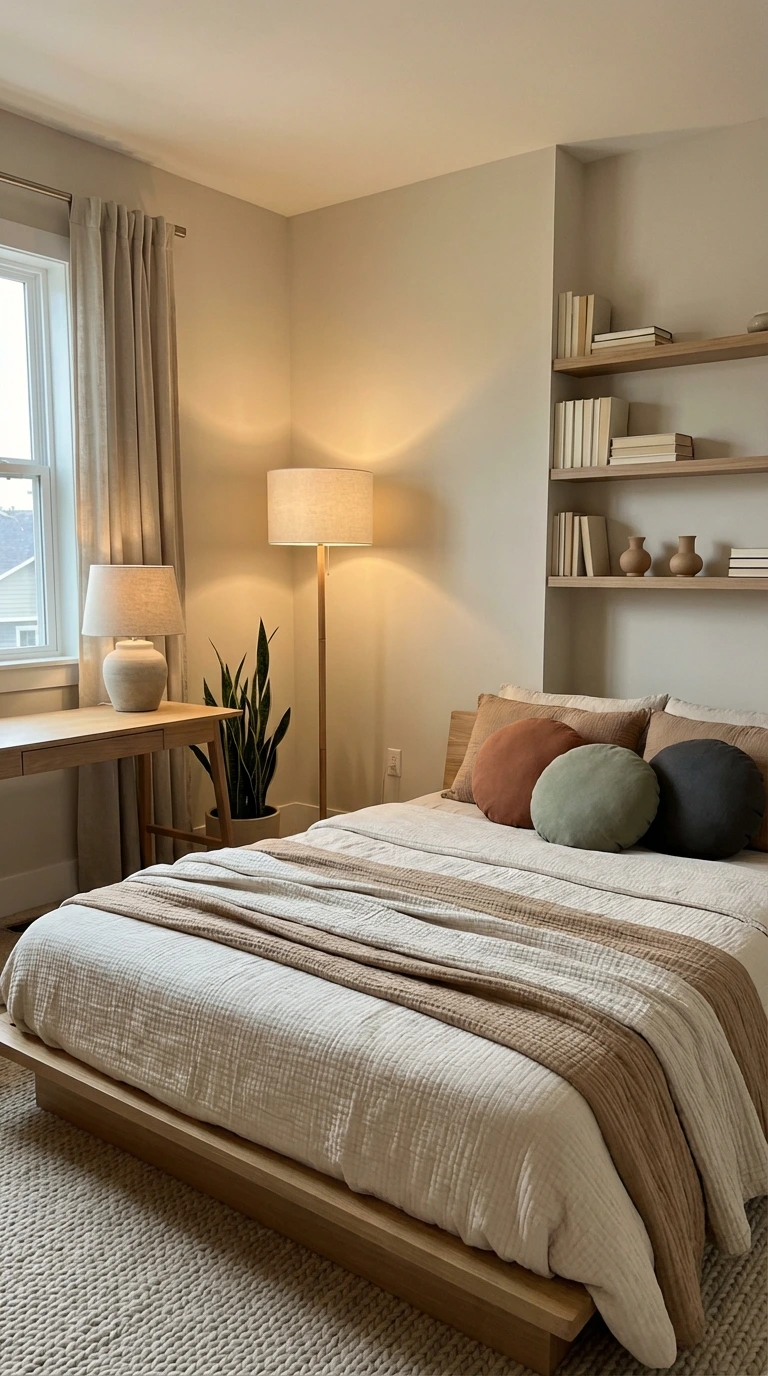
This bedroom is built to lower stress before you even lie down.
Every element supports calm: soft colors, balanced symmetry, and gentle lighting. Nothing visually “shouts.” The bed sits low, dressed in breathable fabrics, while shelves are arranged evenly with minimal objects.
Design principles used:
- Muted, earthy tones that don’t overstimulate
- Symmetrical layouts to create visual stability
- Diffuse lighting only—no glare, no harsh shadows
This room quietly says, “You’re safe. You can rest now.”
4. The Minimalist Wardrobe Bedroom
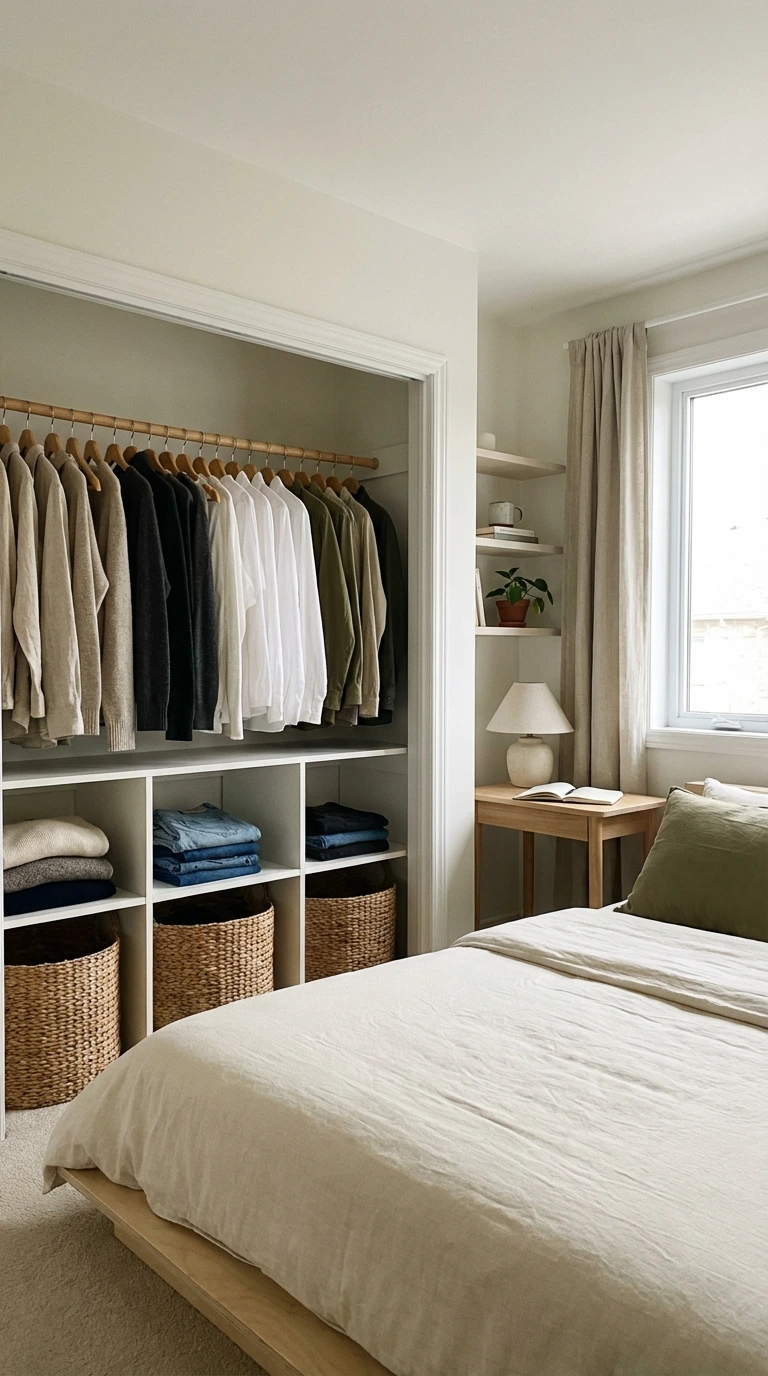
If clutter stresses you out, this room tackles it head-on.
Instead of hiding clothes behind doors, this design uses a curated open wardrobe. Clothing is evenly spaced, color-coordinated, and limited. The result? Fewer choices, faster mornings, and less visual noise.
Why it’s effective:
- Visibility encourages mindful ownership
- Neutral bedding keeps focus on function
- Storage baskets hide small items
Minimalism isn’t about having nothing—it’s about having exactly enough.
5. The Seasonal Reset Room

This bedroom is made for people who love change but hate redecorating.
The base design stays neutral all year: light walls, simple furniture, natural wood. Seasonal updates happen through small, low-effort swaps like pillows, plants, or shelf objects.
Easy seasonal refresh ideas:
- Linen covers in summer, textured throws in winter
- Plants rotated based on light and season
- Desk accessories updated quarterly
Same room, new mood—no renovation required.
6. The Writer’s Retreat Bedroom
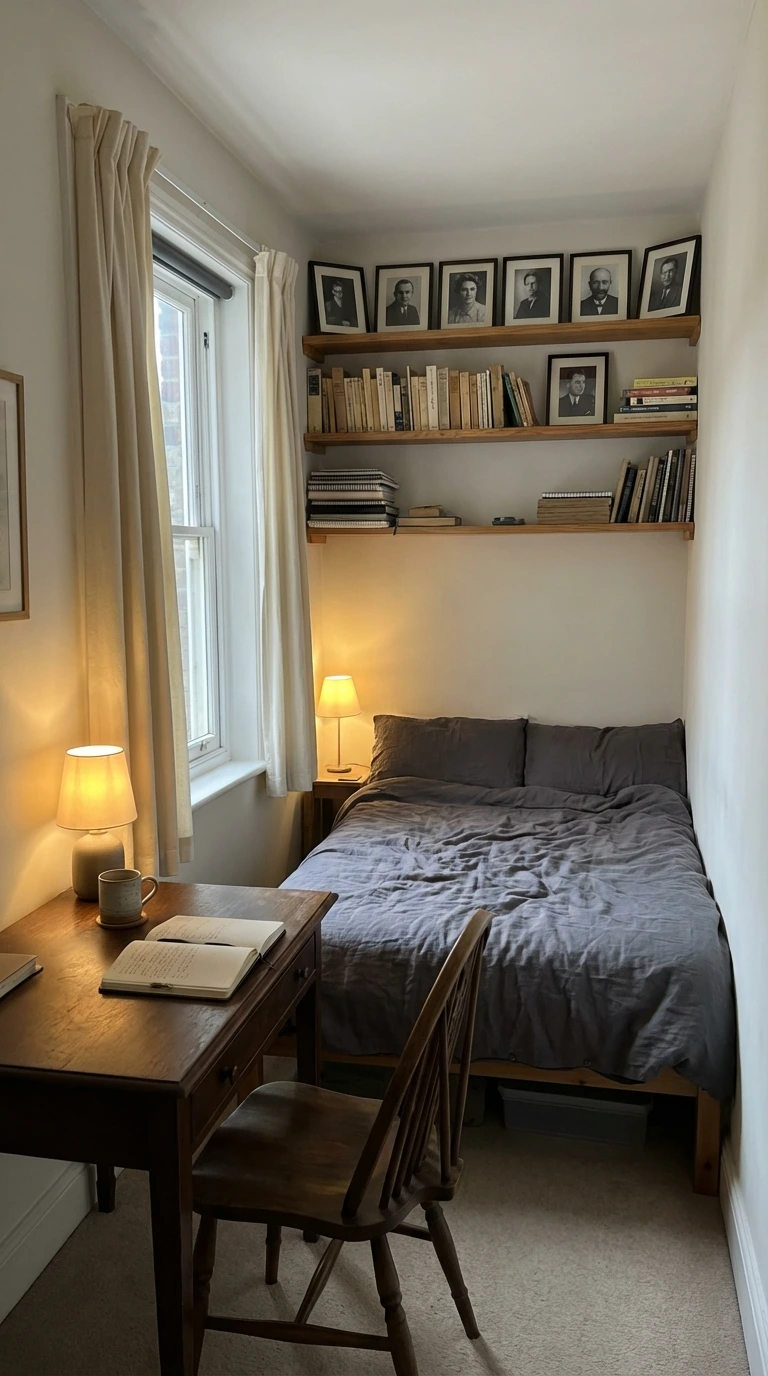
This space is designed for deep thinking and quiet focus.
The bed supports rest, but the desk is the emotional center. Positioned under the window, it’s paired with a comfortable chair and warm task lighting. Shelves hold books, notebooks, and a few meaningful images.
What supports writing here:
- Limited decor to reduce mental noise
- Soft lighting that favors long sessions
- A clear desk that invites daily use
It’s not flashy. It’s serious about words.
7. The Sustainable Small-Space Bedroom
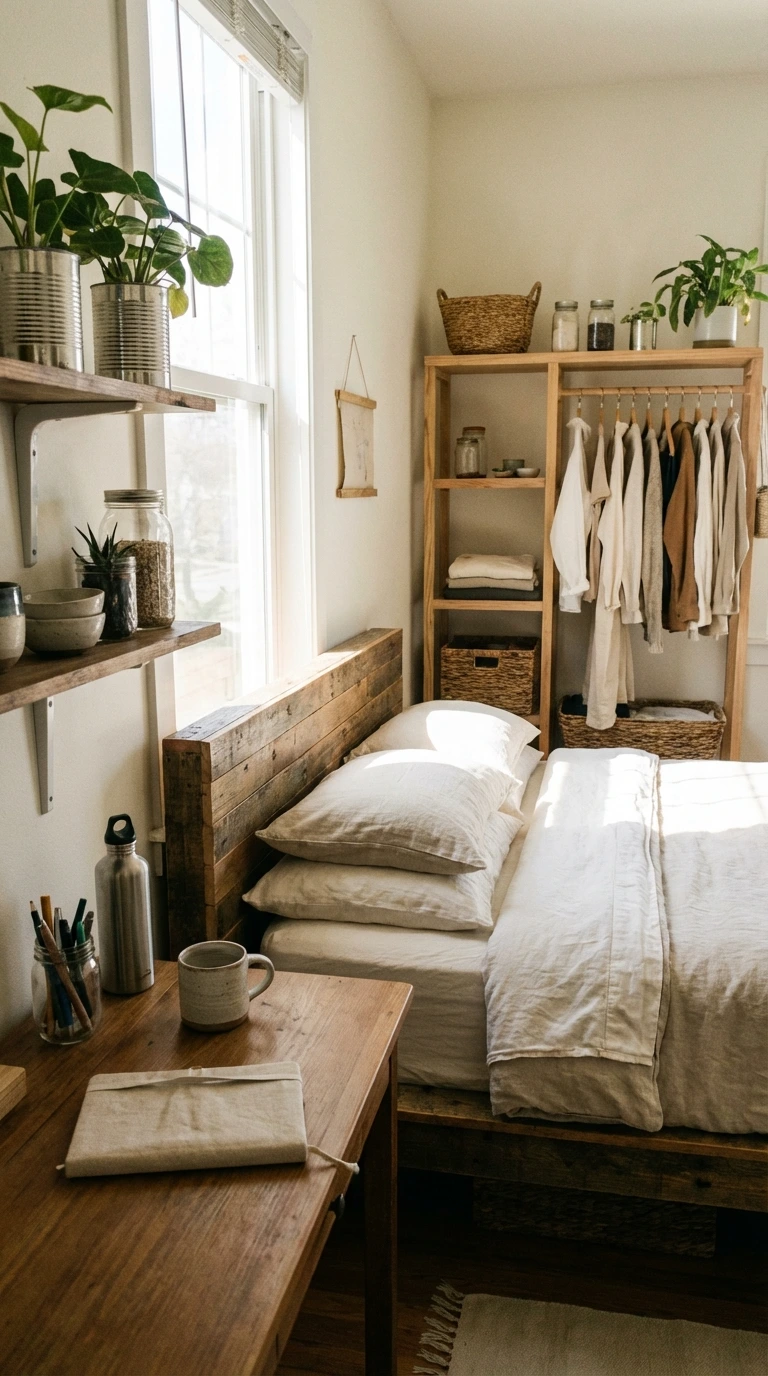
This bedroom proves sustainability doesn’t have to look boring.
Natural materials take center stage: wood furniture, cotton bedding, ceramic lamps. Storage is intentional, and decor often doubles as reuse—like plants in repurposed containers.
Sustainable choices include:
- Undyed or low-impact fabrics
- Furniture built to last
- Fewer items, chosen carefully
The room quietly supports better habits without preaching.
8. The Student Survival Room
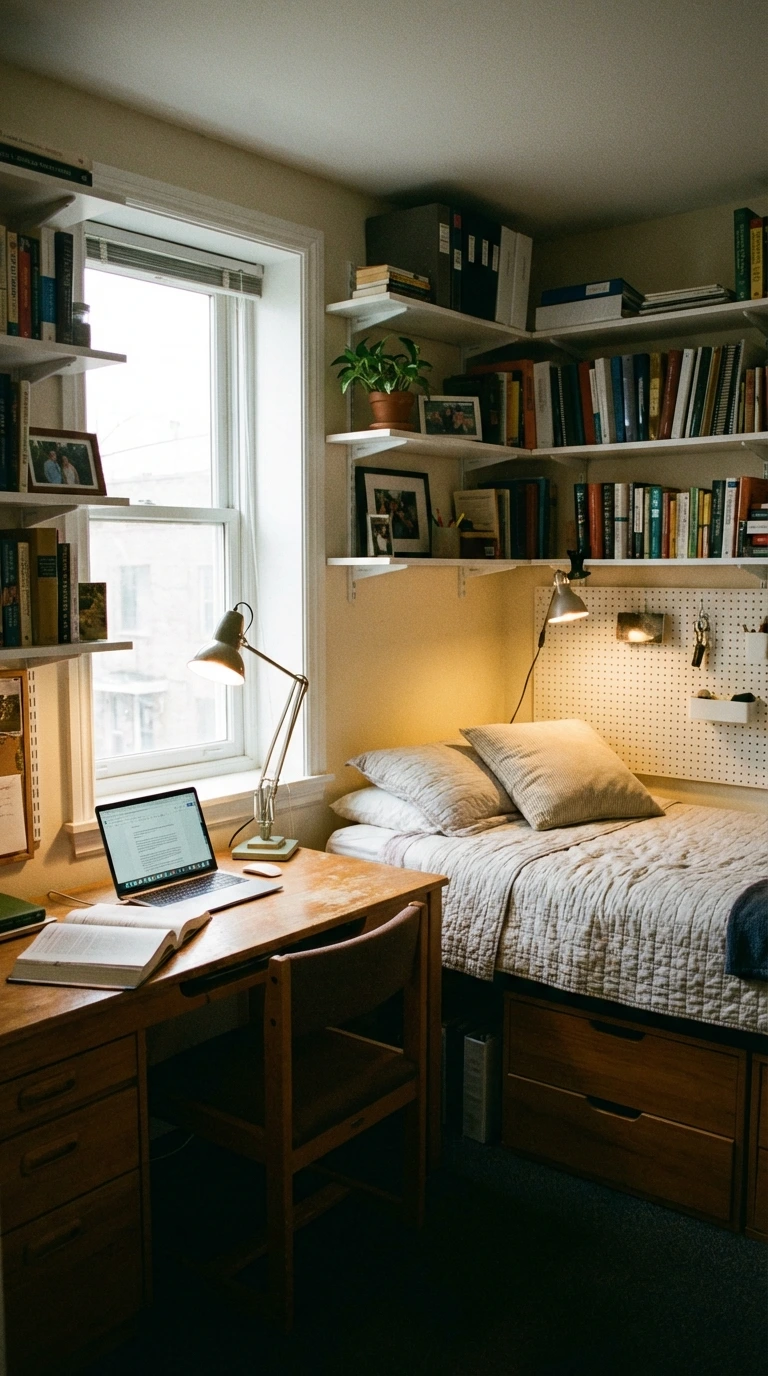
Designed for academic life, this room balances sleep, study, and storage.
The desk fits textbooks and a laptop without overcrowding. Shelves hold both school supplies and personal items, keeping the room human—not institutional.
Student-friendly features:
- Layered lighting for late-night study
- Efficient storage to prevent pile-ups
- Comfortable bedding for real rest
Because surviving school shouldn’t feel like camping indoors.
9. The Hybrid Guest–Office Bedroom
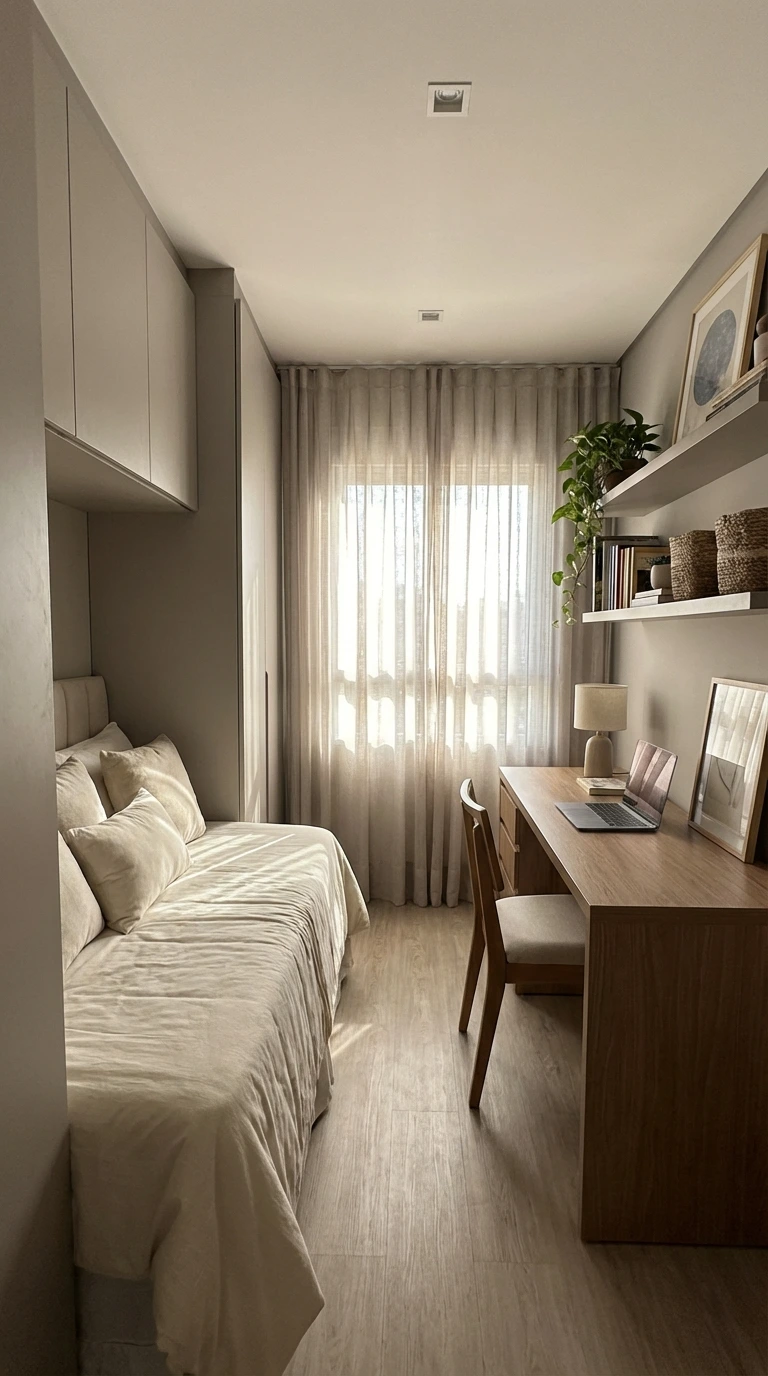
One room, two jobs—without confusion.
This bedroom works equally well as a home office and a guest space. The bed stays neutral and inviting, while the desk and shelves remain adaptable.
Design strategies:
- Neutral colors for universal comfort
- Clear surfaces that reset quickly
- Minimal personal clutter
Guests feel welcome, and you don’t feel displaced.
10. The Morning-Routine Optimized Room
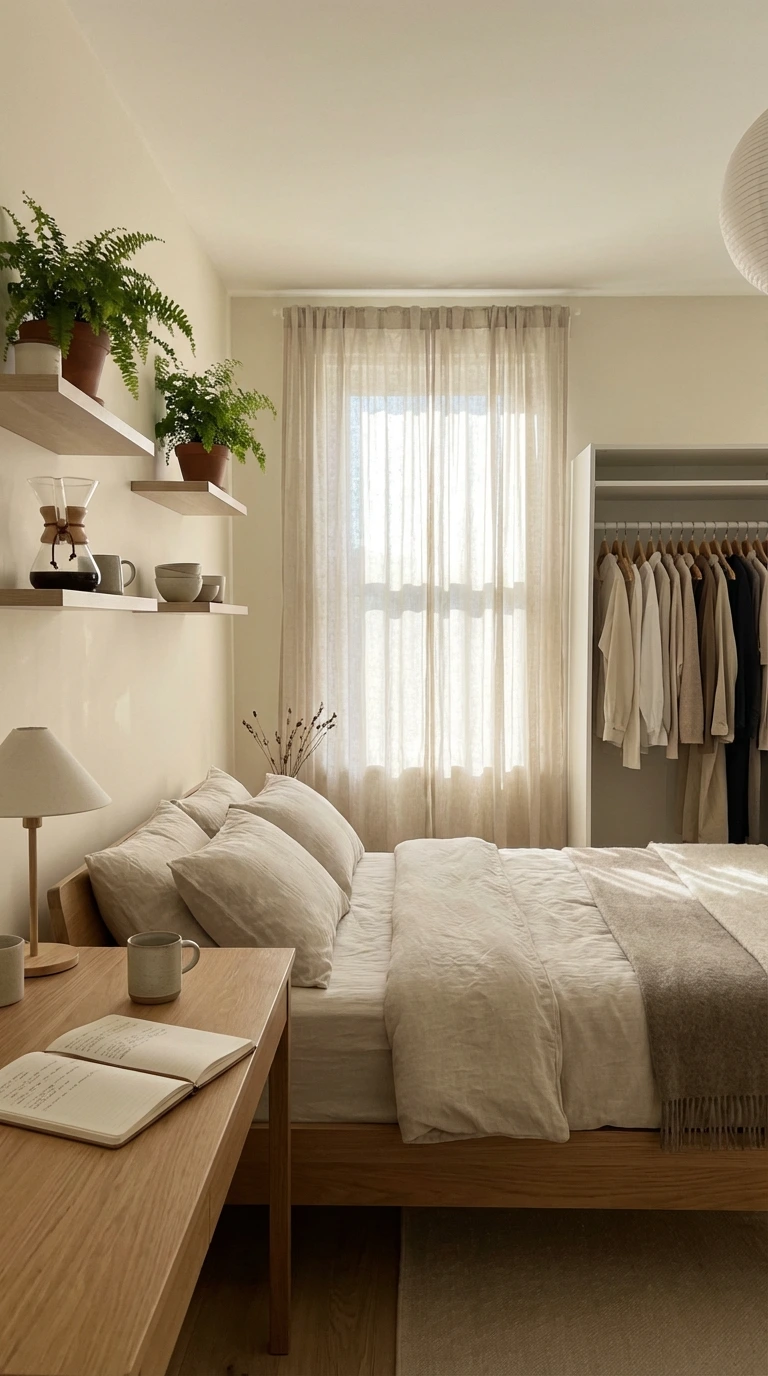
This bedroom is designed to make mornings easier.
Everything supports smooth transitions from sleep to action. Clothes are visible and curated. The desk holds morning essentials like a journal or planner.
Morning-friendly details:
- Natural light filtered through sheer curtains
- Reduced decision points
- Clear paths and open floor space
It gently nudges you into the day instead of shoving you.
11. The Budget-Conscious Cozy Room
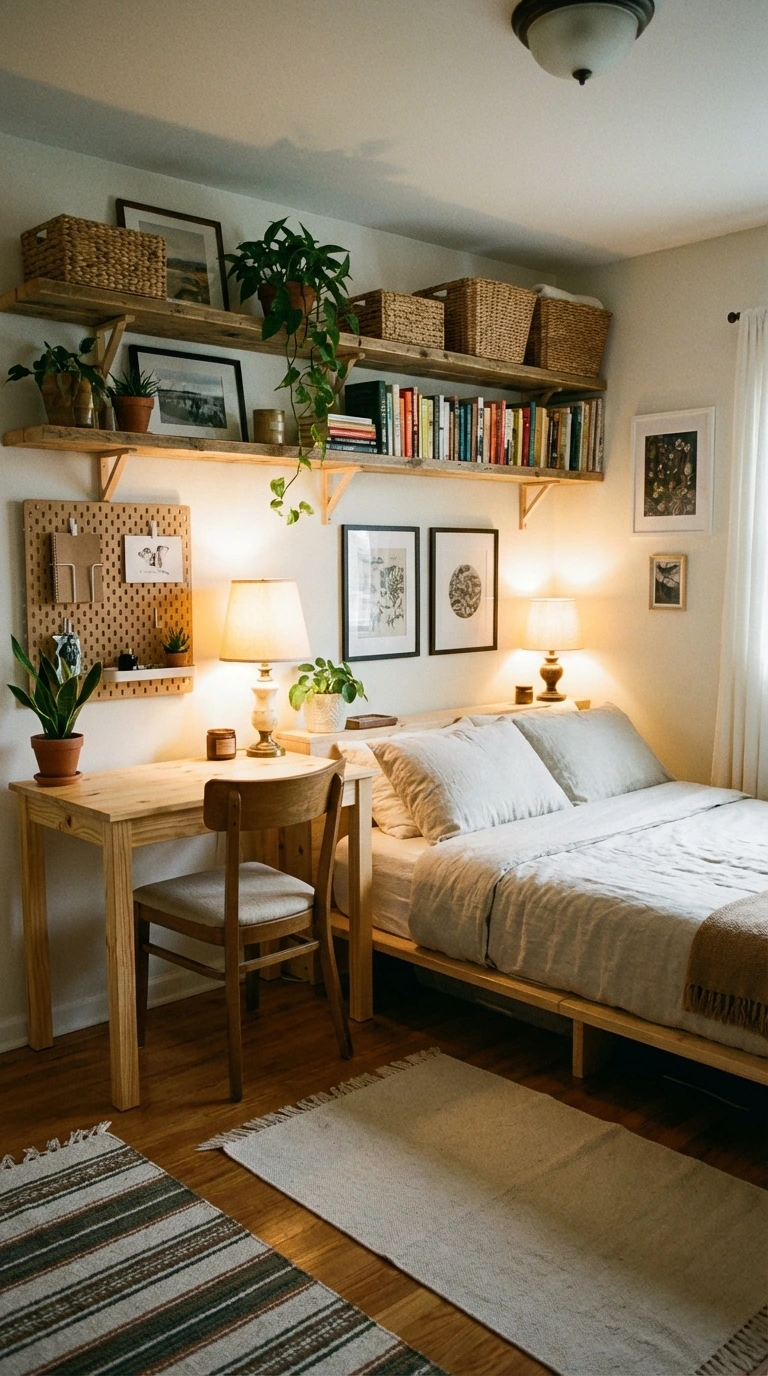
Warmth doesn’t require a big budget—this room proves it.
Affordable furniture, neutral bedding, and smart lighting create comfort without excess. Nothing looks temporary, even if it is.
Budget-smart moves:
- Table lamps instead of built-ins
- Open shelving instead of cabinets
- Textiles used for warmth and personality
Cozy beats expensive every time.
12. The Digital-Detox Bedroom
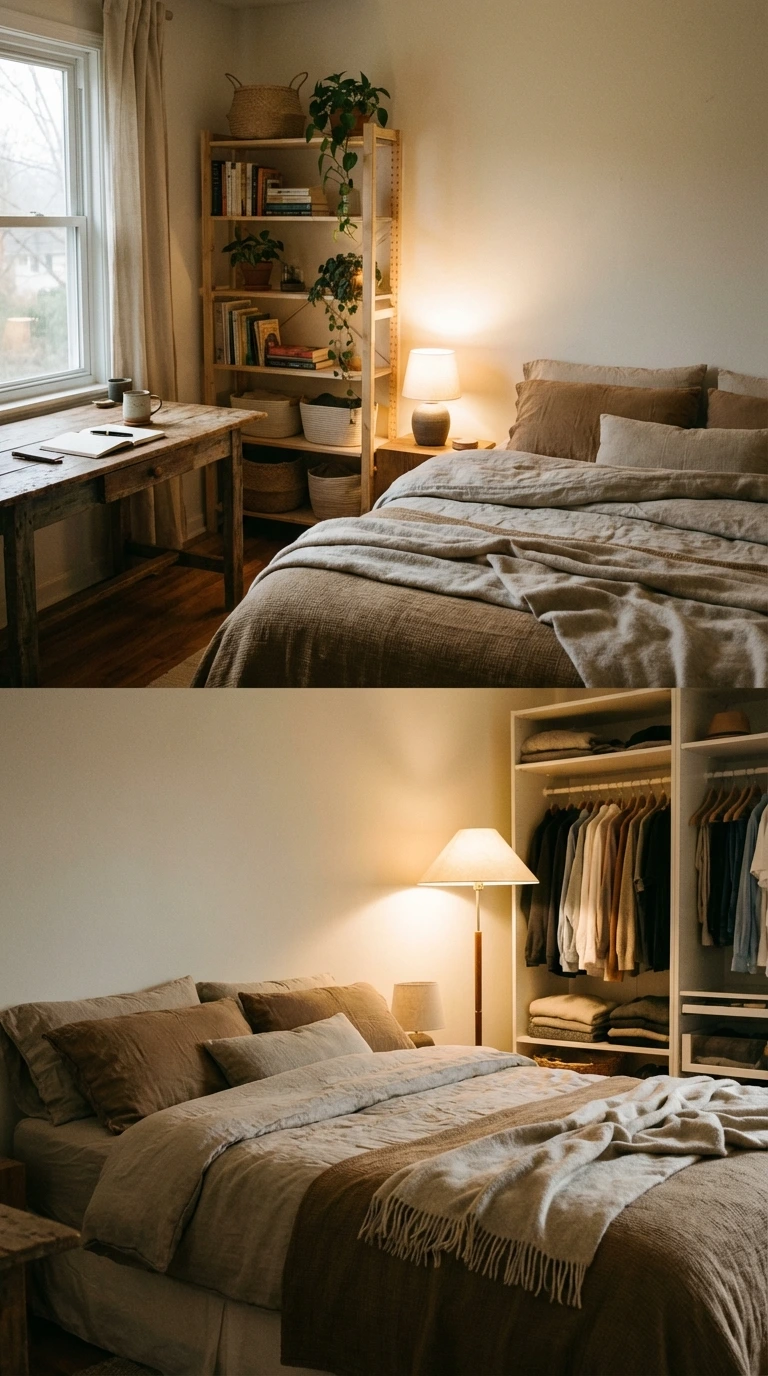
This room is a screen-free sanctuary.
No visible tech. No glowing lights. Just soft textures, warm lamps, and analog activities. The desk is used for reading, writing, or thinking—not scrolling.
Why it works:
- Better sleep quality
- Lower mental stimulation at night
- Clear association between bed and rest
Your phone can sleep somewhere else.
13. The Plant-Lover’s Micro Bedroom
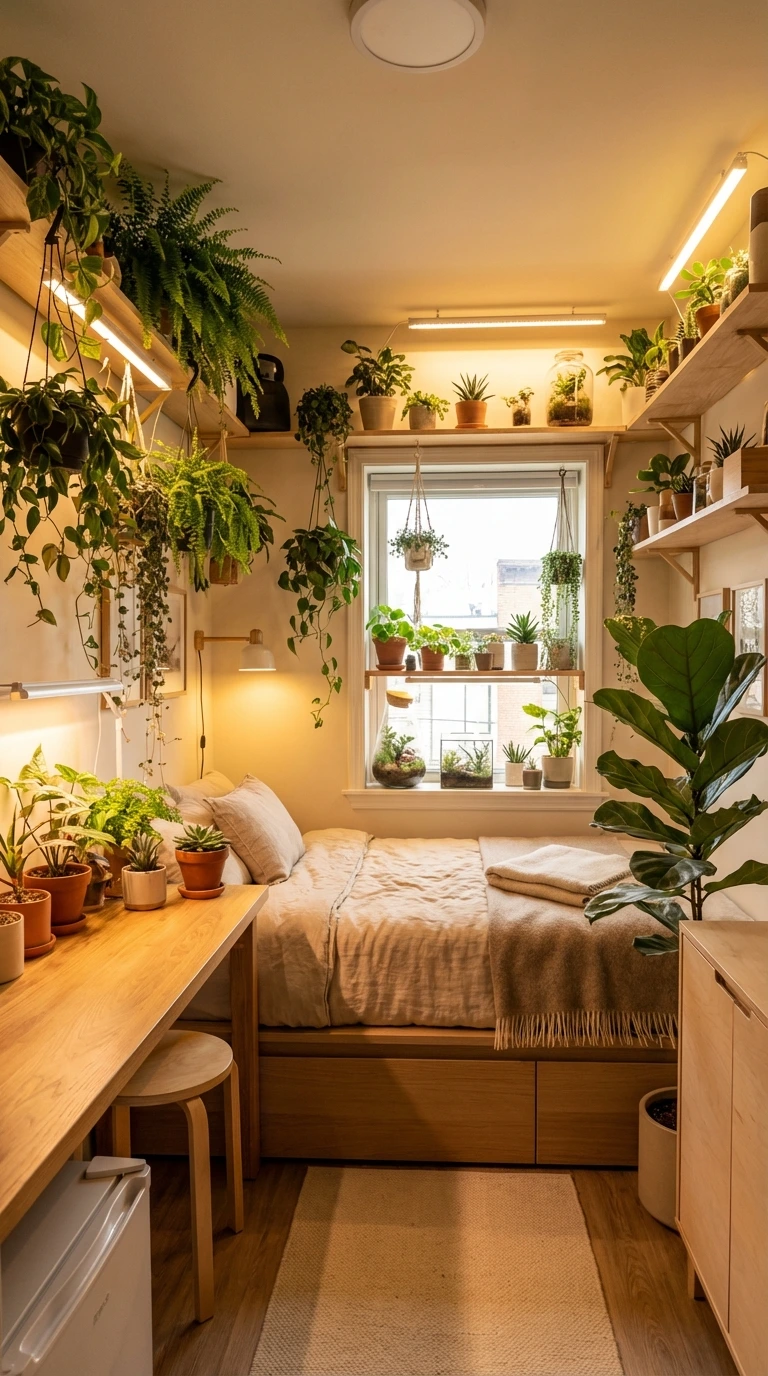
Greenery becomes the hero here.
Plants live on shelves, desks, and windowsills. The rest of the room stays neutral to let them shine.
Plant-friendly design choices:
- Lighting that supports growth
- Simple furniture to avoid crowding
- Natural materials that complement greenery
It’s like sleeping inside a calm, breathable ecosystem.
14. The Emotional-Support Bedroom
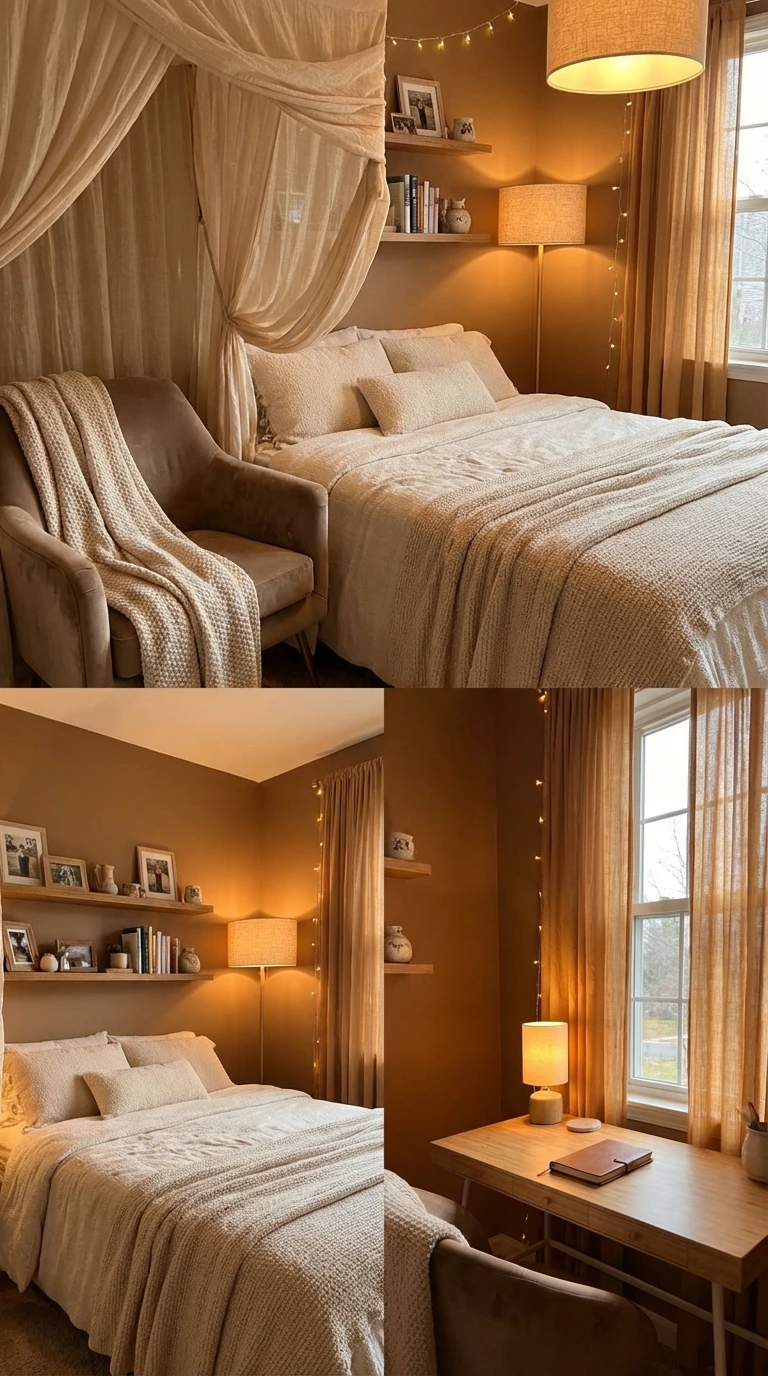
This room is designed for emotional well-being.
Soft textures, warm colors, and meaningful personal items create a sense of safety. Nothing feels rushed or sharp.
Supportive elements include:
- Layered textiles for comfort
- Personal photos or memories
- Gentle lighting at multiple levels
Sometimes, a room just needs to be kind.
15. The First-Apartment Bedroom
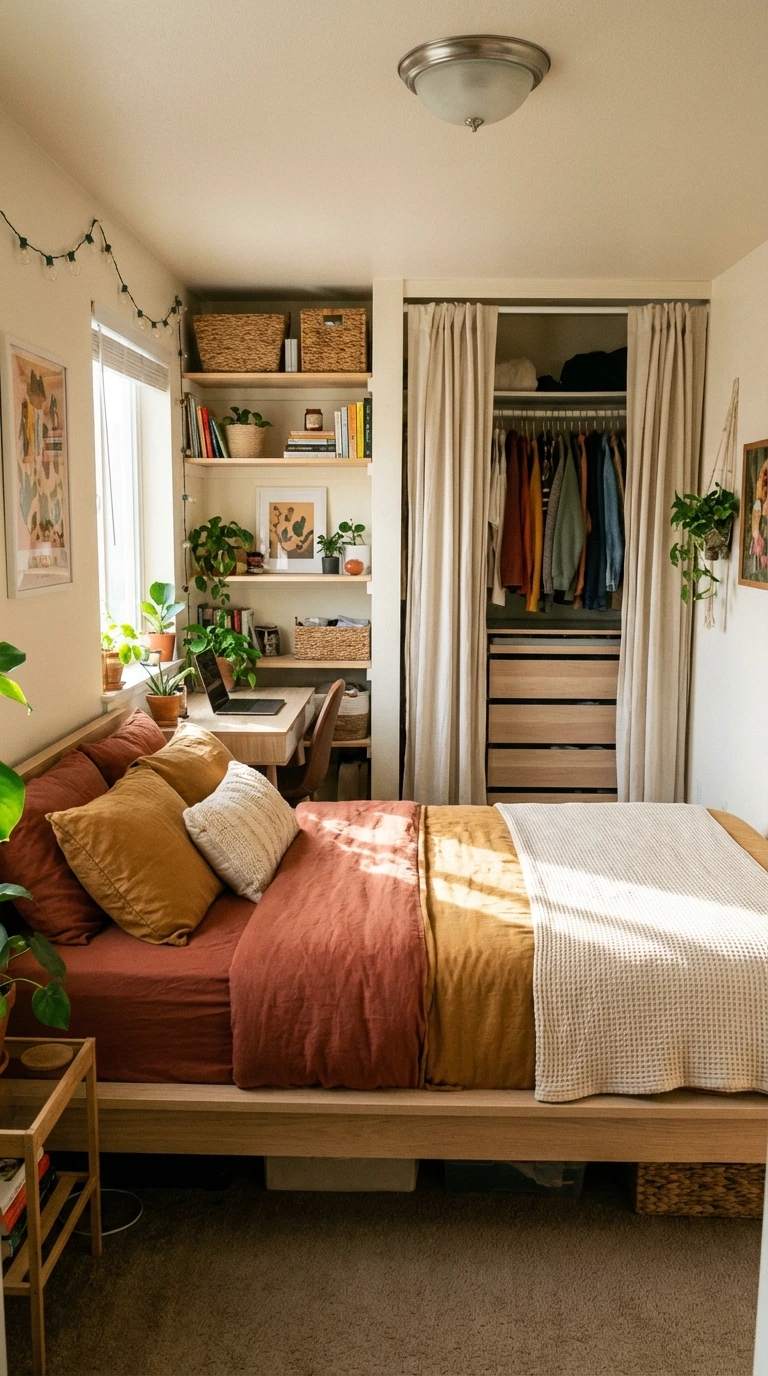
This bedroom supports a major life transition: living alone.
It balances practicality with warmth. Furniture is simple but intentional. Storage is visible and manageable. Nothing feels overwhelming.
Why it’s ideal for first-time renters:
- Easy-to-maintain layout
- Flexible storage solutions
- A grown-up but welcoming feel
It says, “You’ve got this.”
Conclusion
Great bedroom design isn’t about trends—it’s about supporting real life. These 15 concepts show how small spaces can reduce stress, boost creativity, improve routines, and even support emotional health. Each idea works on its own, but they all share one belief: your bedroom should work for you.
Start with one problem you want to solve. Then shape your space around it. The results might surprise you—and help you sleep better too.
Other Articles

14 Small Apartment Bedroom Ideas You’ll Wish You Tried Sooner
15 Smart Bed Nook Ideas That Make Small Rooms Functional

No Comment! Be the first one.