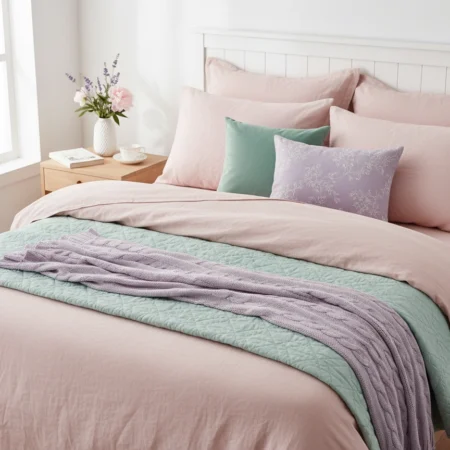

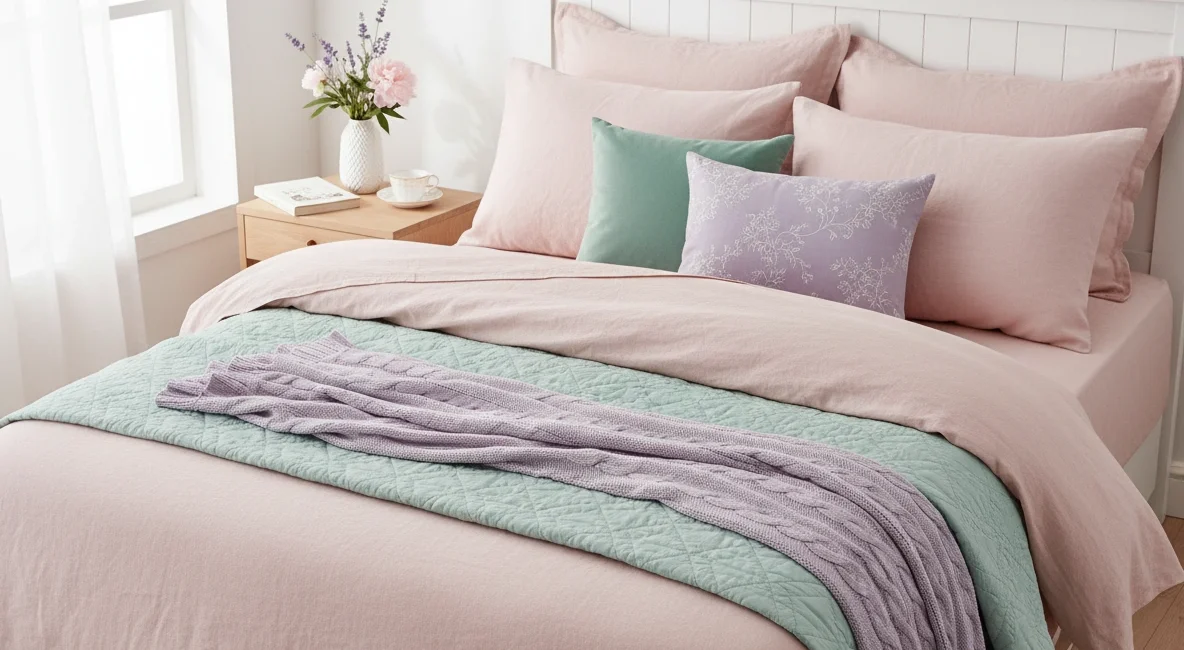
Fresh bedding can change the entire mood of a room in a single afternoon.
New colors, textures, and layers do more than look pretty – they can make your space feel calmer, cozier, or more like the person you are right now.
If your bedroom feels a little tired, you do not always need new furniture or a remodel.
A few smart bedding choices can instantly refresh your bedroom and make your bed feel like a styled Pinterest pin instead of an afterthought.
Here are 15 bedding ideas to instantly refresh your bedroom, all practical, all doable, and all easy to imagine in your own space.
1. Choose a Statement Duvet in an Unexpected Palette
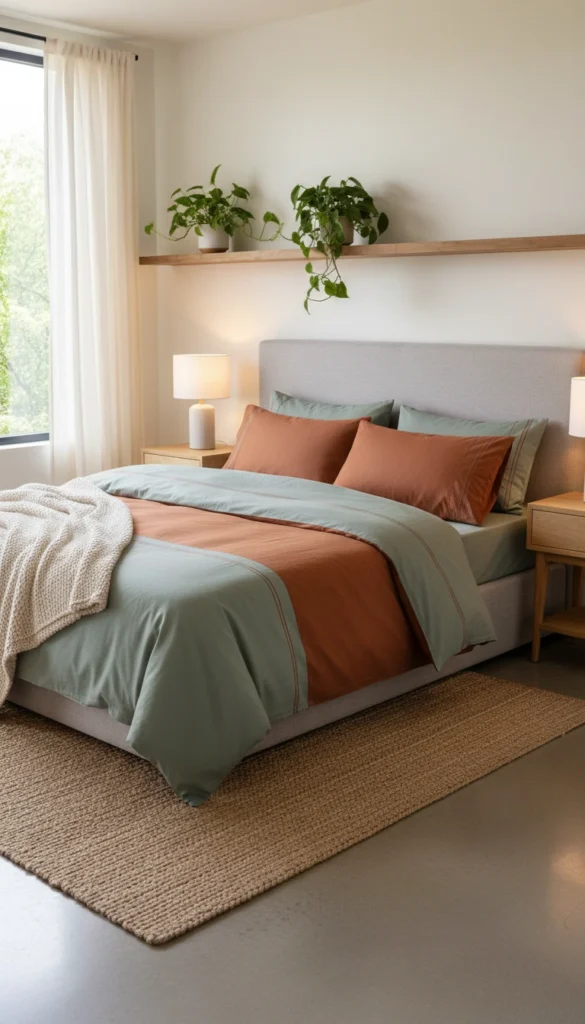
A statement duvet is the quickest way to change the mood of your bedroom.
Instead of safe grey or basic navy, imagine a terracotta duvet cover with dusty sage shams and creamy sheets. The whole bed suddenly feels warm, modern, and a little bit boutique hotel.
This matters because color is usually the first thing the eye notices.
A bold yet grounded palette makes the bed the star of the room and pulls focus away from anything that feels unfinished.
To use this idea, pick one hero color and two softer supporting shades.
For example:
- Deep plum duvet
- Soft blush pillowcases
- Warm ivory sheets
On the bed, this looks rich and layered, but still calm.
The duvet becomes the main block of color, and the pillows and sheets soften and balance everything.
2. Layer a Textured Quilt over Your Comforter
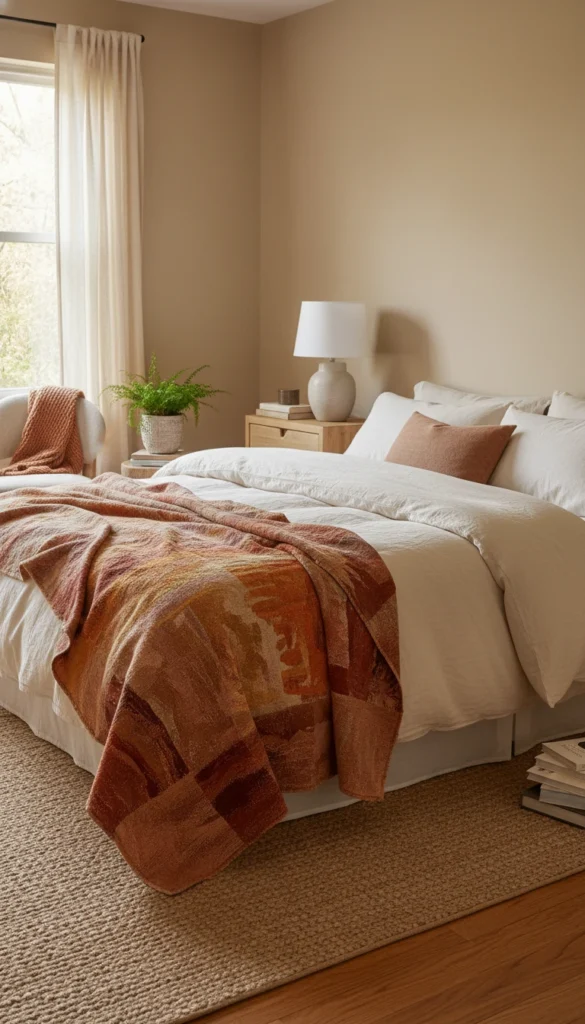
A lightweight quilt layered on top of your existing comforter instantly adds depth.
Think of a clay-toned cotton quilt folded neatly across the bottom third of the bed, sitting over a smooth cream duvet.
This layer matters because it adds that “styled” look you see in magazines.
Multiple visible layers scream cozy and intentional, instead of flat and basic.
Choose a quilt with subtle texture: a channel stitch, hand-stitched lines, or a stonewashed finish.
When someone walks into the room, they see waves of texture catching the light, not just a flat expanse of fabric.
Use this in real life by:
- Keeping your existing duvet as the base
- Adding a quilt in a slightly deeper or dustier shade
- Folding it horizontally near the foot of the bed
The result feels like a boutique stay, without replacing everything.
3. Mix Small-Scale and Large-Scale Patterns
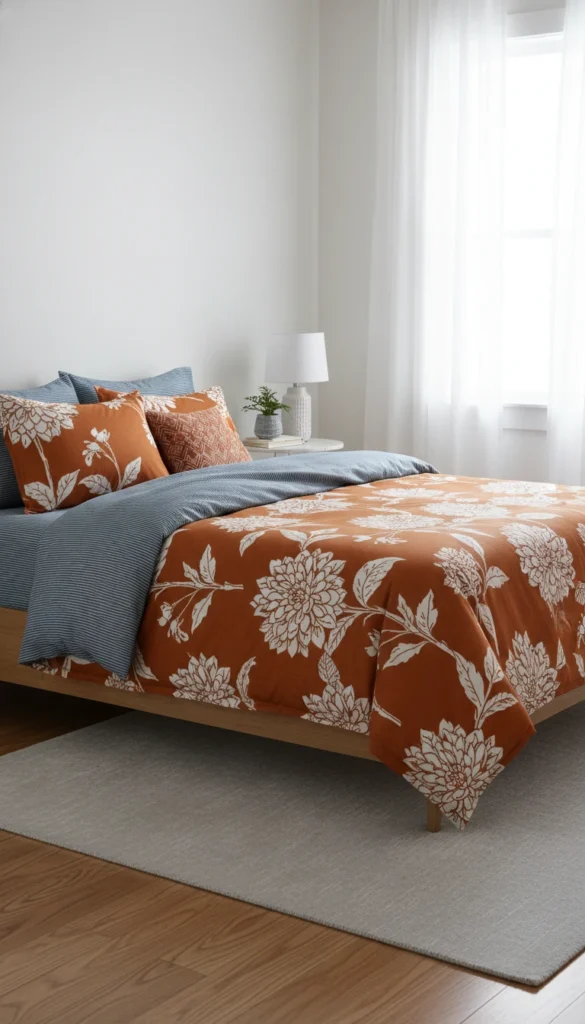
Pattern mixing can sound scary, but on a bed it becomes playful and inviting.
Picture large botanical pillow shams paired with tiny pin-dot sheets and a subtle geometric quilt.
This works because the eye loves contrast.
Large-scale patterns feel bold, while small-scale patterns read almost like texture from a distance.
To pull this off:
- Choose one hero pattern (for example, a big floral or abstract print)
- Add one small, quiet pattern (tiny dots, thin stripes, micro-check)
- Keep everything within one color story
For instance, a burnt orange floral duvet with slate blue mini-stripe sheets and creamy pillowcases creates a layered, collected look.
The patterns dance together, instead of fighting for attention.
4. Add an Oversized Throw at the Foot of the Bed
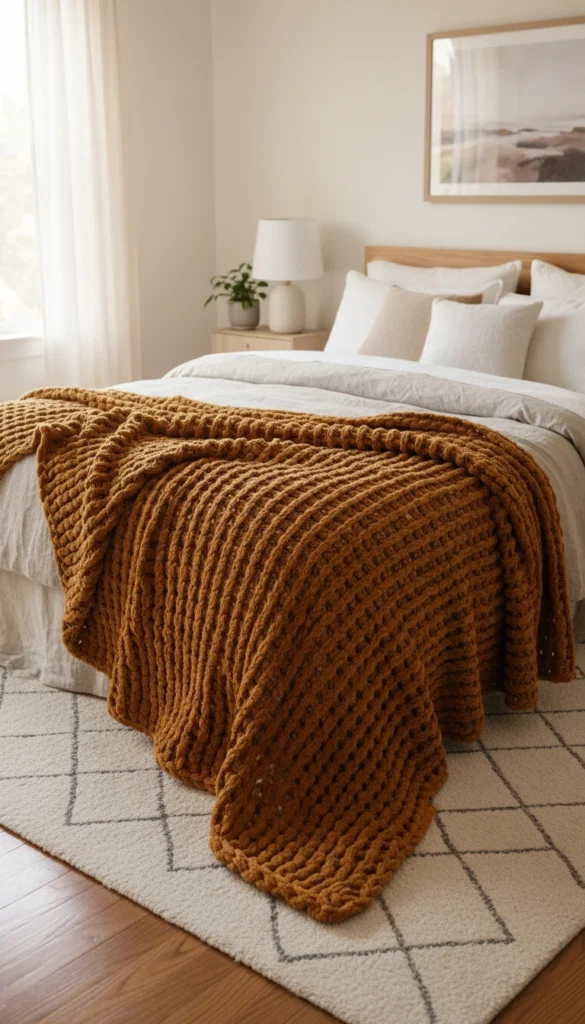
An oversized throw is the easiest “instant Pinterest” trick.
Imagine a chunky knit throw in warm caramel casually draped across the corner of the bed, looking like you just finished a lazy Sunday nap.
This matters because it softens the edges of a made bed.
A perfectly tucked duvet can feel a bit stiff; a throw adds that relaxed, lived-in energy.
Choose a throw that:
- Has serious texture (chunky knit, bouclé, thick woven fringe)
- Is bigger than a standard couch throw
- Introduces a new, but complementary color
On the bed, it might fall slightly onto the floor, curve around the corner, and show off its tassels.
It makes the bed feel approachable, not museum-level perfect.
5. Play with Pillow Heights and Shapes
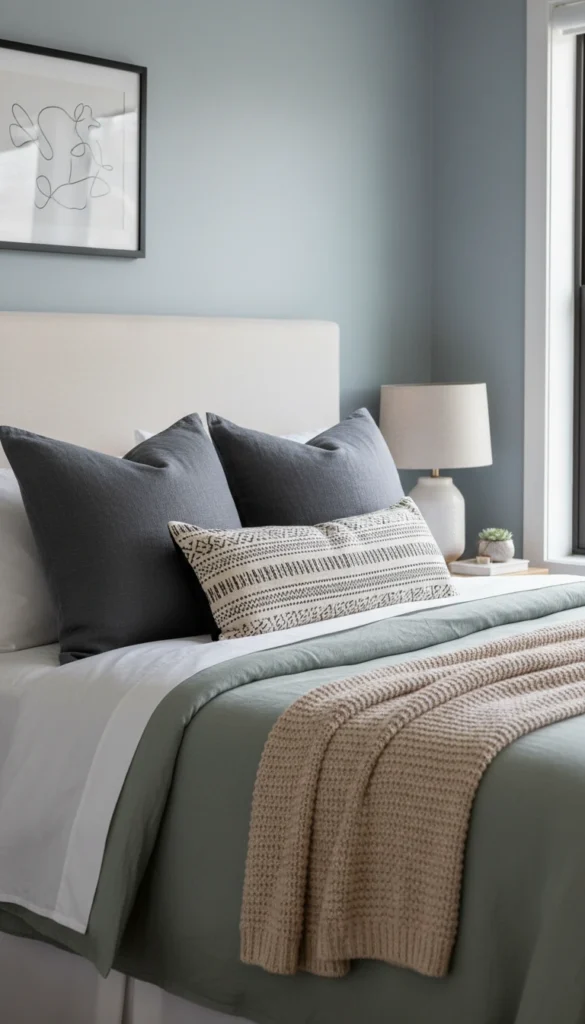
Pillows are not only for sleeping; they are styling tools.
Think about two large European pillows against the headboard, then standard pillows, then a row of smaller cushions in front.
This layering creates a gentle slope from tall to low, which looks visually satisfying and plush.
The bed feels more luxurious, even if the mattress itself remains the same.
Try mixing:
- Square Euros in a textured solid
- Sleeping pillows in crisp percale with a simple edge
- Lumbar or small accent cushions in a bold pattern or contrasting material
For example, a long, narrow lumbar pillow in olive green velvet against mauve shams instantly adds drama.
The shapes and heights keep the bed from looking flat or unfinished.
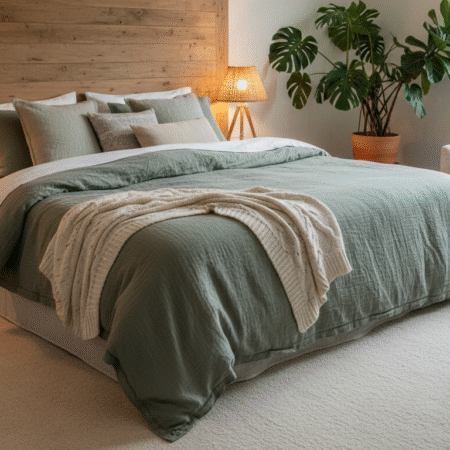
6. Embrace a Relaxed Linen Look
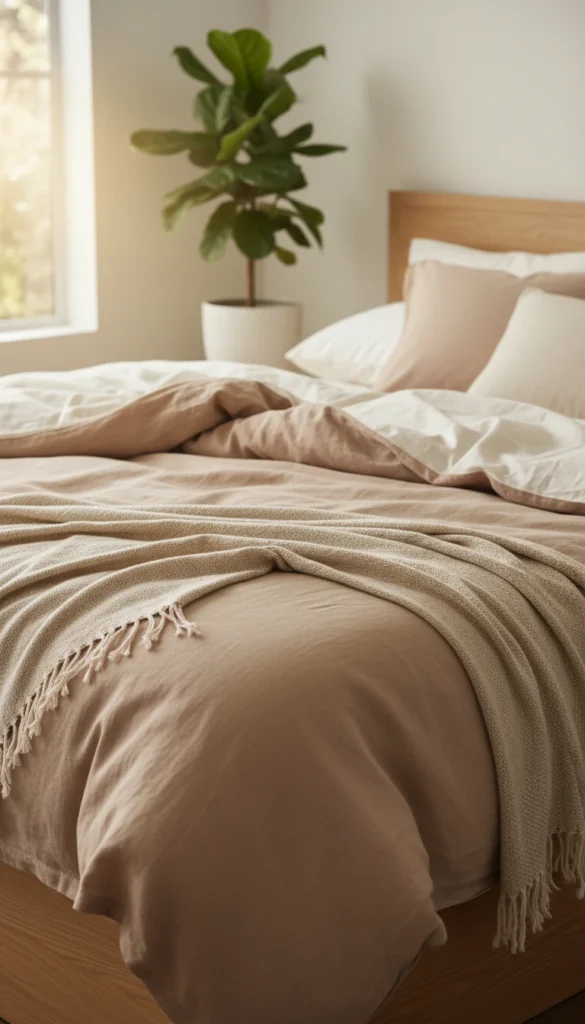
Linen bedding has a very specific mood: unfussy, breathable, effortlessly chic.
Picture a set of soft clay linen sheets with a warm white linen duvet, slightly wrinkled in that intentional, “I wake up in a lifestyle photo” way.
This matters because linen adds both texture and practicality.
It feels cool in summer, cozy in cooler months, and the natural creases give the bed a relaxed, European apartment vibe.
To bring this into your bedroom:
- Start with pillowcases or a duvet cover if a full set feels like too much
- Choose warm, earthy neutrals like sand, stone, clay, or olive
- Embrace the wrinkles instead of ironing everything smooth
On the bed, linen catches light differently than cotton, creating soft shadows on every fold.
It looks calm, soft, and a little bit romantic.
7. Try a Two-Toned or Color-Blocked Bed
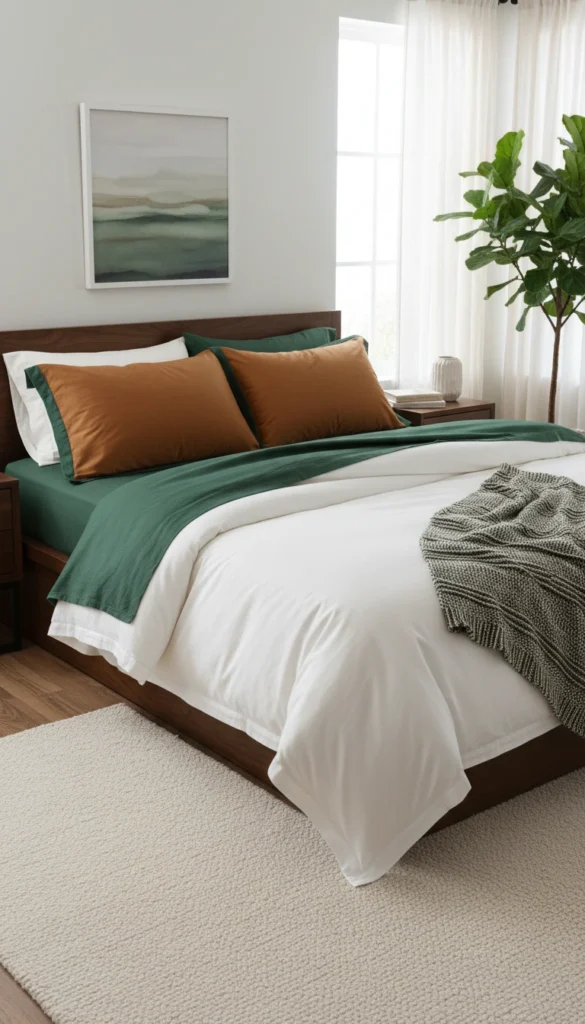
Color-blocking your bedding keeps things simple but visually striking.
Imagine a bed with forest green sheets, a warm ivory duvet, and caramel pillow shams. Clean, bold blocks of color, no busy patterns required.
This approach matters if you love color but want a streamlined look.
It feels modern and intentional, not chaotic.
To create this:
- Choose 2–3 colors from the same mood family (for example, warm earthy tones or cool coastal tones)
- Assign each color to a “zone”: sheets, duvet, pillowcases, throw
For instance, a clay duvet, olive sheets, and warm white shams give the bed a grounded, nature-inspired energy.
The color blocks create simple shapes that read beautifully, even in photos.
8. Build a Seasonal Bedding Capsule
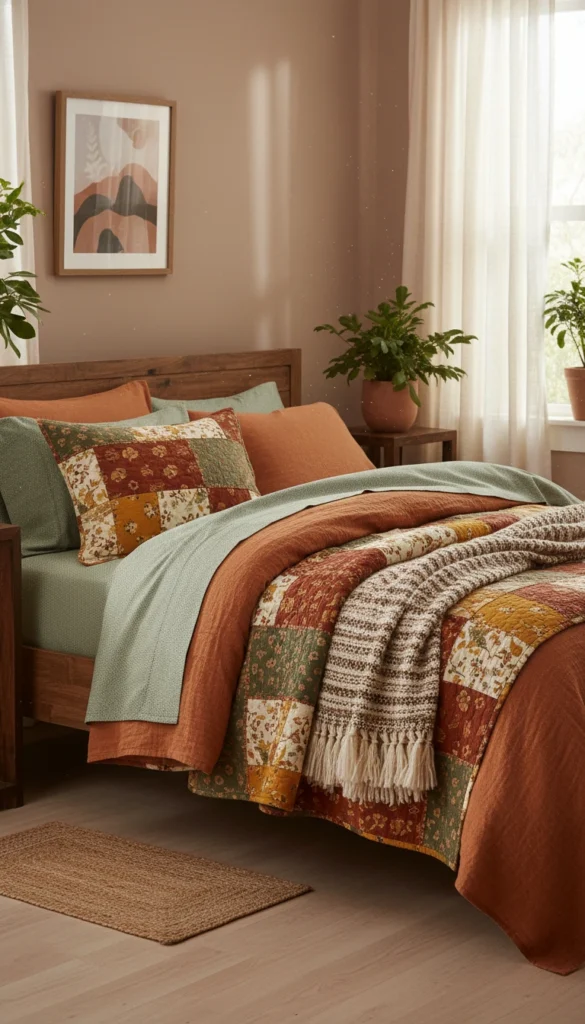
Just like a wardrobe capsule, a bedding capsule gives you mix-and-match pieces that you rotate through the year.
This keeps your bedroom feeling fresh, without buying a full new set each season.
It matters because your body and your mood change with the weather.
Winter might call for flannel and deeper colors, while summer feels better with crisp cotton and lighter shades.
Create a small collection:
- One all-season duvet
- A lighter quilt or coverlet
- One set of cool sheets (percale or linen)
- One cozier set (sateen or flannel)
- Two different color or pattern sets of shams
Visually, your bed evolves through the year.
In spring, dusty sage sheets with a cream quilt feel airy.
In autumn, swap to plum or rust sheets with a thicker, textured throw, and the whole room shifts with the season.
9. Make Your Sheets the Star
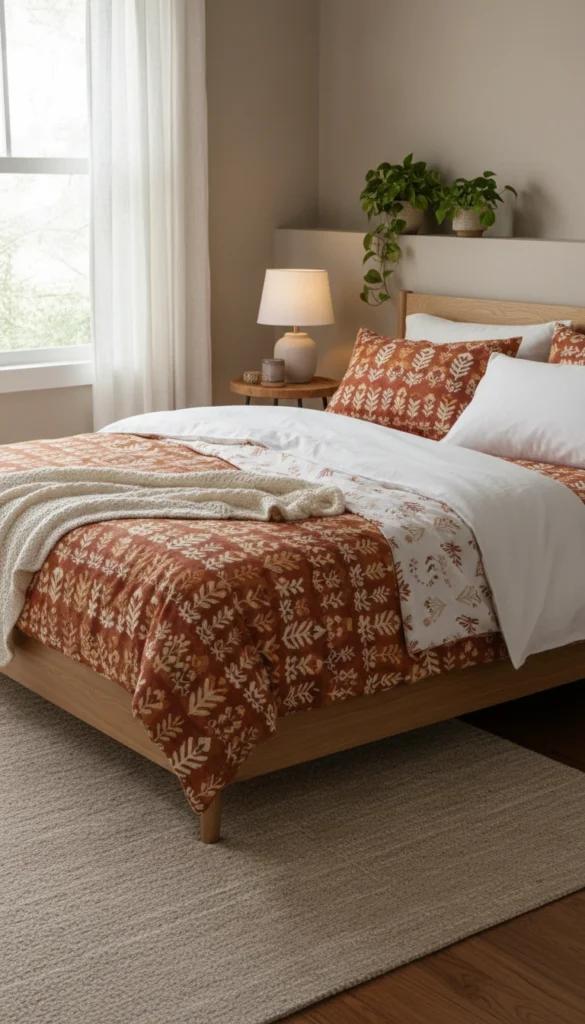
Most people fall in love with the duvet first, but statement sheets can be a fun twist.
Picture pulling back a plain warm white duvet and revealing tiny terracotta blooms or slate blue hand-drawn stripes underneath.
This idea matters because it adds delight to the everyday.
You see the pattern every night when you climb into bed, and guests catch a peek when the duvet is casually folded back.
Choose sheets with:
- A small, repeated pattern (so it reads harmonious, not overwhelming)
- Colors that tie into at least one other element on the bed
- A comfortable, breathable fabric
On the bed, the pattern flashes along the fold of the top sheet and the edges of the pillows.
It feels like a secret design detail that rewards a closer look.
10. Create a Monochrome Story with Texture
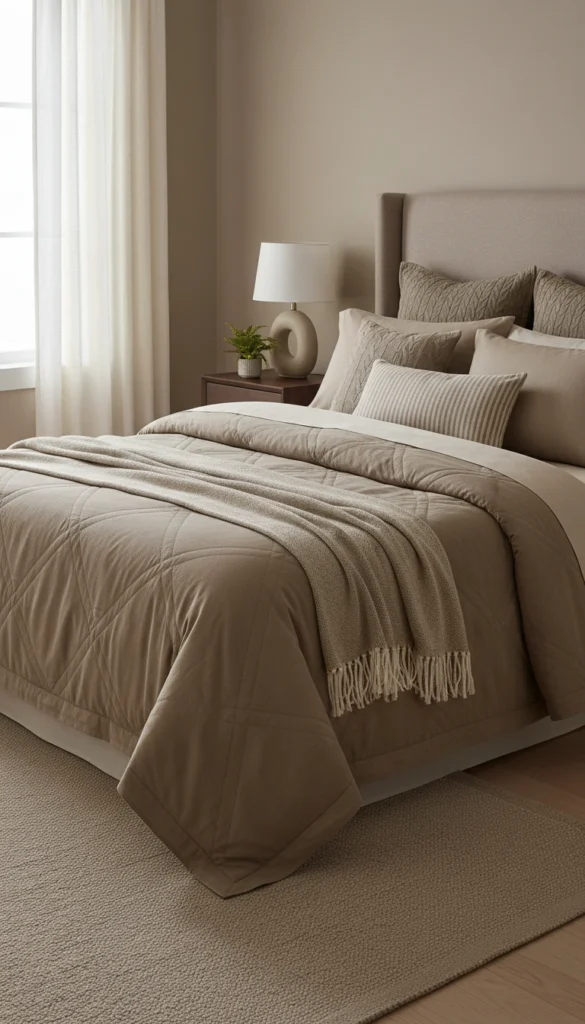
A monochrome bed uses one main color in different tones and textures.
Imagine a bed in varying shades of soft taupe, from pale sand sheets to a slightly darker quilt and a deeper mocha throw.
This matters because it keeps the look calm and cohesive while still feeling layered.
Instead of a color clash, you get gentle depth through texture and shade.
To try this:
- Choose one color family (for example, clay, moss, plum, or charcoal)
- Find 3–4 items that sit in light, medium, and dark versions of that tone
- Vary textures: smooth cotton, gauzy linen, ribbed knit, velvet cushion
On the bed, your eye moves across the different surfaces instead of different colors.
It feels serene, spa-like, and very grown up in the best way.
11. Style a Hotel-Inspired Bed with a Soft Edge
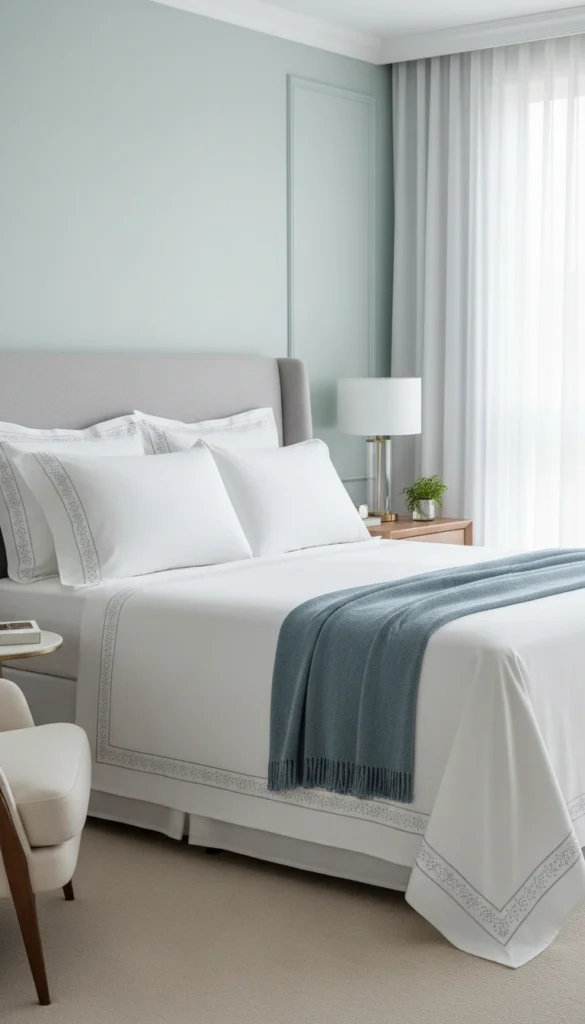
A hotel-style bed feels crisp and luxurious, but at home it is nice to soften the edges.
Think white or warm ivory sheets with a subtle embroidered border, neatly layered, then topped with two fluffy pillows and a relaxed throw.
This approach matters because it combines structure and comfort.
You still get that “freshly made” feeling, but it does not feel stiff or formal.
To pull it off:
- Use high quality-feeling sheets in a solid, light shade
- Add two to four standard pillows and two Euro pillows for height
- Fold the duvet back to show off the sheet border
- Add one relaxed element, like a crinkled throw or a patterned lumbar cushion
Visually, it looks like a boutique hotel that belongs to someone with personality.
Clean lines at the head, soft texture at the foot, and a few details that make it yours.
12. Mix Natural, Tactile Materials
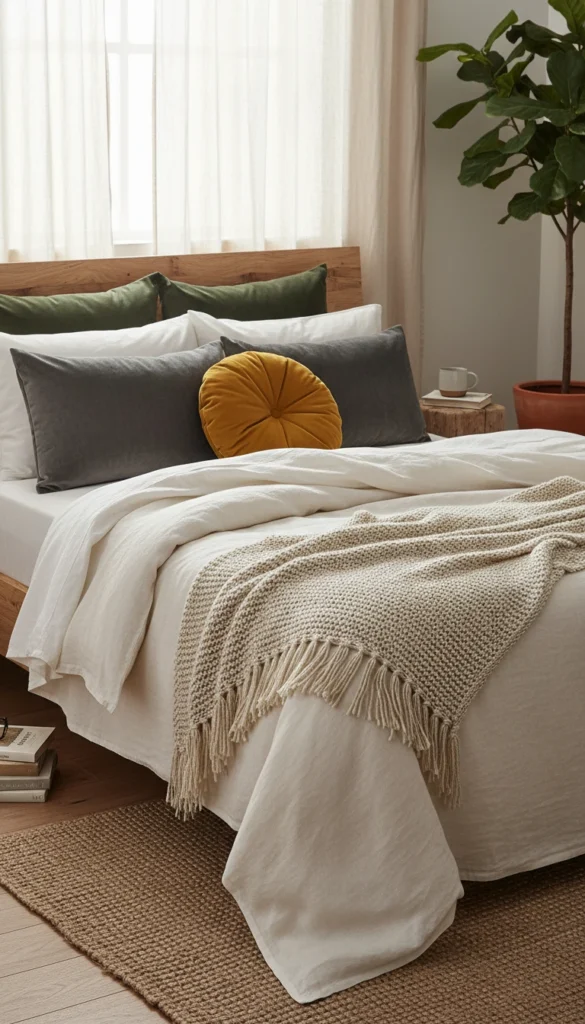
Combining different natural materials makes the bed feel grounded and interesting.
Picture cotton sheets, a linen duvet, a wool or bouclé throw, and velvet cushions all in a soft clay and olive palette.
This matters because tactile variety invites you to actually use the bed, not just look at it.
It also gives a quiet luxury vibe without needing everything to be expensive.
To use this idea, think “materials first, colors second.”
Decide on two or three textures you love, then find them in a cohesive palette: maybe warm white cotton, olive linen, and caramel velvet.
On the bed, each piece catches the light differently.
The smooth cotton looks calm, the linen slightly rumpled, the velvet rich and deep, the wool cozy and plush.
13. Add a Bed Runner or Scarf for a Tailored Touch
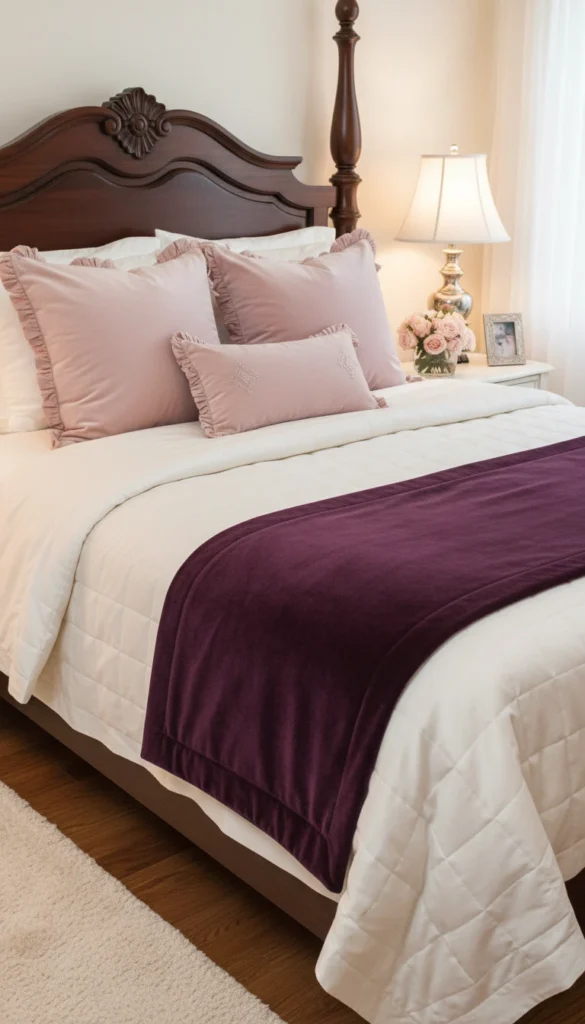
A bed runner or bed scarf is a narrow strip of fabric laid across the foot of the bed.
You often see them in high-end hotels, but in a home they can add color and structure without overheating the bed.
This matters because it creates a strong visual line.
The runner frames the end of the bed and anchors whatever color story you choose.
Pick a runner in:
- A bold pattern that ties into your pillows
- A contrasting color that sparks energy
- A rich texture like velvet, jacquard, or thick woven cotton
On your bed, a deep plum runner with soft blush shams and ivory bedding looks polished but romantic.
It gives the impression that you took an extra styling step, even if everything else stayed simple.
14. Introduce a Touch of Moody Dark Bedding
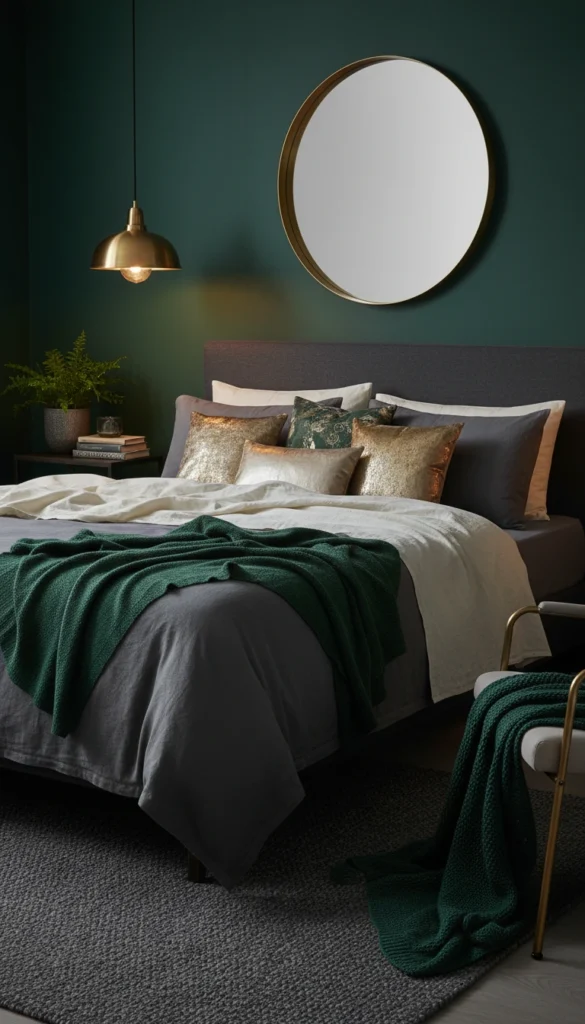
Dark bedding can feel dramatic in the best way.
Picture charcoal pillowcases with a mauve quilt and gold-accented cushions, or a deep forest green duvet with warm ivory sheets.
This matters because darker tones add depth and make lighter accents pop.
They can also make the bed feel like a safe little cocoon, especially at night.
To keep it from feeling heavy:
- Use dark tones on part of the bed, not every single layer
- Balance them with lighter sheets or throws
- Add a small metallic accent, like a gold-embroidered cushion or brass bedside lamp
Visually, the dark bedding recedes slightly, making the bed feel deeper.
The contrast against pale walls or lighter furniture feels rich, not gloomy.
15. Refresh Your Bedding with Scent and Small Ritual Details
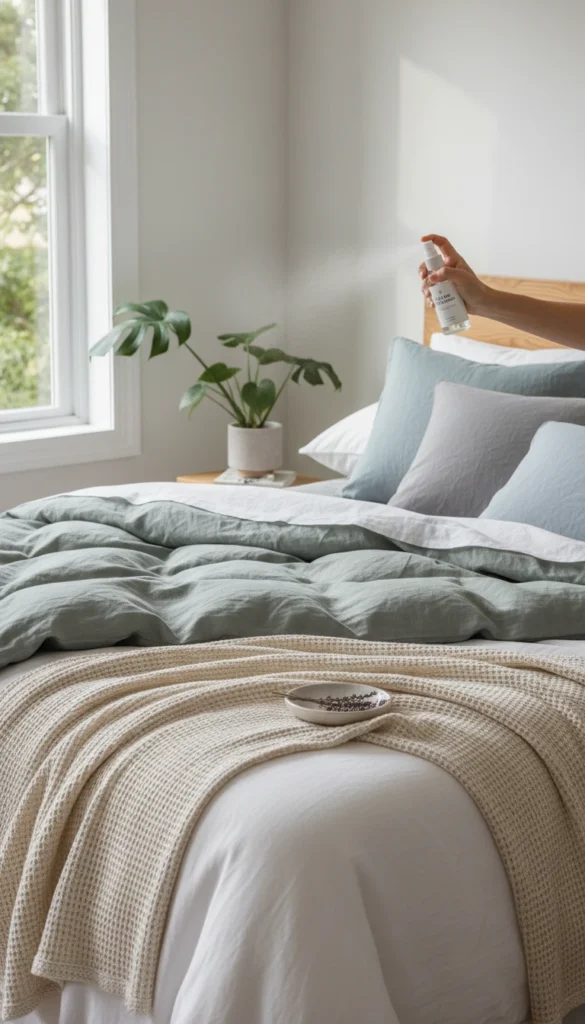
The bedding experience is not only visual.
Soft scent and tiny details make your refreshed bed feel like an intentional sanctuary.
This matters because your brain connects scent with memory and mood.
A light linen spray with notes of lavender, soft citrus, or sandalwood can signal rest time as soon as you pull back the covers.
Try:
- Spritzing a natural fabric spray onto the duvet or pillows in the morning
- Tucking a small sachet into the linen closet or under the mattress corner
- Keeping a folded extra throw at the foot, ready for reading nights
On the bed, everything still looks beautiful, but it also feels like a ritual.
You see the layered textures, feel the soft fabrics, and breathe in a scent that tells your mind it is safe to slow down.
How to Pick the Right Bedding Refresh for Your Bedroom
With so many bedding ideas, it can feel hard to choose where to start.
A simple approach is to decide what your room needs most: color, texture, or comfort.
If your bedroom looks flat in photos, focus on texture and layering.
If it feels chaotic, lean into monochrome or color-blocked ideas.
If sleep quality needs improvement, a seasonal bedding capsule and breathable fabrics might do more than any decorative cushion.
You can also ask yourself:
- Do I want my room to feel calm or energizing?
- What colors appear often in my clothes and accessories?
- Which idea from the list feels the easiest and most fun to try first?
Let one small change lead the way.
Swap the duvet cover, add a quilt, or upgrade your pillows.
Very often, one beautiful new element inspires the rest.
Common Bedding Styling Mistakes to Avoid
Even the prettiest bedding can feel off with a few simple missteps.
The good news: they are easy to fix.
Mistake 1: Too few pillows or layers
A naked mattress with two lonely pillows usually feels like a dorm, not a retreat.
Add at least one extra layer (quilt or throw) and two more pillows or one bold lumbar to create fullness.
Mistake 2: Everything in one exact color
All bright white or all pale beige can feel a little flat.
Try shifting the tones slightly or adding texture, like a clay throw on a cream bed or a waffle knit blanket on a warm white duvet.
Mistake 3: Ignoring fabric feel
Beautiful bedding that feels scratchy will never feel like an upgrade.
Prioritize softness and breathability first, then color and pattern.
Final Thoughts: Your Bed as a Daily Reset Button
Your bed is the first and last thing you see each day.
Refreshing your bedding is not only about pretty photos; it is about how you feel when you climb in at night and stretch in the morning.
Start with one of these 15 bedding ideas to instantly refresh your bedroom, then build from there.
Maybe it is a new statement duvet, a textured quilt, moodier colors, or a stack of lush pillows that make you smile every time you walk in.
The goal is simple: a bed that feels like you, supports the way you rest, and quietly whispers, “Come relax,” every time you pass by.
Other Articles
12 Cozy Bedding Ideas for the Comfiest Nights Ever
12 Modern Japandi Bedroom Ideas for a Calm, Balanced Space