


14 Small Apartment Bedroom Ideas You’ll Wish You Tried Sooner
Small bedrooms have a reputation for feeling limiting, but they don’t have to. With the right choices, even the most compact space can feel warm, personal, and deeply comforting. It’s not about cramming in more furniture or chasing perfection—it’s about creating a mood that makes you exhale the moment you walk in. When your bedroom feels intentional and gentle, size stops mattering. What matters is how the space makes you feel at the end of a long day.
Let the Corners Do the Heavy Lifting
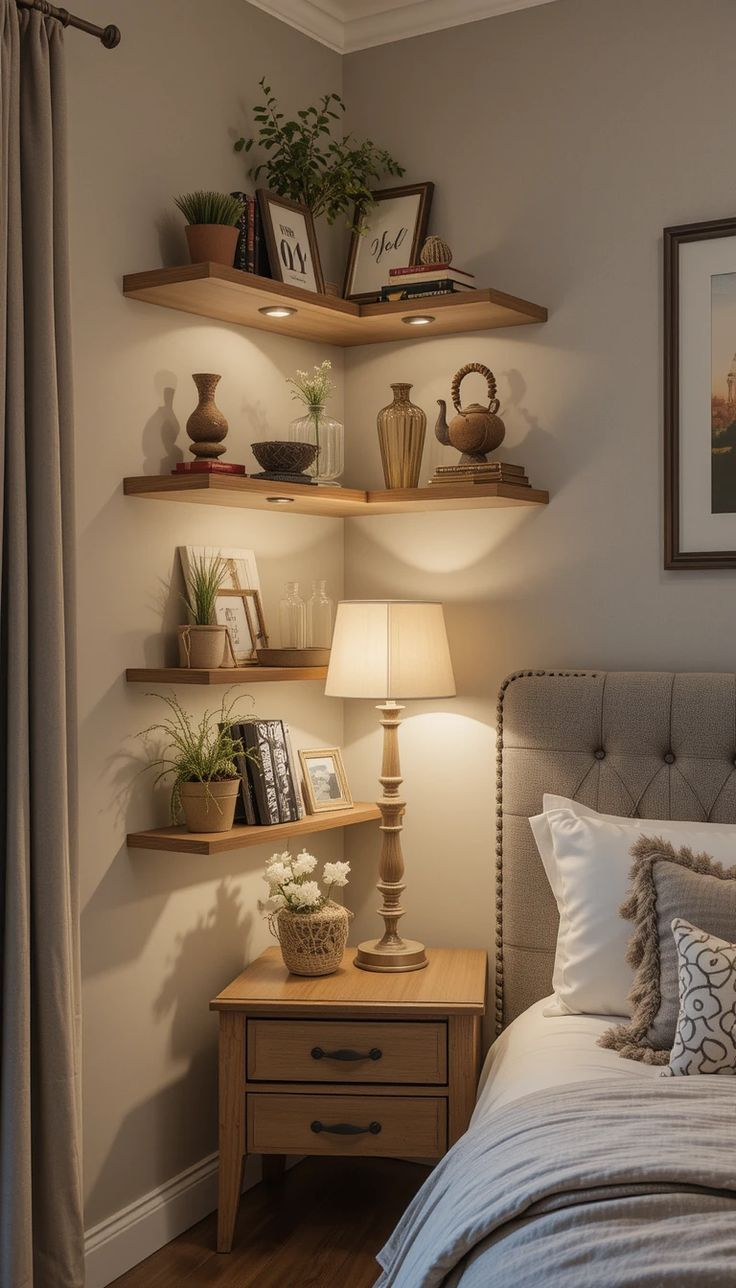
Corners are often ignored, but in a small bedroom they can quietly change everything. Floating shelves stacked upward turn an awkward angle into a place that feels intentional and calm. Instead of clutter spreading across every surface, your favorite books, plants, and personal objects get a home that doesn’t steal floor space.
There’s something comforting about vertical storage that’s styled slowly, piece by piece. It makes the room feel lived-in rather than cramped, like every item earned its place. When your bedside area feels lighter and less crowded, the whole room breathes a little easier—and so do you.
Use Soft Light and Curves to Make the Room Feel Bigger
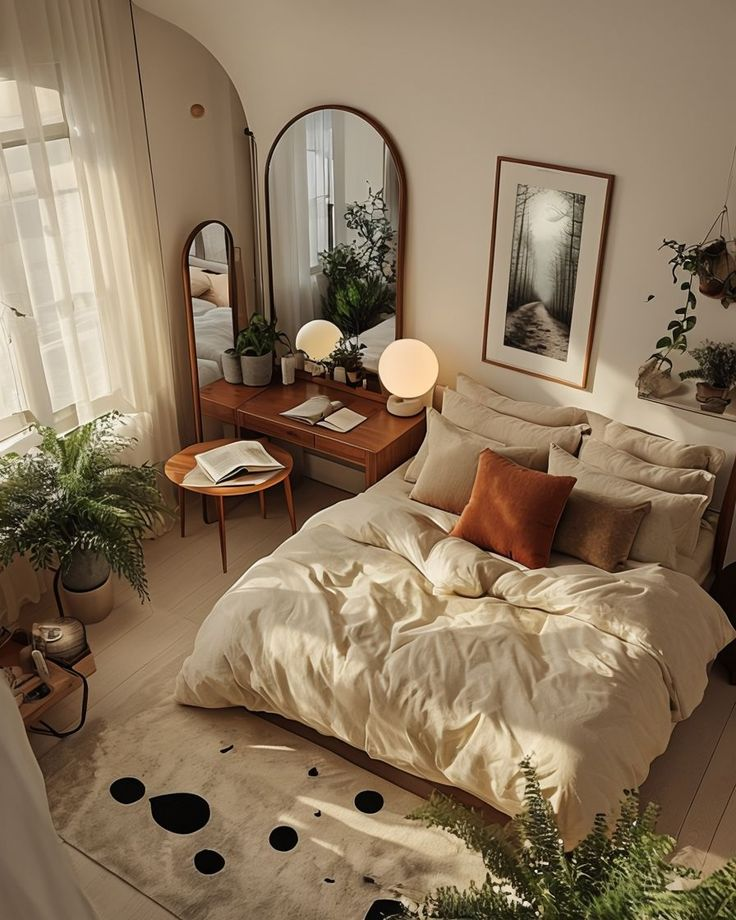
Small bedrooms feel more generous when nothing feels sharp or harsh. Rounded shapes, warm lighting, and layered textures gently blur the edges of the space, which tricks your brain into relaxing instead of measuring square footage. The room stops feeling tight and starts feeling calm.
Light that glows instead of glares changes the mood instantly. It creates pockets of warmth that make evenings slower and mornings softer. When everything feels gentle—fabric, light, and shape—the room feels like a retreat rather than a compromise.
Make the Bed Feel Like the Star of the Room

In a small bedroom, the bed sets the emotional tone. When it looks layered, soft, and intentional, the entire space feels more put together—even if everything else is simple. Plush textures, a padded headboard, and balanced symmetry create a sense of calm that instantly makes the room feel finished.
There’s a quiet confidence in letting the bed do most of the work. When it feels inviting and grounded, you don’t need much else to feel comfortable. The room becomes a place you actually look forward to ending your day, not just somewhere you sleep.
Use Mirrors to Quietly Open Up the Space

A small bedroom doesn’t need more furniture to feel bigger—it needs breathing room. A well-placed mirror creates that feeling without asking for extra square footage. It reflects light, softens the walls, and gives the room a subtle sense of depth that makes everything feel less boxed in.
There’s also something calming about visual balance. When clean lines and simple surfaces are paired with reflection, the room feels lighter and more intentional. It’s the kind of change you feel immediately, even if you can’t quite explain why the space suddenly feels easier to be in.
Turn One Wall into Something Personal
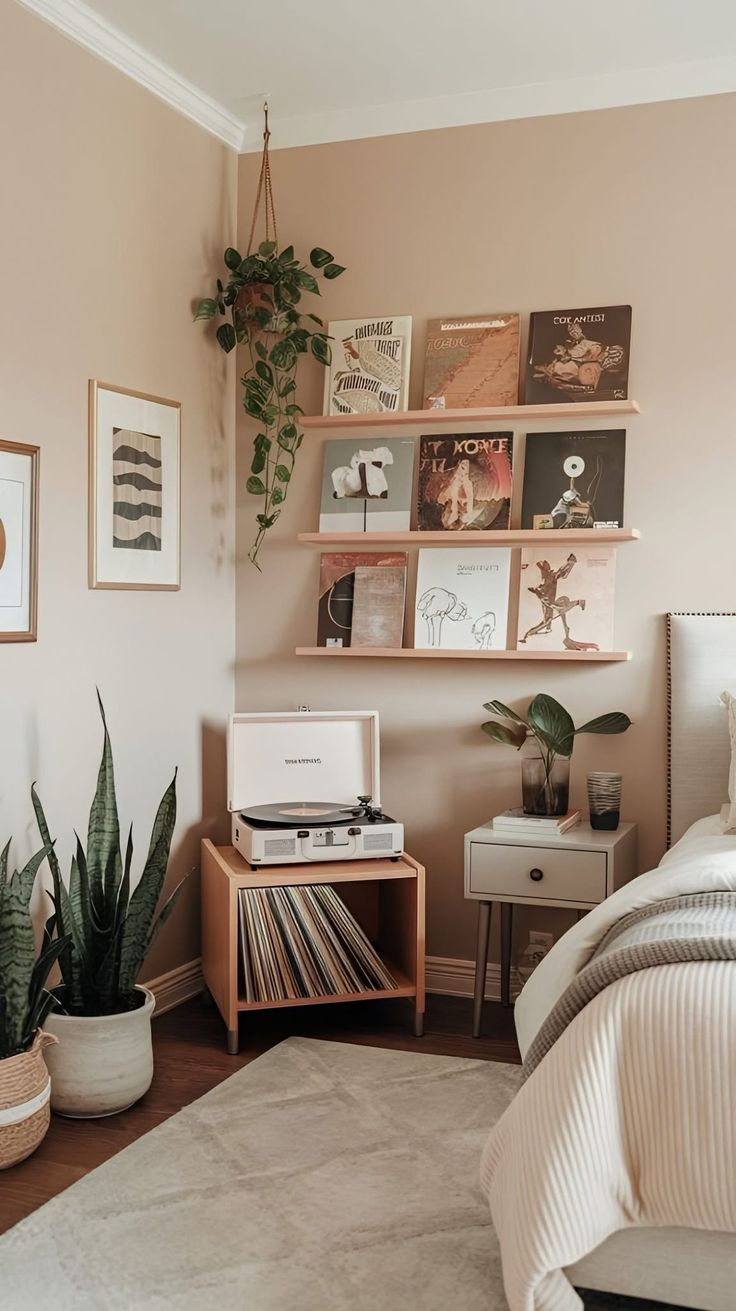
A small bedroom feels more meaningful when it reflects who you are, not just how much space you have. Using wall space for art, records, or books adds personality without making the room feel crowded. Everything lives vertically, which keeps the floor open and the energy calm.
What makes this work is restraint. A few carefully chosen pieces feel intentional rather than busy, and the room starts to tell a story. When your space feels personal in a quiet way, it becomes somewhere you actually want to linger instead of rush through.
Let Plants Soften the Room Without Taking Space
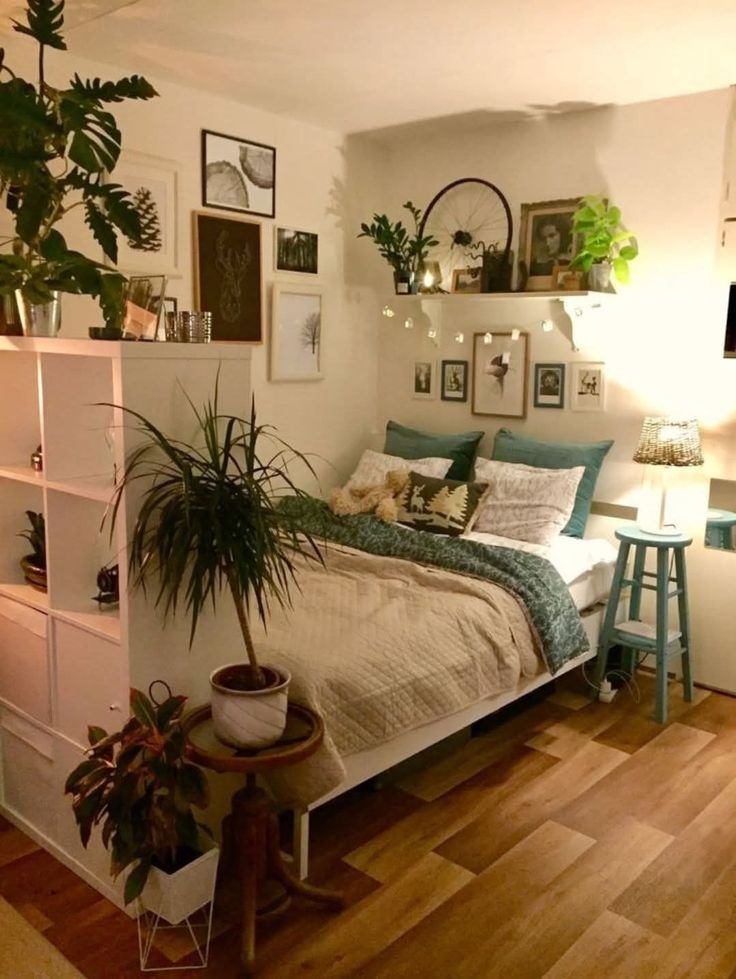
Greenery has a way of making even the smallest bedroom feel alive. When plants are layered at different heights—on shelves, stands, or tucked into corners—they add warmth without crowding the floor. The room feels calmer, more human, and a little more forgiving.
There’s also an emotional shift that happens with natural elements. The space feels less styled and more relaxed, like it’s meant to be lived in. Even a few plants can turn a tight bedroom into a place that feels restorative rather than restrictive.
Keep Entertainment Clean and Out of the Way
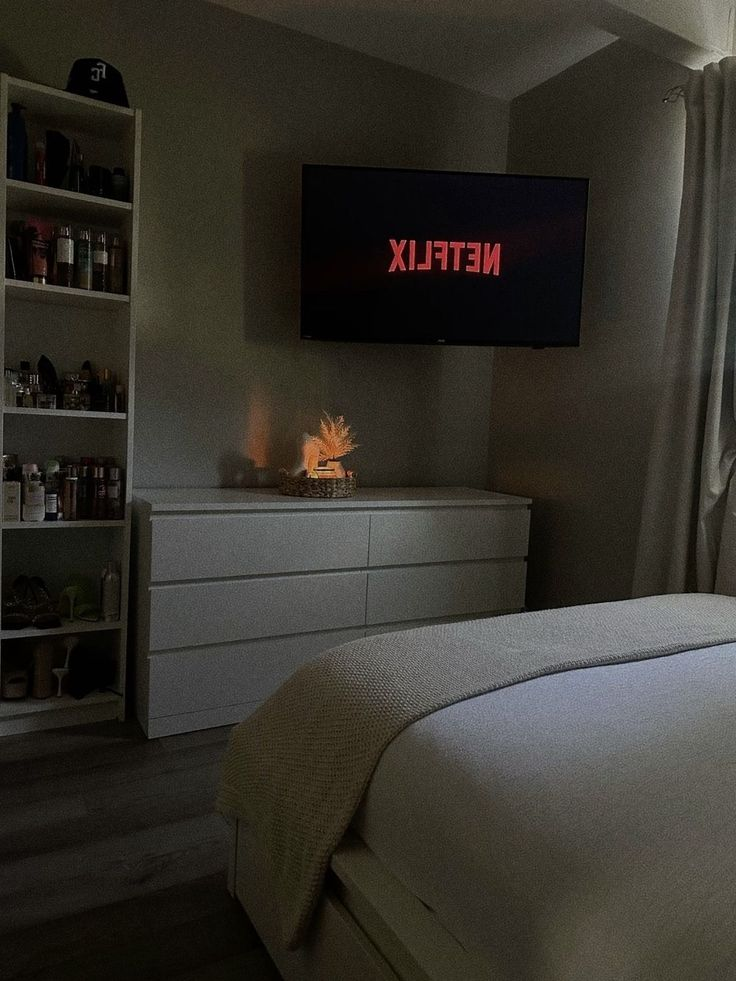
In a small bedroom, visual noise adds up fast. Mounting screens and keeping surfaces clear instantly makes the room feel calmer and more intentional. When cords, bulky furniture, and extra pieces disappear, the space feels less like a storage zone and more like a place to rest.
There’s something deeply relaxing about a room that doesn’t ask for your attention. When entertainment blends into the background instead of dominating the space, it’s easier to unwind. The bedroom keeps its quiet purpose, even when it doubles as a cozy place to relax.
Add Warm, Layered Lighting for Instant Coziness
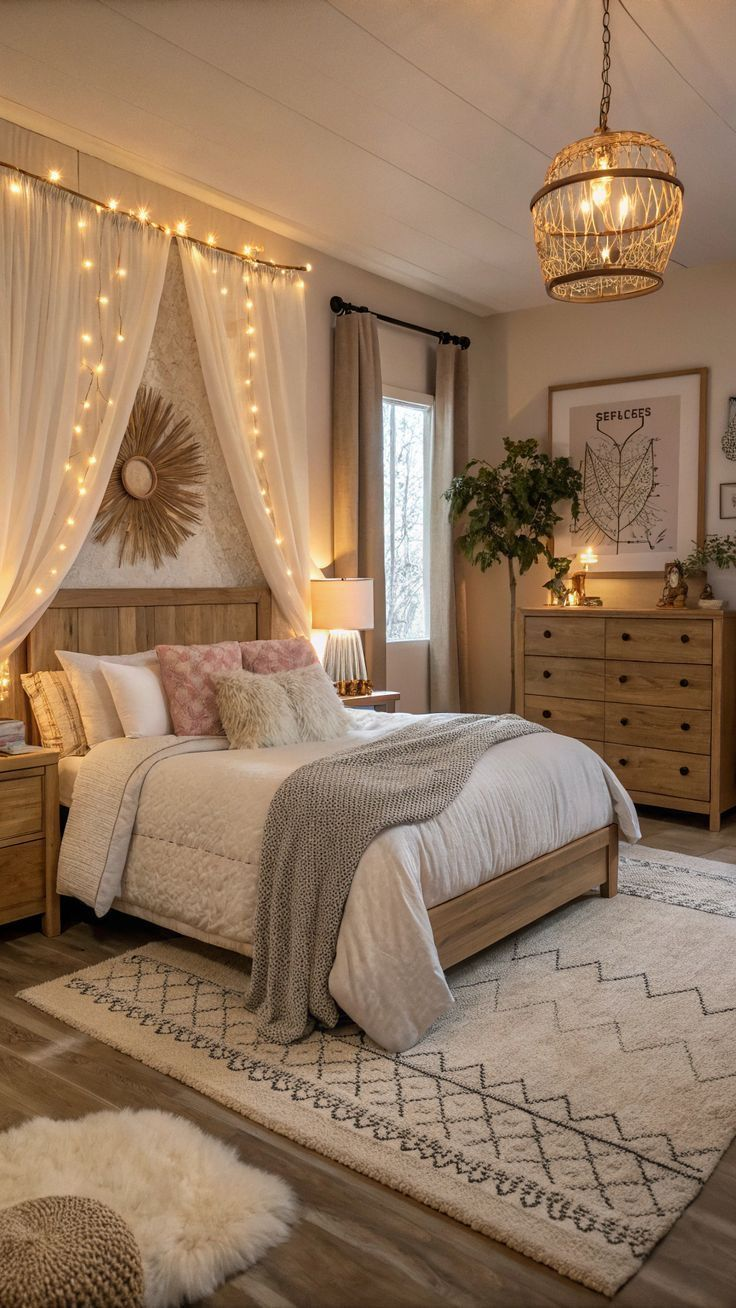
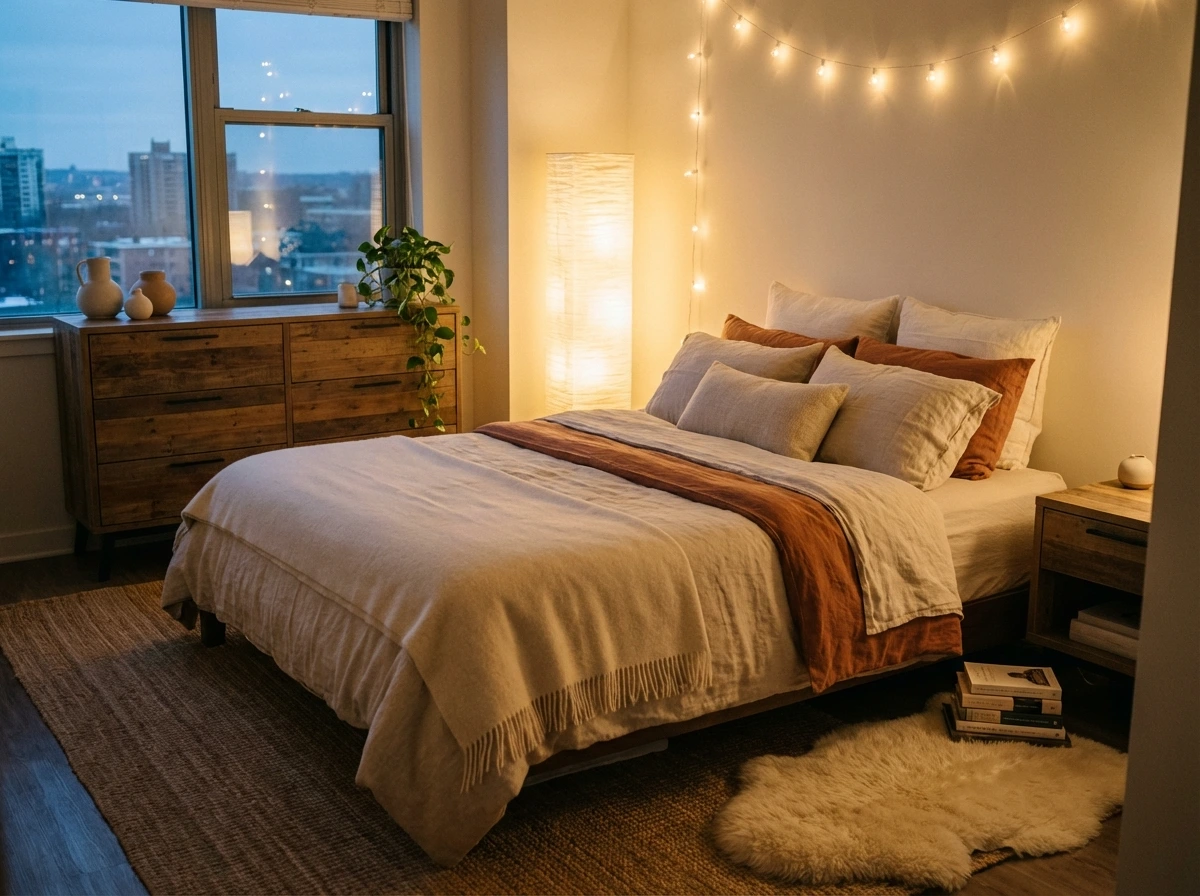
Nothing transforms a small bedroom faster than the right lighting. Soft, layered light creates depth and warmth that overhead fixtures alone can’t deliver. When light wraps around the space instead of shining straight down, the room feels gentler and more inviting.
This kind of glow changes how the room feels emotionally. It slows everything down and makes the space feel safe and comforting at the end of the day. Even a simple lighting change can make a bedroom feel like a place you truly unwind, not just crash.
Let One Space Do Double Duty—Without Feeling Busy
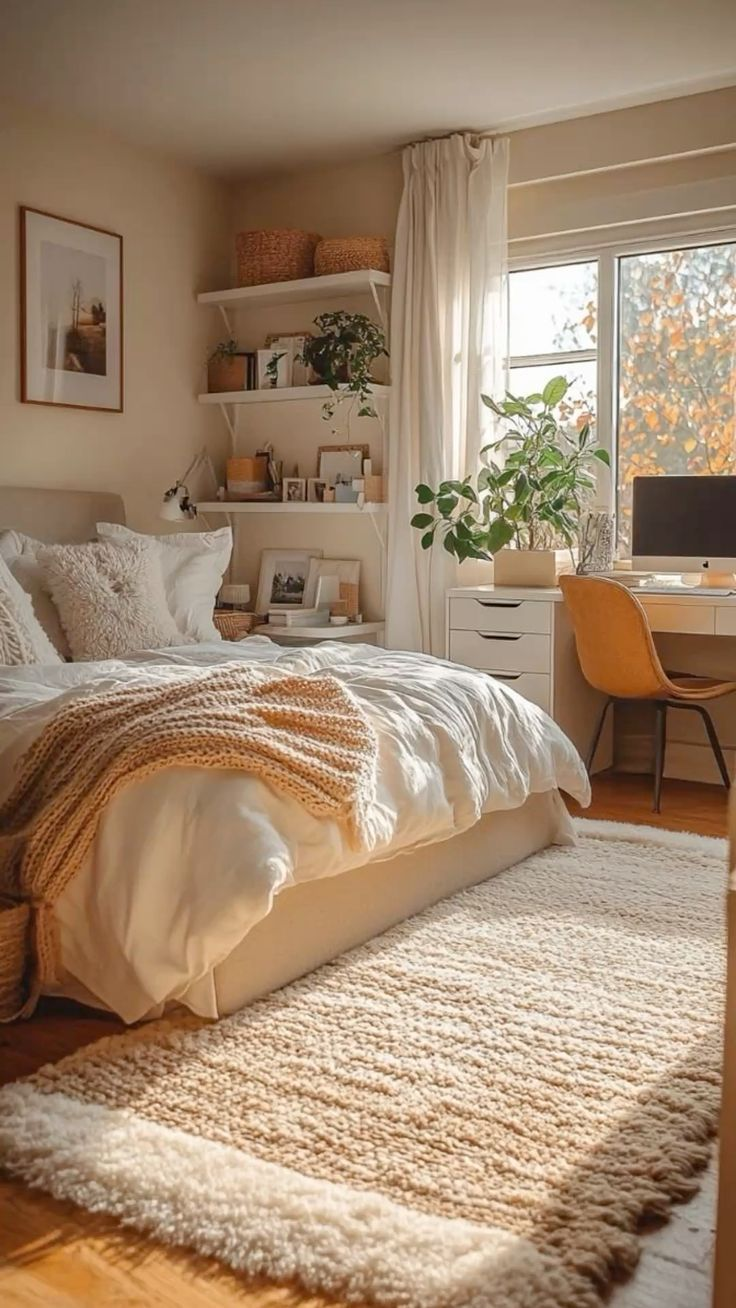
Small bedrooms often have to work harder, but that doesn’t mean they should feel chaotic. When sleeping and working live in the same room, soft boundaries make all the difference. Keeping furniture light, finishes warm, and surfaces mostly clear helps each area feel calm instead of competing for attention.
There’s a quiet comfort in a room that adapts to your day without losing its softness. When everything feels cohesive, the space shifts naturally from productive to peaceful. It proves that even a small bedroom can support your life without overwhelming it.
Keep the Floor Open to Let the Room Exhale

A small bedroom instantly feels more peaceful when the floor isn’t fighting for space. Low-profile furniture, visible floorboards, and a simple layout allow the room to breathe. When you can see more floor, the room feels lighter—even if the square footage hasn’t changed.
This openness creates a subtle sense of ease. Moving through the room feels natural, unhurried, and calm. The space stops feeling tight and starts feeling intentional, like everything is exactly where it’s meant to be.
Let Storage Blend Into the Room, Not Fight It
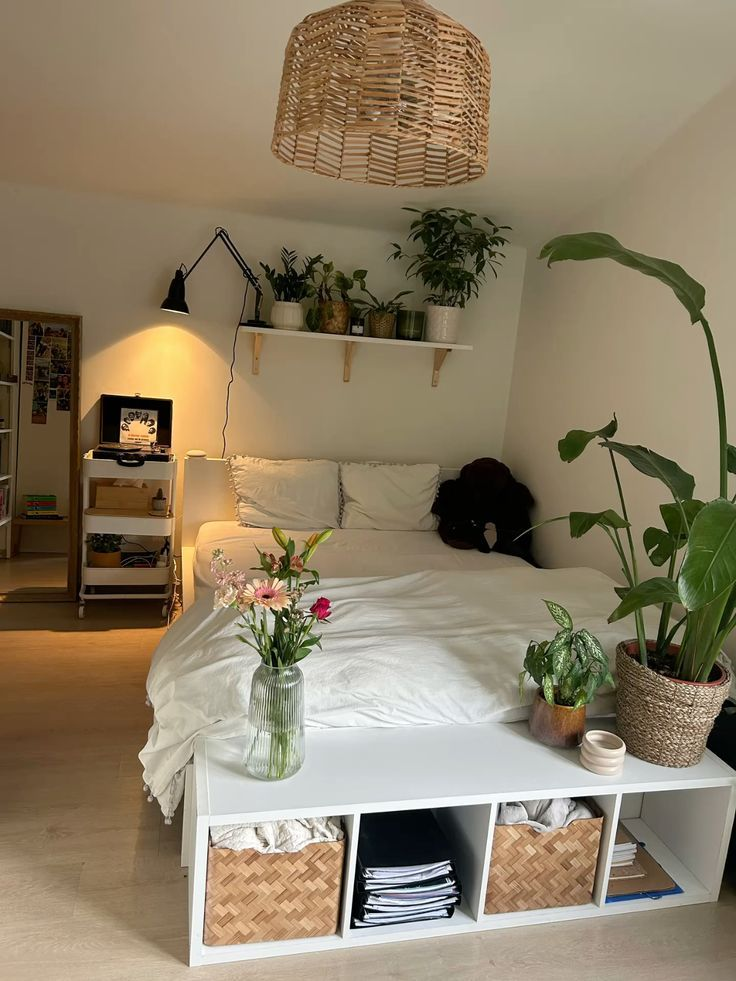
Storage doesn’t have to look heavy to be useful. When it stays low, light-colored, and integrated into the layout, it quietly supports the room instead of overwhelming it. The bedroom feels calmer when storage looks like part of the design, not an afterthought.
There’s a sense of relief that comes from knowing everything has a place without seeing it all at once. When clutter disappears visually, the room feels softer and more restful. It’s easier to relax when nothing feels stacked against you.
Use a Calm, Limited Color Palette to Set the Mood
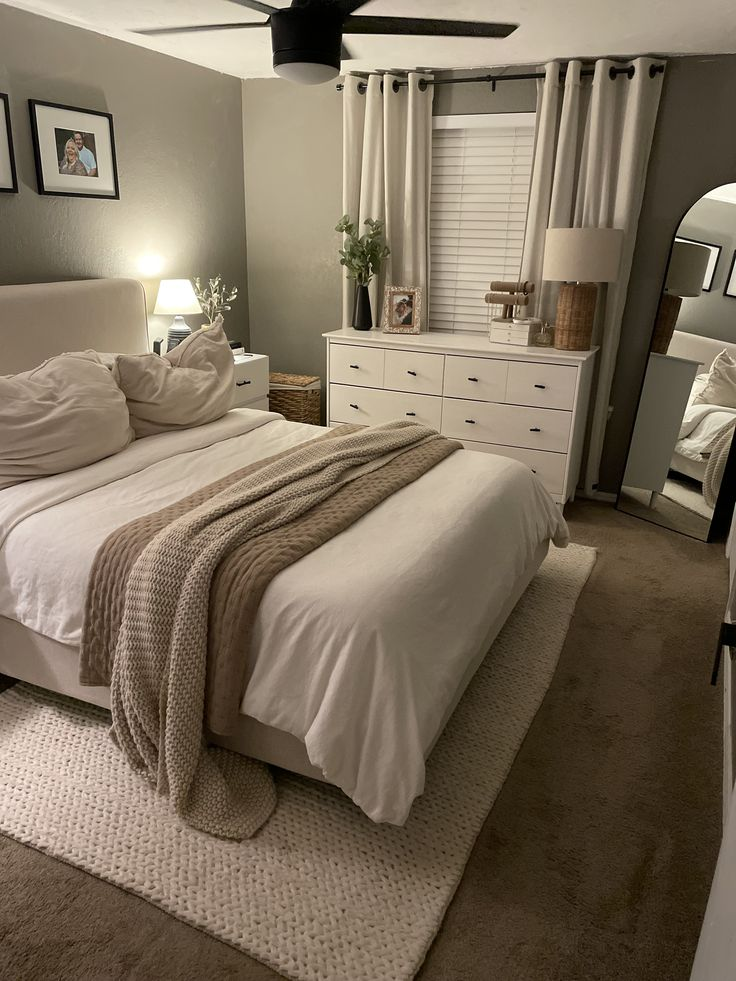
A small bedroom feels instantly more peaceful when the colors don’t compete with each other. Soft neutrals, gentle contrasts, and repeated tones create a sense of flow that makes the room feel cohesive instead of busy. The space feels calmer because nothing is visually shouting for attention.
This kind of palette does more than look good—it changes how the room feels to be in. When colors stay quiet and consistent, your mind does too. The bedroom becomes a place where everything slows down, exactly how it should feel at the end of the day.
Create a Sense of Calm With Thoughtful Nighttime Lighting
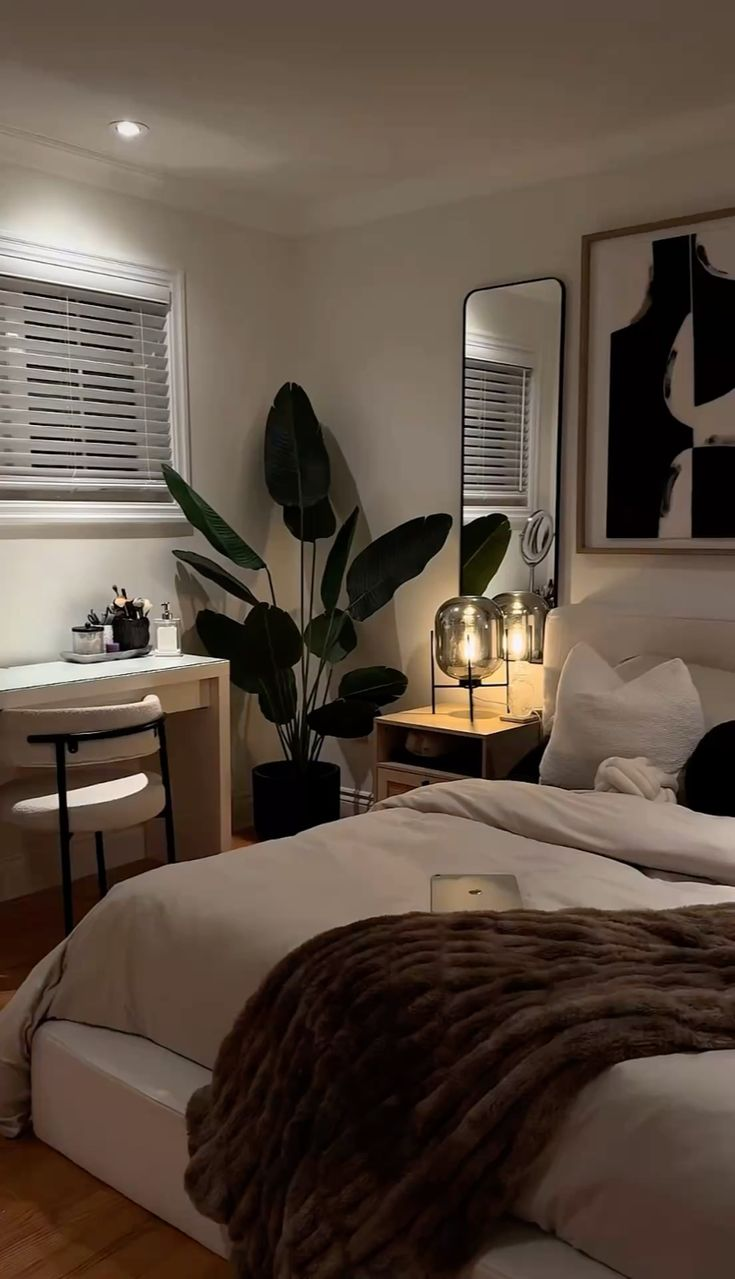
A small bedroom feels most special in the quiet moments. Soft bedside lighting, gentle shadows, and warm tones turn the room into a place that feels safe and settled at night. When lighting is intentional, the space feels less functional and more emotional.
This kind of atmosphere invites you to slow down. The room stops being about size and starts being about comfort. When evenings feel peaceful, the bedroom becomes somewhere you truly want to retreat to—not just somewhere you happen to sleep.
Mix Old and New to Make the Room Feel Collected, Not Small
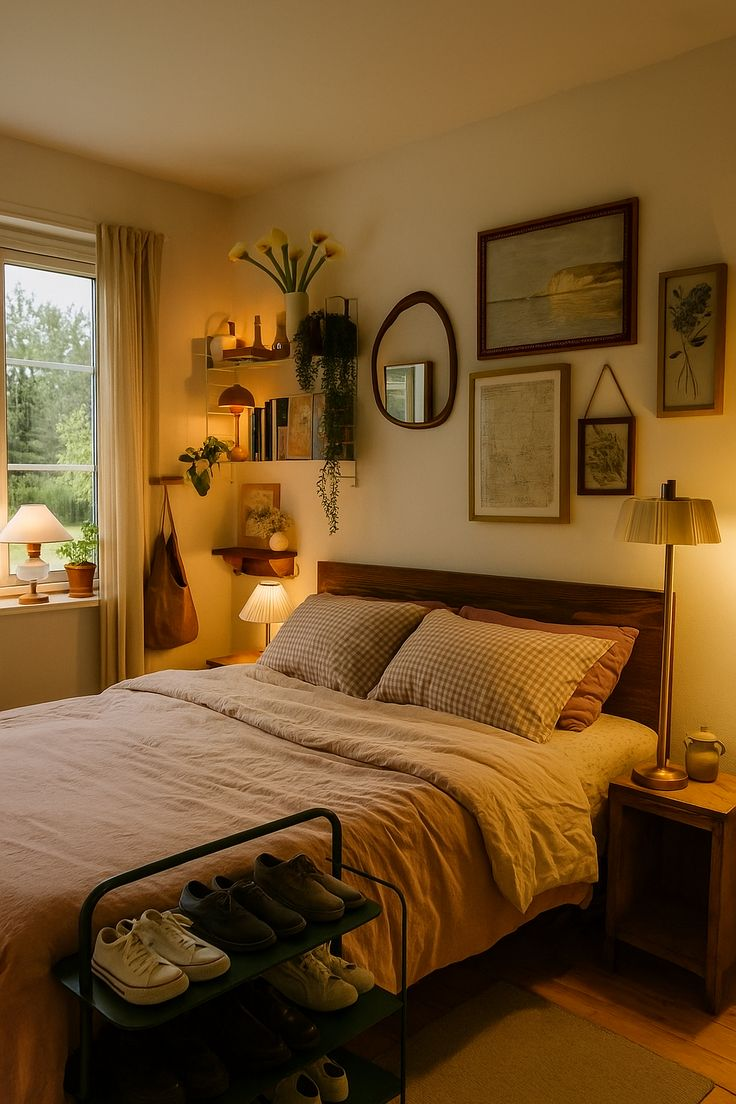
A small bedroom feels richer when it looks like it came together over time. Mixing vintage-style pieces with simple, modern basics adds depth without adding clutter. The space feels layered and personal, not overly styled or temporary.
This balance creates warmth. Familiar shapes and textures make the room feel grounded, while clean lines keep it from feeling heavy. When a bedroom feels collected rather than crowded, its size fades into the background—and the comfort comes forward.
Conclusion
A small bedroom can still be a place that feels grounding, beautiful, and entirely yours. The most meaningful changes often come from subtle shifts—soft light, thoughtful storage, calming colors, and pieces that feel personal rather than forced. When everything works together quietly, the room becomes more than a place to sleep. It becomes a retreat. And once your bedroom feels like that, you’ll wonder why you didn’t make these changes sooner.
Other Articles

17 Minimalist Room Ideas That Instantly Feel Calm & Clean
15 Smart Bedroom Concepts That Transform Small Spaces

No Comment! Be the first one.