



12 Stylish Dining Room Curtain Ideas for a Welcoming Ambience
There’s something magical about walking into a dining room that feels just right — not too formal, not too fussy, but perfectly warm and inviting. The secret? It’s often hanging right in front of you. Curtains have a quiet power to transform a space, softening the light, adding texture, and tying the room’s personality together.
Whether your dining area hosts candlelit dinners or casual weekend brunches, the right window treatment can set the tone before anyone even sits down. Here are twelve stylish curtain ideas that make your dining room feel like the most welcoming place in the house.
1. Sheer Linen for Effortless Elegance
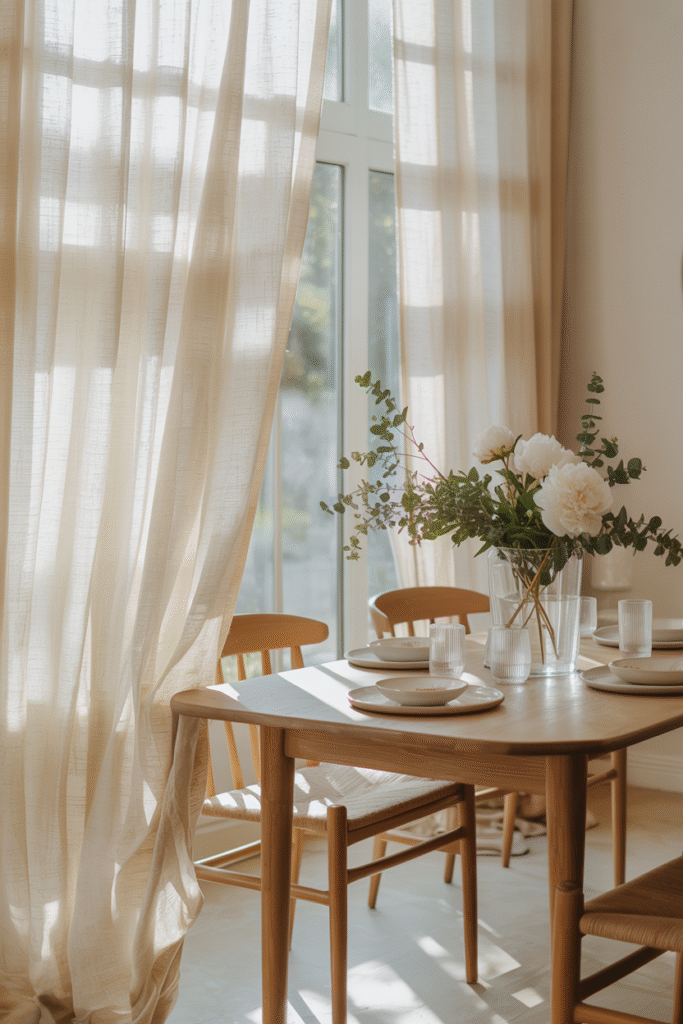
There’s an easy-breezy charm to sheer linen curtains that instantly makes a dining room feel calm and airy. Picture soft morning light filtering through natural fibers as you sip coffee — it’s serenity in fabric form.
Because linen has a relaxed drape, it works beautifully in both modern and traditional spaces. Choose off-white, sand, or pale gray for timeless appeal, or mix in subtle stripes for quiet texture. The slight wrinkles only add to the look — no steaming required.
Pro Tip: Layer sheers with solid panels on either side to control light while keeping that light, floaty vibe intact.
2. Floor-to-Ceiling Drama
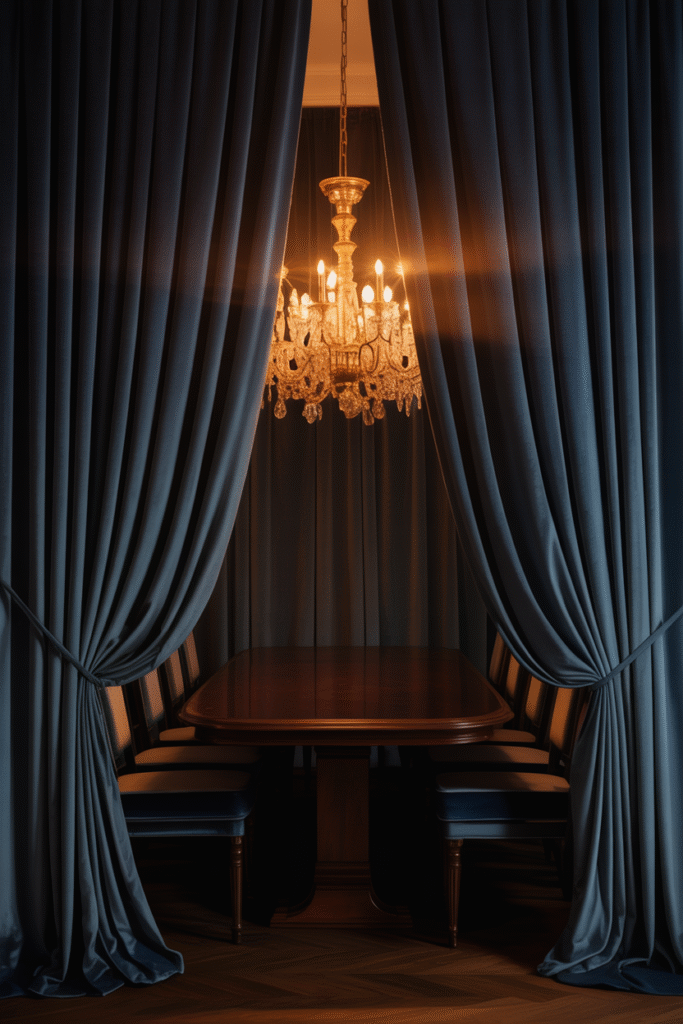
If your dining room needs a little “wow” factor, go for floor-to-ceiling curtains — they elongate the walls and make even small rooms feel grand. Hanging your curtain rod closer to the ceiling draws the eye upward, giving instant architectural interest.
Velvet, silk, or even heavy cotton can add structure and elegance. Deep jewel tones like emerald, navy, or garnet work especially well for creating mood.
Pro Tip: Always go a few inches wider than your window frame. The extra fabric helps curtains fall more luxuriously and makes windows look larger.
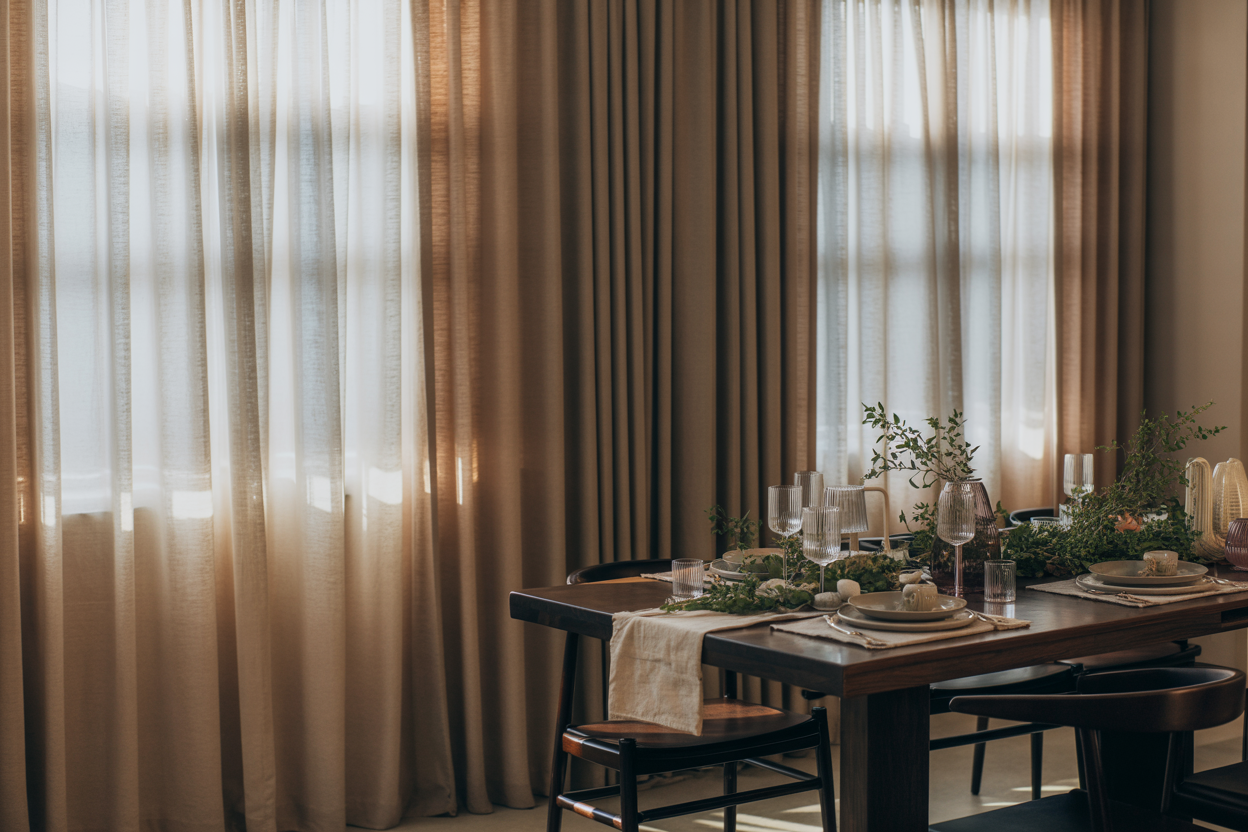
3. Warm Neutrals That Whisper Sophistication
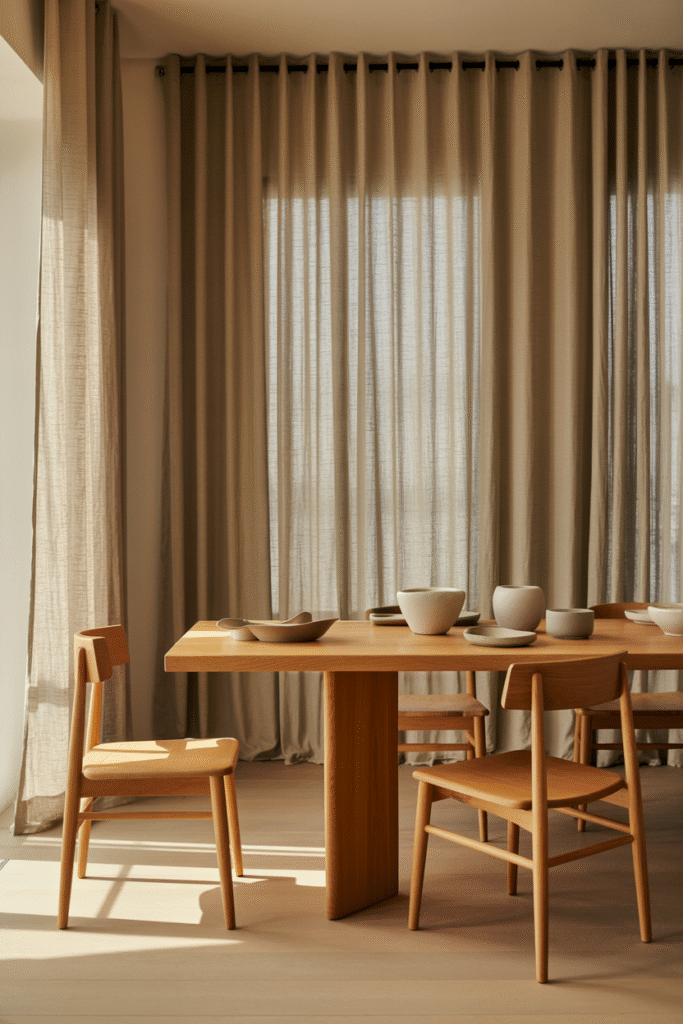
Sometimes, subtlety steals the show. Soft beige, warm ivory, and greige curtains add a quiet depth that pairs with nearly any dining room palette. These tones reflect natural light beautifully, keeping the space feeling open and welcoming.
They’re also perfect if you like switching up table linens or wall art often — neutral curtains are a design chameleon.
Pro Tip: To keep neutrals from feeling flat, look for woven textures like linen blends or slub cotton. Texture is what makes them feel layered, not bland.
4. Bold Prints for Personality
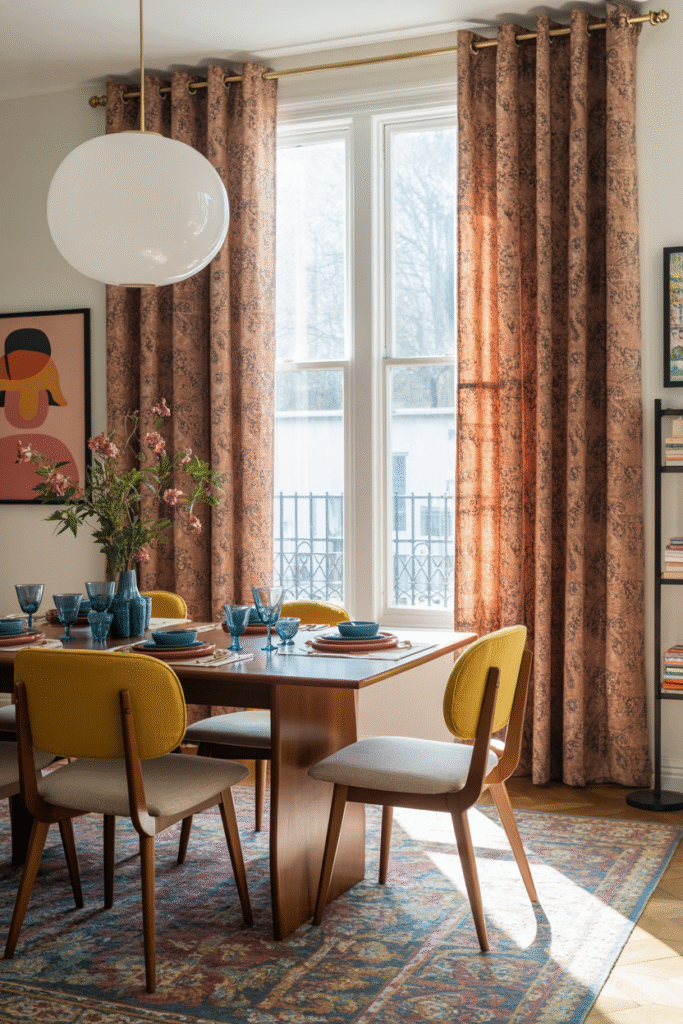
If your dining room feels a little too “safe,” let your curtains do the talking. Floral, geometric, or abstract prints can completely re-energize a space without overwhelming it.
Choose a color pulled from your rug or wall art to tie things together. Printed curtains are also an easy way to introduce pattern if you’re not ready to wallpaper.
Pro Tip: Balance bold curtains with minimalist furniture and table settings — it keeps the look lively but not chaotic.
5. Two-Tone Panels for Subtle Contrast
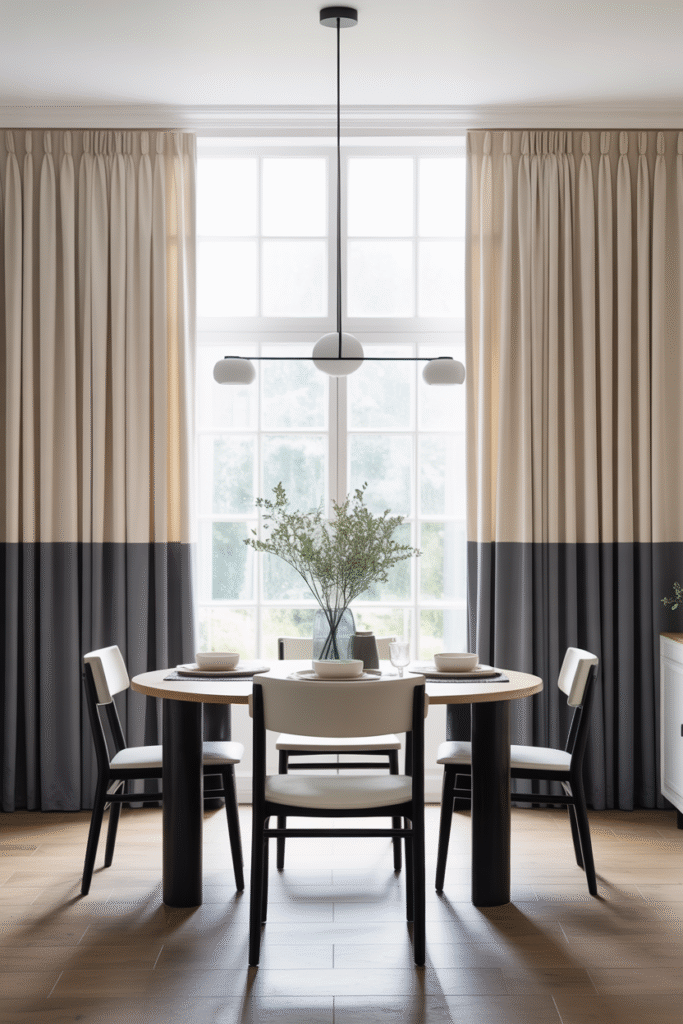
Two-tone curtains — think cream on top, charcoal on bottom — are the unsung heroes of modern dining decor. They create visual structure and a designer touch without feeling loud.
This style works beautifully in open-concept spaces where you want definition without walls. Stick to two neutral tones or play with muted color blocking for a chic statement.
Pro Tip: Position the darker tone at the bottom to anchor the room visually (and hide the occasional scuff from chair backs).
6. Velvet for Luxe Comfort

Velvet instantly adds depth, texture, and a touch of glamour. In a dining room, it can make the space feel warm, cocooned, and ready for long conversations. Think of it as the fabric equivalent of candlelight — soft, flattering, and a bit mysterious.
Rich hues like burgundy, sapphire, or forest green pair perfectly with wood furniture and metallic accents. They also double as natural sound absorbers, making dinner chatter more pleasant.
Pro Tip: To avoid heaviness, choose light-filtering velvet or style them open most of the day for a softer presence.
7. Roman Shades with Drapery Layers
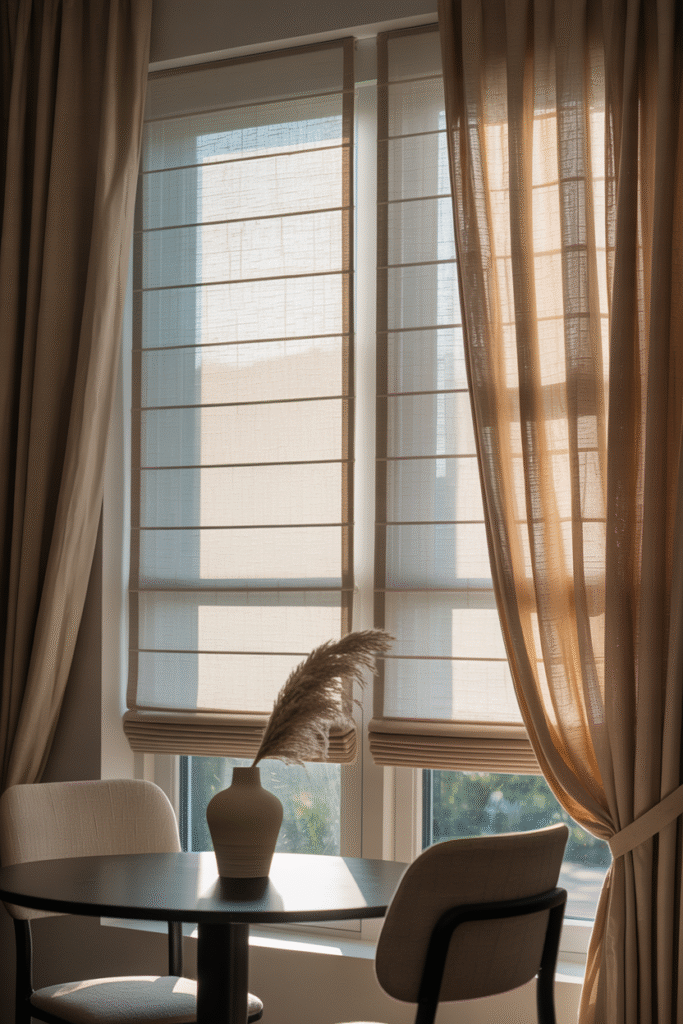
For a tailored yet cozy look, combine Roman shades with full-length drapes. The shades give you privacy and structure, while the curtains frame the window for added softness.
This combo works wonders in smaller dining rooms or bay windows where you want control without clutter. It’s a layered look that says, “I thought this through.”
Pro Tip: Match the curtain color to one found in your Roman shade fabric for a cohesive, designer-worthy finish.
8. Natural Woven Textures

If you’re into earthy, organic vibes, woven materials like bamboo, jute, or rattan bring warmth and natural character to the dining room. They pair beautifully with wooden tables and greenery, creating that easy, indoor-outdoor flow.
Add light, linen side panels to soften the look and balance texture with elegance.
Pro Tip: Opt for lined versions to filter sunlight and protect your furniture from UV damage while keeping that organic charm.
9. Metallic Accents for a Touch of Glam
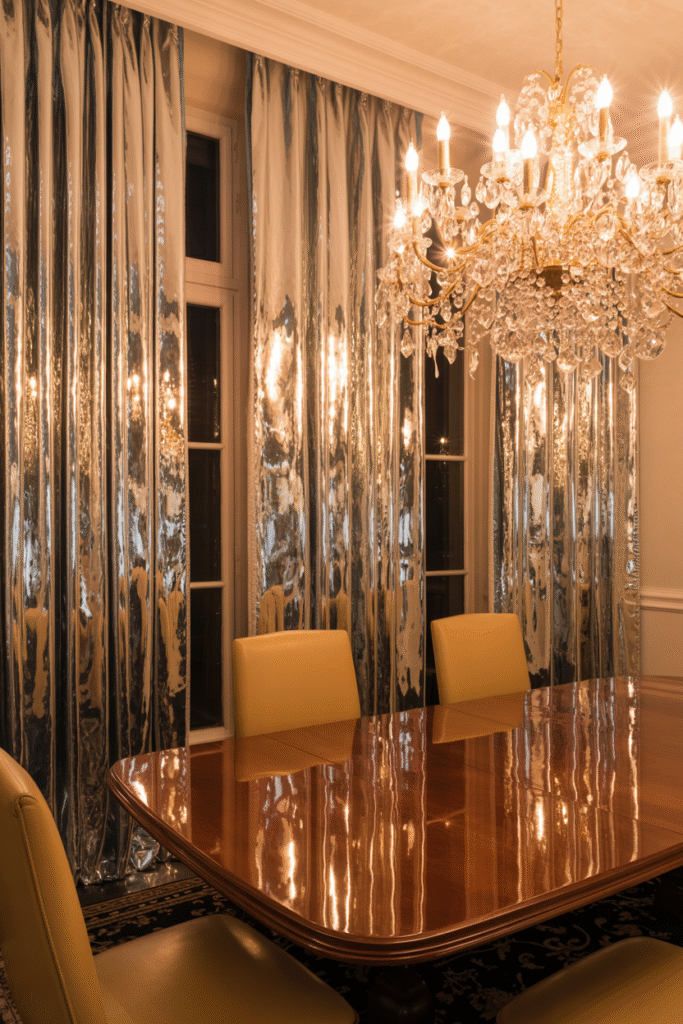
Metallic-thread curtains aren’t just for holiday parties. Subtle gold, silver, or bronze weaves can elevate your dining room lighting — catching the glow of candles and chandeliers in just the right way.
They add luxury without being over-the-top, especially when paired with matte finishes and minimalist furniture.
Pro Tip: Keep the rest of the palette neutral so the metallics shimmer softly rather than steal the show.
10. Patterned Valances for a Traditional Twist
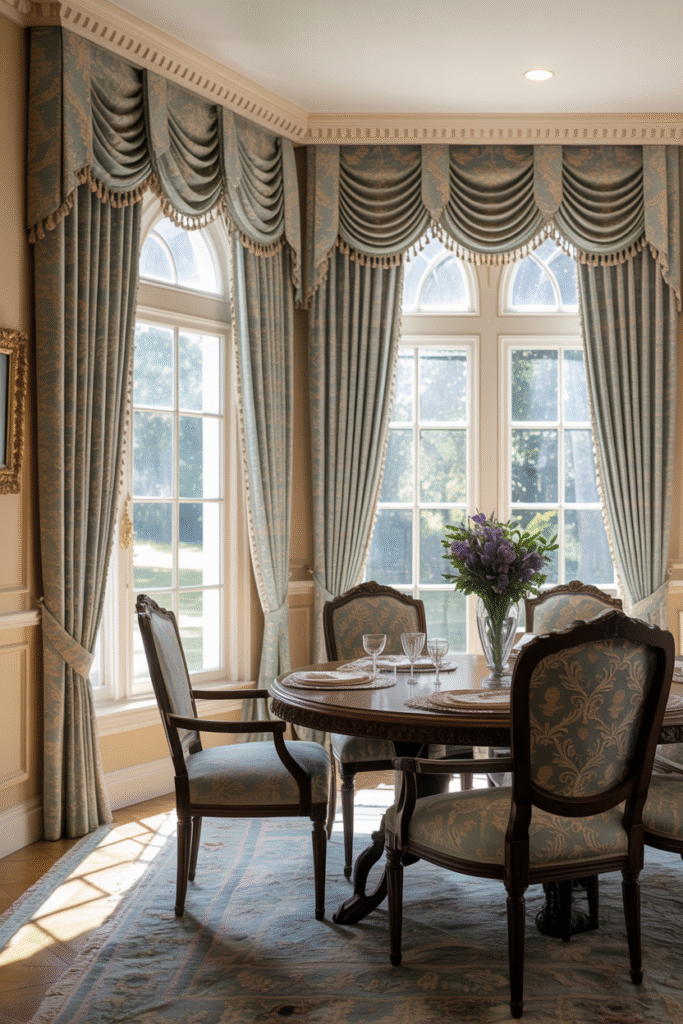
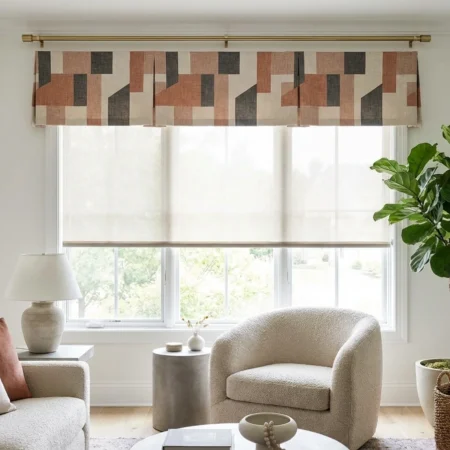
Valances are back — and done right, they can feel refined, not dated. A patterned valance adds a decorative layer to your windows without closing them in, perfect for formal dining rooms with tall ceilings or architectural trim.
Choose elegant fabrics like damask, jacquard, or embroidered linen to enhance the space’s structure.
Pro Tip: Skip matching chair slipcovers (a 2000s mistake) and let the valance stand alone as your nod to classic style.
11. Color-Dipped Edges for a Modern Accent
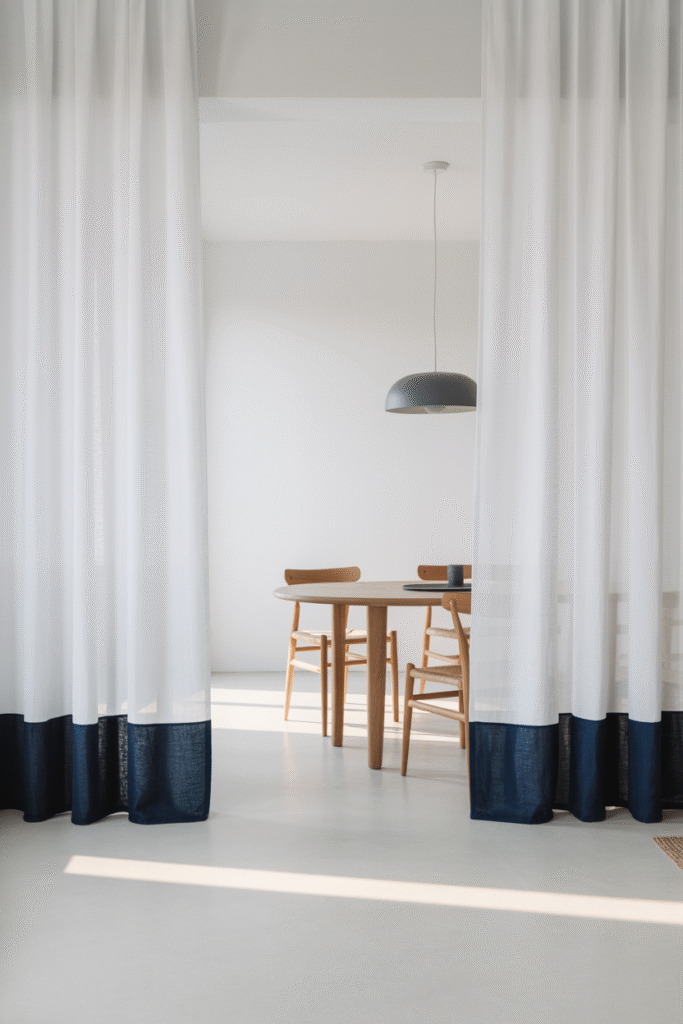
For those who love minimalist decor but still want some personality, try curtains with color-blocked edges or borders. This simple detail feels modern and custom — like your dining room quietly got a design upgrade.
Contrasting edges work especially well in crisp white rooms, giving definition without visual noise.
Pro Tip: Match the border color to another accent in the room — a vase, chair upholstery, or pendant light — to pull the space together seamlessly.
12. Layered Tones for Depth and Dimension
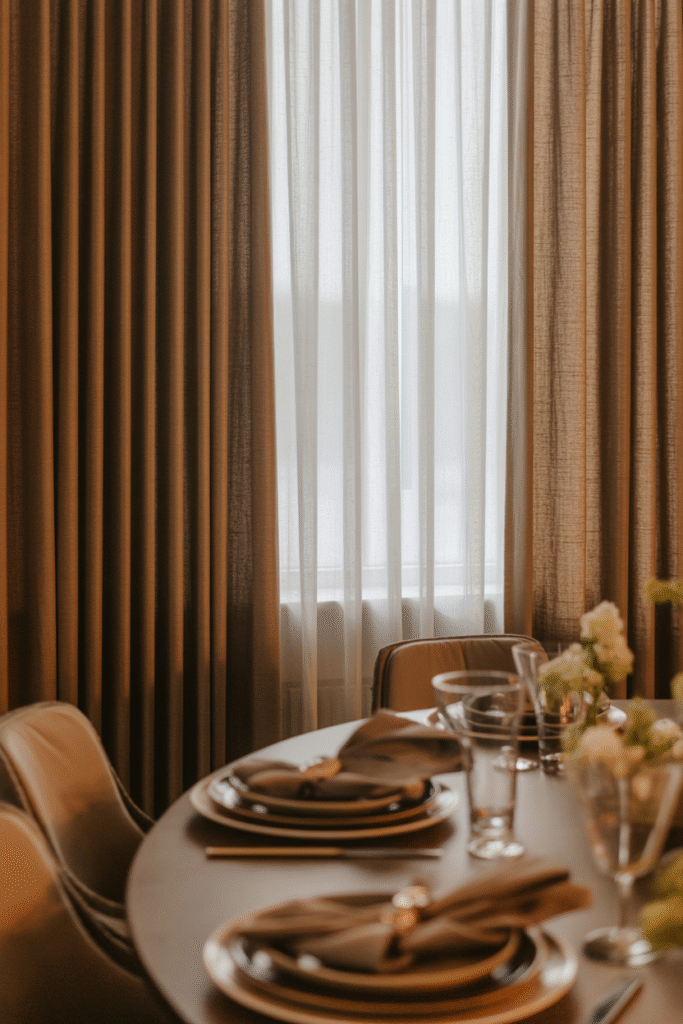
Layering curtains in complementary tones (like ivory over taupe or blush over gray) adds incredible dimension and coziness. It’s like giving your windows their own outfit change — tailored, tonal, and intentionally styled.
The double layers also let you adjust privacy and light levels effortlessly throughout the day.
Pro Tip: Use different materials — such as sheer linen behind heavier drapes — for a dynamic mix of translucence and texture.
Conclusion
The right dining room curtains do more than dress a window — they set the emotional tone for every meal, conversation, and celebration. From sheer linens to bold prints, your choice of fabric, color, and drape tells a story about how you want the room to feel.
Start small if you’re hesitant: swap one window, try a new texture, or layer something unexpected. Before long, you’ll see that it’s not just about style — it’s about creating a space where people want to linger a little longer, one curtain panel at a time.
Other Articles

12 Living Room Curtains to Make Your Space Feel Cozy & Chic
10 Space-Saving Closet Ideas to Organize a Small Bedroom Beautifully
No Comment! Be the first one.