


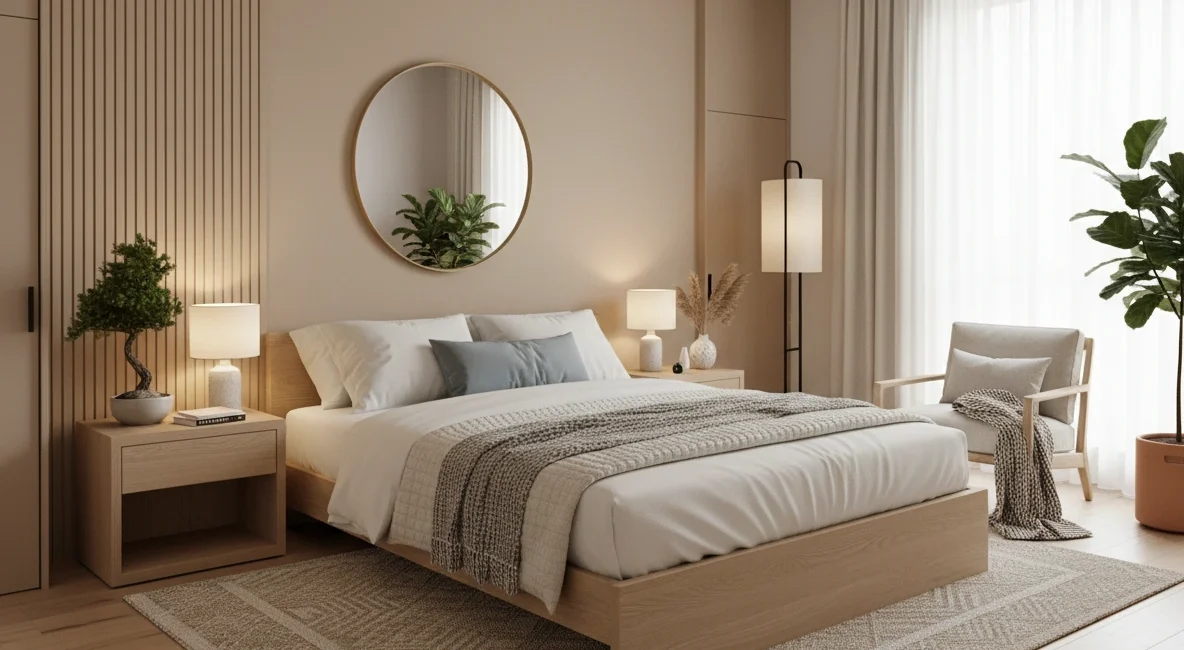
A Japandi bedroom feels like pressing a soft mute button on the day.
Lines get simpler, colors get warmer, and everything in the room quietly supports rest instead of demanding attention.
If you crave a calm, balanced space with a modern, lived-in warmth, these 12 modern Japandi bedroom ideas will help you build a sanctuary that actually works in real life, not just in photos.
1. Create a Low “Island” Bed That Grounds the Room
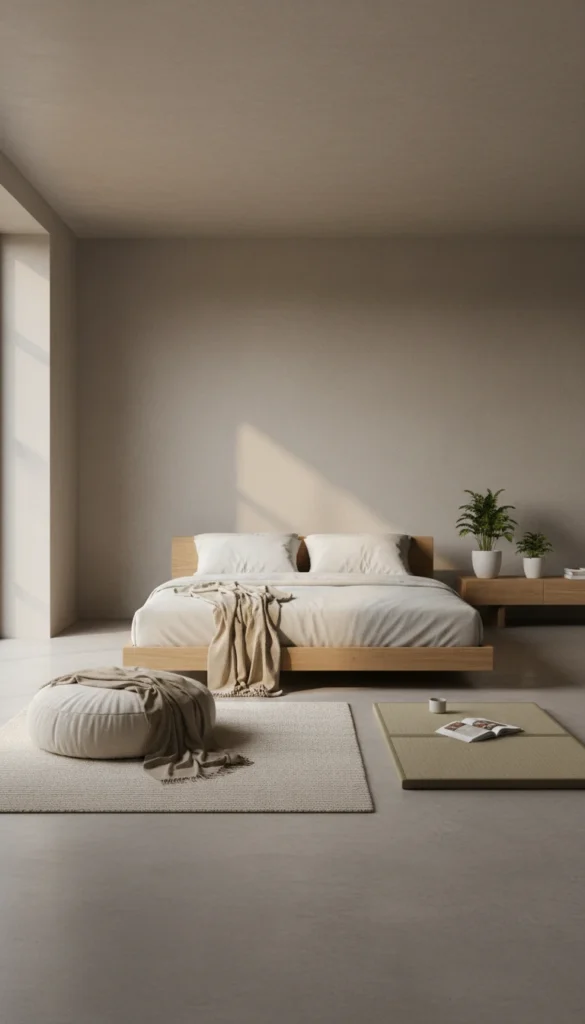
A low bed is classic Japandi, but think of it less as a mattress on a frame and more as a small island in the middle of your room.
Choose a low platform or simple frame and give it just a slim headboard.
Then build a “shoreline” around it: a floor cushion, a tatami-style mat, or a folded throw on the floor along one side.
That little floor zone turns the bed into more than a place to sleep.
It becomes a spot for morning stretches, a tea moment, or a quiet scroll-free reading nook. Visually, the low lines and extra floor space make the room feel airy and grounded at the same time.
2. Use a “Landscape Palette” Instead of Random Neutrals
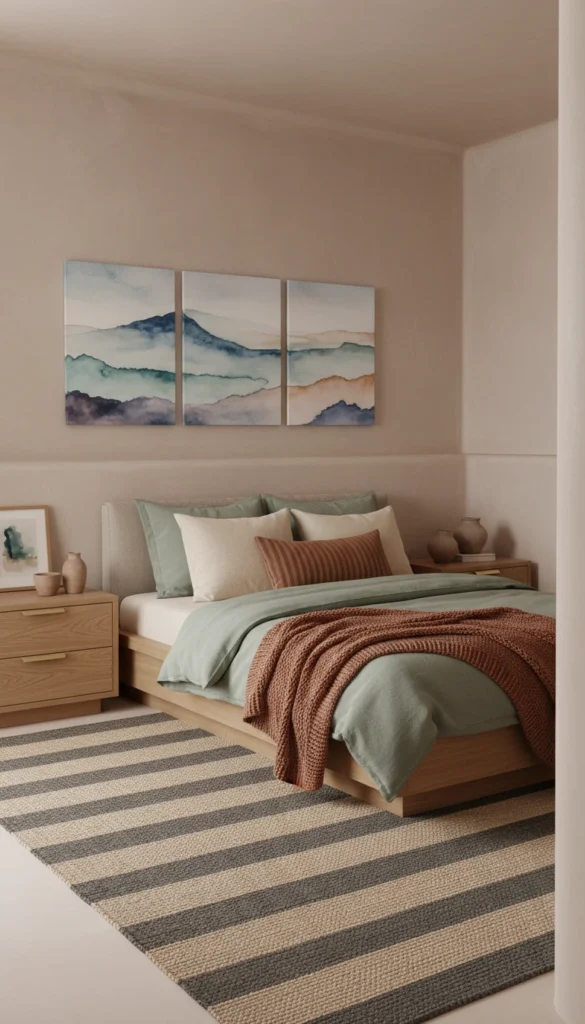
Japandi bedrooms love calm color, but “use warm neutrals” is too vague to be helpful.
Try choosing your colors as if you are painting a landscape:
- Horizon color (walls): the soft backdrop – warm white, mushroom, or pale clay
- Earth color (wood): furniture and floor – oak, ash, or honeyed walnut
- Foliage color (textiles): accents in bedding, cushions, and art – sage, olive, rust, dusty plum
A few modern landscape combos:
- Soft clay walls + light oak wood + dusty sage cushions
- Warm white walls + honey oak + burnt terracotta throw + muted forest green art
- Pale mushroom walls + ash wood + mulberry cushion + blush-beige linen
This “horizon / earth / foliage” formula makes your 12 Modern Japandi Bedroom Ideas for a Calm, Balanced Space feel cohesive and intentional instead of randomly beige.
3. Tell a Two-Tone Wood Story with One Dark Ink Line
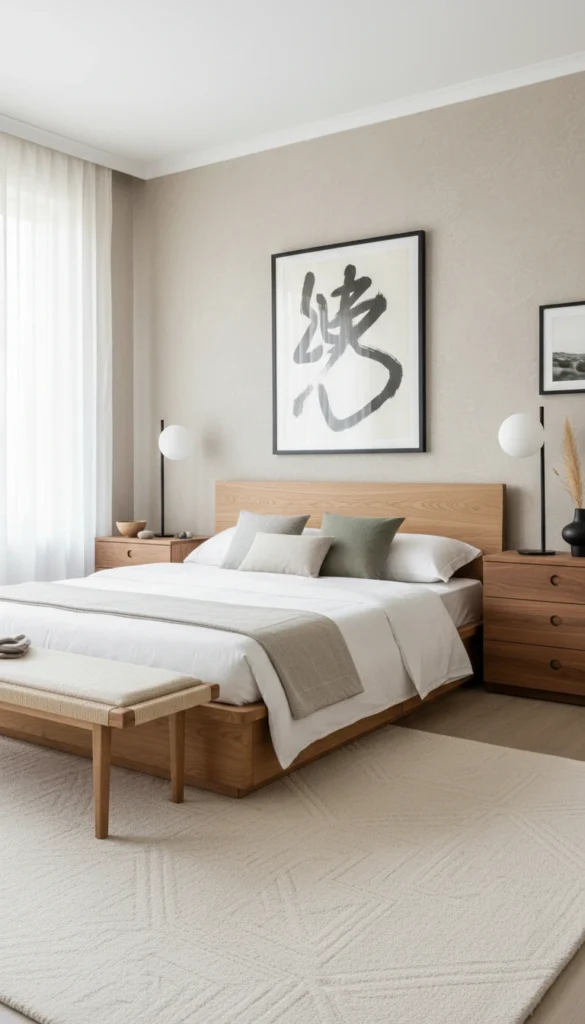
If your bedroom already holds a mix of wood pieces, Japandi can still happen; it just needs a story.
Use this simple structure:
- Base wood: the wood you have the most of (maybe your floor or bed)
- Supporting wood: one other tone that plays nicely with it
- Ink line: one dark detail that shows up in small doses
For example, a pale oak bed and dresser (base) with a slightly darker bench (supporting), plus slim black lamp stems and frame edges (ink line).
To calm mismatched pieces, group all the orange or redder tones together in one area (like a chair and frame) or soften them with a throw. Once you repeat your base and supporting wood across the room, the mix feels curated instead of chaotic.
4. Follow the “Three Glow Rule” for Sculptural Lighting
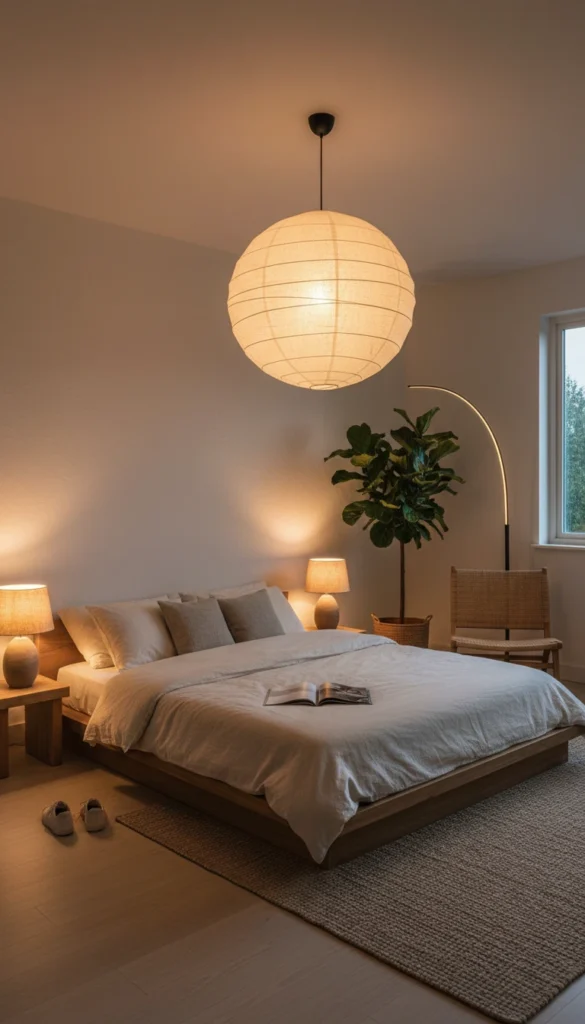
Instead of one bright ceiling light, aim for three pockets of gentle glow:
- A soft overhead light, like a linen or paper lantern that diffuses light.
- Bedside lighting, a lamp or wall sconce with a rounded shade that pools light on your book and pillow.
- An accent glow, like a small table lamp on the dresser or a floor lamp in a corner.
Choose shapes that feel organic: paper, linen, or rounded frosted glass.
Plug bedside lamps into a smart plug or dimmer you can switch on in one tap. Every evening, your room shifts from “day tasks” to “night sanctuary” with a warm, sculptural glow instead of sharp beams from the ceiling.
5. Turn One Wall into a Quiet Storage Plane
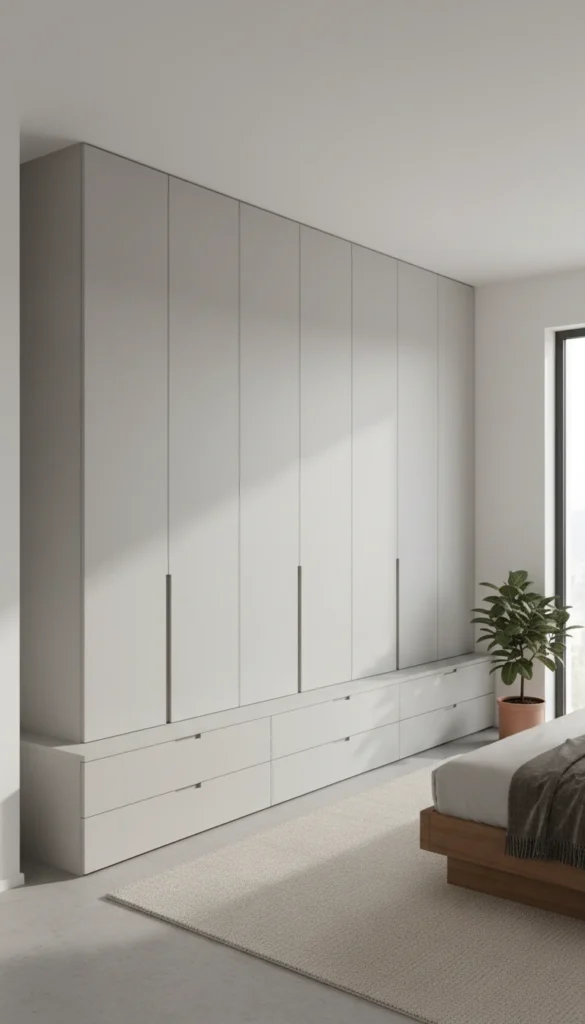
For a truly calm Japandi bedroom, storage almost disappears into the architecture.
Choose one wall—often the one opposite the bed—and think of it as a quiet storage plane:
- Wardrobes with flat, push-latch doors in the same color as the wall
- A low dresser aligned with the wardrobe edges, not floating randomly
- Boxes or baskets inside, not on top, so the surface stays clear
If built-ins are not possible, pick freestanding pieces with simple, slab-like fronts.
Painting them close to the wall color can make them visually melt away.
Under the bed, use drawers or low boxes with fabric fronts so they look soft and intentional when slightly visible. The room keeps all its function, just with fewer visual “interruptions.”
6. Style a Bedside “Tea Ceremony” Station
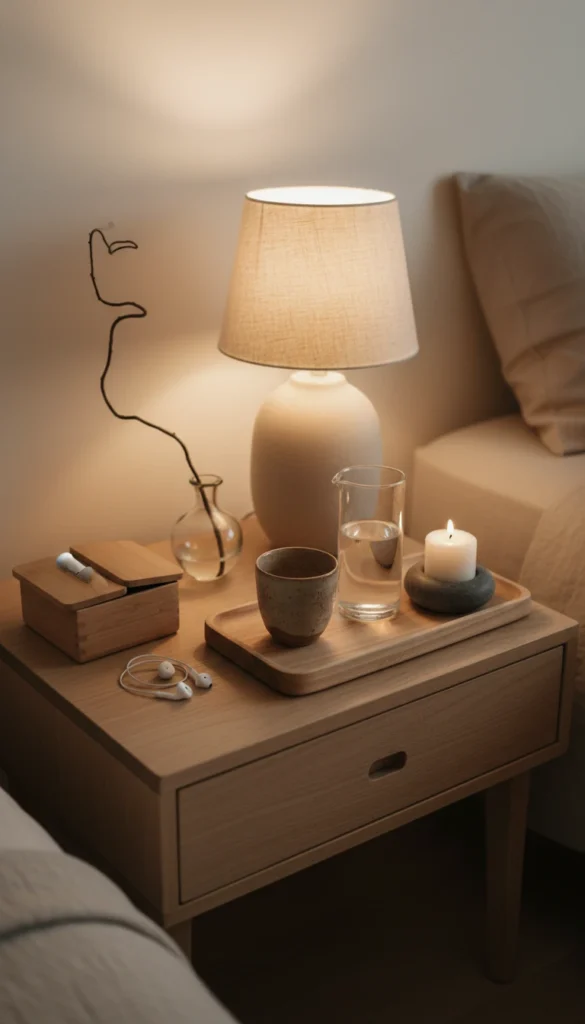
Instead of a generic minimalist nightstand, turn yours into a tiny, everyday ritual station.
Start with a simple wooden table or wall-mounted shelf. Then add:
- A tray that holds a small carafe of water, a cup, and a candle
- A little box or drawer where your lip balm, earplugs, and random bits live out of sight
- One small natural object: a smooth stone, a small branch in a bud vase, or a ceramic bowl
Create a “phone home”: a set spot on the lower shelf or inside the drawer where your phone sleeps at night. When everything has a place, the surface stays calm and you get a mini bedtime ritual every single evening.
7. Build a Texture Stack and a Barefoot Halo
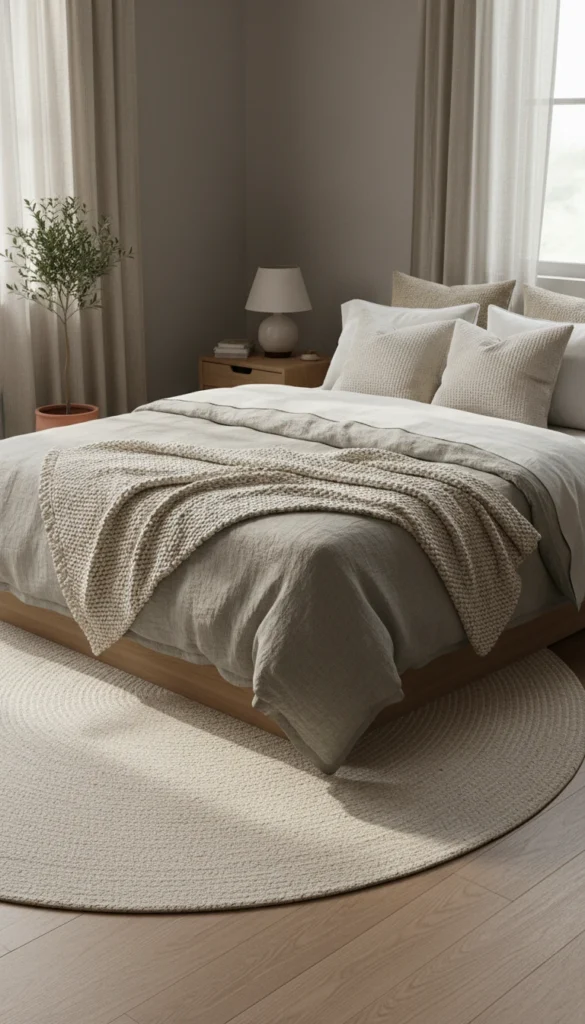
Instead of just “add cozy textiles,” think in terms of a texture stack on the bed and a barefoot halo on the floor.
For the bed:
- Base: smooth cotton or bamboo sheets
- Middle: relaxed linen or washed cotton duvet
- Top: a nubby wool, boucle, or waffle-knit throw at the foot
Choose colors that stay in your palette but vary slightly in depth, so the bed looks like a calm landscape of fabric when you stand at the door.
For the floor, aim for a rug that creates a halo of softness around the bed:
- Large enough to peek out on both sides
- Extending past the foot if space allows
- Material like wool, jute-wool blend, or cotton flatweave
The visual effect is a soft island of texture in a simple room, and your feet get a gentle welcome every morning.
8. Design a Tactile Headboard Wall Instead of a Loud Accent
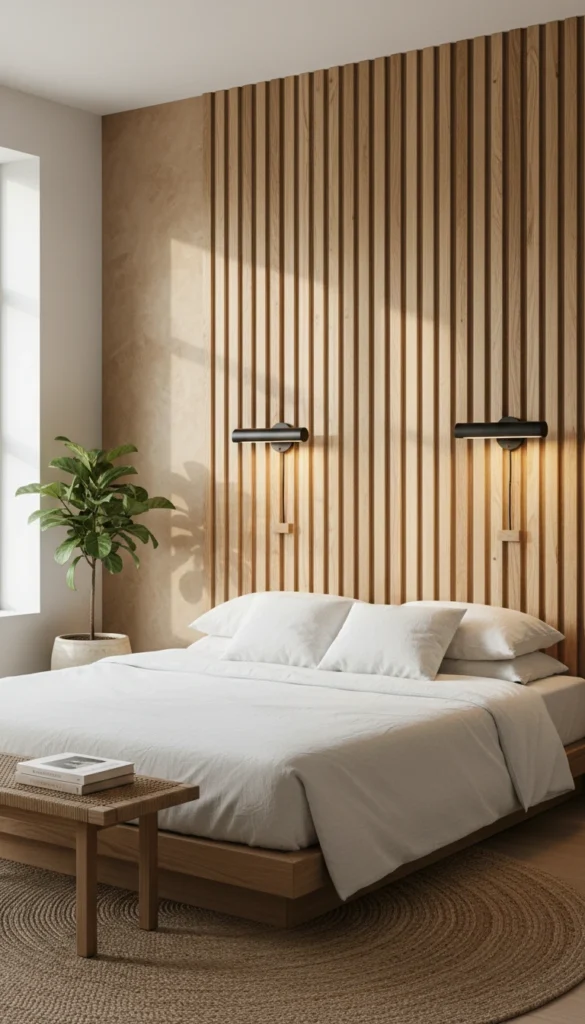
Skip the high-contrast accent wall and create a tactile headboard zone that feels calm up close and far away.
Options:
- Vertical wood slats behind the bed, either full wall height or just from floor to a bit above the headboard
- A limewashed band of color that runs horizontally behind the pillows, in clay, mushroom, or dusty sage
- A fabric panel, such as a linen-covered board or curtain that hangs behind the bed, adding softness and sound absorption
For renters, peel-and-stick wood slats, textured paint effects, or a simple curtain rod with a linen curtain can give that layered look without renovation.
From across the room, you see gentle texture and rhythm instead of a loud block of color.
9. Use Seasonal Branches and Mini Nature Moments
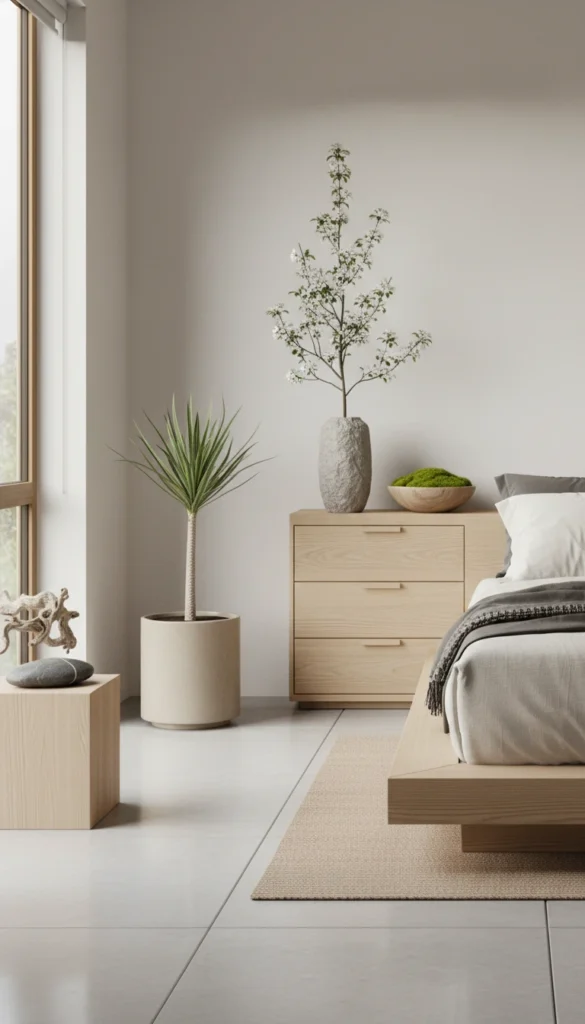
Plants are wonderful, but a Japandi bedroom often feels calmer with a few intentional nature moments rather than a whole jungle.
Try this simple practice:
- Choose one main living element, like a rubber plant, olive tree, or a moss bowl in a low dish.
- Add a seasonal branch in a ceramic vase—eucalyptus in cooler months, blossom in spring, something leafy and arching in summer.
- Create a tiny stone or wood vignette: a shallow dish with a single stone and a tealight, a piece of driftwood, or a small handmade object.
Every month or season, swap the branch.
This small ritual keeps the room feeling alive and tuned into the outside world, without overwhelming surfaces with pots and leaves.
10. Create “Three Quiet Moments” Instead of Scattered Decor
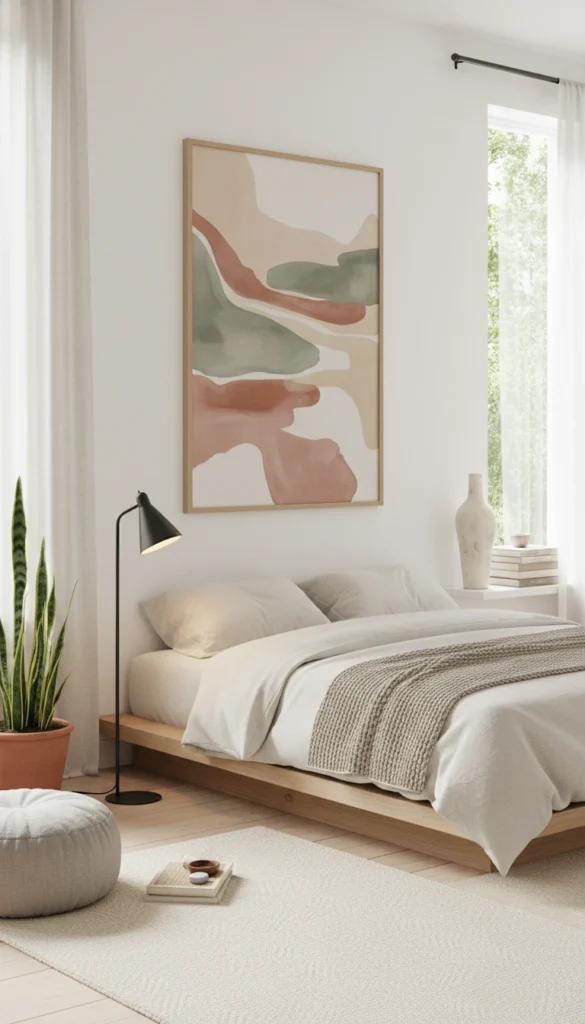
Instead of decor everywhere, aim for three quiet scenes in the room:
- Above the bed: one large artwork or two simple pieces with plenty of breathing space. Think soft abstract shapes or a calming landscape.
- On the dresser: a tray with daily essentials, one ceramic vase, and a stack of books. Use the rule of three: one tall item, one medium, one low.
- In a corner: a chair or floor cushion, a small lamp, and a plant or branch.
By limiting decor to these three “moments,” everything else can stay clean and functional.
The eye moves slowly from scene to scene instead of bouncing between a hundred little objects, which makes the whole room feel more grounded.
11. Choose Light-Footprint Furniture That Can Move with You
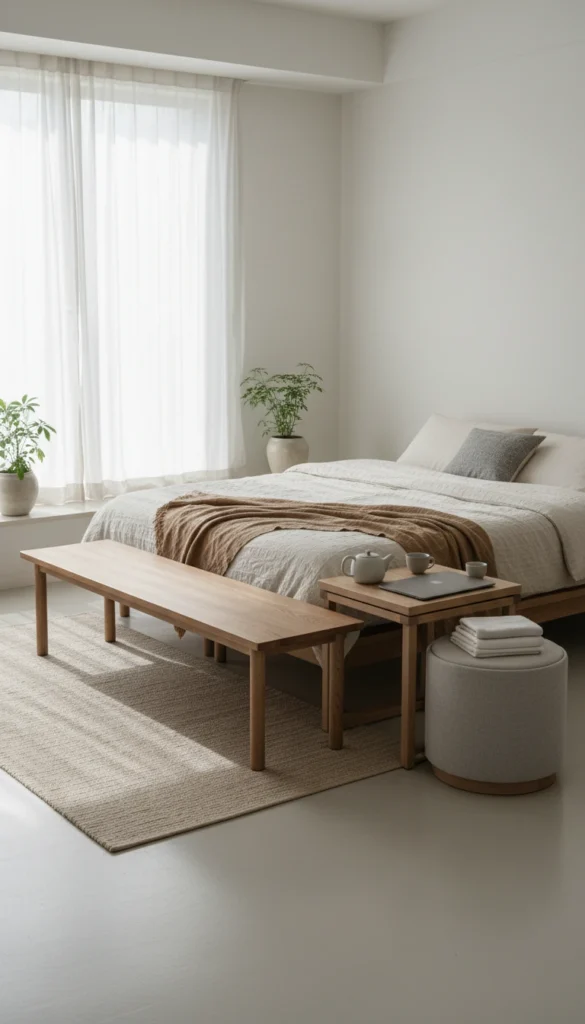
Japandi style loves furniture that feels light on its feet and flexible.
Look for pieces like:
- A low bench that can act as a nightstand, foot-of-bed perch, or spot to stack extra blankets
- Nesting tables that slide under each other and move from bedside to reading corner easily
- A small stool with storage inside, doubling as seating and hidden clutter control
Prioritize pieces with visible legs so more floor shows; that makes the room feel open.
Over time, you can shift these pieces around as your needs change, instead of committing to one heavy, oversized nightstand or dresser that dominates the room.
12. Set Up an Evening Landing Strip for Your Day
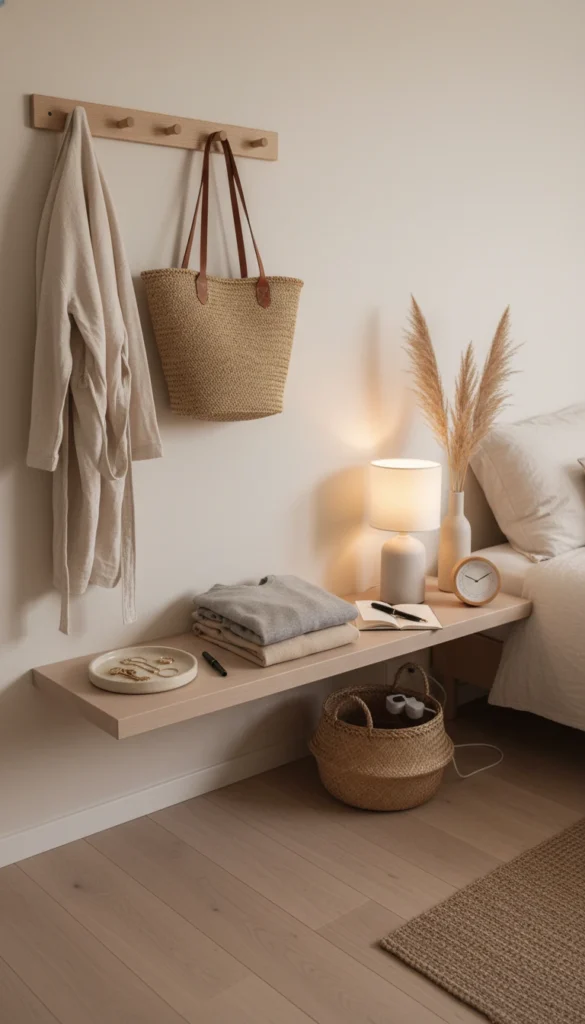
Instead of a vague “wind-down corner,” create a specific evening landing strip where the day gently ends.
This might include:
- A hook or peg rail near the door for your robe, bag, or tomorrow’s outfit
- A small tray for jewelry, keys, and watch so they land in one place
- A journal and pen for a quick brain dump
- A simple analog clock so your phone can stay off the pillow
Choose a warm lamp nearby and treat this spot like the last stop before bed.
After a few days, your body starts to associate this small ritual—hang things up, drop items in the tray, jot a few lines—with slowing down. The room supports your calm, not just your sleep.
How to Start Shifting Your Bedroom into Japandi Mode
If your bedroom currently feels busy or mismatched, you do not need to change everything at once. Try this:
- Edit one surface.
Clear your nightstand or dresser completely, then put back only what earns its place. - Choose your landscape palette.
Decide on your horizon (wall), earth (wood), and foliage (textiles) colors, using what you already own as a guide. - Upgrade one area.
Maybe you tackle the bedside “tea ceremony,” or create your first tactile headboard wall with a curtain or painted band. - Add one nature moment.
A single branch in a vase can transform the mood more than ten small decor objects.
Step by step, your room shifts into the kind of space that feels quiet even before you turn off the lights.
A Japandi bedroom for a calm, balanced space is not about perfection or strict rules.
It is about gentle edits, thoughtful textures, and a few small rituals that make your room feel like it is on your side.
Other Articles

15 Bedding Ideas to Instantly Refresh Your Bedroom
12 Modern Earthy Bedroom Ideas for a Calm, Collected Look