
“Why do my windows look… off?”
You’ve dialed in the sofa and sideboard, landed on the right rug, and your lighting finally feels warm instead of hospital-white. But the windows still bug you. Maybe the blinds feel bulky, maybe the curtains are too “hotel,” or maybe there’s just too much glare at the wrong time of day.
If that’s you, you’re not alone. Window treatments are usually the last thing people tackle—and the first thing that can throw off a mid-century modern room. The good news: you don’t need fancy custom work to get it right. You do need to make a few smart choices about fabric weight, mounting height, and how you actually use the room.
Below are twelve mid-century modern window treatment ideas that work in real living rooms and bedrooms. Each idea explains why it works, what to choose, how to size it, and small details that make a big difference.
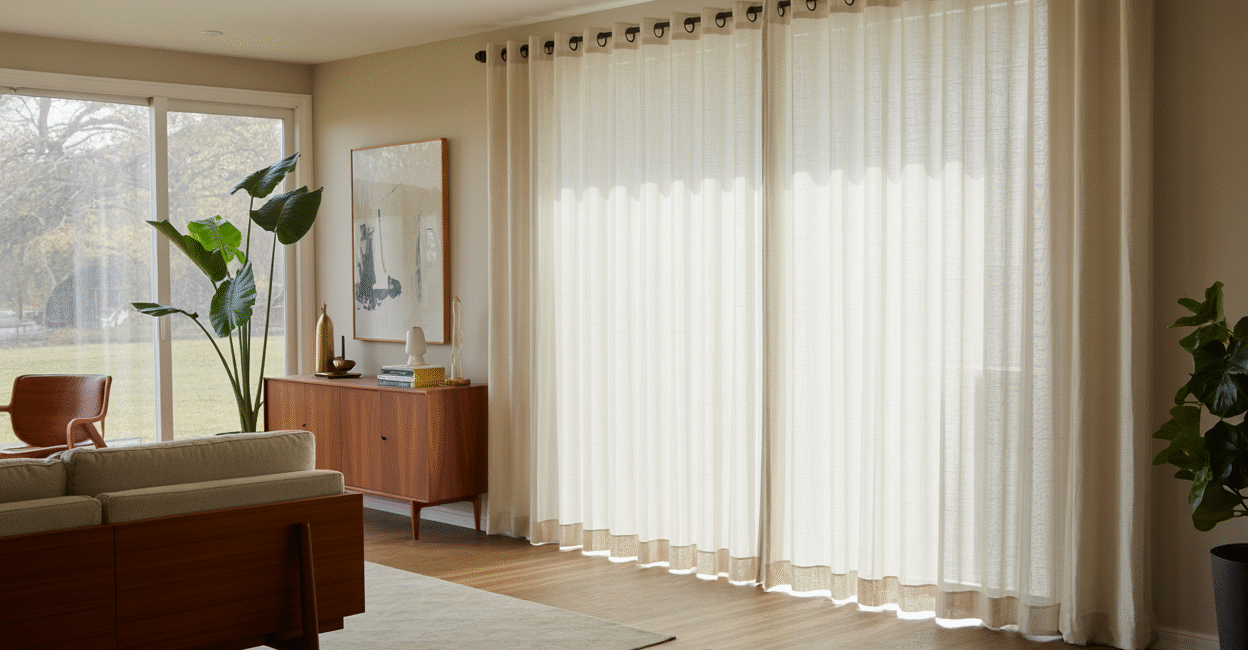
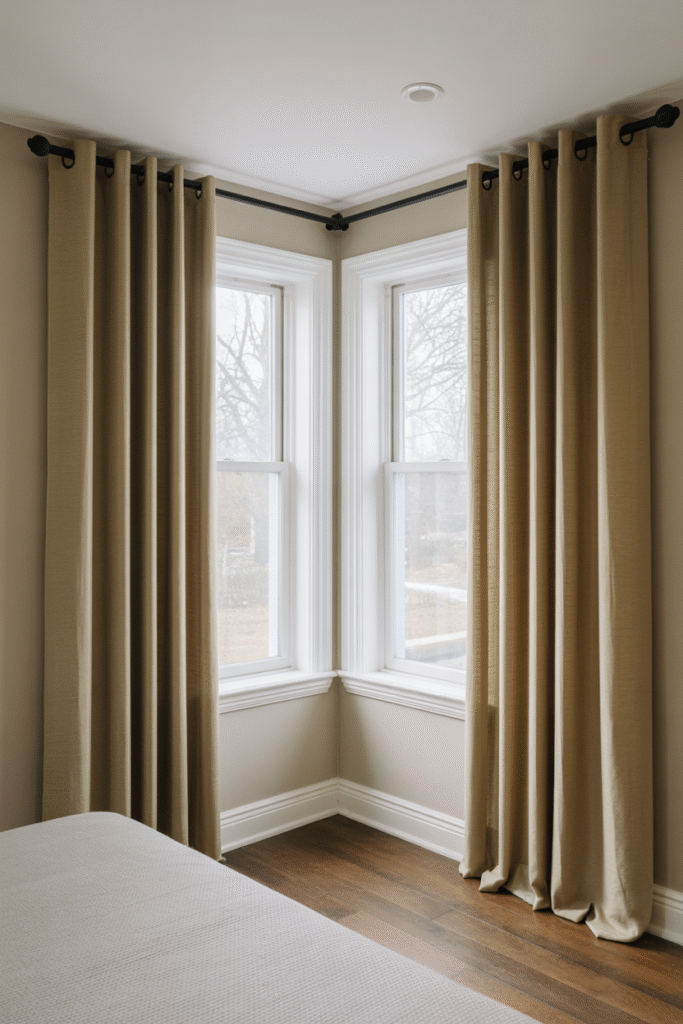
1) Floor-to-Ceiling Linen Drapes (Soft, Calm, and Architectural)
Why this works
Mid-century spaces love vertical lines and natural texture. Full-length linen or linen-blend drapes create a quiet, continuous drop that flatters low and high ceilings alike.
How to do it well
- Mount high and wide: 4–8 inches above the frame (or all the way to the ceiling on lower ceilings) and 6–12 inches beyond each side. This clears glass when open and makes windows look bigger.
- Aim for 1.8–2.2× fullness: If your rod is 100″, total panel width should be 180–220″. Too little fullness reads skimpy; too much looks fussy.
- Let them “kiss” the floor: A light touch or ½” break feels modern. Heavy puddling reads traditional.
Fabric & color
- Textured solids in ivory, stone, oatmeal, warm gray, or soft olive.
- Linen blends hang better and wrinkle less than 100% linen.
Key takeaway: Ceiling-high, natural-fiber drapes instantly calm a room and make your architecture feel intentional.
2) Sheers + Blackout Rollers (Daylight without the Nighttime Glow)
Why this works
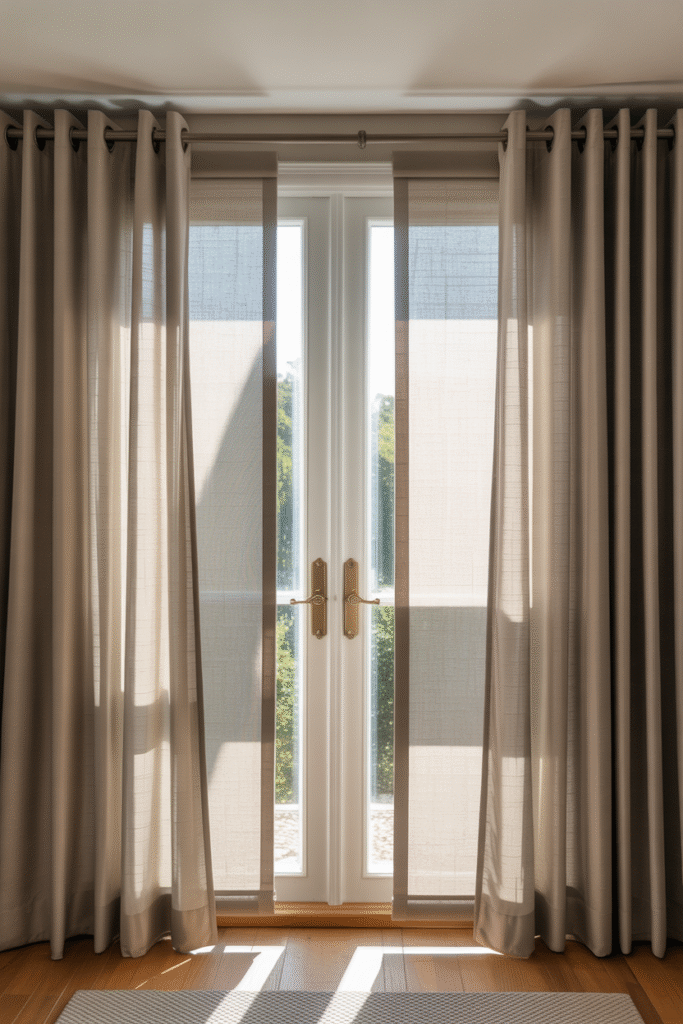
You want sunlit rooms but also true darkness for sleeping or movie night. Layering a blackout roller close to the glass with sheer panels on the room side gives you both.
How to do it well
- Inside-mount the blackout roller to make it disappear; color-match it to your trim.
- Sheers at 2× fullness on a slim rod or track for softness and privacy.
- Motorized rollers (battery) are worth it in bedrooms—quiet, reliable, renter-friendly.
Small upgrades that matter
- A cassette valance hides the roller bar cleanly.
- Double-track ceiling mounts are nearly invisible and ideal for large walls of glass.
Key takeaway: Layer blackout rollers behind sheers to enjoy soft daylight by day and true darkness by night—without visual clutter.
3) 2″ Wooden Venetian Blinds (Warm, Precise Light Control)
Why this works
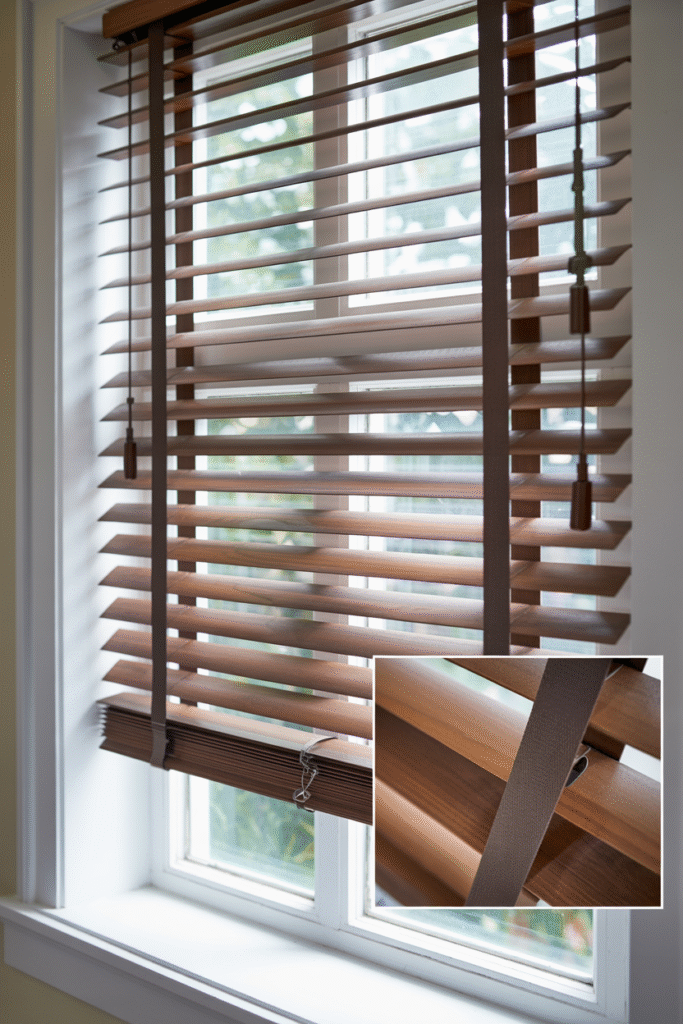
Mid-century design celebrates wood and practical adjustability. 2-inch wood slats give laser-precise control over glare and privacy while echoing walnut, teak, or oak furniture tones.
How to do it well
- Match wood tones thoughtfully: Warm walnut pairs with warm floors or credenzas; medium oak is forgiving across palettes.
- Cloth tapes vs. cords: Tapes look retro; cords read minimal. Pick one and repeat it throughout the home for cohesion.
- Consider faux wood in humid rooms; real wood elsewhere.
Use cases
- Street-facing rooms: Angle slats for privacy but keep sky light.
- Bedrooms with little wall space: Inside-mount keeps walls visually clean.
Key takeaway: Wood blinds give warm materiality and the best day-to-day control over light and privacy.
4) Woven Wood & Bamboo Shades (Organic Texture, Clean Lines)
Why this works
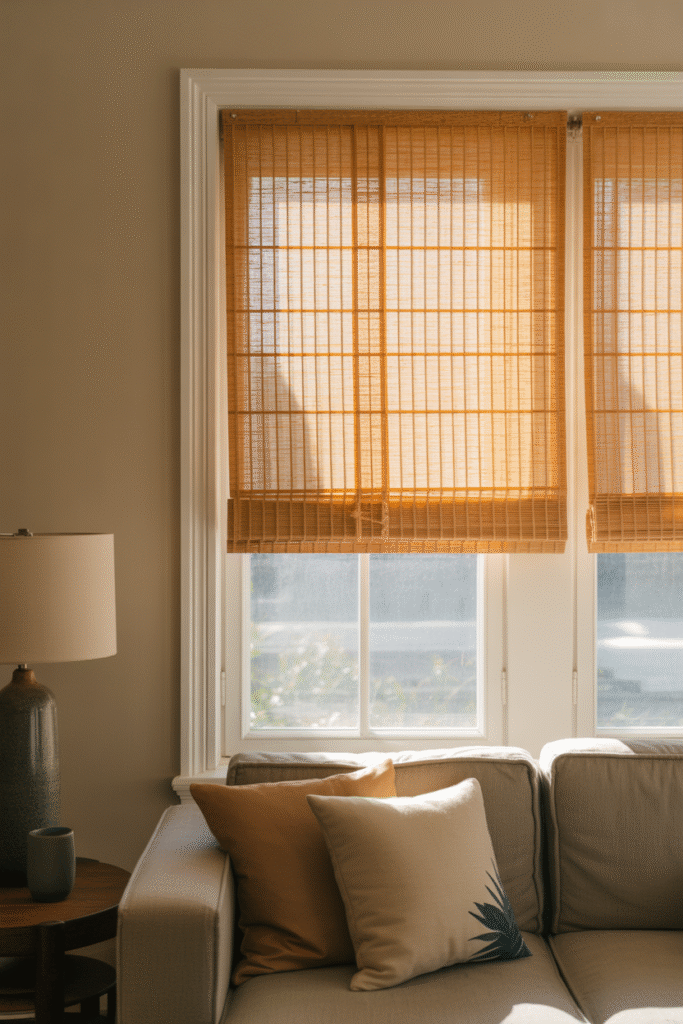
When a room feels flat, woven texture brings it to life. Woven wood or bamboo shades add warmth without bulk, playing nicely with plants, rattan, and stone.
How to do it well
- Pick your weave: Tighter weaves for bedrooms and street-facing windows; looser weaves for private, sun-soaked spaces.
- Add a liner: Light-filtering liners keep texture visible but improve privacy; blackout liners work beautifully in bedrooms.
- Edge banding: Protects the edges and adds a tailored finish.
Styling tips
- Pair with linen side panels to add softness and nighttime depth.
- Keep wall paint calm—white, bone, or pale gray—so the weave becomes the quiet star.
Key takeaway: Woven shades deliver mid-century warmth and texture while staying sleek and unfussy.
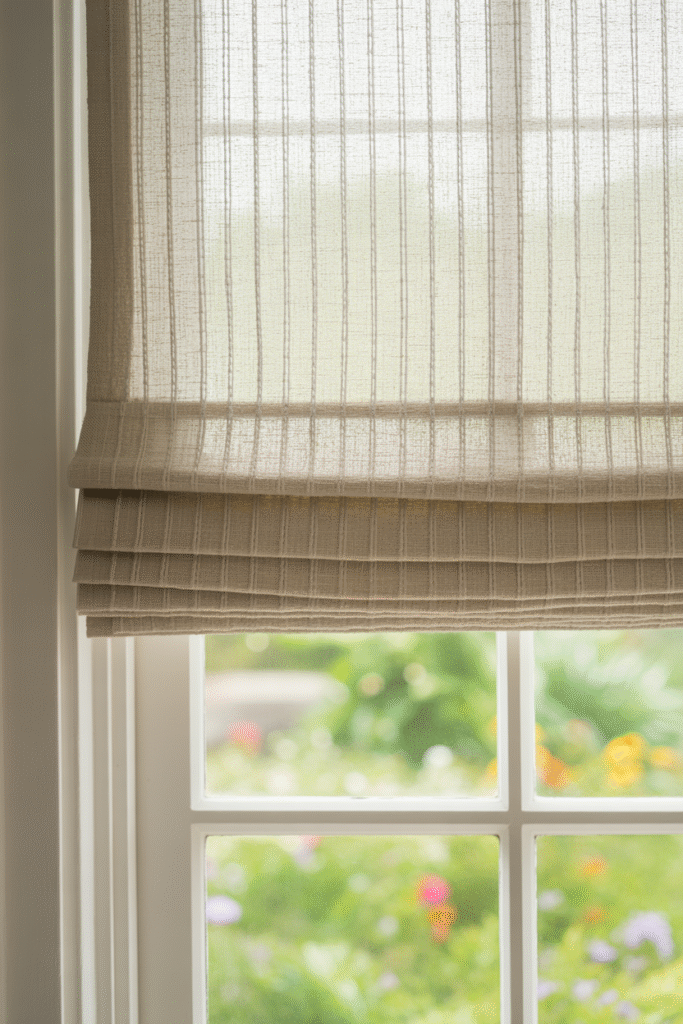
5) Flat Roman Shades (Tailored but Soft, Great for Bedrooms)
Why this works
Romans give you the softness of fabric with the geometry mid-century rooms love—especially flat Romans, which stack in clean folds.
How to do it well
- Inside mount if your jamb depth allows (often 1¾–2¼” minimum). Otherwise, outside mount and extend 2–3″ beyond the frame on each side for better light block.
- Choose linings intentionally: Privacy lining for living rooms; blackout for bedrooms.
- Keep fabrics solid or subtly textured; tiny geometrics can work if they read tone-on-tone.
Where they shine
- Smaller windows where full drapery feels heavy.
- Bedrooms where fabric softness matters but you still want neat lines.
Key takeaway: Flat Romans strike a perfect balance between tailored structure and textile warmth.
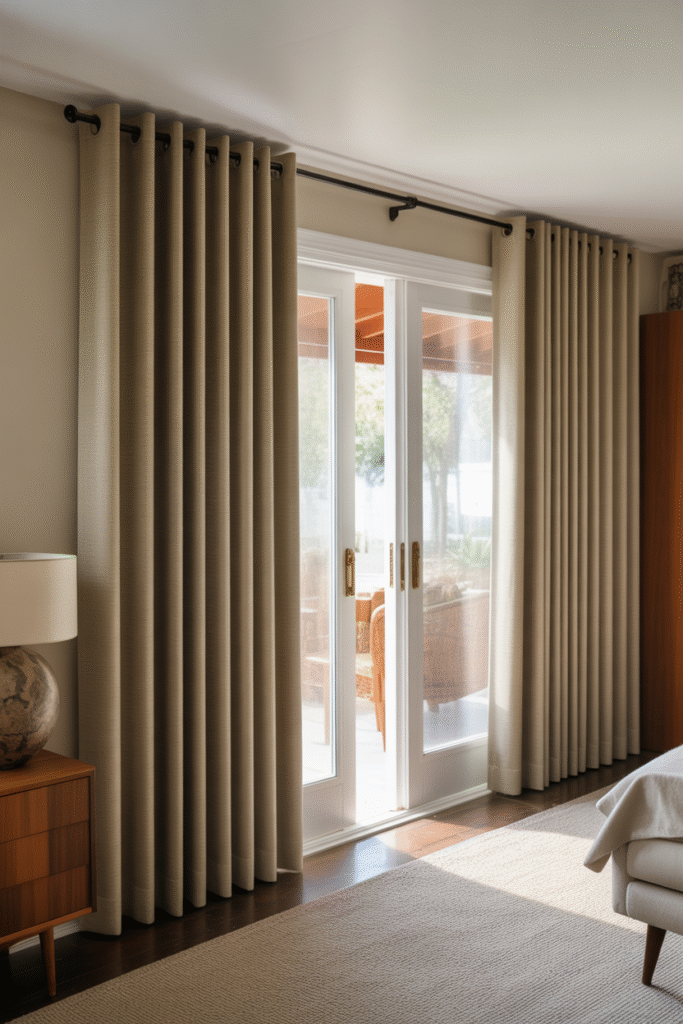
6) Panel Track Systems (The Right Answer for Sliders & Picture Windows)
Why this works
Large openings—sliders, picture windows—are mid-century hallmarks. Panel tracks handle them better than anything else.
How to do it well
- Ceiling mount the track to emphasize architecture and make low ceilings feel taller.
- Stack direction: Stack away from the door handle/traffic path.
- Fabric choice: Textured plains or woven-look materials; avoid shiny synthetics.
Options to consider
- Light-filtering panels for everyday comfort.
- Blackout panels for media rooms and bedrooms.
- Split stacks when doors open from the center.
Key takeaway: Panel tracks glide cleanly over big spans, keeping the look modern and effortless.
7) Color-Blocked Curtains (A Little Retro, Not Theme-Park)
Why this works
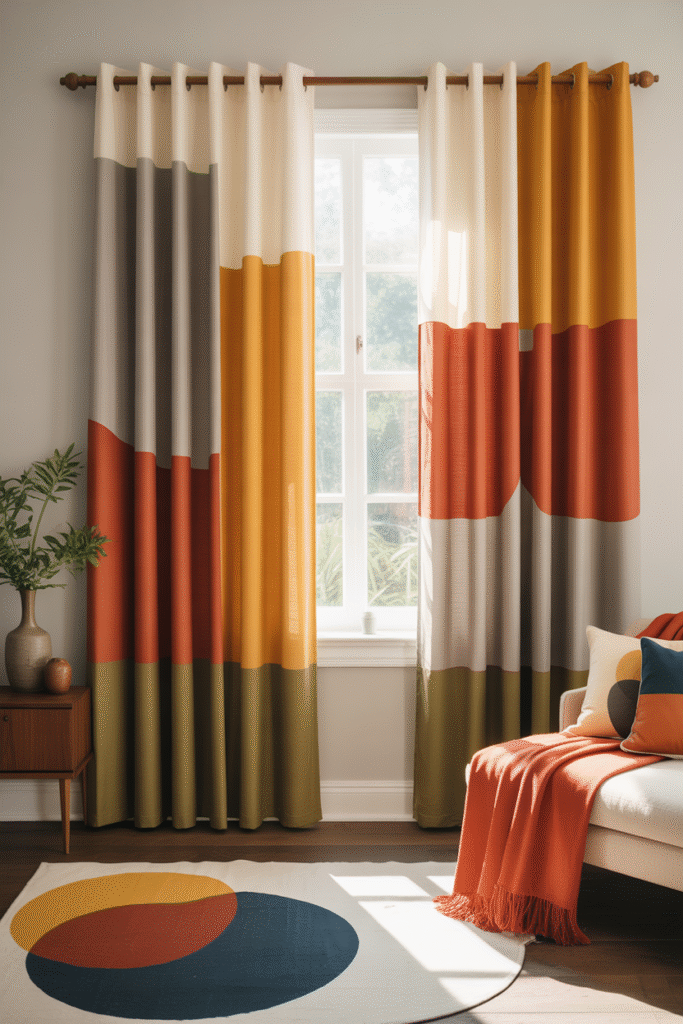
Mid-century style embraces bold color—just not in fussy patterns. Large-scale color blocking nods to the era’s playful geometry while staying grown-up.
How to do it well
- Stick to two tones: ivory + ochre, gray + rust, olive + natural. Keep the blocks large and simple.
- Line the panels so colors read true in daylight.
- Repeat one curtain color in pillows or a throw to tie the palette together.
Where to use
- Living rooms that need an anchor without a heavy drape.
- Guest rooms where a little personality is welcome.
Key takeaway: Use large, simple blocks of color for a subtle retro wink that still reads modern.
8) Pinch-Pleat or Ripplefold Drapes (Choose Your Flavor of “Tailored”)
Why this works
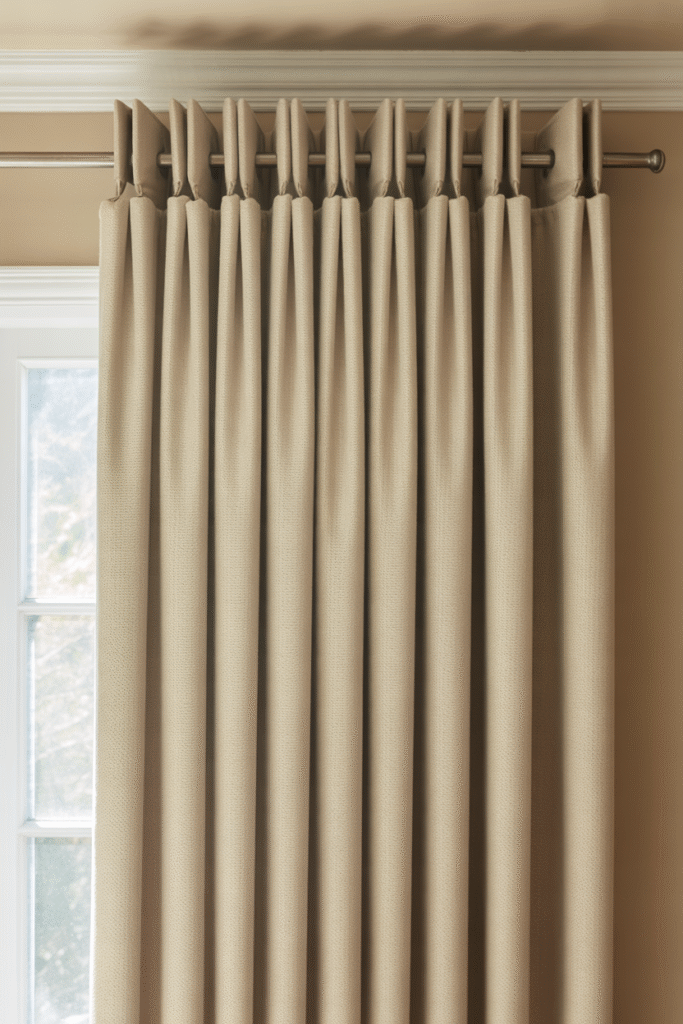
You can lean more “retro” or more “architectural” with your header style:
- Two-finger pinch pleat: Quietly classic mid-century, structured but not formal.
- Ripplefold: Ultra-clean, repeated wave; very modern and incredibly smooth on tracks.
How to do it well
- Ceiling-mounted tracks are your friend—especially on wall-to-wall glazing.
- Consistent spacing matters; ripplefold is hard to mess up, pinch pleat needs correct hook placement.
- Choose solid, textured fabrics; let the header be the detail.
Key takeaway: Pick pinch pleat for a soft retro line or ripplefold for a crisp, architectural wave—both are era-appropriate.
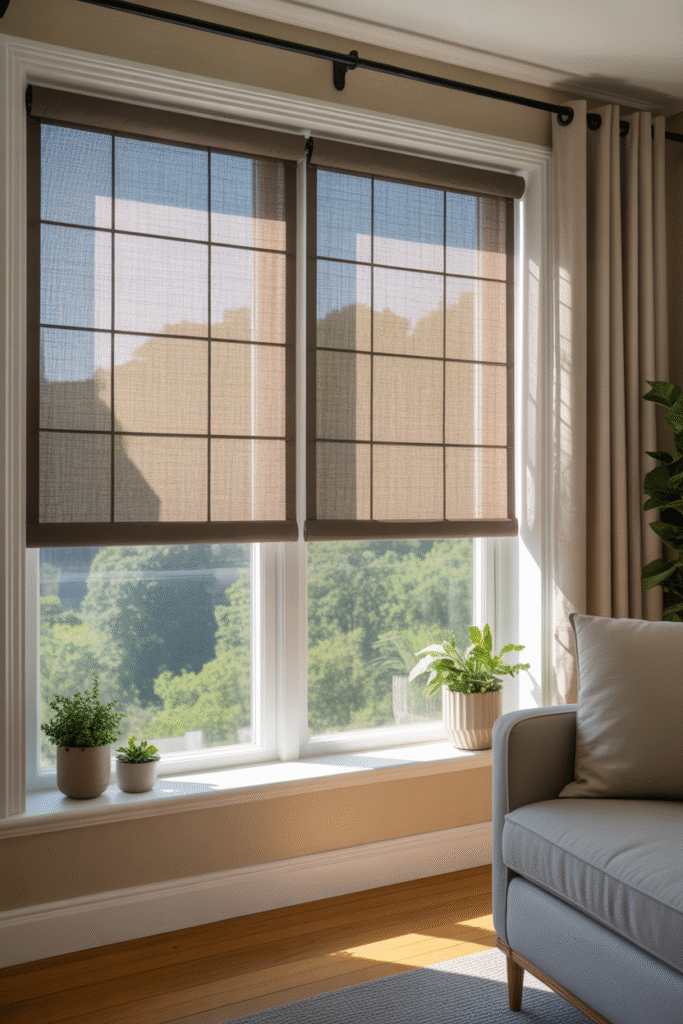
9) Solar Screen Roller Shades (Keep the View, Lose the Glare)
Why this works
When you want the view and daylight but not the glare or UV, solar rollers are perfect. They’re rated by openness factor (how open the weave is).
How to choose openness
- 1–3%: Maximum glare reduction, highest privacy by day.
- 5%: Balanced view and glare control (the most versatile).
- 10%: Best view retention, lighter glare reduction.
How to do it well
- Inside mount to minimize their presence.
- Use a fabric-wrapped fascia or cassette for tidy tops.
- Pair with linen side panels if you want evening softness.
Key takeaway: Solar rollers quietly solve glare and UV without stealing attention from your windows or view.
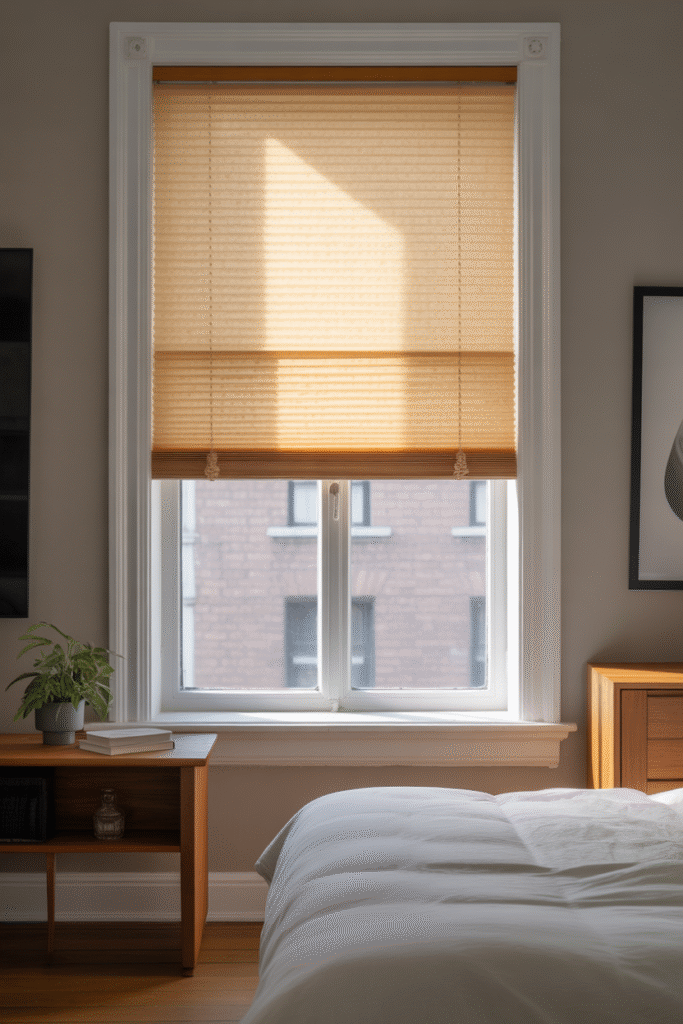
10) Top-Down/Bottom-Up Cellular Shades (Flexible Privacy + Insulation)
Why this works
Sometimes you want light at the top and privacy at eye level—especially in bedrooms or street-facing living rooms. Top-down/bottom-up cellular shades give you that control, plus insulation.
How to do it well
- Choose light-filtering for living spaces; blackout for bedrooms.
- Stick to matte, neutral fabrics so they disappear when retracted.
- If the room feels cool or hot near the windows, go for double-cell construction.
Pairing tip
- Layer with sheer panels if you want more softness without losing flexibility.
Key takeaway: Cellulars add energy efficiency and flexible privacy while staying visually quiet—great for bedrooms.
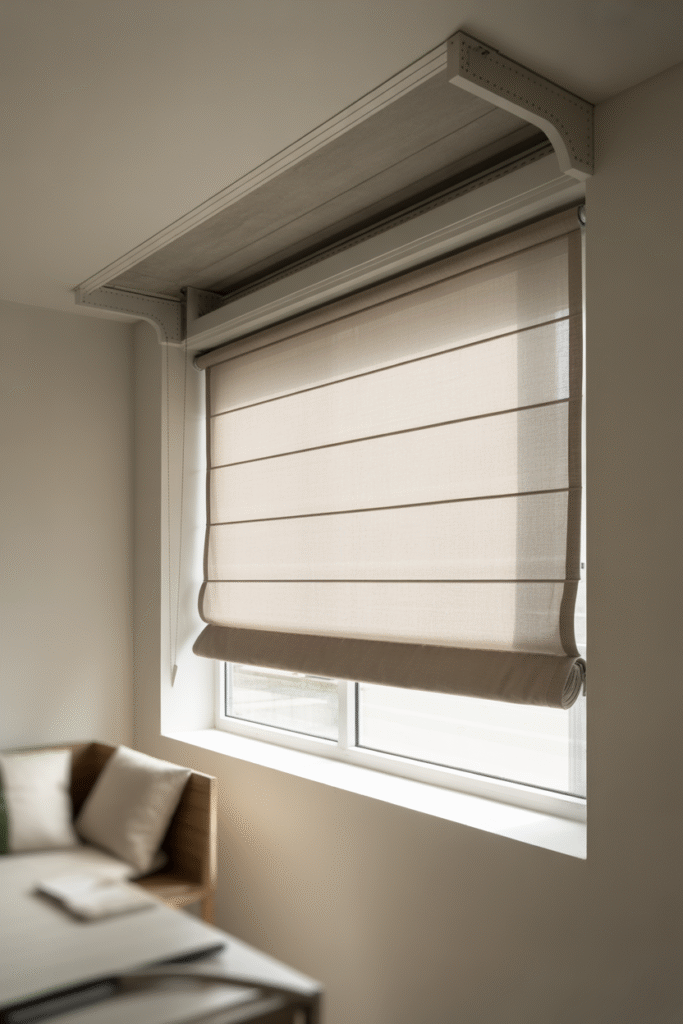
11) Recessed or Fascia-Concealed Rollers (Minimalist Magic)
Why this works
If you prefer a barely-there solution, recessed pockets or clean fascias hide roller hardware so the wall reads as one plane—very mid-century, very calm.
How to do it well
- New builds/renos: Ask for a drywall pocket above the window to tuck shades into.
- Retrofits: Use a fabric-wrapped cassette that matches the wall or trim.
- Color-match shade fabric to trim for a “disappearing” effect.
When to choose this
- Rooms where the furniture or view is the star.
- Homes with strong linear architecture you don’t want to interrupt.
Key takeaway: Concealed rollers keep attention on your architecture, not your hardware.
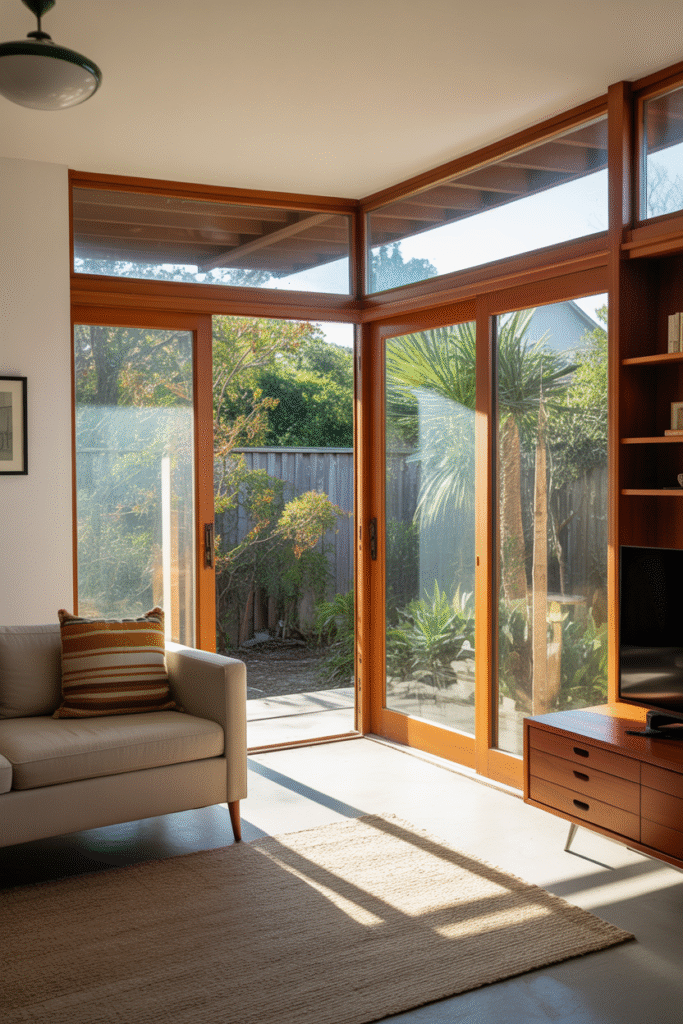
12) Intentionally Bare Windows (Yes, Sometimes That’s the Best Choice)
Why this works
Mid-century homes often have clerestory windows or private backyard views. If privacy isn’t an issue and the light is kind, leaving a window bare can be the most honest choice.
How to do it well
- Keep glass spotless; use low-iron glass if you’re renovating and want crystal clarity.
- Balance with textiles elsewhere (rug, upholstery) so the room still feels warm.
- Consider UV film if fading is a concern but you love the open look.
Key takeaway: When the architecture and privacy allow, no treatment can be the most mid-century move of all.
Quick Sizing & Measuring Guide (The 5 Numbers That Fix Most Problems)
- Rod/track height: 4–8″ above the frame or to the ceiling for a taller look.
- Width extension (panels): 6–12″ beyond each side to clear the glass when open.
- Panel fullness: 1.8–2.2× the rod width so folds look intentional.
- Outside-mount shades: Add 2–3″ width each side and 3–6″ above for better light block.
- Inside-mount depth: Confirm headrail requirements (often 1¾–2¼” minimum).
If you only change one thing, raise the mount. Higher = taller walls, happier proportions.
Material & Maintenance Pointers (So They Age Gracefully)
- Linen/linen-blend panels: Vacuum with a brush attachment monthly; steam on the rod to release creases.
- Wood blinds: Dust weekly with a microfiber paddle; avoid soaking cords and slats.
- Woven woods: Dust regularly; liners protect from UV and add structure.
- Rollers (blackout/solar): Wipe with a barely damp cloth; no harsh cleaners.
- Cellular shades: Vacuum with a soft brush; spot-clean per manufacturer.
Budget & Upgrade Levers (Spend Where It Shows, Save Where It Doesn’t)
- Spend on: Correct sizing, quality lining, smooth hardware (tracks/rod brackets), and motorization where you’ll use it daily (bedrooms, tall windows).
- Save on: Fabric content (linen blends over 100% linen), decorative extras you won’t use, and pattern (tone-on-tone reads rich without a designer price).
- Smart splurge: A ceiling-mounted double track in main spaces—clean look, effortless operation, and it standardizes the whole home.
Room-by-Room Cheatsheets (Plug-and-Play Combos)
Living Rooms
- Bright room with mild glare: 5% solar roller + linen side panels.
- Private backyard view: Woven wood shade + optional sheer panels.
- Huge slider: Ceiling-mounted panel track with textured, light-filtering fabric.
Bedrooms
- Primary suite: Inside-mount blackout roller + sheer linen panels on a ceiling track.
- Guest room: Flat Roman with blackout lining; add a slim rod + panels if you love drapery.
- Street-facing window: Top-down/bottom-up cellular for privacy with daylight.
FAQs You’re Probably Thinking
Do I need blackout in living rooms?
Usually no. Try light-filtering or solar fabrics. If you watch TV in daylight, 3–5% solar cuts reflections without turning the room into a cave.
Are vertical blinds okay in a mid-century house?
Traditional vinyl verticals skew 80s/90s. If you need vertical movement on a budget, panel tracks or fabric vertical louvers with slim profiles are a better modern fit.
Pattern scares me—what’s safe?
Keep pattern tone-on-tone or use color-blocking instead. Let texture do most of the talking.
Can I mix treatments in one open space?
Yes—repeat at least one element (same fabric, hardware finish, or lining color) to make it feel intentional.
Start with one window and one problem
If your windows feel off, don’t overthink it. Pick one window—the one you use most—and decide the core issue:
- Glare? Choose solar rollers.
- Privacy at night? Blackout roller + sheer panels.
- Room feels flat? Woven woods or linen drapes.
- Big slider? Panel tracks.
- Need insulation and flexibility? Top-down/bottom-up cellular.
From there, mount it high, size it correctly, and keep the materials honest—linen, wood, textured weaves, quiet hardware. Mid-century modern isn’t about perfect sets; it’s about simple, comfortable choices that respect the architecture. Dress your windows to support how you actually live, and the rest of the room will finally click.
One small action today: measure your most-used window (width, height, and frame depth) and write down the primary problem (glare, privacy, softness, or darkness). That single note will point you straight to the right option from the list above.
Other Articles

15 Modern Valance Window Treatment Ideas You’ll Love
50+ Curtain Tie Backs You’ll Love: From Minimal to Luxurious