
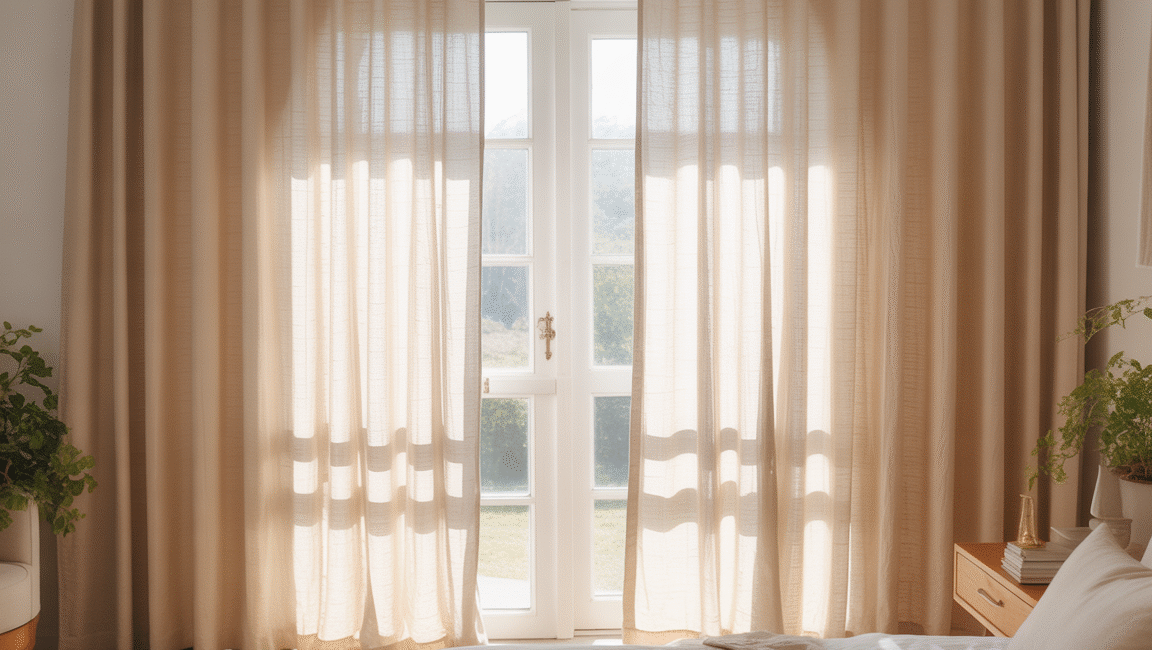
You’re standing in your bedroom, squinting at the morning sun streaming through bare windows, or maybe staring at those dated curtains you inherited from the previous owner. Either way, you know something needs to change. The right curtains can transform your bedroom from “just a place to sleep” into a space that actually feels like yours—calming, stylish, and perfectly suited to how you live.
The challenge? There are so many options that it’s easy to get overwhelmed. Do you need blackout curtains or sheer ones? Should they puddle on the floor or hover just above it? And what about those beautiful layered looks you see on Instagram—are they actually practical?
Let’s walk through twelve curtain styles that work beautifully in real bedrooms, not just design magazines. I’ll tell you what makes each one special and when it’s the right choice for your space.
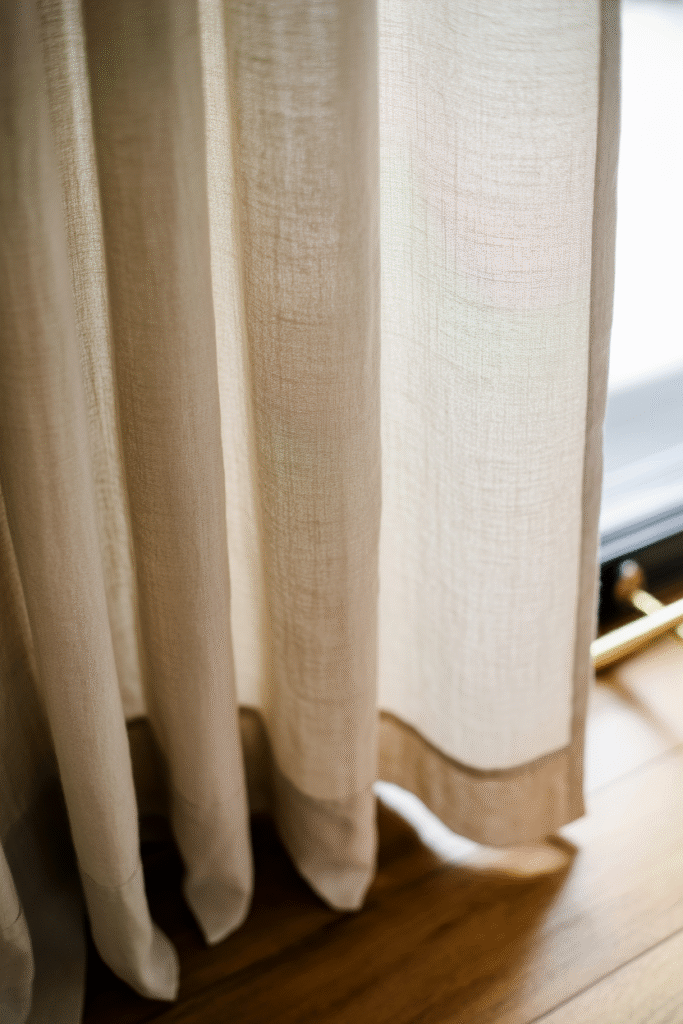
Floor-Length Linen Curtains for That Effortless Look
Linen curtains have this relaxed elegance that’s hard to beat. They’re naturally textured, breathable, and they soften over time in a way that actually makes them look better, not worn out.
Here’s what makes them work: Linen filters light beautifully without blocking it completely, so your bedroom gets that soft, diffused glow during the day. They’re substantial enough to provide privacy but light enough that they don’t feel heavy or oppressive.
For the best look, hang them so they just kiss the floor or have a 1-2 inch break. This length makes your ceilings look higher without the high-maintenance puddle that collects dust. Choose colors like warm white, oatmeal, or soft gray—these work with practically any bedroom style and won’t compete with your other design choices.
One practical note: pure linen wrinkles easily. If that bothers you, look for linen-cotton blends that give you the texture without quite as much rumpling.
Velvet Drapes for Luxury and Light Control
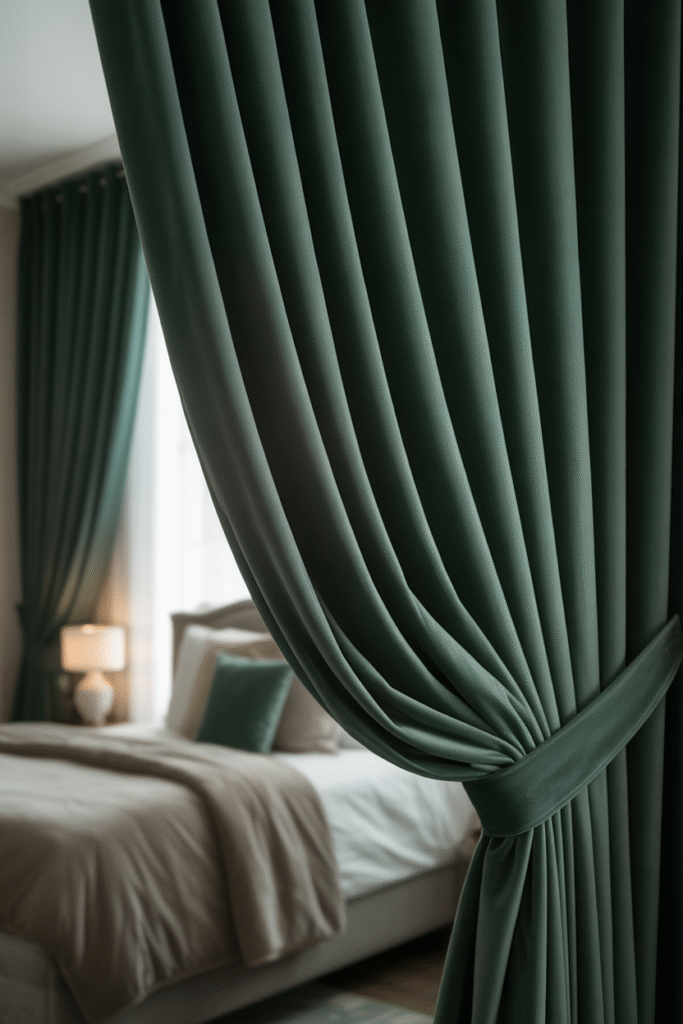
Want your bedroom to feel like a high-end hotel? Velvet curtains deliver that instant luxury. But they’re not just about looks—velvet is genuinely functional for bedrooms.
The thick, dense weave blocks light exceptionally well, even without a blackout lining. They’re also natural insulators, which means they help keep your bedroom cooler in summer and warmer in winter. If you live on a busy street, you’ll appreciate that they muffle sound too.
Rich jewel tones like emerald, sapphire, or burgundy create drama, while softer shades like blush, dove gray, or champagne keep things sophisticated without overwhelming your space. For the most polished look, pair velvet curtains with simple hardware—a sleek brass or matte black rod lets the fabric be the star.
Just be aware: velvet curtains are heavy. Make sure your curtain rod is sturdy enough to support them, and if you have tall windows, you might want to consider getting help with installation.
Sheer White Curtains for Airy Brightness
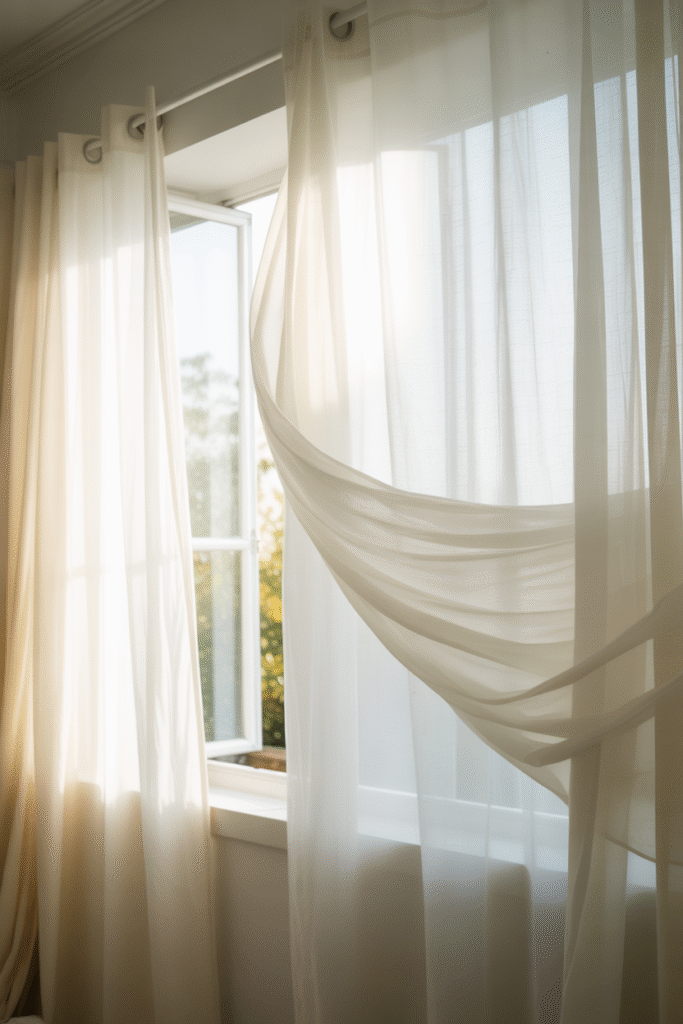
If you love natural light but still want some privacy, sheer curtains are your answer. They create a gentle boundary without making your room feel closed off.
The key to making sheers work in a bedroom is choosing the right opacity. Super-thin voile might not give you enough privacy, especially at night with interior lights on. Look for semi-sheer fabrics that blur the view from outside while still letting plenty of light through.
White and cream are classic for good reason—they work with everything and make your room feel fresh and open. For a slightly more interesting look, try sheers with a subtle texture like a linen weave or delicate embroidery.
Here’s a practical tip: hang sheers on a double rod system with heavier curtains behind them. This gives you flexibility—light and airy during the day, complete privacy and darkness at night. It’s the best of both worlds without needing to choose just one style.
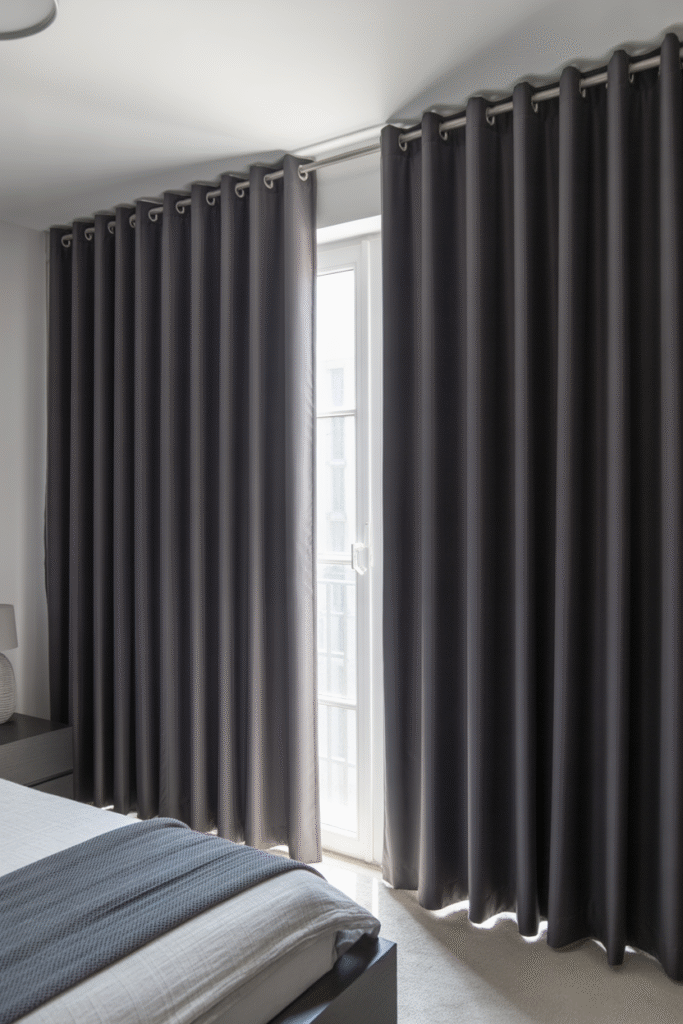
Blackout Curtains for Serious Sleepers
If you’re someone who needs complete darkness to sleep well, or you work night shifts and sleep during the day, blackout curtains aren’t optional—they’re essential. Modern blackout curtains have come a long way from the stiff, plastic-backed options of the past.
Look for triple-weave blackout fabrics that block light through their construction rather than a coating. These drape better and last longer. They typically block 95-100% of light when properly installed.
The secret to maximum darkness is in the installation: hang your curtains as close to the wall as possible and make them wider than your window—extend the rod 8-12 inches on each side. This prevents light from sneaking around the edges.
Color matters here. Darker colors on the room-facing side absorb more light, but if you want a light, bright room aesthetic, many blackout curtains have white backing that still blocks light effectively while showing a lighter color inside your room.
Layered Curtains for Versatility
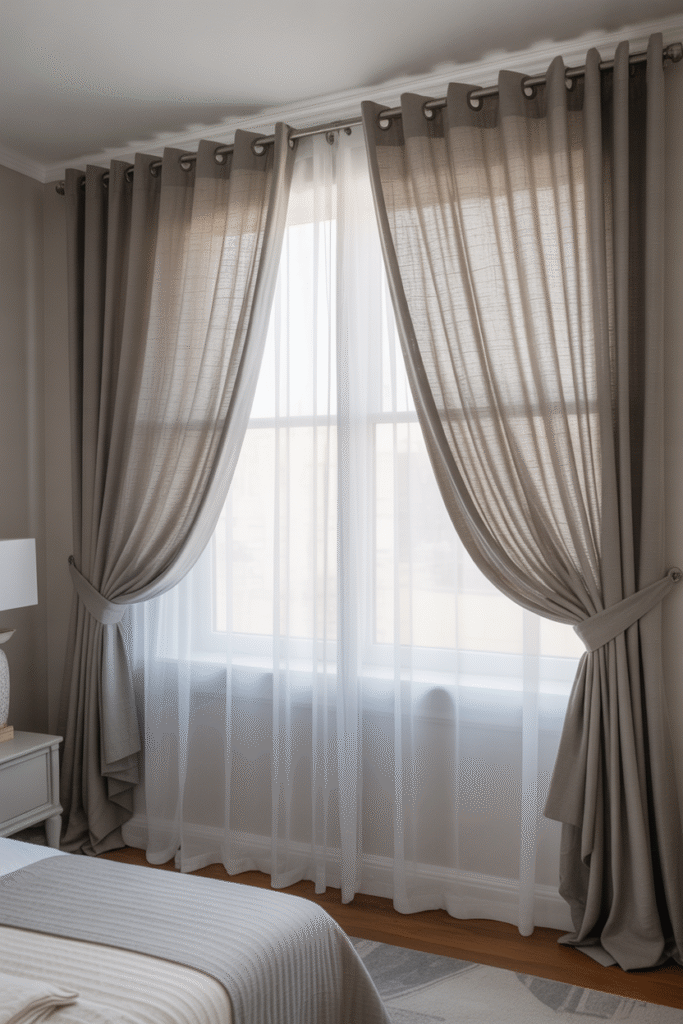
This is probably the most flexible curtain solution for bedrooms. Layering combines the benefits of multiple curtain types so you can adjust based on time of day, season, or mood.
The classic combination is sheer curtains closest to the window with heavier drapes on the outer layer. During the day, pull back the drapes and let the sheers filter light gently. At night, close everything for complete privacy and darkness.
Other successful combinations include:
- Roman shades with side panels
- Blackout roller shades with decorative curtains
- Linen curtains over cellular shades for maximum energy efficiency
The hardware matters here. Use a double curtain rod or a track system that allows both layers to operate smoothly. Nothing’s more frustrating than curtains that tangle every time you try to open them.
Layering does require more investment upfront, but it gives you so much control over light, privacy, and the overall look of your room that many people find it’s worth it.
Grommet Curtains for Modern Simplicity
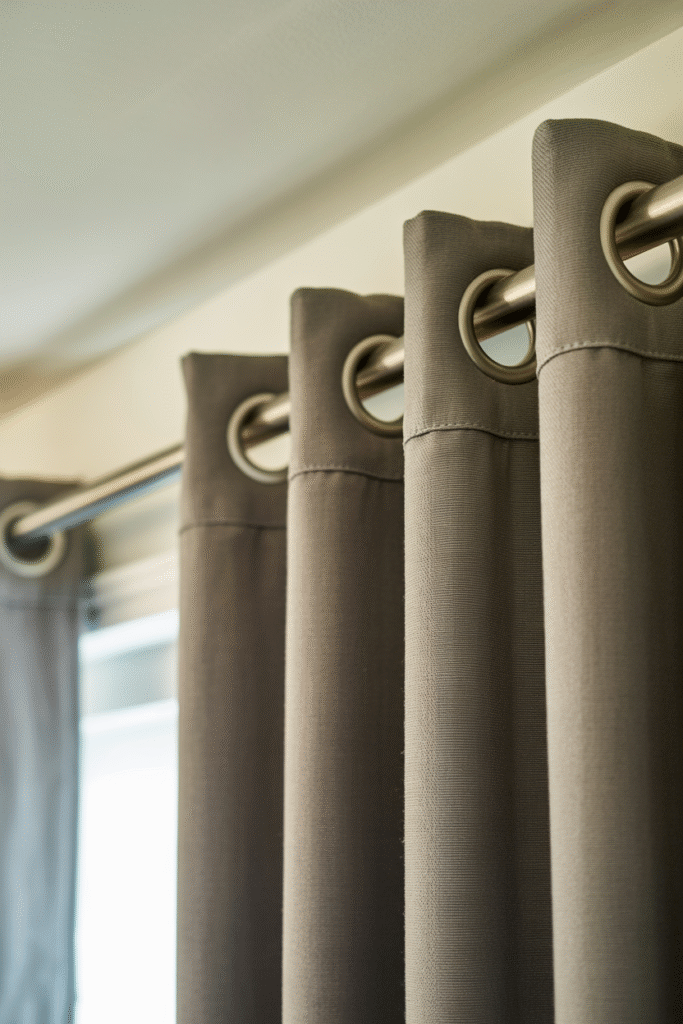
Grommet curtains have metal rings at the top that slide directly onto the curtain rod. This creates those neat, uniform folds that look crisp and contemporary.
They’re incredibly easy to open and close—no fighting with hooks or rings. The motion is smooth, which is genuinely nice when you’re adjusting them every day. This makes them a smart choice if you have heavy blackout curtains that you’ll be opening and closing frequently.
Grommet curtains work particularly well in modern or minimalist bedrooms. The hardware becomes part of the design, so choose a rod finish that complements your room—matte black, brushed nickel, or brass all look great.
One thing to know: because of how they hang, grommet curtains expose about two inches of the rod above the rings. This is part of the look, but if you prefer curtains that completely hide the rod, consider tab-top or pinch-pleat styles instead.
Pinch Pleat Curtains for Traditional Elegance
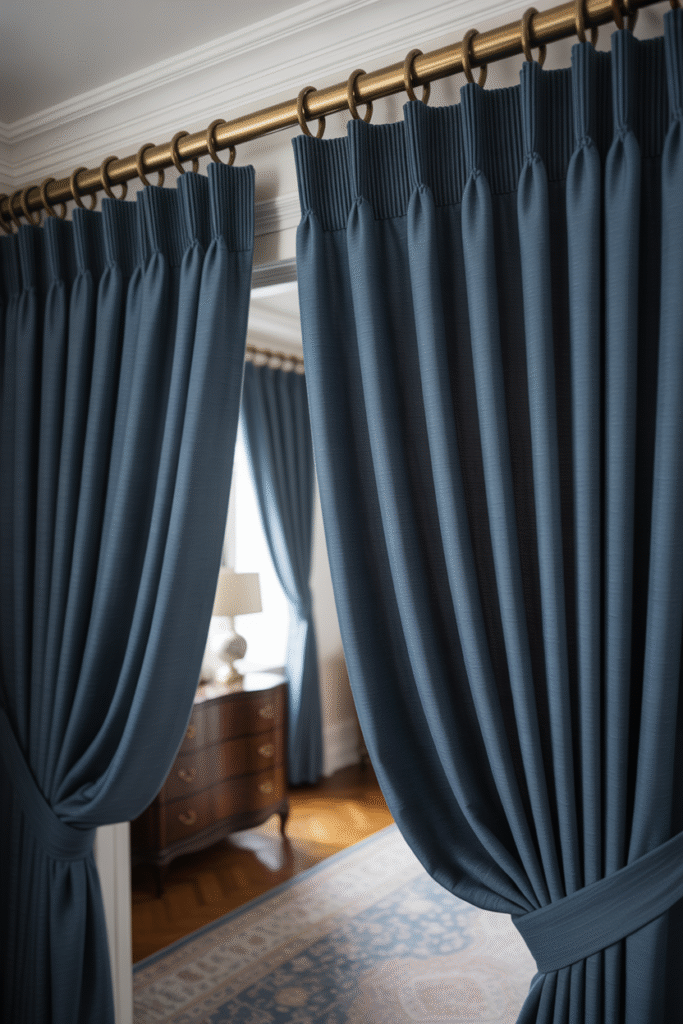
Pinch pleat curtains have gathered fabric at the top that creates structured, tailored folds. They’re the traditional choice for formal or classic bedroom designs, and they have a polish that’s hard to replicate with other styles.
These curtains hang beautifully and hold their shape over time. The pleats create dimension and depth that makes the fabric itself more interesting to look at. They work especially well with luxurious materials like silk, velvet, or heavy cotton.
You’ll need rings or hooks to hang pinch pleat curtains—they don’t slide directly onto the rod like grommets. This does mean slightly more effort when opening and closing them, but the trade-off is that formal, custom-drapery look.
If you have high ceilings, pinch pleats really shine. The structured top draws the eye upward and emphasizes the vertical lines in your room.
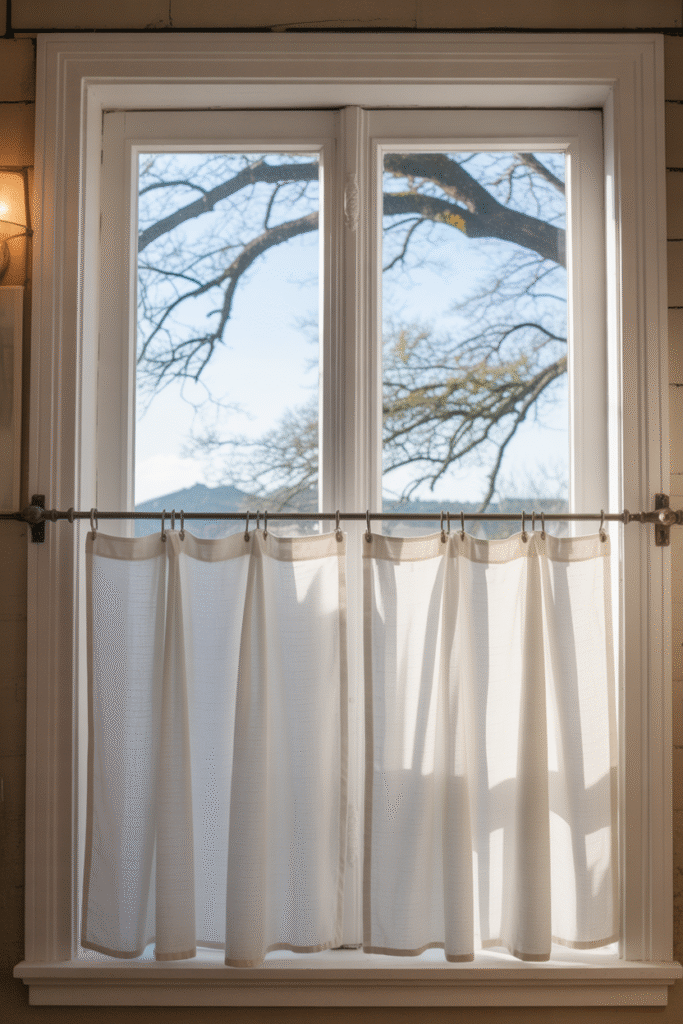
Café Curtains for Unique Window Shapes
Café curtains cover only the bottom half or two-thirds of your window. While they’re traditionally associated with kitchens, they can be surprisingly charming in bedrooms with special circumstances.
They work wonderfully if you have:
- A beautiful view you don’t want to block
- Upper windows that provide light but don’t need privacy coverage
- Uniquely shaped windows where full curtains would look awkward
- A cottage or farmhouse aesthetic
For bedrooms, choose café curtains in slightly more substantial fabrics than you’d use in a kitchen. Linen, cotton, or even lightweight wool keeps them from feeling too casual. You can also layer café curtains with a top treatment like a valance for a complete look.
Install the café rod at the point where you need privacy coverage to begin—typically at least halfway up the window or at the lower third.
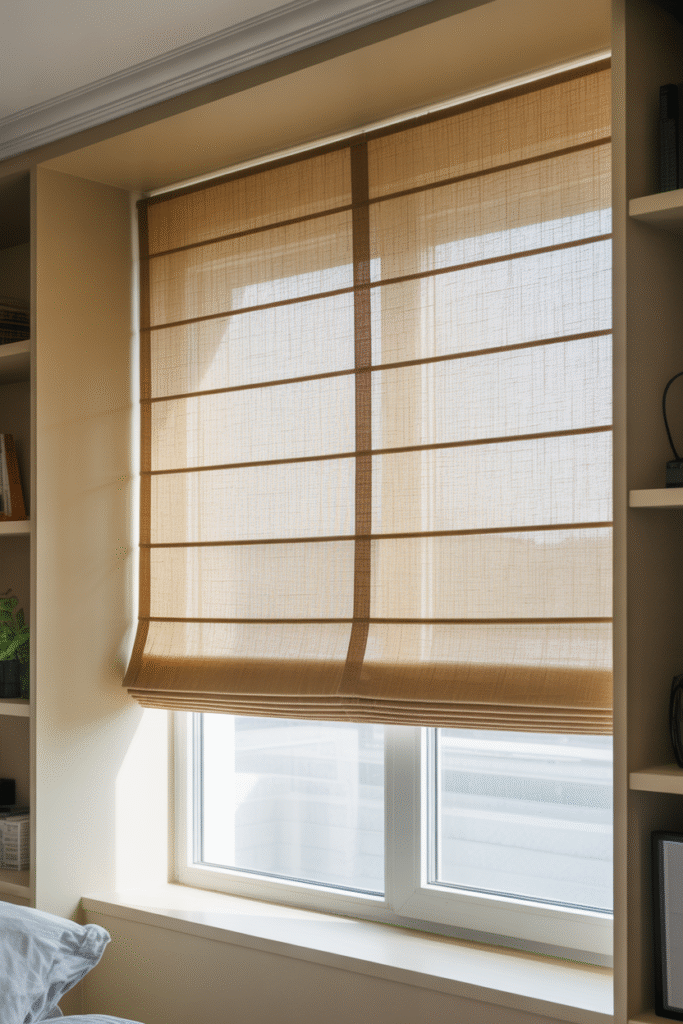
Roman Shades for Clean Lines
Roman shades fold up into neat horizontal pleats when raised and lie flat when lowered. They’re excellent for bedrooms where you want window coverage without the volume of fabric that curtains require.
They work particularly well in smaller bedrooms or rooms with limited wall space beside the windows. Since they mount inside or just outside the window frame, they don’t take up any visual real estate, making your room feel more spacious.
Roman shades come in various styles:
- Flat fold: Clean, modern, minimal fabric bunching
- Hobbled: Soft cascading folds even when lowered
- Relaxed: Gentle curve at the bottom for a softer look
Choose blackout lining if light control is important, or go with unlined shades in lighter fabrics for gentle light filtering. Cotton, linen, and textured weaves all work beautifully for bedroom roman shades.
One practical consideration: Roman shades require periodic adjustments to keep the folds even, and the cord mechanism can wear out over time. Opt for cordless or motorized options if you have small children or just want easier operation.
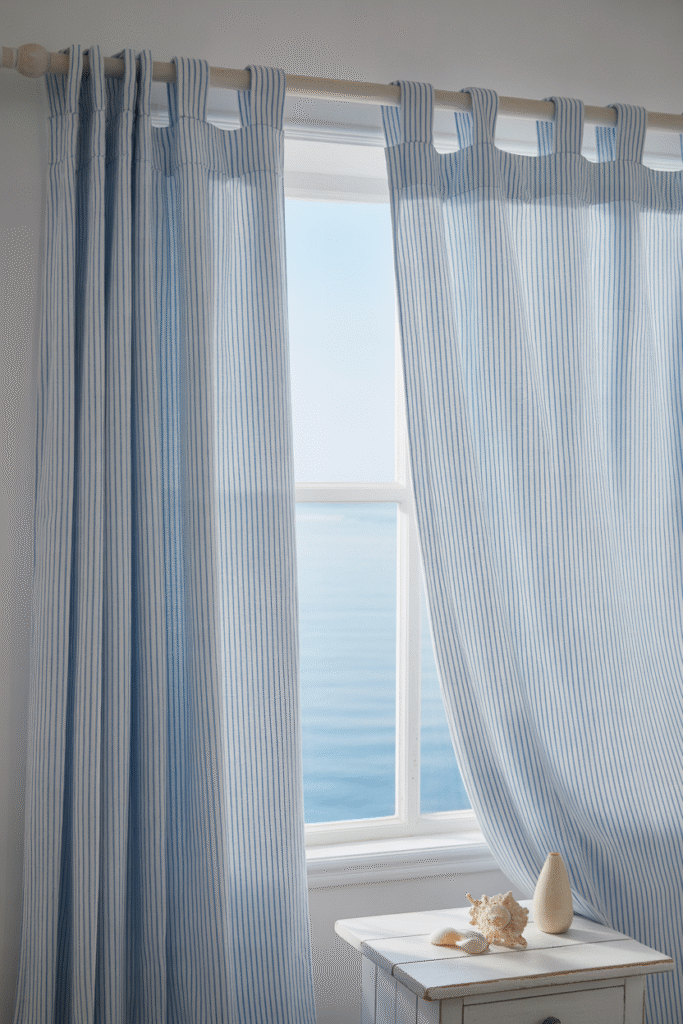
Tab-Top Curtains for Casual Charm
Tab-top curtains have fabric loops at the top that slide onto your curtain rod. This creates a relaxed, casual look with slightly irregular spacing between panels—in a good way.
They’re easier to make yourself than many other curtain styles, so if you’re at all handy with a sewing machine, tab-tops are a great DIY project. The construction is straightforward, and you can customize the fabric, tab width, and spacing to exactly what you want.
Tab-tops work best in bedrooms with a casual, relaxed aesthetic—think coastal, farmhouse, or bohemian styles. They’re not the right choice if you’re going for formal or ultra-modern, but in the right setting, they have real charm.
One downside: They don’t slide quite as smoothly as grommets or ring-top curtains. The fabric loops create a bit of friction against the rod. If you’ll be opening and closing your curtains multiple times a day, consider whether this will bother you.
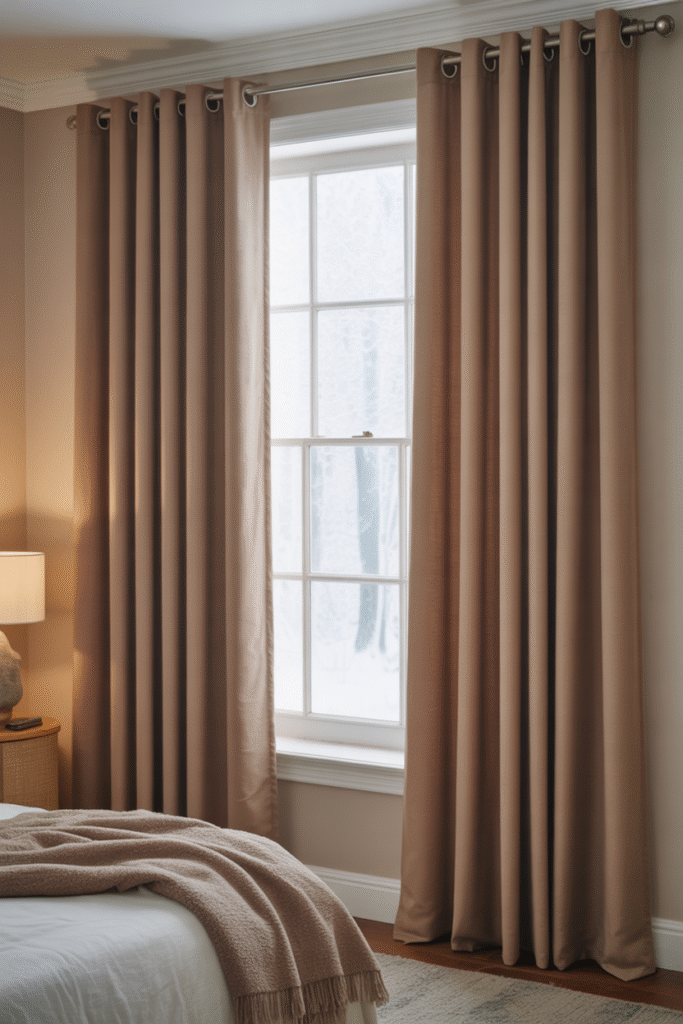
Thermal Curtains for Energy Efficiency
Thermal curtains have special insulating properties—usually through multiple layers or a foam backing—that help regulate your bedroom temperature. This isn’t just about comfort; it can actually reduce your energy bills.
In winter, thermal curtains prevent warm air from escaping through your windows. In summer, they block heat from entering. If your bedroom is always too hot or too cold, thermal curtains might solve the problem better than adjusting your thermostat.
Many thermal curtains also block light effectively, making them a good choice if you need both light control and temperature regulation. They’re particularly valuable in rooms with large windows, old windows with poor seals, or windows that get intense direct sun.
Modern thermal curtains don’t look obviously “functional” the way they used to. You can find them in attractive colors and fabrics that blend seamlessly with your bedroom decor. Look for options with a decorative outer layer and thermal backing—you get style and substance.
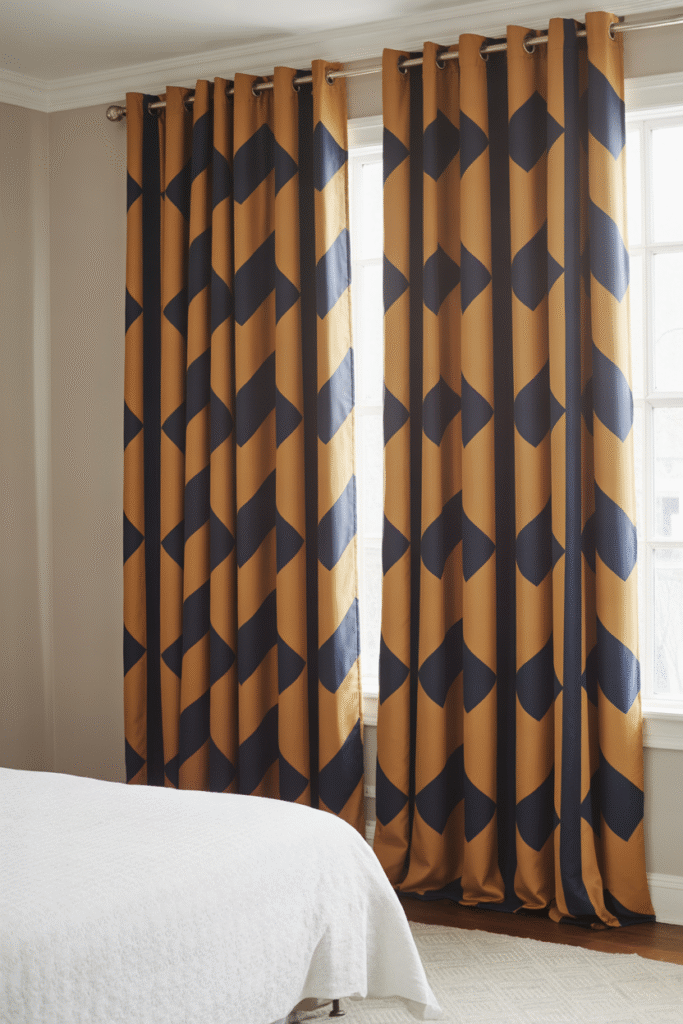
Patterned Curtains as Statement Pieces
If your bedroom feels a little bland, patterned curtains can instantly add personality without permanent commitment. They’re easier to change than wallpaper but make just as much impact.
The trick is choosing patterns that enhance rather than overwhelm your space:
- Large-scale patterns work best in big bedrooms with high ceilings
- Small, subtle patterns suit compact spaces and create texture without business
- Geometric patterns feel modern and structured
- Floral or organic patterns soften the space and add natural elements
If your bedroom already has a lot going on with bedding, artwork, or wallpaper, choose curtains with patterns in your existing color scheme but simpler designs. If your room is fairly neutral, curtains are your chance to introduce color and visual interest.
One piece of practical advice: When you’re looking at patterned curtains online, order a swatch if possible. Patterns can look very different at full scale than they do in small product photos, and you want to make sure the scale and color work in your actual space.
Choosing What Works for Your Bedroom
You don’t have to overthink this. Start by asking yourself a few questions: Do you need complete darkness to sleep? How much privacy do you need? What’s your budget? What style makes you happy?
Most bedrooms do best with either blackout curtains, layered curtains, or heavy drapes like velvet—something that gives you real control over light and privacy. Everything else is about personal style and how you want your room to feel.
If you’re still uncertain, go with floor-length linen or cotton curtains in a neutral color. They’re versatile enough to work in almost any bedroom, and you can always layer or accessorize them later if you want more impact.
The perfect curtains are the ones that make you feel good in your own bedroom. Start with one pair, see how they work, and adjust from there. Your bedroom should feel like a retreat, and the right curtains are a simple way to get closer to that feeling.
Other Articles
50+ Curtain Tie Backs You’ll Love: From Minimal to Luxurious
15 Stunning Curtains for Bedroom That Transform Your Space