

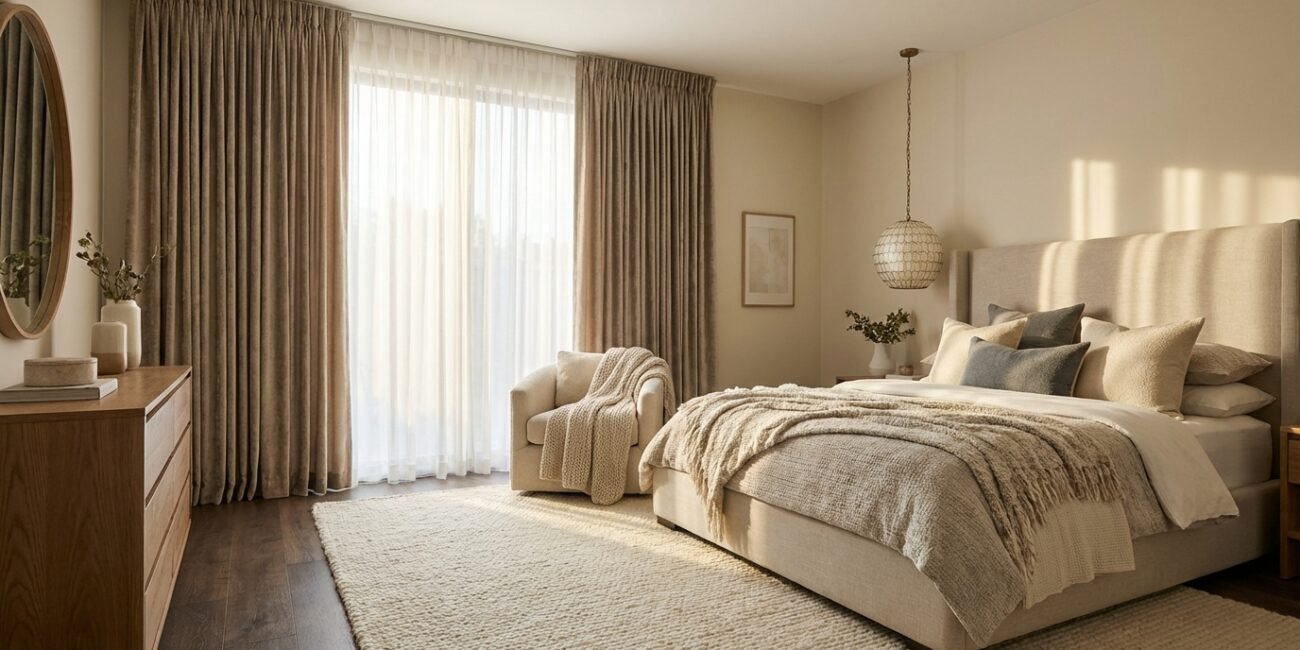
Window treatments serve a dual purpose in bedroom design: defining the aesthetic tone of the space and providing essential functionality. Proper selection influences sleep quality through light control, regulates room temperature via insulation, and ensures privacy. From structural hard treatments to soft, flowing textiles, the options available cater to varying architectural styles and budgets. Selecting the right treatment requires balancing visual weight, material texture, and mechanism type to create a sanctuary that is both restful and visually cohesive.
Floor-to-Ceiling Velvet Drapes
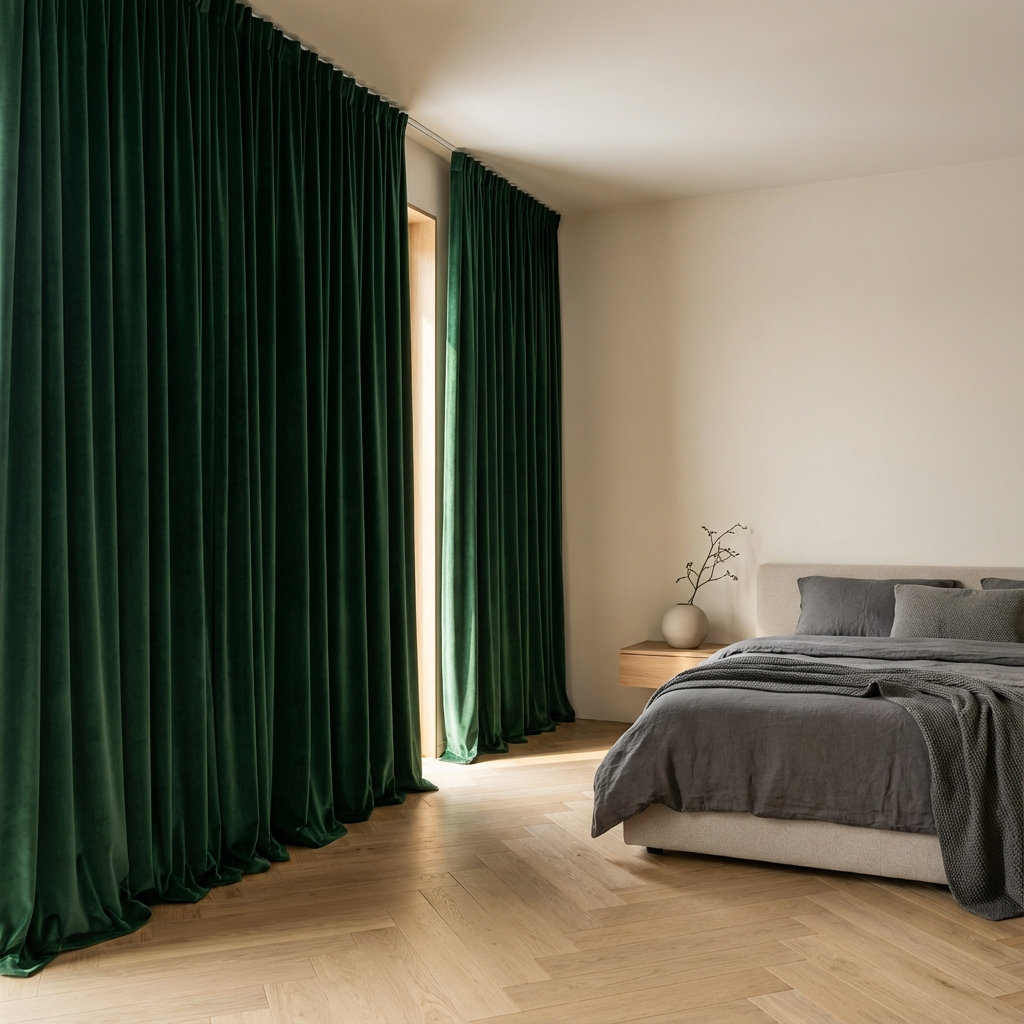
Velvet introduces an immediate sense of luxury and warmth, making it ideal for creating a cozy atmosphere. Beyond aesthetics, the heavy weave of velvet acts as a powerful insulator against drafts and functions as an excellent sound damper, reducing street noise. To maximize the perception of height in a room, mount the curtain rod as close to the ceiling as possible rather than directly above the window frame. This vertical line draws the eye upward, making average-sized bedrooms feel grander.
Benefits of Heavy Textiles
- Light Blocking: Naturally opaque, reducing the need for extra liners.
- Insulation: Traps heat during winter and blocks heat in summer.
- Acoustics: Softens echoes and dampens external noise.
Pro Tip: Choose a velvet fabric with a slight matte finish rather than high shine for a more modern, sophisticated look that avoids appearing dated.
Layered Sheers and Blackout Curtains
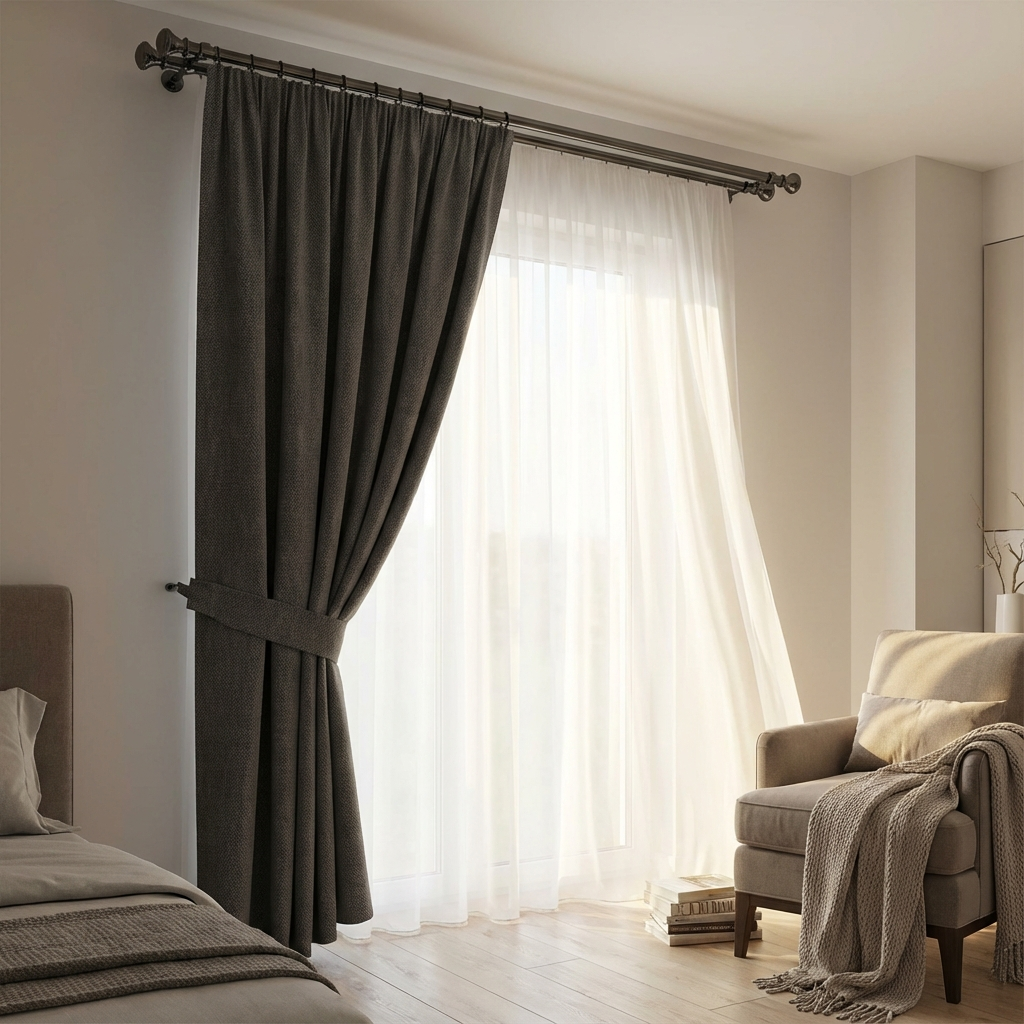
Combining sheer panels with heavier blackout drapes offers the ultimate flexibility in light management, often referred to as the ‘hotel look.’ During the day, the sheer layer diffuses harsh sunlight while preventing outsiders from looking in. At night, drawing the blackout layer ensures complete darkness for deep sleep. This layered approach adds depth and dimension to the window, preventing the ‘flat’ look that singular treatments sometimes produce.
Hardware Considerations
- Double Rods: essential for operating both layers independently.
- Ceiling Tracks: Creates a seamless, architectural flow.
- Color Contrast: Pair white sheers with charcoal or navy drapes for visual interest.
Pro Tip: Ensure the sheer layer is two to three times the width of the window to maintain generous ripples and fullness even when closed.
Flat-Fold Roman Shades
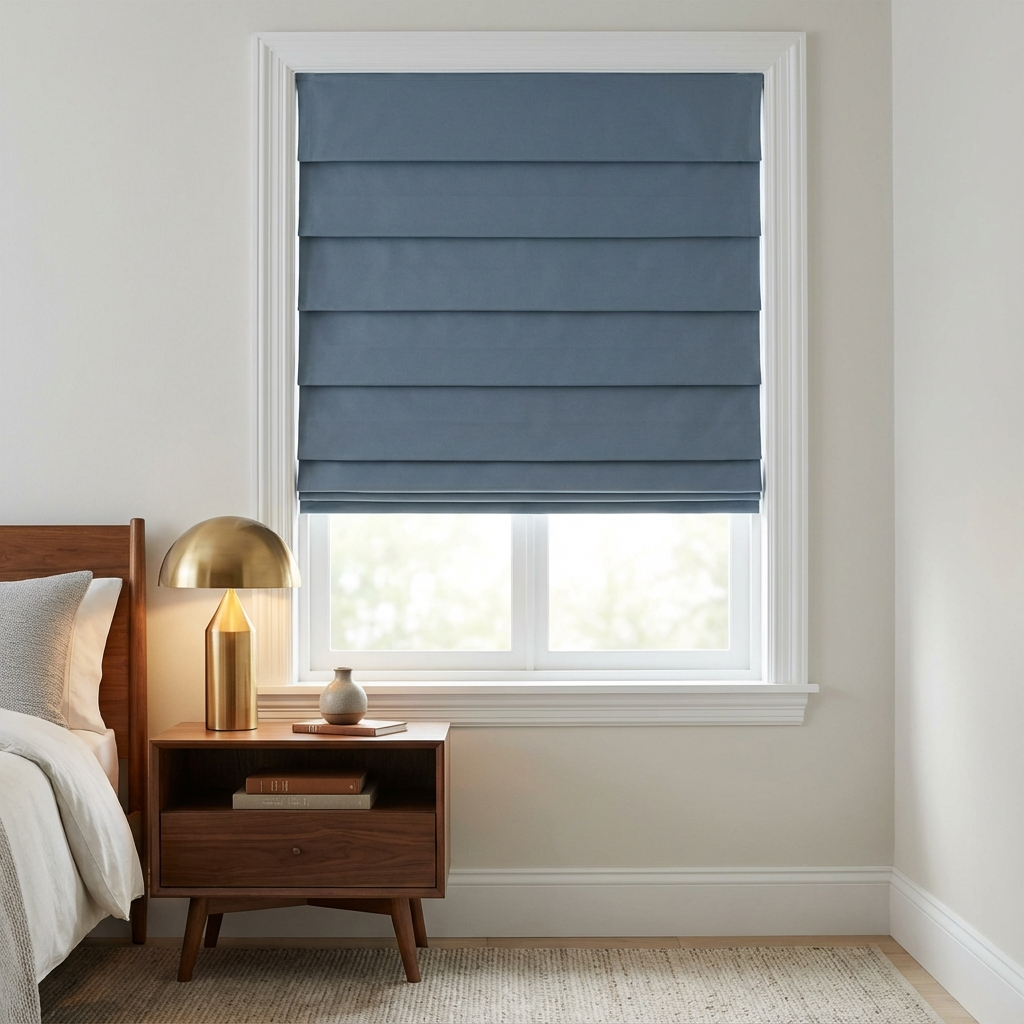
For a tailored, uncluttered appearance, flat-fold Roman shades are a superior choice, particularly in smaller bedrooms where floor-length drapes might occupy too much visual or physical space. When raised, the fabric stacks neatly at the top of the window; when lowered, it lies perfectly flat, showcasing the fabric pattern or texture. This style bridges the gap between traditional softness and modern minimalism.
Material Options
- Linen: Offers a relaxed, organic texture.
- Cotton Blend: Provides crisp folds and durability.
- Blackout Lining: Essential for bedrooms to prevent light leakage at the seams.
Pro Tip: Mount the shade 2-3 inches above the window frame (outside mount) to allow the fabric stack to clear the glass when fully raised, maximizing natural light.
Woven Wood Shades
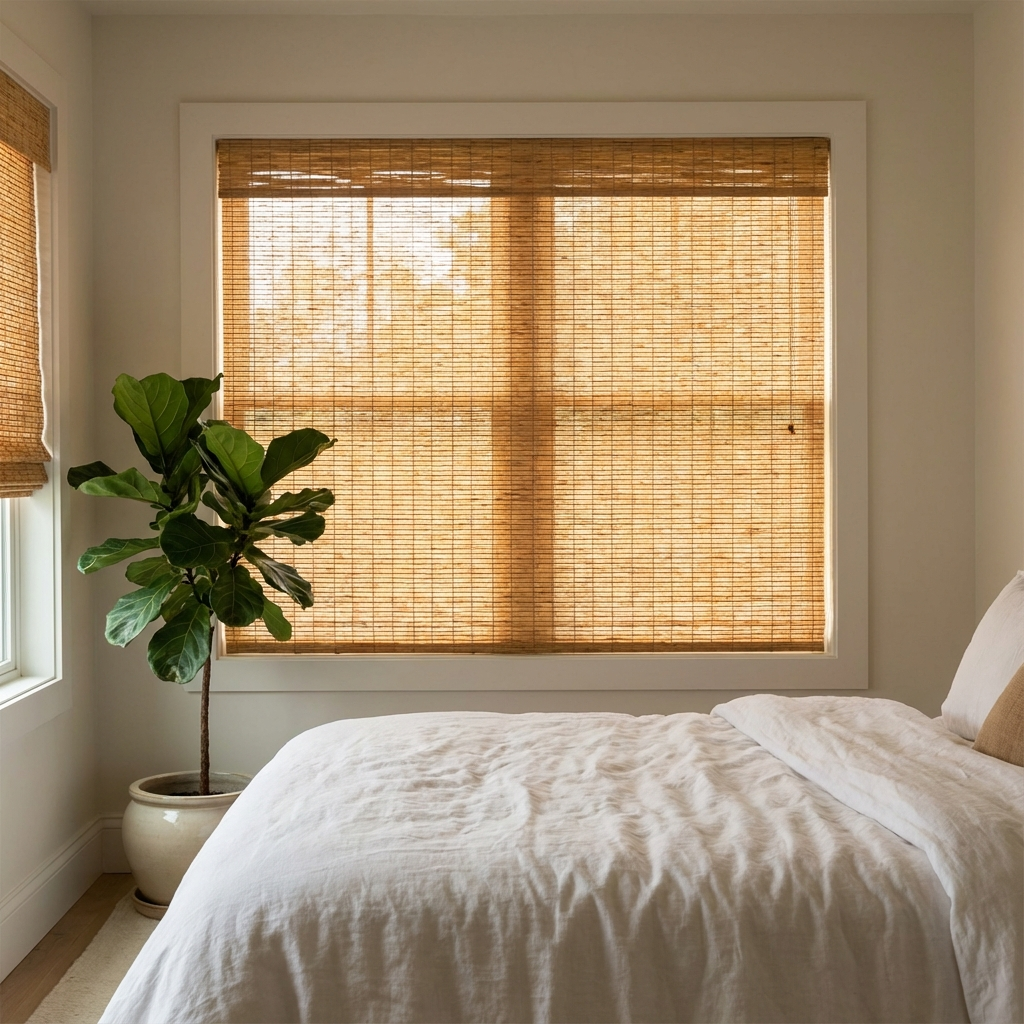
Woven wood shades, often made from bamboo, grasses, or jute, introduce organic texture and warmth to a bedroom. This treatment works exceptionally well in neutral or monochromatic color schemes, preventing the space from feeling sterile. While they naturally filter light rather than block it, they can be customized with privacy or blackout liners to suit bedroom requirements. Their natural variation in color allows them to coordinate with various wood tones in furniture and flooring.
Style Compatibility
- Boho: Pairs well with plants and rattan.
- Coastal: Complements whites and blues.
- Modern Farmhouse: Adds rusticity to clean lines.
Pro Tip: Select a ‘cordless’ lift mechanism for a cleaner look and increased safety, especially in homes with children or pets.
Cellular Honeycomb Shades
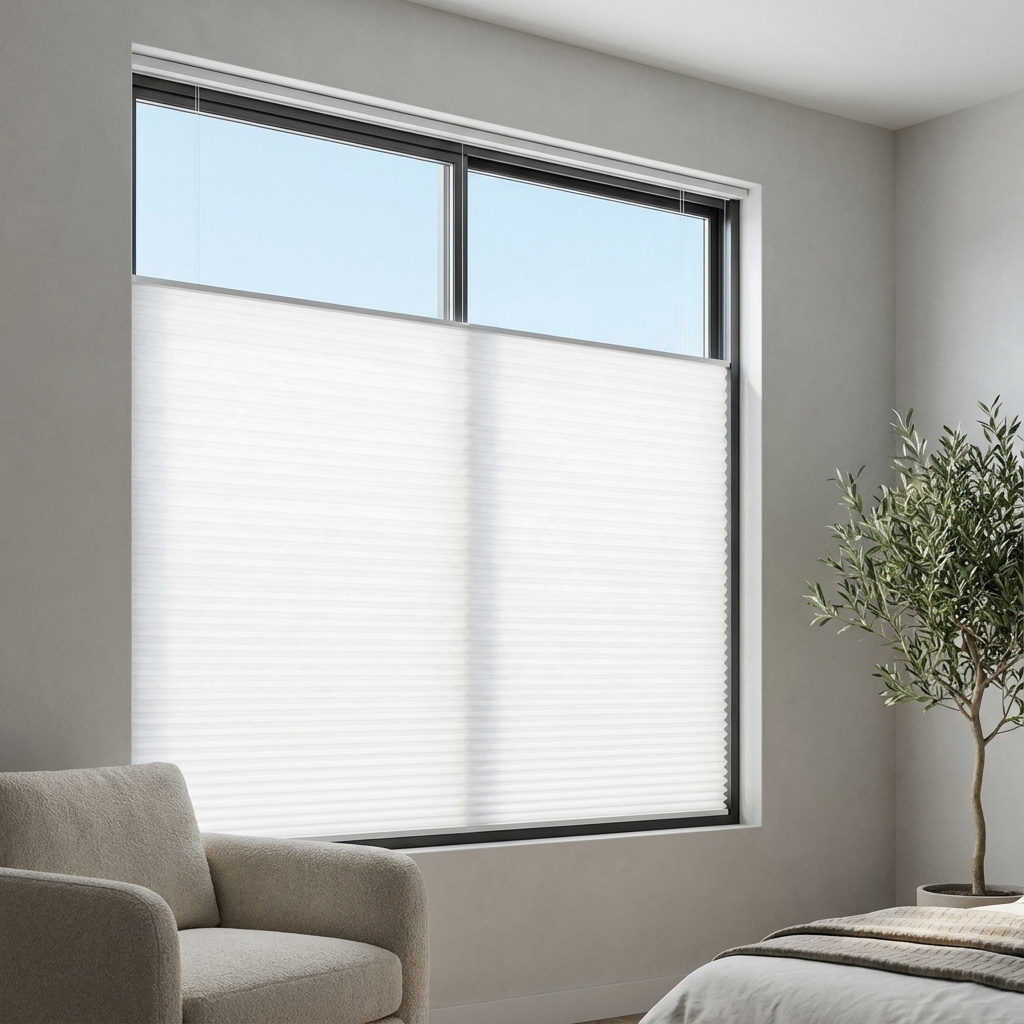
Functionality reigns supreme with cellular shades, which are engineered with a unique honeycomb structure that traps air in distinct pockets. This design creates a thermal barrier between the window glass and the room, significantly improving energy efficiency by keeping the bedroom warmer in winter and cooler in summer. While they may appear simple, their insulation properties are unmatched among window treatments.
Key Features
- Top-Down Bottom-Up: Allows privacy on the bottom half while letting light in at the top.
- Slim Profile: fits neatly inside shallow window jambs.
- Sound Absorption: Reduces outside traffic noise.
Pro Tip: Opt for a ‘top-down, bottom-up’ mechanism to maintain privacy from street level while still allowing natural light to flood the room from the top of the window.
Minimalist Roller Blinds
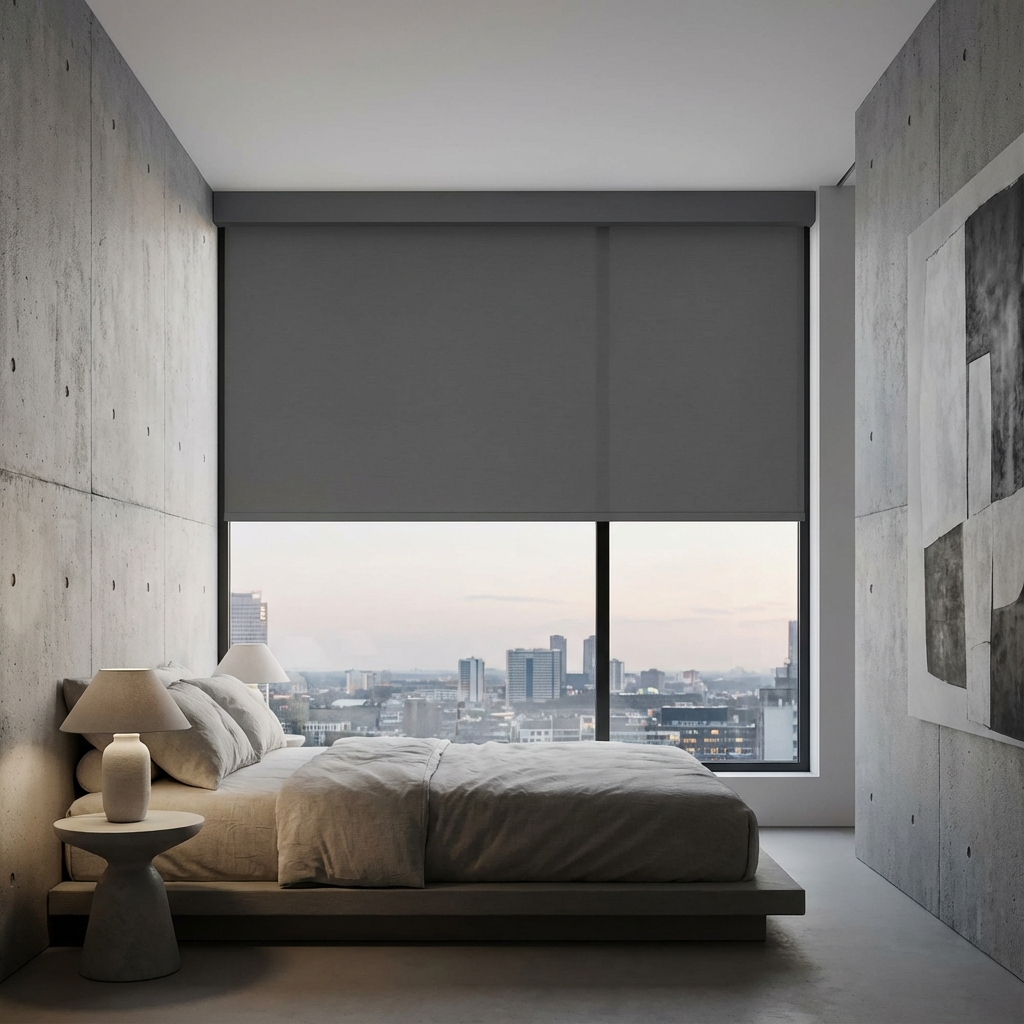
Roller blinds are the epitome of modern simplicity. When fully raised, they disappear into a discreet cassette or roll, leaving the window view completely unobstructed. This makes them an excellent choice for bedrooms with spectacular views or for minimalist designs where ‘less is more.’ Modern roller blinds have evolved beyond the cheap vinyl of the past; they now feature high-quality fabrics, varying opacities, and automated motorization options.
Fabric Choices
- Blackout Fabric: Absolute darkness for shift workers.
- Light Filtering: Soft glow without visibility.
- Solar Screen: Reduces glare and UV rays while maintaining the view.
Pro Tip: Install a valance or fascia to cover the roller mechanism at the top for a polished, architectural finish that hides the moving parts.
Interior Plantation Shutters
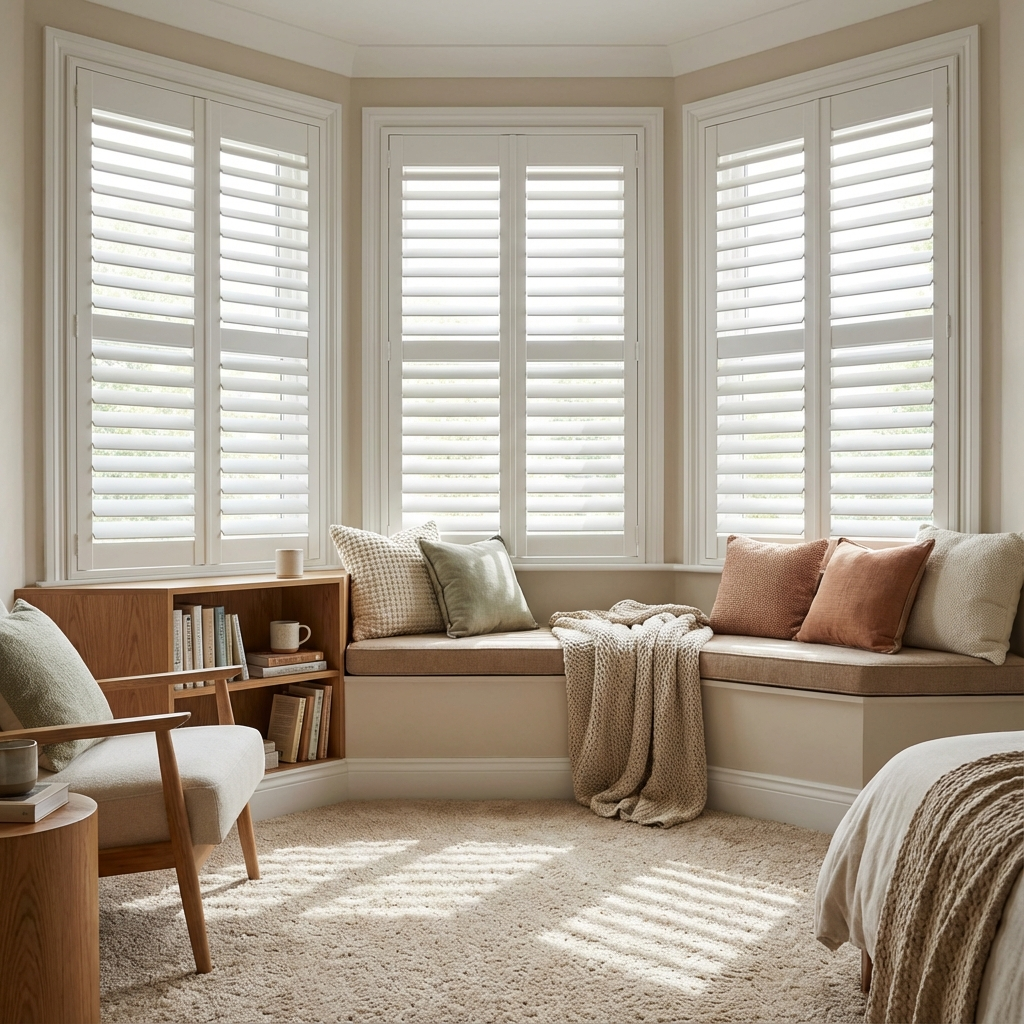
Plantation shutters are considered ‘hard’ window treatments and are often valued as a permanent architectural improvement to a home. Their adjustable louvers provide precise control over light and airflow; you can tilt them to deflect sunlight upwards while maintaining privacy at eye level. While the upfront cost is higher, they are durable, easy to clean, and can increase property value.
Material Selection
- Real Wood: Best for rich stains and traditional looks.
- Composite/Faux Wood: Resistant to moisture and warping, ideal for humid climates.
- Poly: Extremely durable and chip-resistant.
Pro Tip: Choose larger louver sizes (3.5 to 4.5 inches) for a more modern appearance and a clearer view when the slats are open.
Linen Blend Curtains
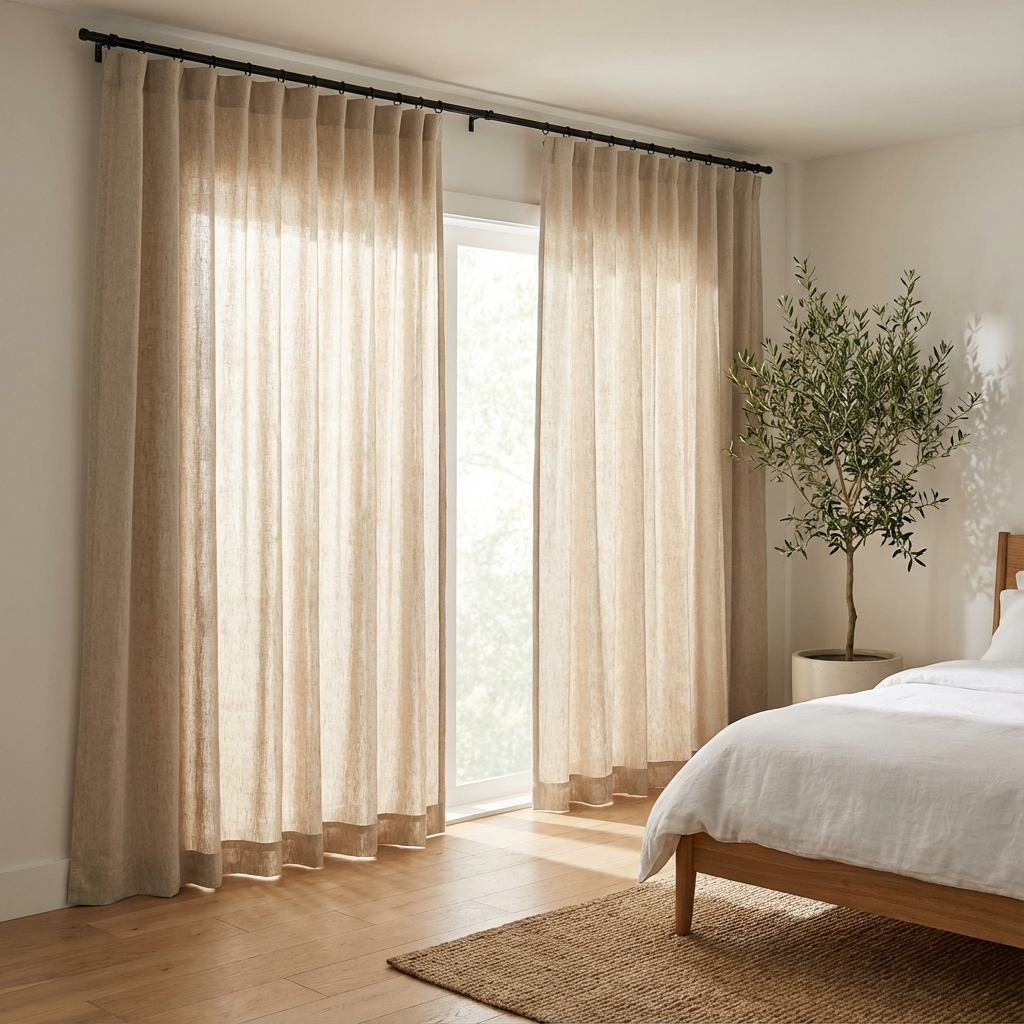
Linen offers a breezy, relaxed aesthetic that softens the rigidity of square windows. Pure linen wrinkles easily, so a linen-poly blend is often preferred for bedroom drapery as it maintains the textured look while draping more elegantly and resisting creasing. These curtains work beautifully in neutral palettes, adding subtle visual interest through their weave rather than bold patterns.
Styling Linen
- Puddle Length: Allow an extra 1-2 inches on the floor for a romantic look.
- Kiss Length: Hem exactly at floor level for a clean, tailored look.
- Neutral Tones: Oatmeal, white, and light grey maximize the airy feel.
Pro Tip: Always double-check the opacity. Light-colored linen blends usually require a privacy lining to prevent silhouettes from being visible at night.
Patterned Valances
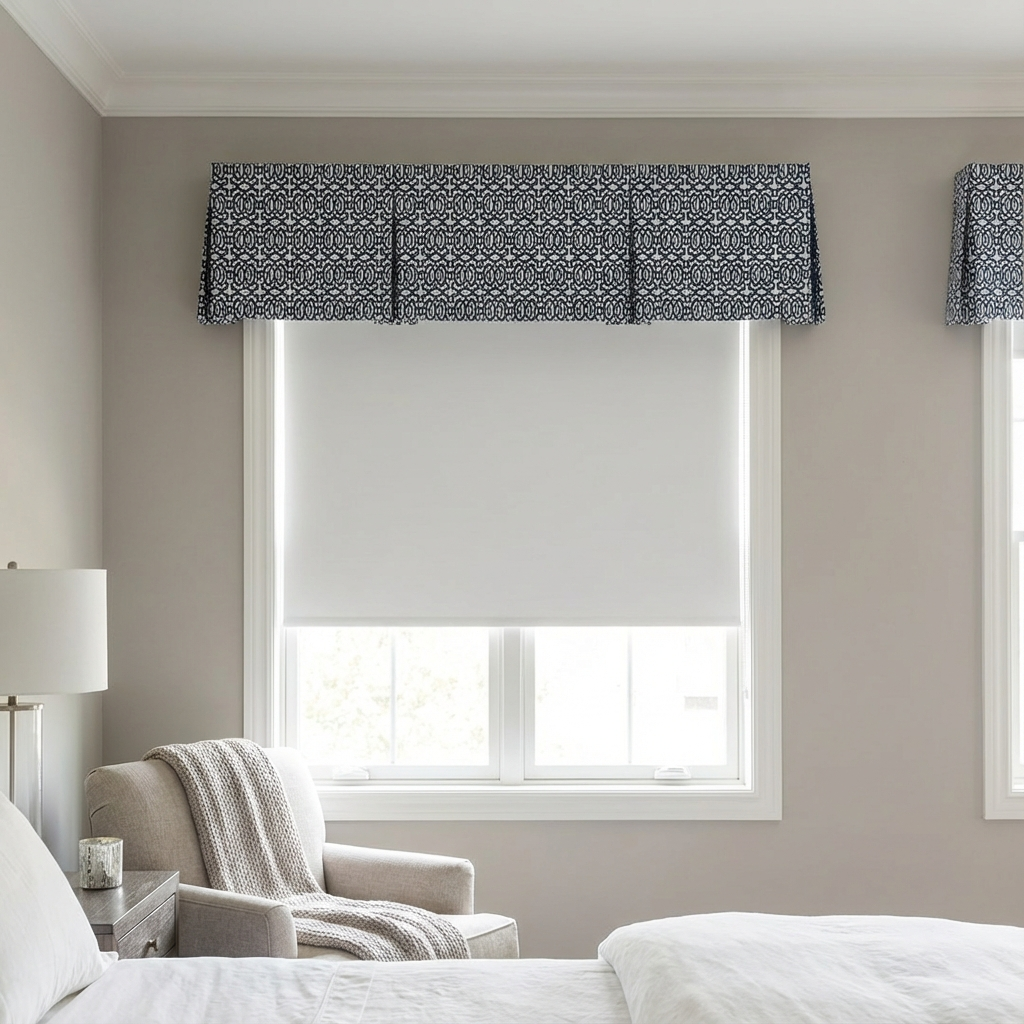
For budget-conscious updates or small windows where full drapes feel overwhelming, a patterned valance adds a pop of color and softness without the cost of substantial yardage. Valances cover only the top portion of the window, concealing drapery hardware and softening the upper frame. In bedrooms, these are best paired with a secondary functional layer, like a roller shade or blinds, to handle privacy needs.
Design Approaches
- Box Pleat: tailored and formal.
- Gathered: casual and country-style.
- Upholstered Cornice: rigid and architectural.
Pro Tip: Mount the valance slightly higher than the window frame to trick the eye into thinking the window is taller than it actually is.
Frosted Privacy Film
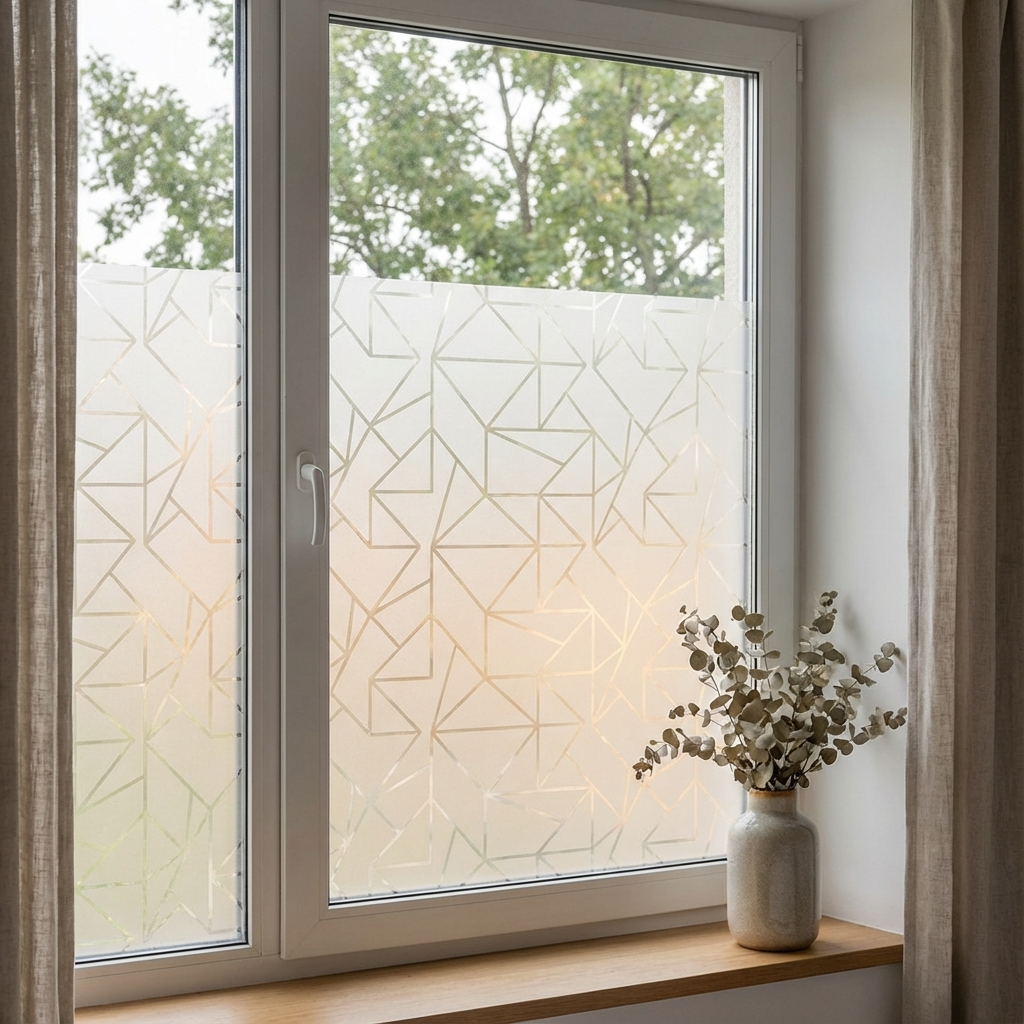
Window film is a modern, budget-friendly solution for bedrooms that face busy streets or close neighbors but still require natural light. Unlike heavy curtains, frosted film obscures the view completely while allowing diffused sunlight to enter. This is particularly effective for bottom-sash windows or unique architectural shapes (like arches) that are difficult and expensive to dress with fabric.
Application Types
- Static Cling: Adhesive-free, easy to remove or reposition.
- Adhesive: Permanent, durable bond.
- Patterned: Geometric or organic designs for added style.
Pro Tip: Apply film only to the lower half of a double-hung window to maintain privacy while keeping a clear view of the sky through the top half.
Café Curtains
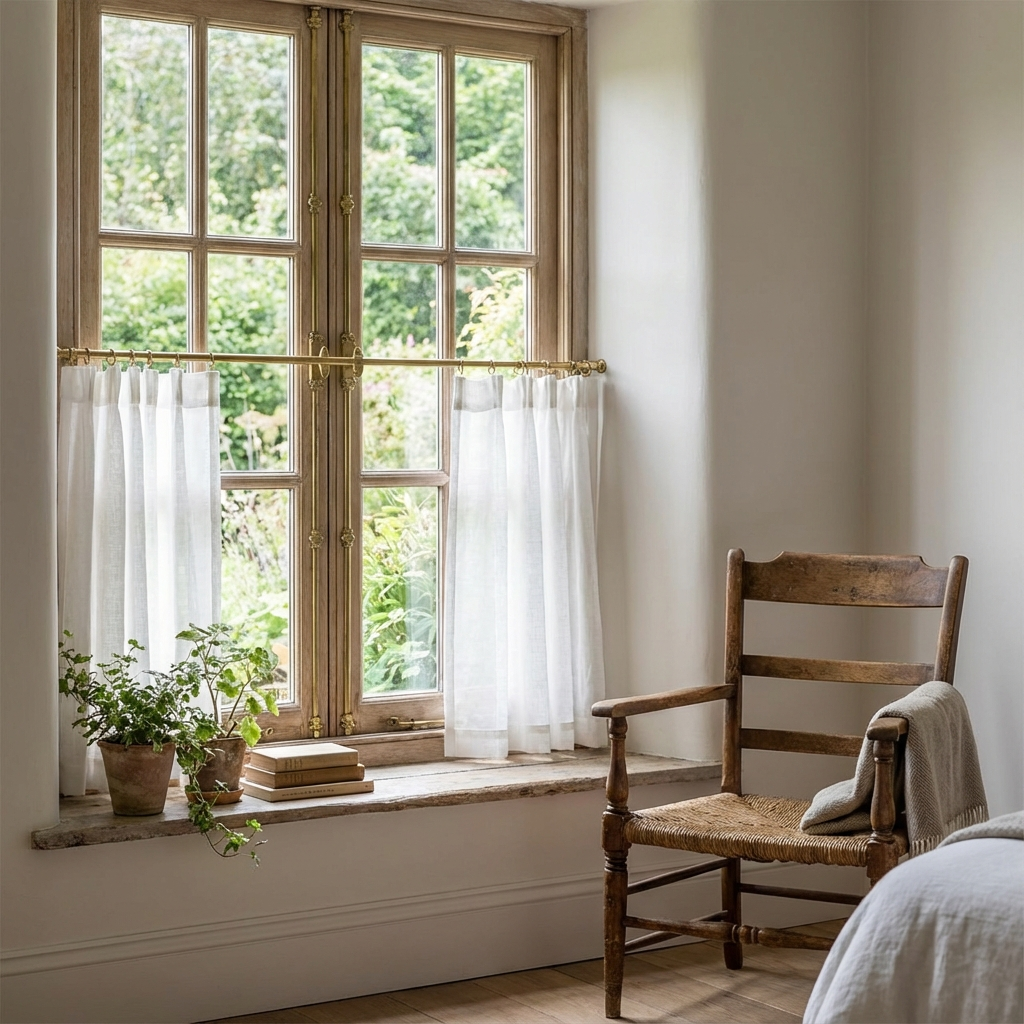
Once reserved for kitchens, café curtains are making a resurgence in bedroom design, particularly in vintage, cottage, or European-inspired spaces. By covering only the bottom half of the window, they provide essential privacy from passersby while leaving the top open to maximize daylight. This style uses significantly less fabric than full drapes, making it a cost-effective choice.
Rod Placement
- Mid-Window: The traditional placement.
- Three-Quarters High: Offers more privacy while leaving a clerestory effect.
- Tension Rods: No-drill installation inside the window frame.
Pro Tip: Use brass hardware and rings with pinch-pleat fabric to elevate the look from ‘country kitchen’ to ‘chic bedroom suite’.
Industrial Pipe Rods with Drop Cloths
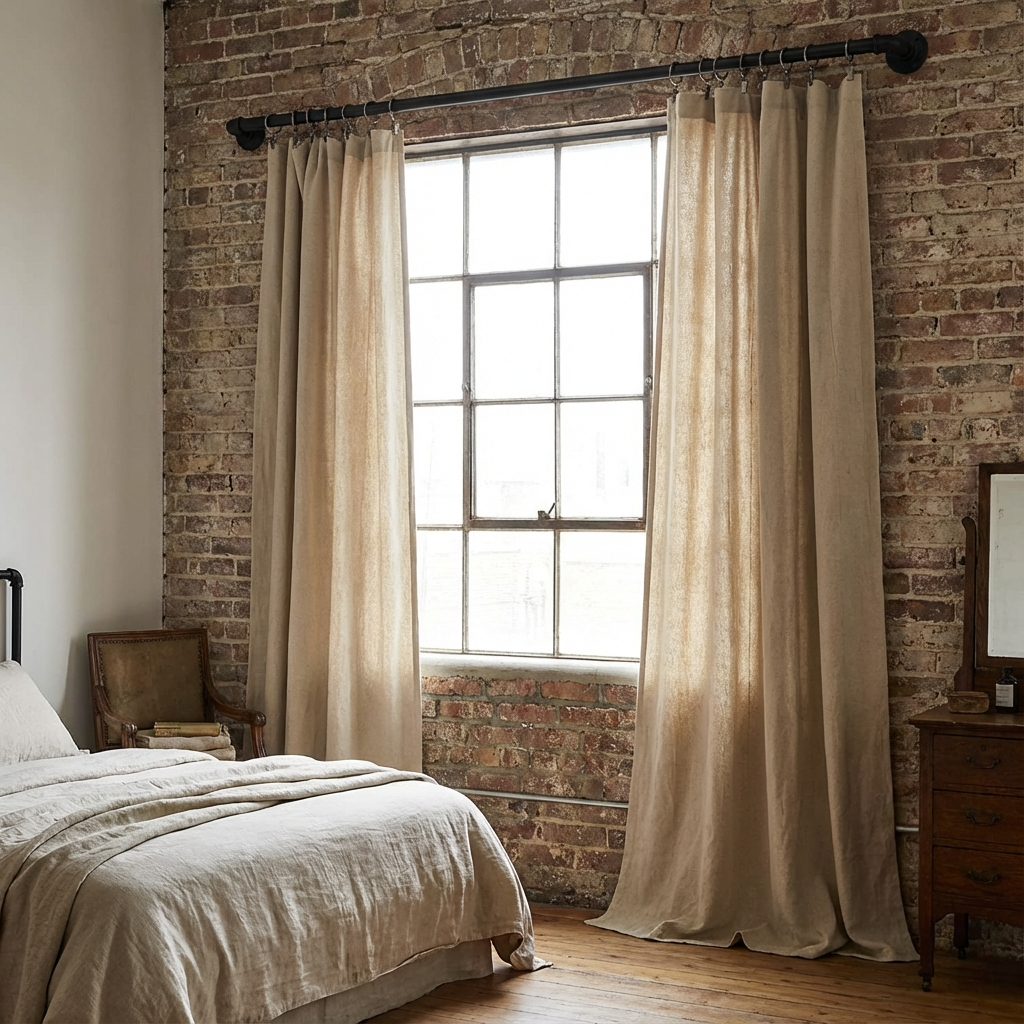
For a rugged, industrial, or modern farmhouse aesthetic that is extremely budget-friendly, combining heavy-duty canvas drop cloths with DIY industrial pipe curtain rods is a popular strategy. The canvas material is naturally heavy, providing decent light filtration and texture similar to heavy linen but at a fraction of the price. The hardware, created from plumbing pipes, adds a custom, architectural edge to the room.
DIY Advantages
- Cost: Significantly cheaper than custom drapery.
- Durability: Canvas is hard-wearing and machine washable.
- Customization: Pipes can be painted matte black, gold, or left raw.
Pro Tip: Wash and dry canvas drop cloths before hanging to soften the stiffness and account for any shrinkage before clipping them to curtain rings.
Conclusion
Choosing the correct window treatments involves more than just picking a fabric; it requires a thoughtful assessment of the room’s lighting needs, privacy requirements, and overall design direction. Whether opting for the architectural permanence of plantation shutters, the soft luxury of velvet drapes, or the budget-friendly ingenuity of window film, the right choice elevates the bedroom from a sleeping area to a restorative retreat. Prioritize the primary function—be it blackout for sleep or sheers for light—and select materials that harmonize with the room’s existing palette.
Other Articles
9 Bedroom Curtain Color Mistakes to Avoid (Designer Tips)
How to Choose Bedroom Window Treatments (Chart Inside)