

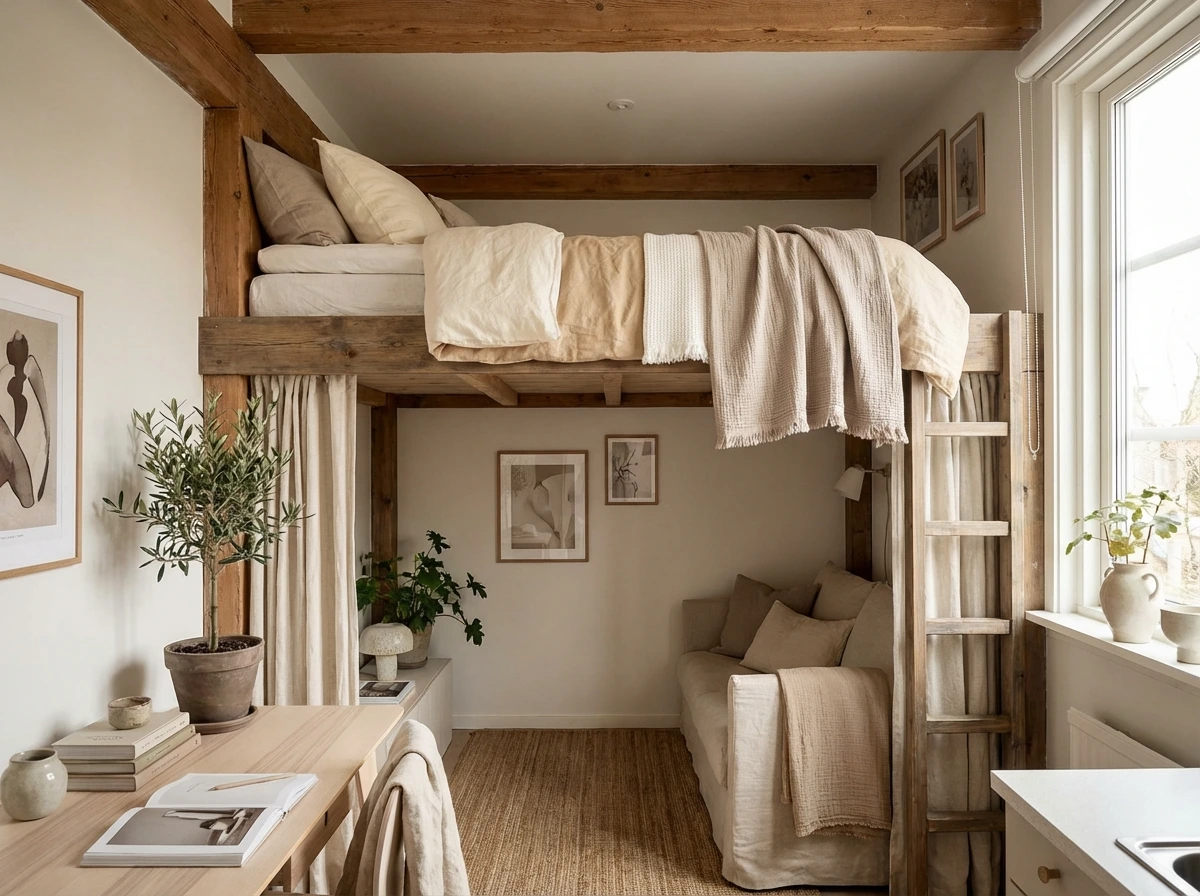
10 Loft Bedroom Ideas That Make Small Rooms Feel Spacious
Creating a space that feels calm, creative, and comfortable doesn’t require perfection. It’s really about intention. A well-designed loft brings together comfort, function, and personality in a way that feels natural—not forced. When it works, the space helps you slow down, think more clearly, and enjoy everyday moments a little more.
Below are ten thoughtful ideas built around warmth, practicality, and real living. Each one can work whether you’re designing a full loft, a small studio corner, or a cozy creative nook. These ideas are meant to feel approachable, useful, and easy to adapt—no design background or big budget needed.
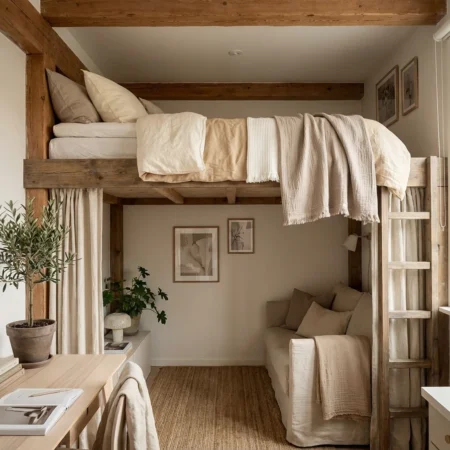
1. Warm Morning Loft with Soft Creative Energy
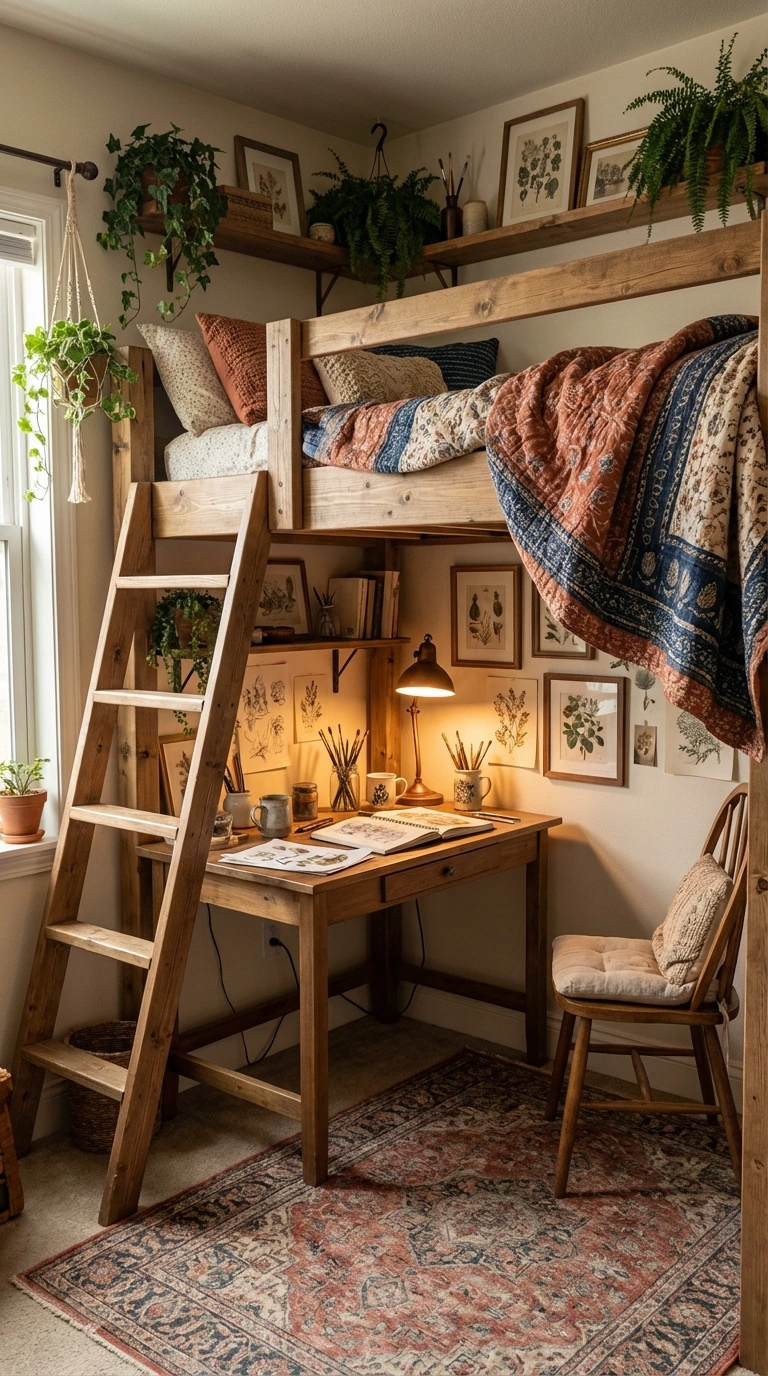
A calm space begins with how the day starts. A warm morning atmosphere encourages ease rather than urgency.
To achieve this feeling, focus on gentle transitions between rest and activity. A sleeping area placed above or beside a creative zone helps separate mental states while keeping the environment cohesive. Use layered bedding in warm neutrals—think clay, oatmeal, or muted green—to avoid visual noise.
Key elements that support this atmosphere:
- Soft textiles with visible texture rather than crisp perfection
- Natural wood surfaces that show grain and age
- A work surface that feels approachable, not overly tidy
A personal tip: leave one object slightly unfinished—an open notebook or loosely folded fabric. It quietly signals that creativity is welcome here, not scheduled.
2. Calm Afternoon Loft with Earthy Balance
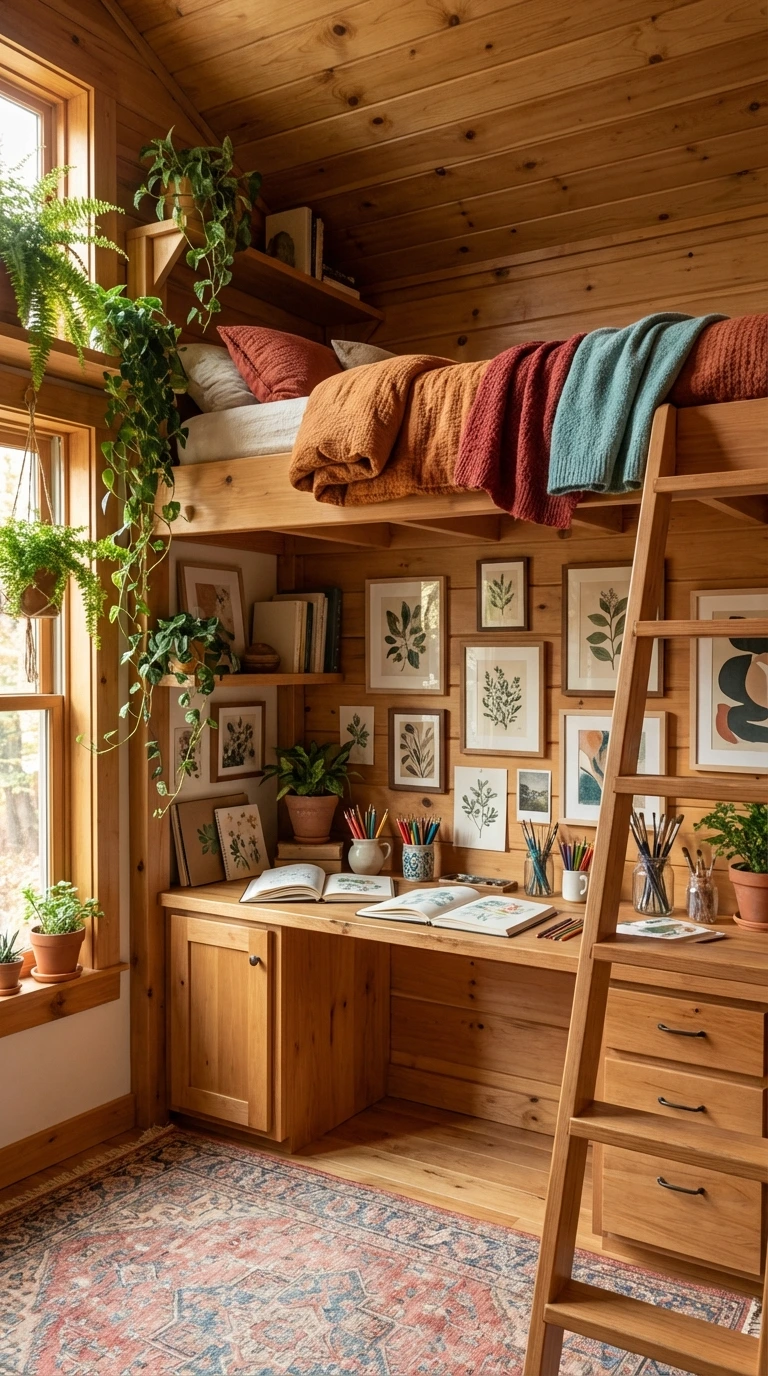
Afternoon spaces benefit from warmth without heaviness. The goal is comfort that doesn’t induce a nap (unless you want one—no judgment).
Balance is achieved through earth-toned materials and soft contrasts. Wood, fabric, and ceramic should dominate, with colors staying within a warm, natural range. This keeps the room grounded without feeling dull.
Practical ways to shape this mood:
- Use mid-tone woods rather than very dark or very pale finishes
- Introduce textiles with subtle variation rather than bold patterns
- Keep surfaces useful but lightly layered
A small personal note: I’ve found that limiting decorative items to what you actually use creates calm without sacrificing character. If it doesn’t serve your hands or your head, it probably doesn’t need space.
3. Quiet Creative Loft with Earthy Stillness
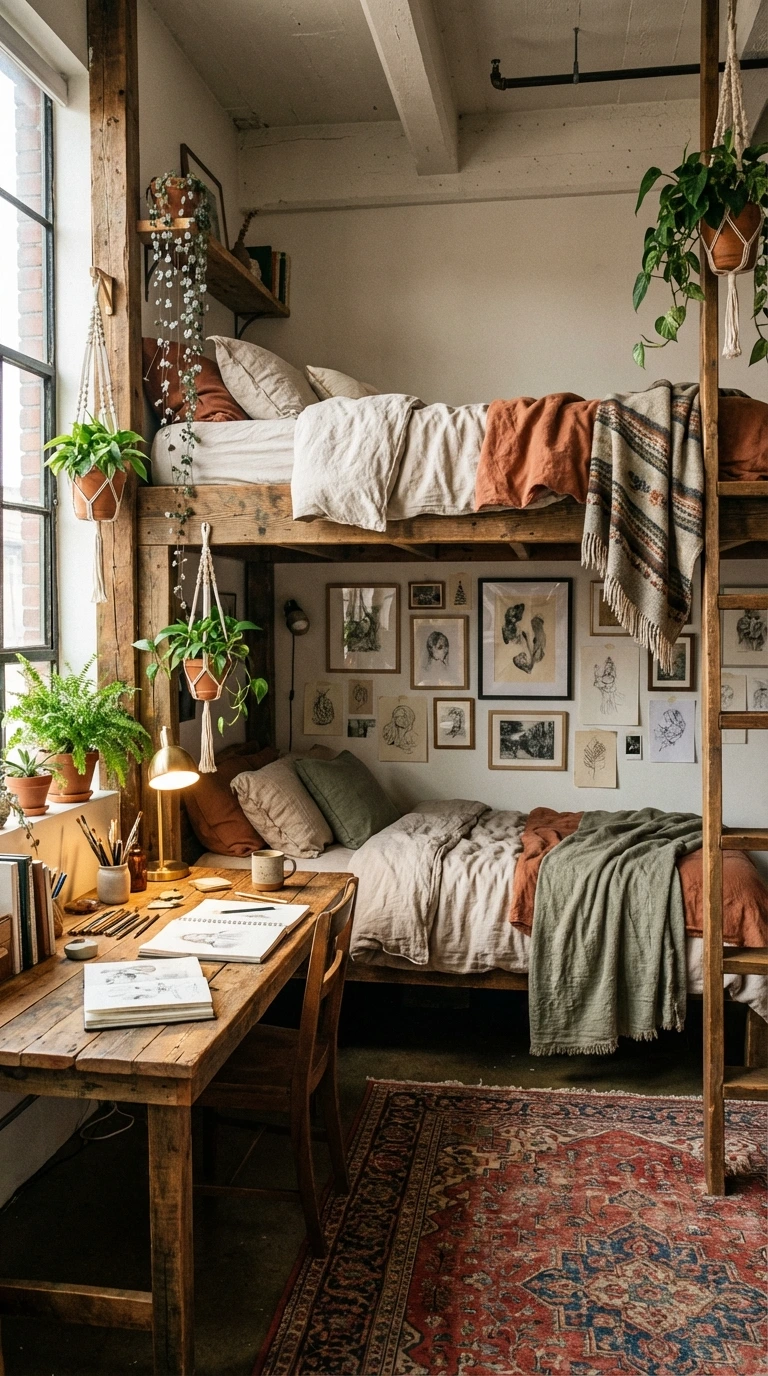
Some spaces invite noise. Others gently ask for quiet. This one does the latter beautifully.
Stillness comes from visual restraint paired with tactile richness. Soft fabrics, muted colors, and a sense of breathing room allow the mind to slow down. It’s not empty—it’s intentional.
To create this feeling:
- Choose a small color range and repeat it subtly
- Let natural textures do most of the visual work
- Keep decor meaningful rather than abundant
This kind of environment supports deep focus. It’s ideal for writing, sketching, or thinking without interruption—unless it’s the good kind, like a cat walking across your notebook.
4. Softly Layered Studio with Handmade Warmth
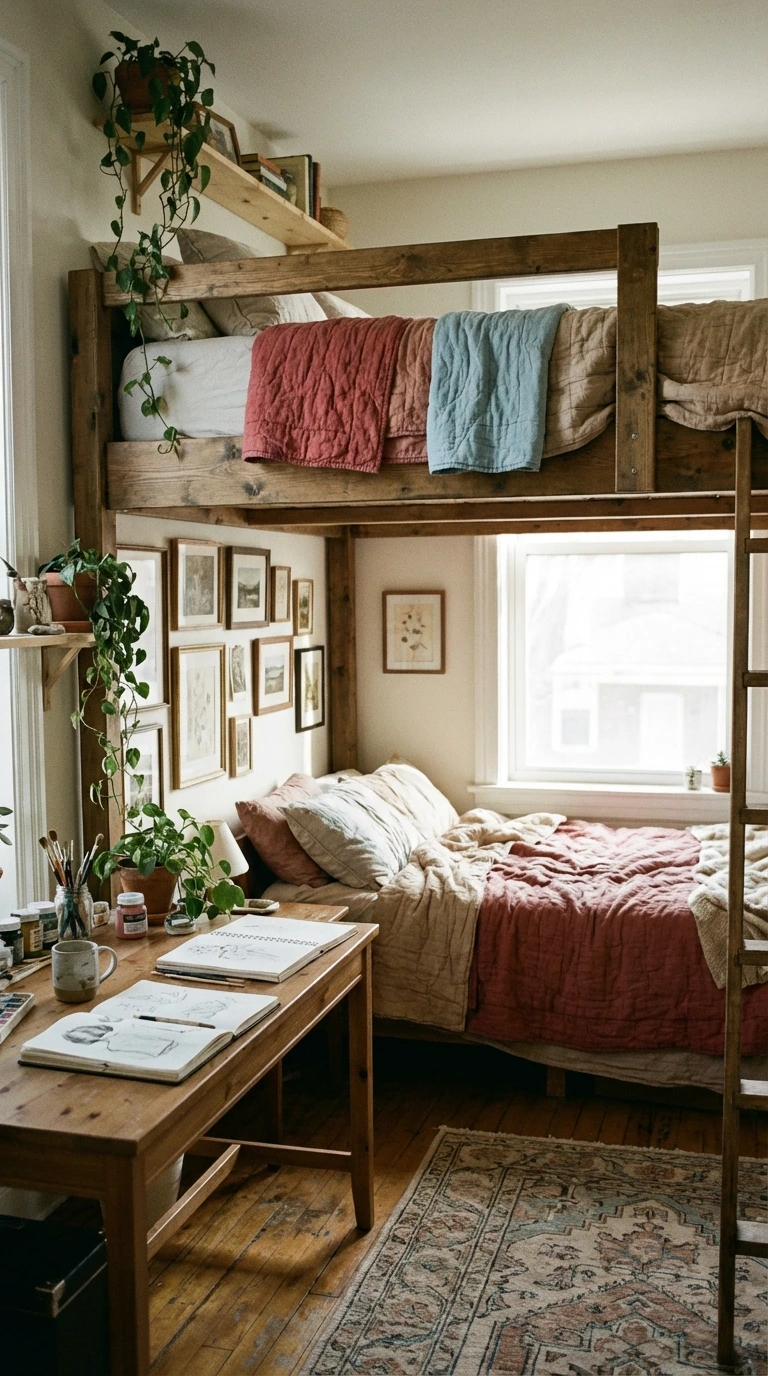
A space feels human when it shows evidence of hands at work. Handmade textures add warmth that no store-bought perfection ever could.
Layering is the key here. Not clutter—layers.
Helpful approaches include:
- Combining fabrics with different weights and weaves
- Mixing smooth wood with rougher, imperfect finishes
- Allowing tools or materials to remain visible
This kind of room quietly says, “Things happen here.” Creativity feels welcome, not staged. And honestly, perfection tends to kill momentum anyway.
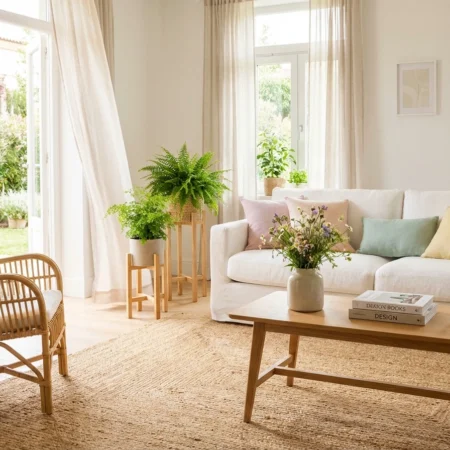
5. Gentle, Plant-Filled Loft for Slow Mornings
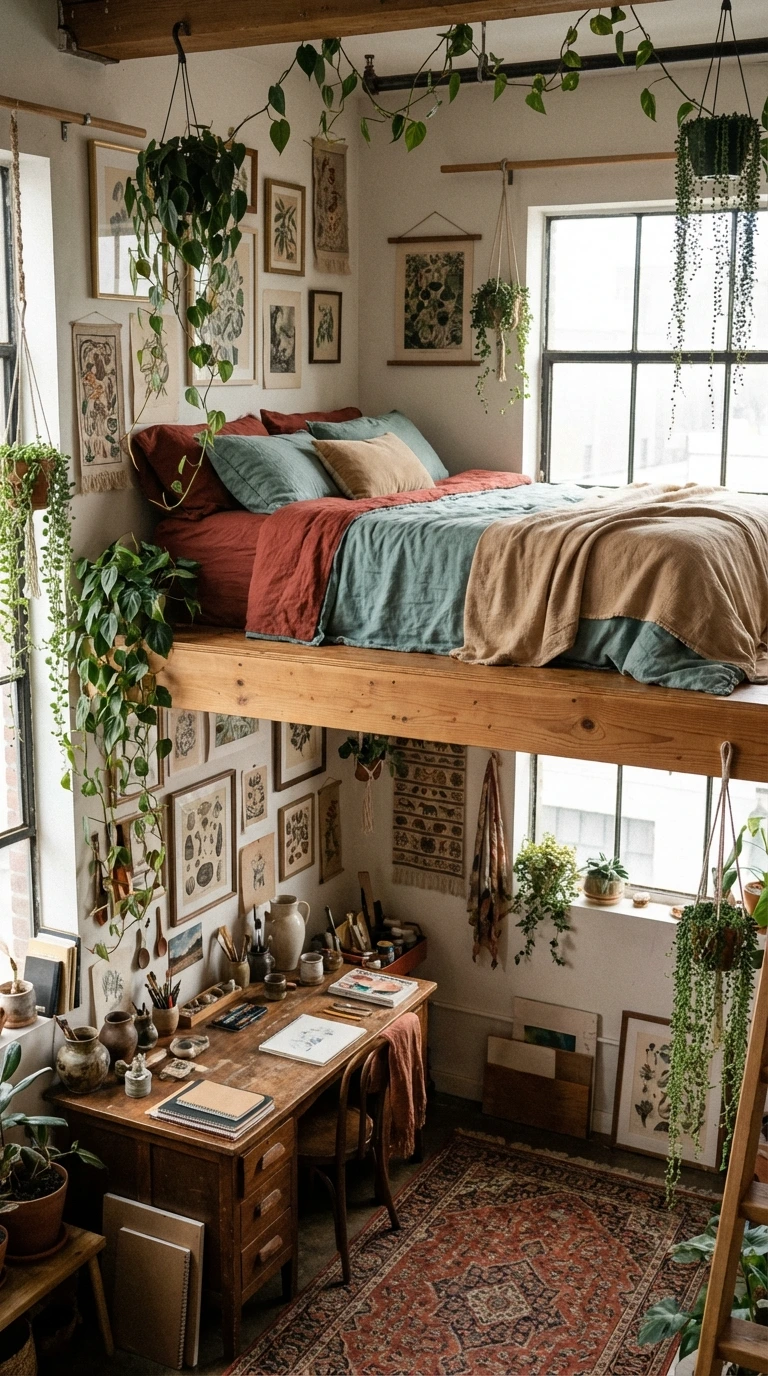
Some spaces exist purely to slow the day down—and that’s a beautiful thing.
Plants play a powerful role here. They soften edges, filter light, and introduce natural movement without demanding attention. When paired with neutral textures and warm tones, they create calm without effort.
To build this atmosphere:
- Use plants of varied heights rather than many of the same kind
- Let light interact naturally with fabrics and surfaces
- Keep décor minimal but intentional
Morning routines feel less rushed in a space like this. Coffee tastes better. Thoughts arrive more gently. Productivity tends to follow, almost accidentally.
6. Cozy Creative Loft with Autumn Undertones
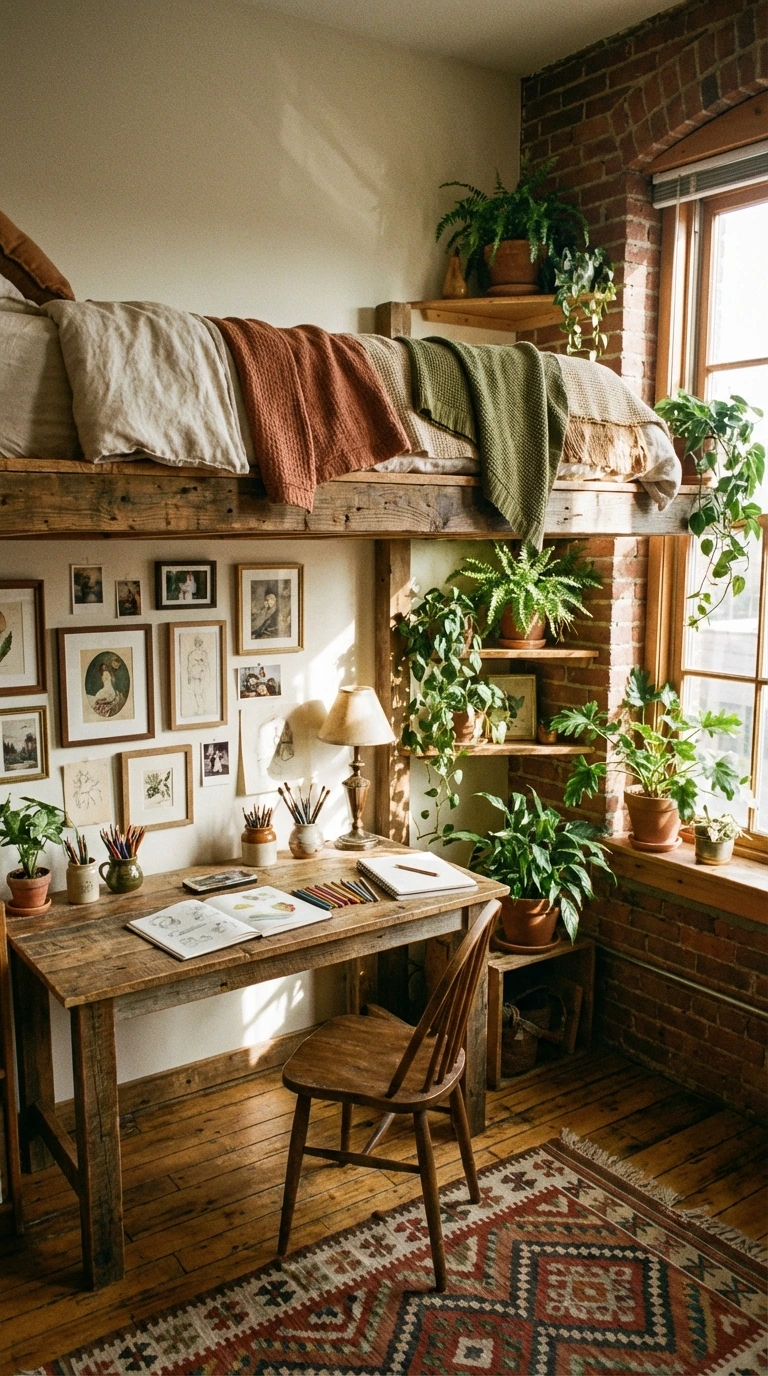
Warmth doesn’t have to mean dark. Autumn-inspired tones—rust, olive, soft gold—add depth without heaviness.
This type of space works best when colors support emotion rather than dominate it. The environment should feel like a soft exhale at the end of a long day.
Ways to bring this in:
- Use warm neutrals instead of stark white
- Choose textiles that invite touch
- Keep lighting soft and indirect
I’ve noticed that rooms like this tend to age beautifully. The more you live in them, the better they feel. That’s always a good sign.
7. Tranquil Loft Studio with Natural Balance

Balance comes from thoughtful spacing, not symmetry. When objects have room to breathe, the space feels calm—even when it’s full of life.
This kind of environment benefits from:
- Clear zones for rest, work, and movement
- Visual rhythm created by repeating materials
- Gentle contrasts between soft and structured elements
Nothing here competes for attention. Everything works together quietly, which makes the space ideal for sustained focus or creative problem-solving.
8. Warm, Lived-In Loft with Creative Soul
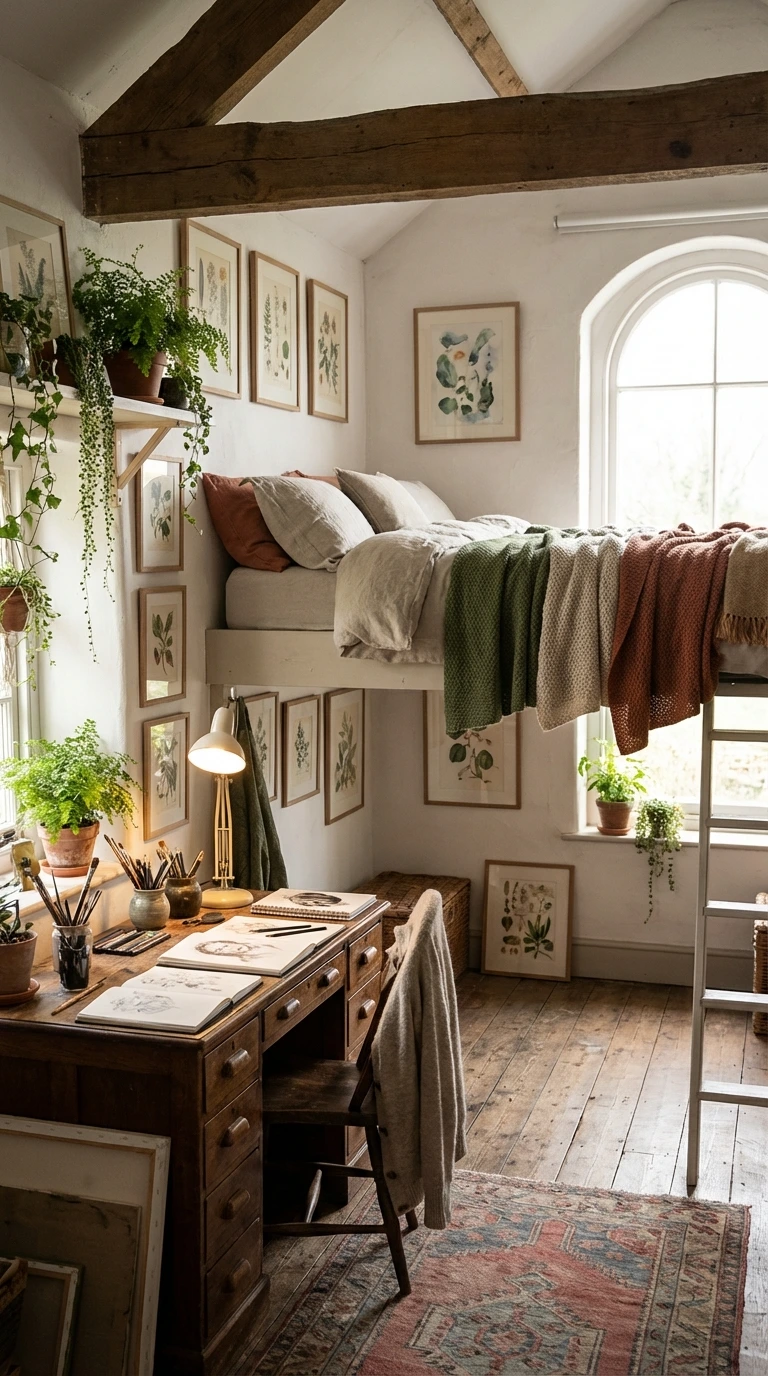
A space should reflect life, not fight it. A lived-in atmosphere embraces wear, imperfection, and personality.
This approach works best when:
- Objects show signs of use rather than perfection
- Personal items are integrated naturally
- Comfort is prioritized over visual trends
There’s something deeply reassuring about a room that doesn’t try too hard. It welcomes mistakes, experiments, and long stretches of thought without pressure.
9. Sunlit Loft with Gentle Rhythm
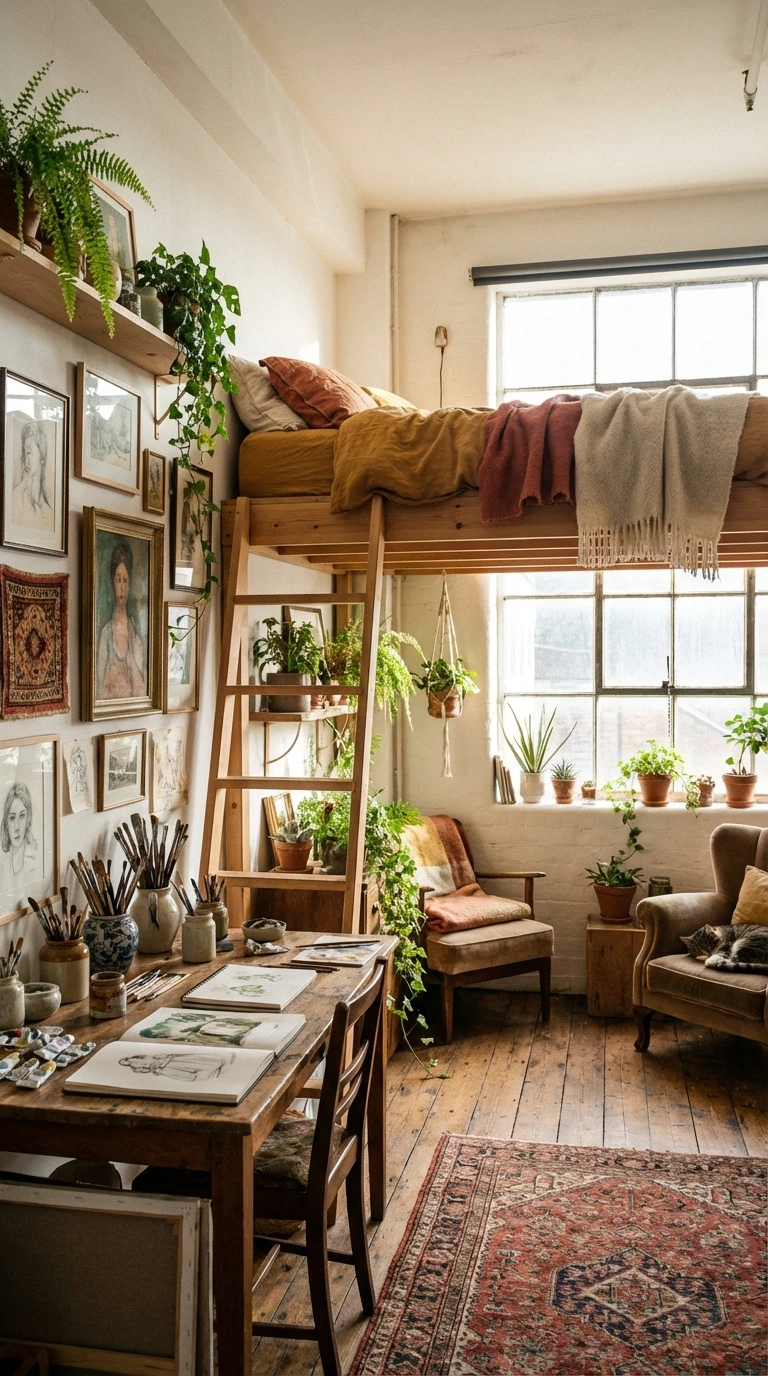
Light can define how a space feels more than any object in it. When used well, it creates rhythm and flow.
To harness this effect:
- Allow light to move freely across surfaces
- Use lighter materials where light naturally falls
- Balance brightness with texture to avoid sterility
This type of environment encourages gentle momentum. It’s ideal for creative routines that benefit from consistency rather than intensity.
10. Soft, Intimate Loft for Thoughtful Living

This final space is about comfort without clutter, warmth without heaviness, and presence without noise.
Key principles include:
- Choosing quality over quantity
- Letting materials age naturally
- Creating visual rest points throughout the space
The result is a place that feels personal without being overwhelming. It supports reflection, creativity, and calm in equal measure.
Conclusion
A well-designed loft isn’t about following trends or copying styles—it’s about shaping an environment that quietly supports how you live and think. When warmth, function, and personality come together, the result feels natural rather than designed.
Each concept in this guide shows how small, thoughtful choices can transform everyday spaces into places that restore energy, invite creativity, and feel genuinely lived in. When a space works this way, you don’t just use it—you belong in it.
Other Articles
10 Hallways Inspiration Ideas for a Calm, Stylish Home
No Comment! Be the first one.