


10 Hallways Inspiration Ideas for a Calm, Stylish Home
Hallways are often overlooked, treated as nothing more than pathways between rooms. Yet when designed with intention, they become some of the most emotionally grounding spaces in a home. A well-considered hallway can slow the pace, create calm, and quietly set the tone for everything that follows. Thoughtful materials, balanced textures, and intentional simplicity turn these transitional areas into moments of comfort rather than afterthoughts. This article explores how subtle design choices can shape atmosphere, improve flow, and make everyday movement feel more considered and welcoming.
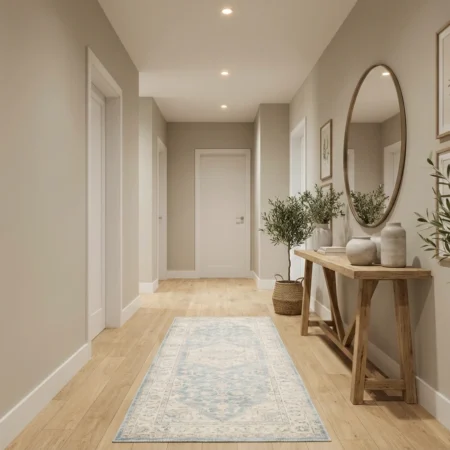
1. How to Create a Calm, Collected Entry Space
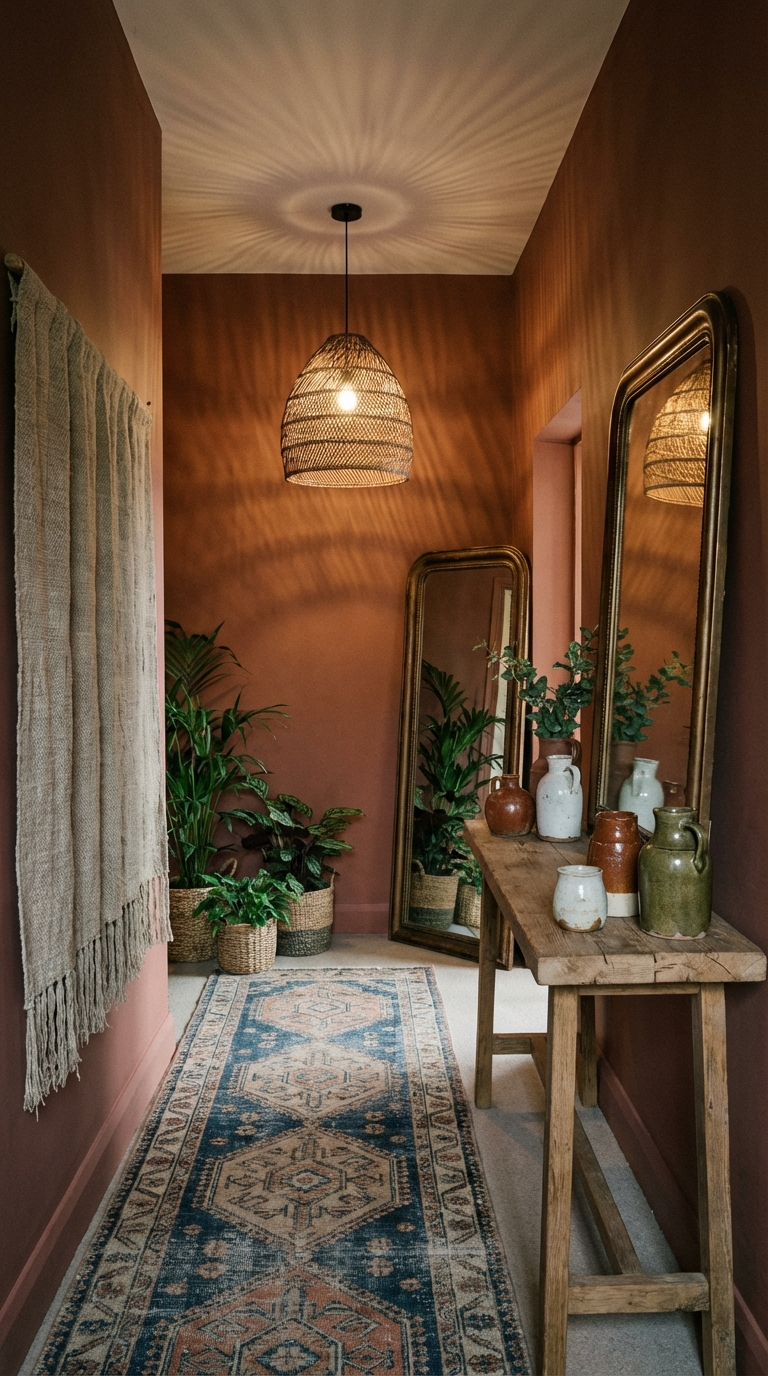
A calm entryway starts with intentional restraint, not minimalism for its own sake.
Key actions to apply this style:
- Choose one dominant wall tone in a warm, muted shade (clay, sand, or soft terracotta).
- Limit decor to 3–5 meaningful objects instead of filling surfaces.
- Use natural materials such as wood, ceramic, linen, and woven fibers.
- Keep the floor visually grounded with a low-contrast patterned runner.
Design principle to remember:
When everything competes for attention, nothing feels calm. Let one or two elements lead and allow the rest to support them quietly.
2. How to Design a Hallway That Feels Like a Gallery
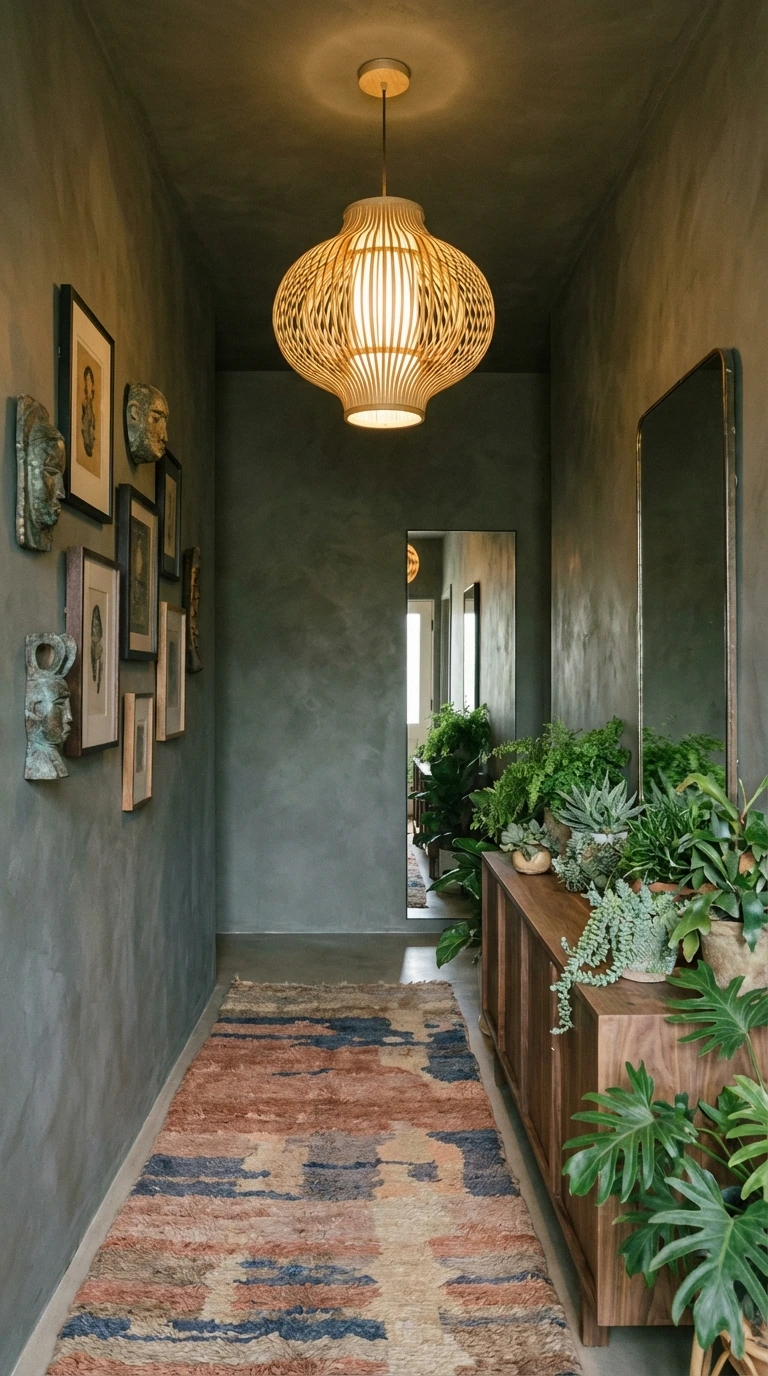
This approach works best when restraint and intention guide every choice.
Focus on these elements:
- Use textured wall finishes (limewash, plaster-look paint, or matte finishes).
- Keep furniture low-profile and visually light.
- Select décor based on form over color—shape creates interest without noise.
Practical tip:
Leave some wall space empty. Negative space allows the eye to rest and makes curated items feel intentional instead of crowded.
3. How to Build Warmth Without Overdecorating
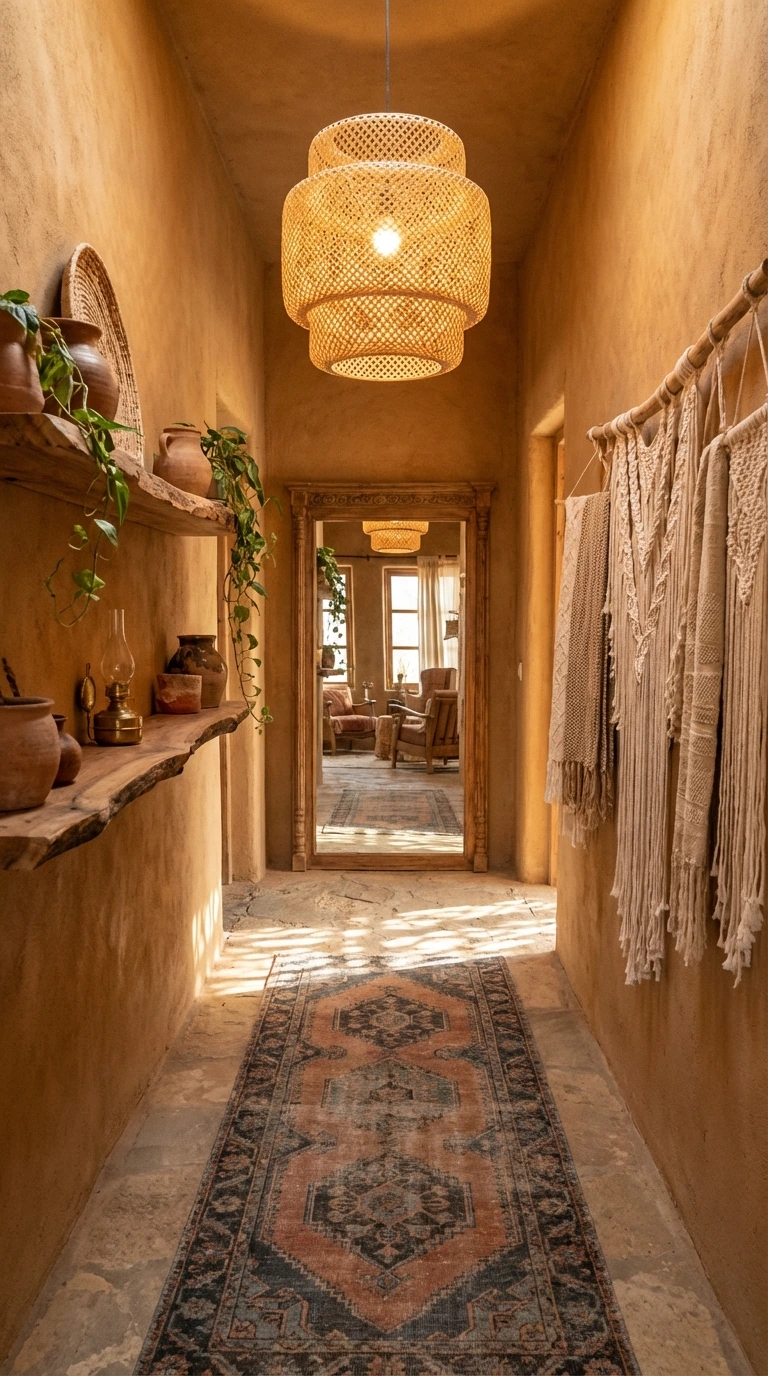
Warmth comes from layers, not clutter.
Use these strategies:
- Layer soft materials like woven textiles, natural fibers, and wood.
- Stick to a tight color range (3–4 tones max).
- Add one soft light source to avoid harsh contrast.
Pro insight:
If a space feels flat, add texture—not more objects. Texture adds depth without visual chaos.
4. How to Use Plants Without Turning the Space into a Jungle
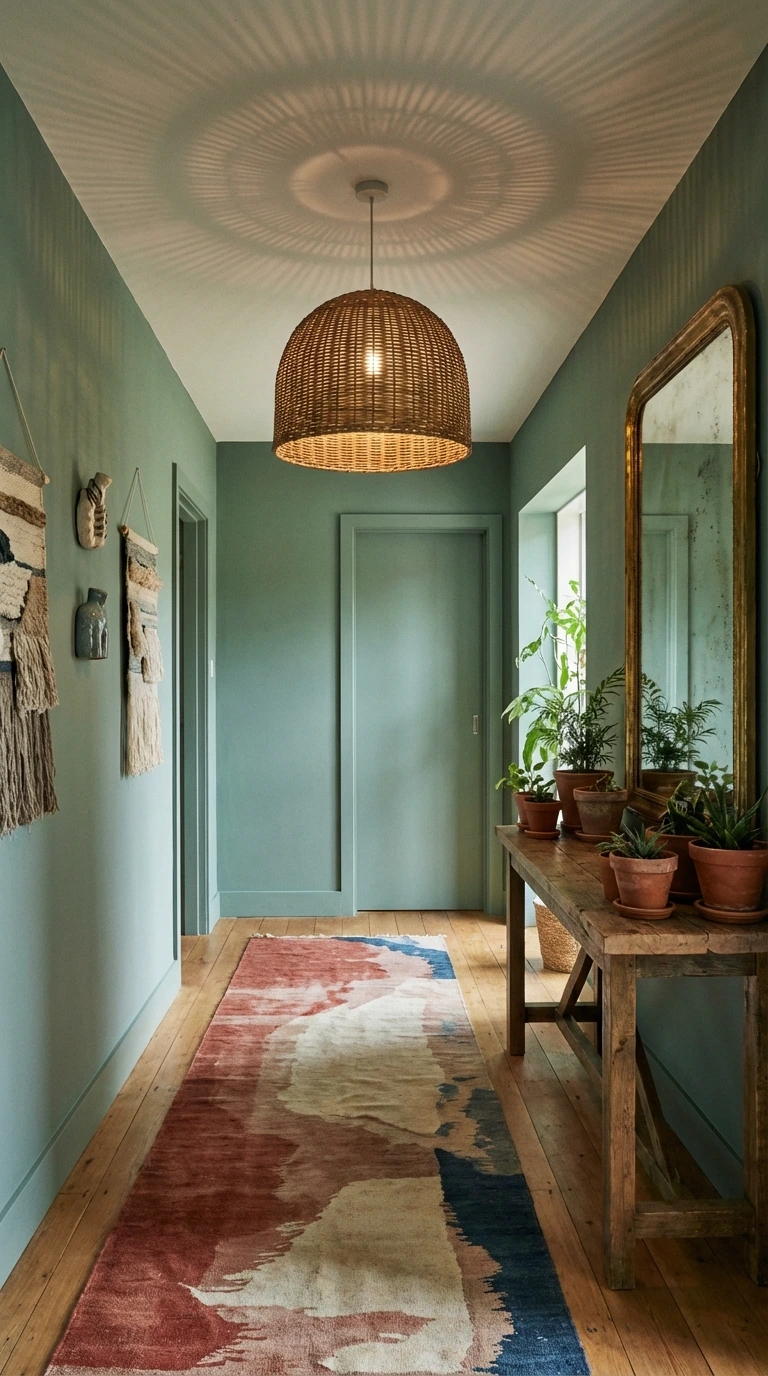
Greenery should support the space, not overwhelm it.
Best practices:
- Mix plant heights and leaf shapes for visual balance.
- Use earth-toned planters to keep the palette grounded.
- Limit yourself to odd numbers (3 or 5 plants feel more natural).
Helpful rule:
If plants block movement or sightlines, there are too many.
5. How to Make Craftsmanship the Focal Point
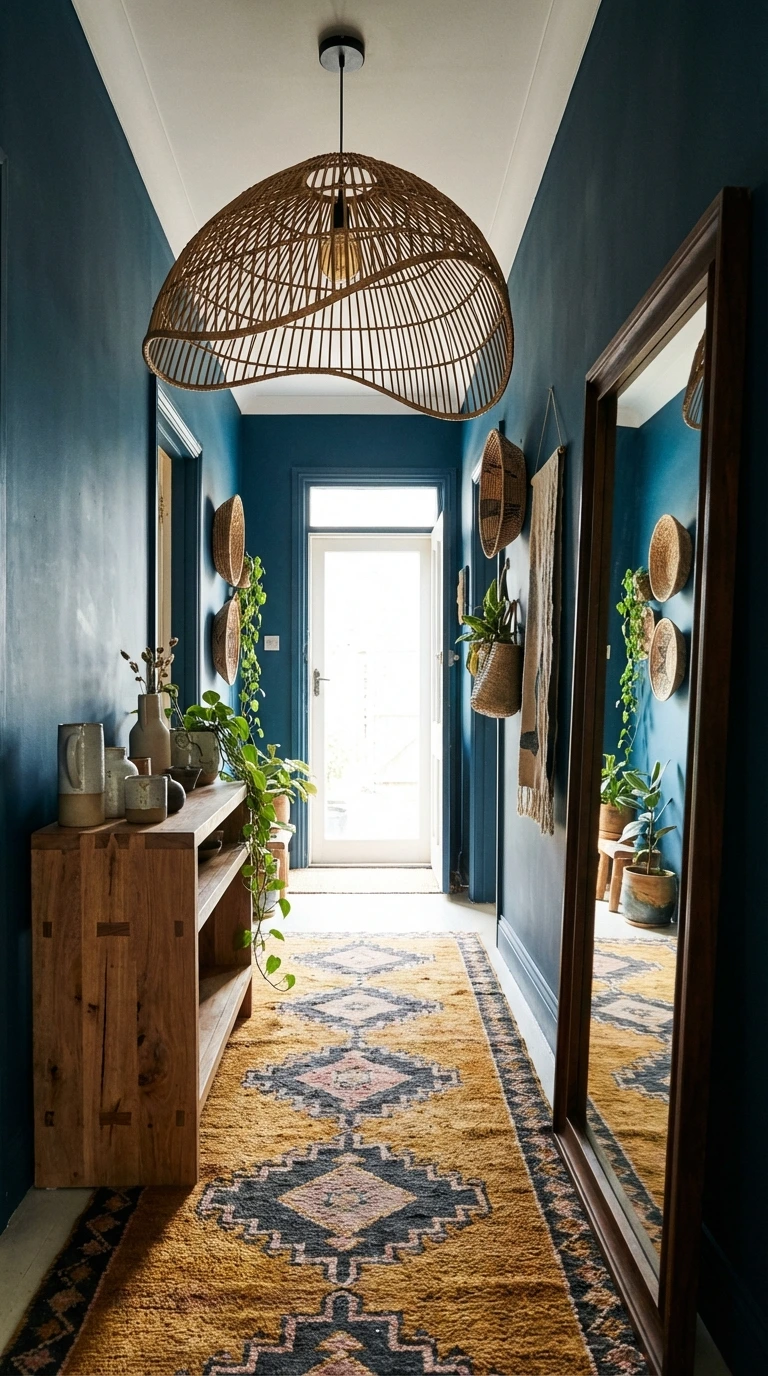
Let materials speak louder than decoration.
Focus on:
- Furniture with visible joints, texture, or grain.
- Handmade or imperfect items that feel human.
- Natural finishes rather than glossy coatings.
Design mindset:
When craftsmanship is strong, decoration becomes optional.
6. How to Use Soft Lighting to Create Calm
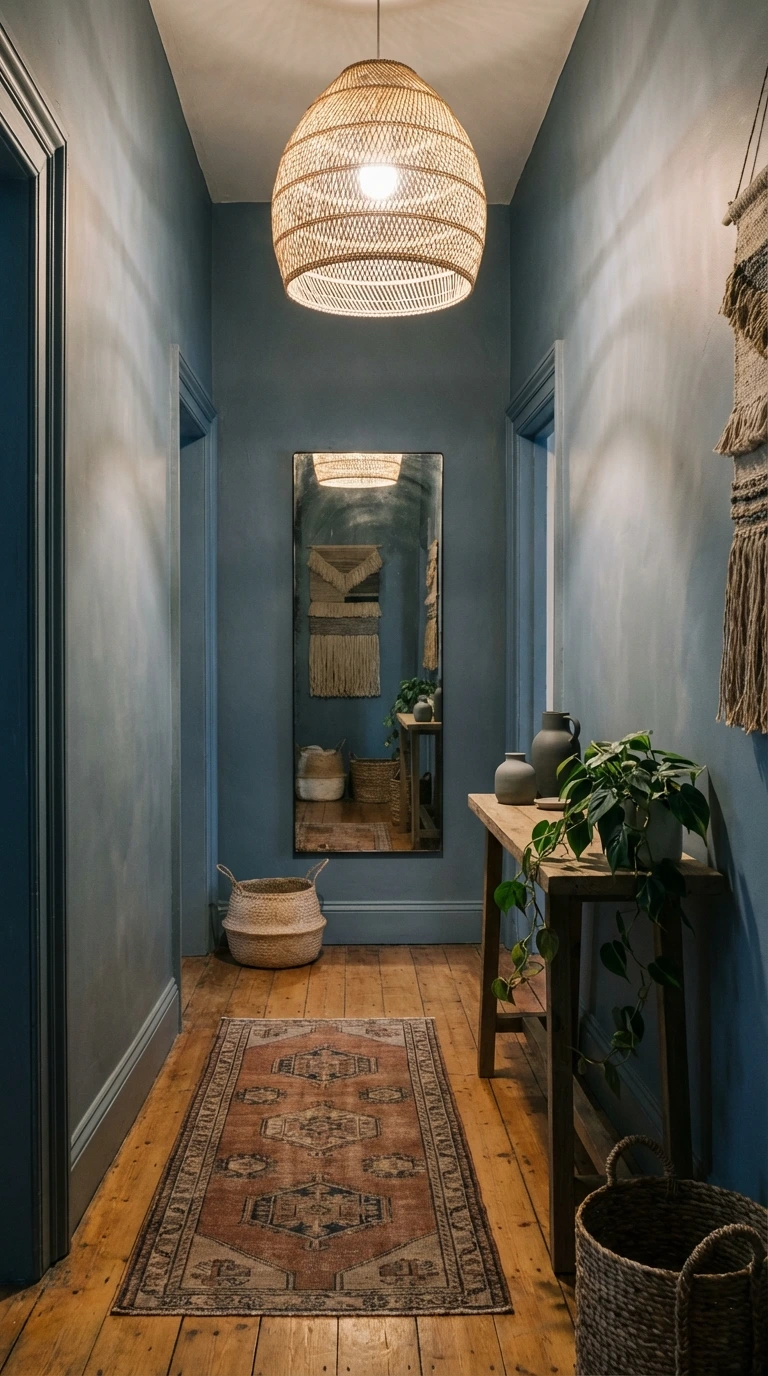
Lighting can completely change how a space feels.
Key strategies:
- Choose diffused lighting, never harsh overhead glare.
- Use warm bulbs (2700K–3000K range).
- Let shadows exist; they add depth and comfort.
Quick check:
If the light feels relaxing at night, it’s working.
7. How to Blend Modern and Organic Without Clashing
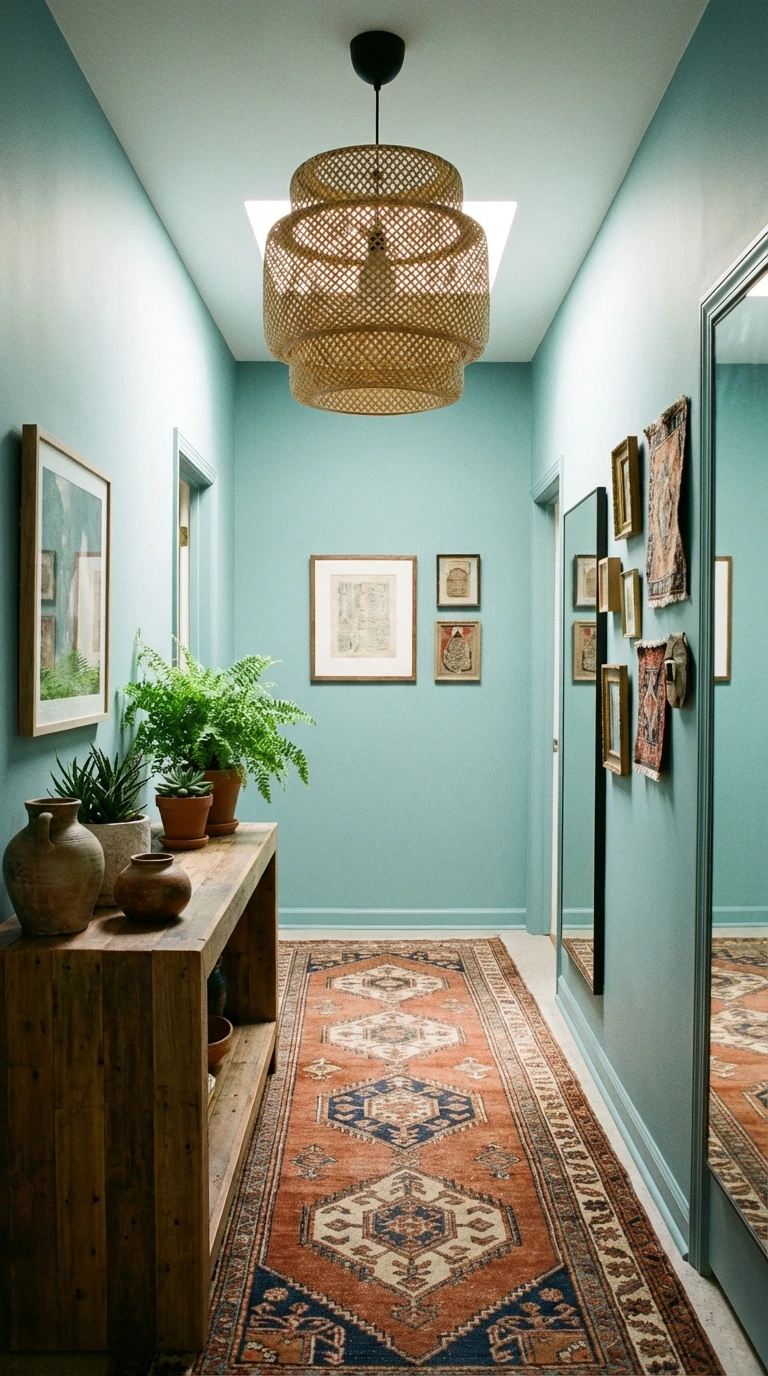
The secret is balance, not symmetry.
Try this approach:
- Pair clean-lined furniture with textured or handmade accents.
- Use neutral walls to let materials stand out.
- Mix one modern piece with one organic one—repeat.
Rule of thumb:
Structure grounds the space; texture gives it soul.
8. How to Create Lightness Without Emptiness
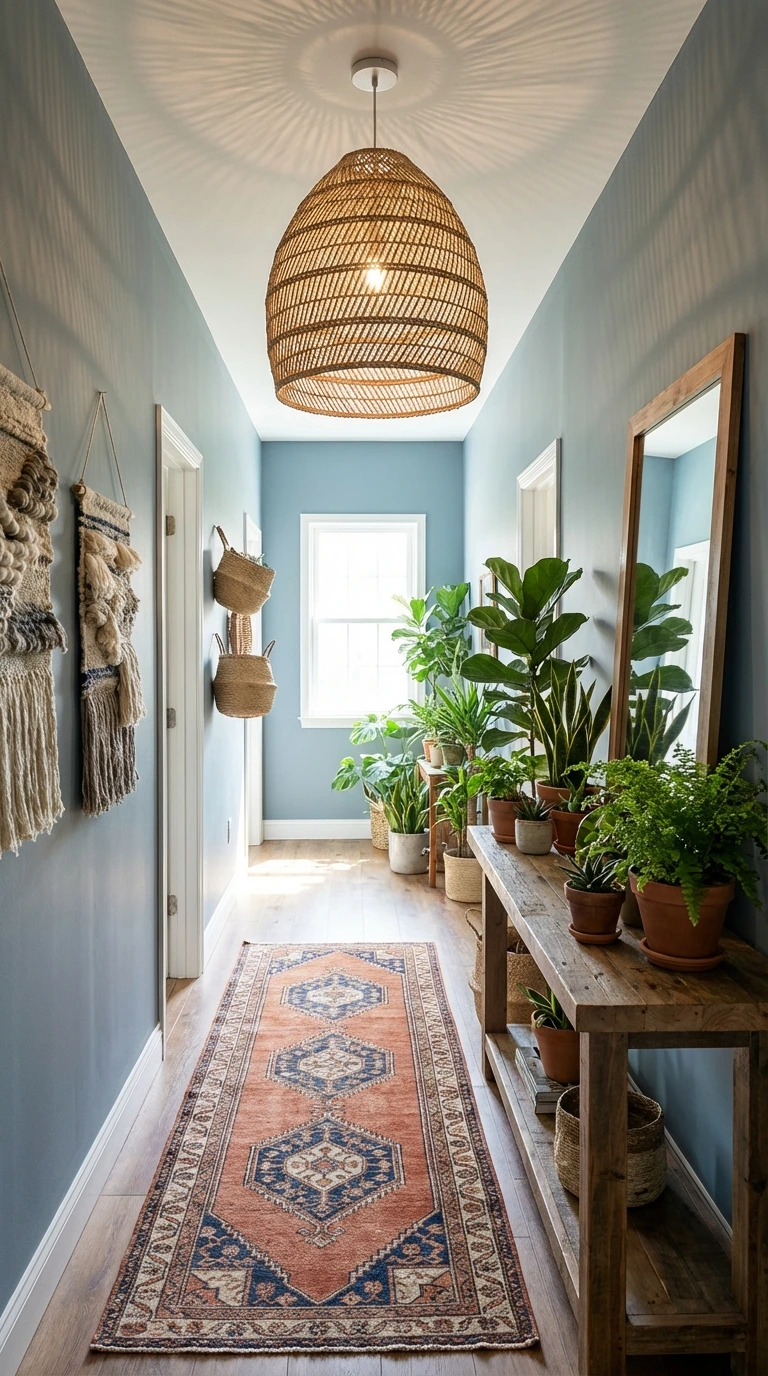
Light spaces still need weight to feel complete.
To achieve balance:
- Combine soft wall colors with grounding elements like wood or clay.
- Add vertical elements to guide the eye upward.
- Keep décor purposeful, not sparse.
Reminder:
Airy does not mean empty—it means intentional breathing room.
9. How to Make a Space Feel Thoughtful, Not Styled
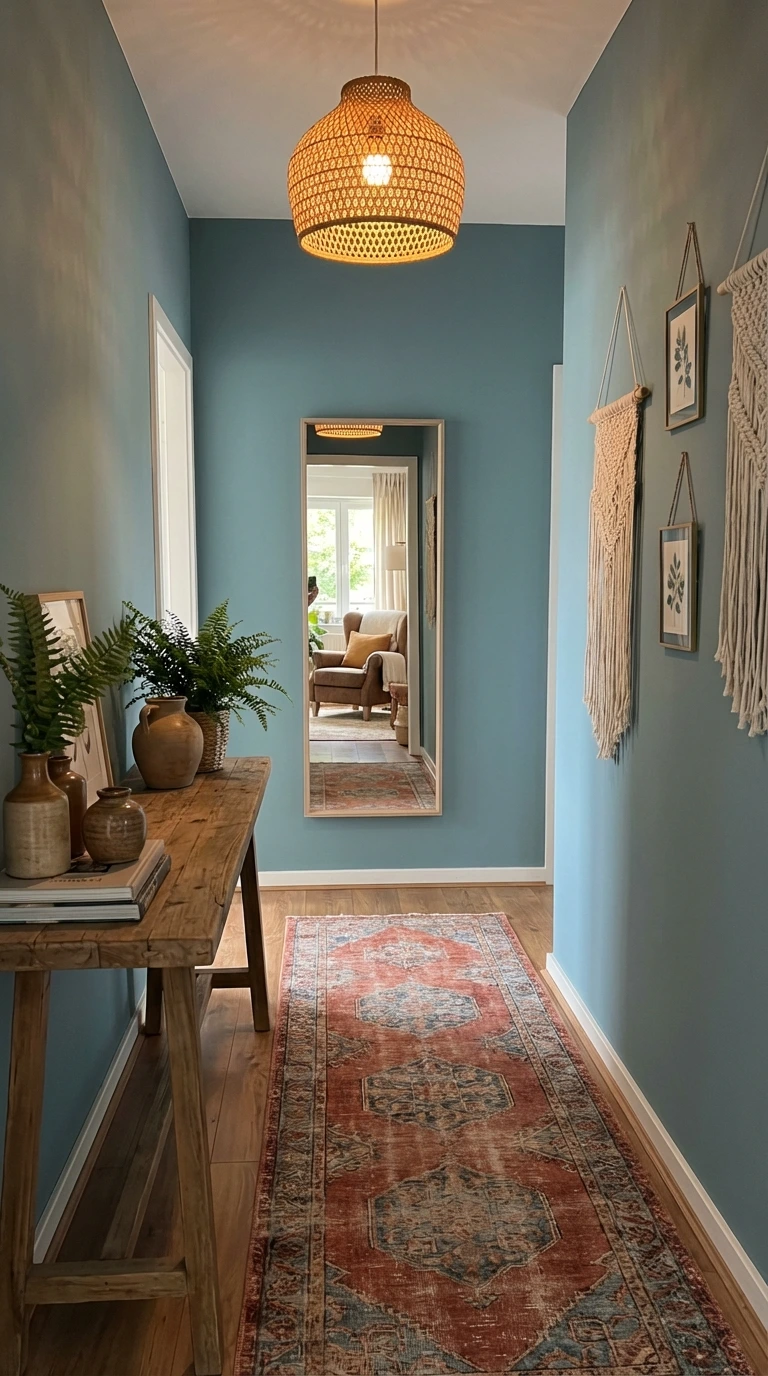
Avoid over-polishing.
Focus on:
- Imperfect textures
- Muted color transitions
- Objects that feel chosen over purchased
Practical test:
If something feels like it’s “trying too hard,” remove it. Calm design doesn’t beg for attention.
10. How to Create a Space That Feels Like Home Instantly
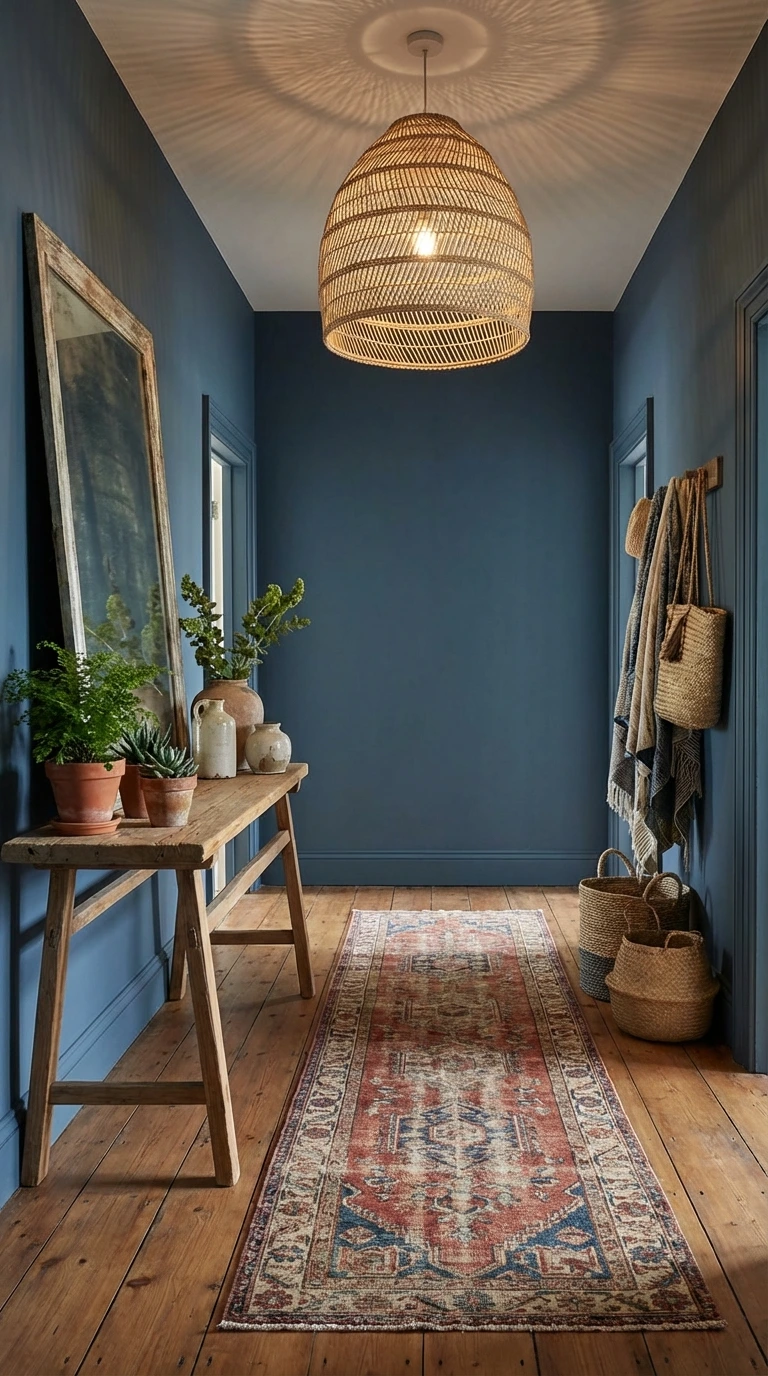
Comfort is emotional, not visual.
To achieve it:
- Use materials that age well and feel familiar.
- Let imperfections remain—they create warmth.
- Design for how the space feels at the end of a long day.
Final insight:
A space feels like home when it supports you quietly, without asking to be admired.
Conclusion
A well-designed hallway doesn’t ask for attention—it earns it through comfort, balance, and authenticity. When materials feel honest, lighting feels gentle, and every object has a purpose, the space begins to support daily life rather than compete with it. These ideas are less about decoration and more about creating ease, rhythm, and emotional clarity. When a space feels good to move through, pause in, and return to, it quietly becomes one of the most meaningful parts of the home.
Other Articles
10 Loft Bedroom Ideas That Make Small Rooms Feel Spacious
11 Spring–Summer Home Decor Ideas for a Seasonal Refresh
No Comment! Be the first one.